Western Hoop Earrings: Technical Guide to Silver & Stone
Explore the technical anatomy of western hoop earrings, from 925 sterling silver gauges and turquoise stabilization to traditional clasp mechanisms.

The Metallurgy of Authentic Western Silver Hoops
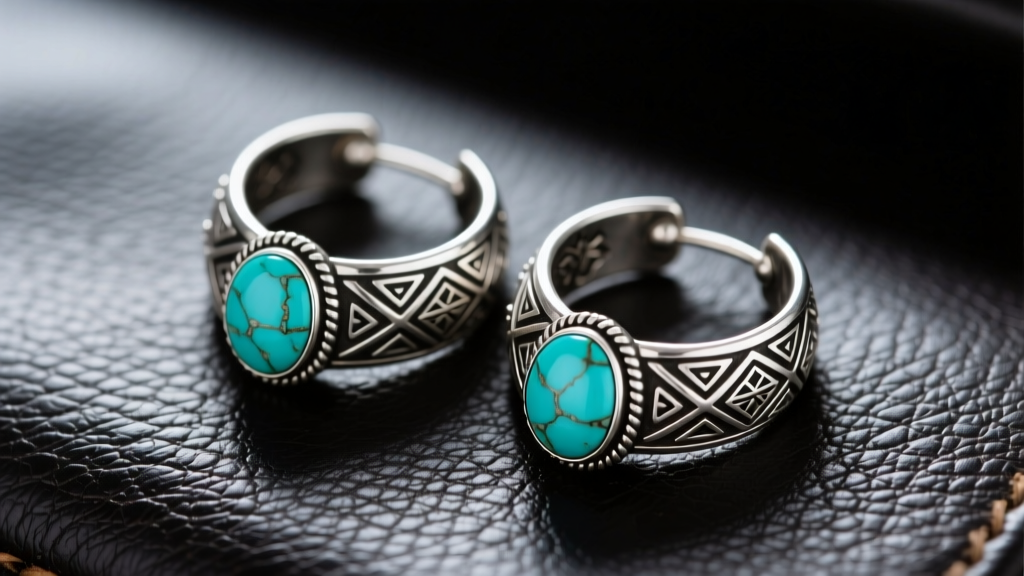
When evaluating high-quality western hoop earrings, the conversation must begin with metallurgy. The structural integrity, patina potential, and long-term wearability of these pieces are dictated by the specific silver alloy used by the silversmith. While commercial jewelry relies almost exclusively on .925 sterling silver (92.5% silver, 7.5% copper), traditional Native American and Western artisans frequently utilize coin silver (.900).
Coin silver contains 90% silver and 10% copper. This higher copper content fundamentally alters the metal's physical properties. It increases the alloy's hardness and tensile strength, making it highly resistant to the warping that plagues thinner, mass-produced hoops. However, this hardness comes at a cost: coin silver requires frequent annealing (heating to a dull red and quenching) during the forging process to prevent the metal from becoming brittle and cracking under the hammer. Furthermore, the higher copper content accelerates oxidation, allowing artisans to achieve the deep, high-contrast black patinas in stamped repoussé work that define authentic Western aesthetics.
Conversely, .999 fine silver is almost never used for the structural wire of western hoops. Fine silver lacks the crystalline lattice rigidity required to support heavy stone settings or maintain the circular tension of a continuous hoop, leading to rapid deformation during daily wear.
Gauge Thickness and Structural Integrity
The wire gauge of a hoop earring dictates not only its visual weight but its mechanical limits. In Western jewelry, where heavy turquoise, coral, or lapis lazuli cabochons are often bezel-set directly onto the hoop's face or dangle from its lower curve, structural failure (bending or snapping) is a primary concern. Understanding the American Wire Gauge (AWG) system is critical for both collectors and piercers.
| Gauge (AWG) | Millimeter (mm) | Structural Profile | Best Application |
|---|---|---|---|
| 20G | 0.81mm | Highly flexible, prone to warping under weight. | Lightweight, stamped commercial hoops without heavy stones. |
| 18G | 1.02mm | Standard commercial durability, moderate flex. | Everyday wear hoops with small (sub-5mm) inlay or cabochons. |
| 16G | 1.29mm | Robust, excellent tension retention. | Medium-weight artisan hoops, ideal for standard lobe piercings. |
| 14G | 1.63mm | Heavy-duty, resists bending under significant load. | Traditional saddle hoops, heavy turquoise settings, conch piercings. |
| 12G | 2.05mm | Maximum rigidity, requires stretched lobes or professional tapering. | Statement artisan pieces, thick continuous saddle hoops. |
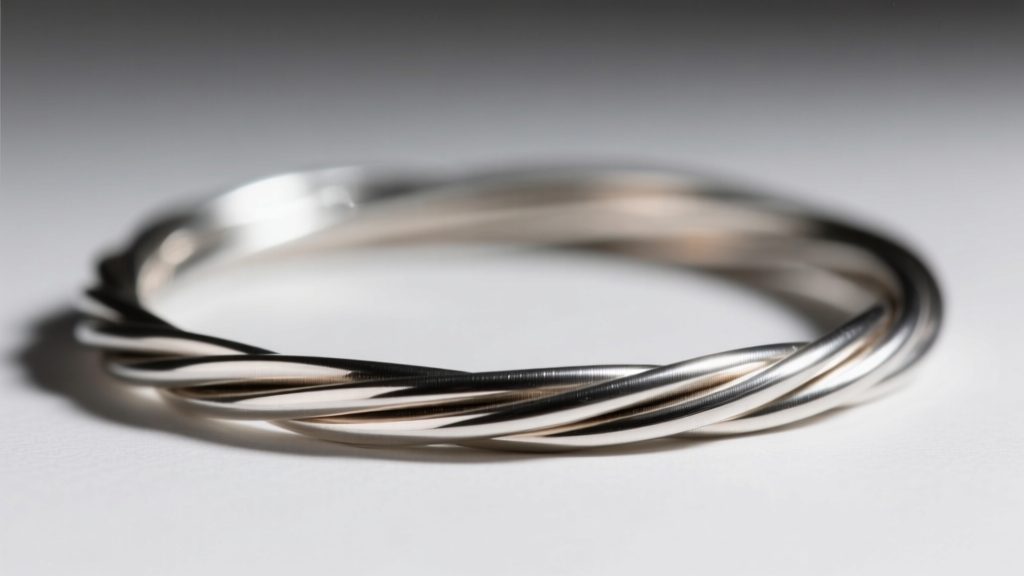
For authentic Western designs featuring heavy cluster work or large bezel-set stones, 16G and 14G are the industry standards. A 14-gauge wire provides the necessary cross-sectional area to support the soldering of heavy bezel walls without melting through the base wire, a common failure point in poorly manufactured 18G or 20G alternatives.
Stone Setting and Turquoise Stabilization Techniques
A defining characteristic of western hoop earrings is the integration of turquoise. However, the use of turquoise in hoop designs presents a unique gemological challenge. Natural turquoise is a hydrous phosphate of copper and aluminum, rating between 3 and 5 on the Mohs hardness scale. It is inherently porous and friable.
Unlike rigid necklaces or bracelets, hoop earrings are subject to continuous micro-flexing and torsional stress as they move with the wearer's jaw and neck. When a natural, untreated turquoise cabochon is set into a flexing silver bezel, the mechanical stress frequently causes the stone to fracture along its natural matrix lines. Furthermore, the porous nature of untreated turquoise allows it to absorb sebum, sweat, and cosmetics, which chemically alter the copper content and turn vibrant blue stones into a dull, muddy green.
"Turquoise is naturally porous and friable. Stabilization is a widely accepted enhancement that improves durability and color retention, especially in jewelry subject to impact or flexing." — Gemological Institute of America (GIA)
To mitigate these failure modes, master silversmiths utilize stabilized turquoise. The most respected technical method is the Zachery process or high-grade epoxy impregnation. The stones are placed in a vacuum chamber where air is extracted from the microscopic pores, followed by the introduction of a clear, hardening resin. This process does not add dye (unlike "enhanced" or "dyed" stones); it merely replaces air and moisture with a structural polymer. This raises the Mohs hardness to a 5 or 6, allowing the stone to withstand the torsional flex of a 16-gauge silver hoop without cracking, while rendering it completely impervious to skin oils.
Clasp Mechanisms: French Wire vs. Continuous Saddle
The closure mechanism of a western hoop dictates its security, comfort, and overall lifespan. There are two primary mechanisms utilized in high-end Western silversmithing, each with distinct mechanical properties.
The French Wire (Fishhook) and Omega Back
The French wire relies on a thin, curved hook that passes through the piercing and rests in a catching groove on the opposite side of the hoop. In heavy Western designs, the French wire is often paired with an Omega back—a hinged, spring-loaded metal plate that snaps over the wire post. The Omega back distributes the weight of heavy stone-laden hoops across a wider surface area of the earlobe, preventing the "cheese-cutter effect" where thin wires migrate downward and tear through the tissue. The tension of the Omega spring must be calibrated precisely; too loose, and the heavy hoop will pull free; too tight, and it will cause cartilage fatigue.
The Continuous Saddle Hoop
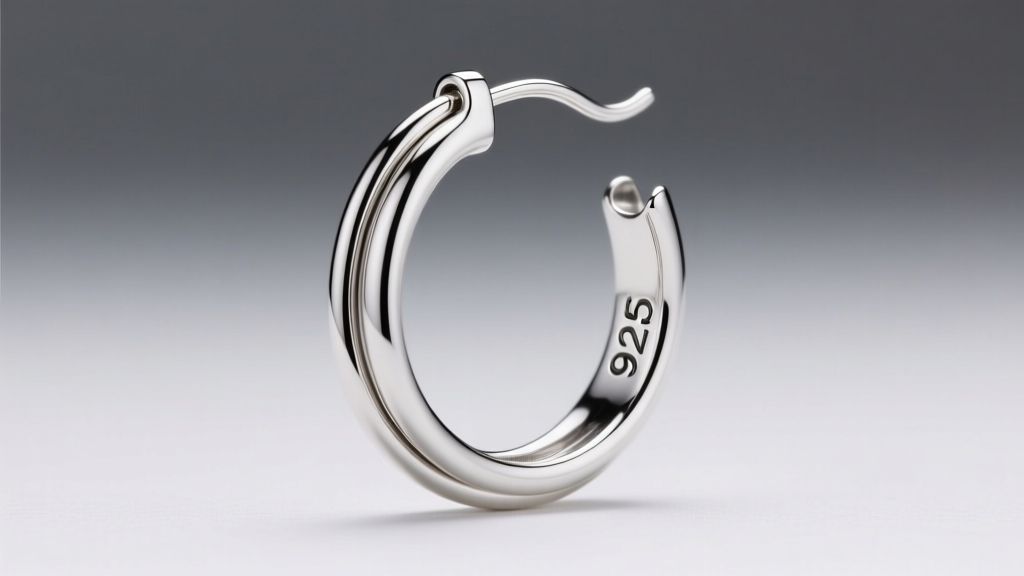
For a seamless aesthetic, artisans craft continuous saddle hoops. These feature a thicker, straight wire post that snaps into a hollow receiving tube on the opposite end of the hoop. The security of this clasp relies entirely on the work-hardening of the silver post. The silversmith must carefully file and shape the post so that it creates exact friction-fit tension inside the receiving tube. If the silver is annealed too much during the soldering of the decorative elements, the post becomes soft, loses its "snap," and will easily pull apart during wear.
Pricing Tiers and Authenticity Markers
Navigating the market for western hoop earrings requires an understanding of pricing structures tied to craftsmanship and legal authenticity markers. According to the Indian Arts and Crafts Board (IACB), it is illegal to market jewelry as "Native American" or "Indian" unless it is entirely produced by a member of a state or federally recognized tribe.
- Mass-Produced / Import ($30 - $80): Often cast from molds rather than hand-stamped. Features 20G or 18G wire, dyed howlite or magnesite masquerading as turquoise, and lacks any artisan hallmark. Prone to rapid tarnishing and structural failure.
- Artisan Handcrafted ($150 - $400): Hand-cut from sheet silver and wire. Features genuine stabilized turquoise, hand-stamped repoussé patterns, and 16G to 14G structural integrity. Stamped with the artist's unique hallmark and a ".925" purity mark.
- Master Silversmith / Vintage ($500 - $2,000+): Museum-quality pieces. Often utilizes rare, natural, untreated turquoise from closed mines (e.g., Lander Blue or Bisbee). Features complex overlay techniques, heavy 12G to 14G coin silver, and documented provenance.
Maintenance and Tarnish Prevention
The high copper content in both sterling and coin silver makes western hoops highly susceptible to silver sulfide formation (tarnish) when exposed to atmospheric sulfur and humidity. While ultrasonic cleaners and harsh chemical dips are effective for plain silver, they are catastrophic for turquoise and coral. Chemical dips will strip the polish from cabochons, lodge in the matrix veins, and degrade the epoxy used in stabilized stones.
For routine maintenance, use a dry, untreated silver polishing cloth on the metalwork, carefully navigating around the bezel settings. For deep cleaning, a soft-bristled brush with mild, phosphate-free dish soap and distilled water is the safest method. Ensure the hoops are completely dried with a microfiber cloth to prevent moisture from becoming trapped between the bezel wall and the stone, which can eventually lead to metal oxidation beneath the setting.


