How to Style the Classic Harrison Ford Earring Look for Men
Discover how to rock the classic Harrison Ford earring look. Our beginner guide covers men's diamond stud sizes, gauge, metals, and placement.


The Legacy of the Harrison Ford Earring
When discussing iconic men's jewelry, the Harrison Ford earring remains a masterclass in understated masculinity. Throughout the 1980s and 1990s, Ford frequently sported a single, small diamond stud in his left ear. At a time when men's earrings were largely associated with counter-culture rebellion or flamboyant rock stars, Ford's choice bridged the gap between rugged leading-man grit and refined Hollywood sophistication. He proved that a well-chosen ear stud could enhance a masculine aesthetic without overpowering it.
For beginners looking to explore men's ear styling, replicating this specific look is an excellent entry point. It avoids the commitment of heavy gauge stretching or the flashiness of large hoops, focusing instead on subtle geometry and light reflection. However, achieving the exact "Ford aesthetic" requires paying close attention to carat weight, metal color, and prong settings. A stone that is too large will look ostentatious, while a stone that is too small will simply look like a fleck of dust on the earlobe.
Decoding the Specs: What Exactly Did He Wear?
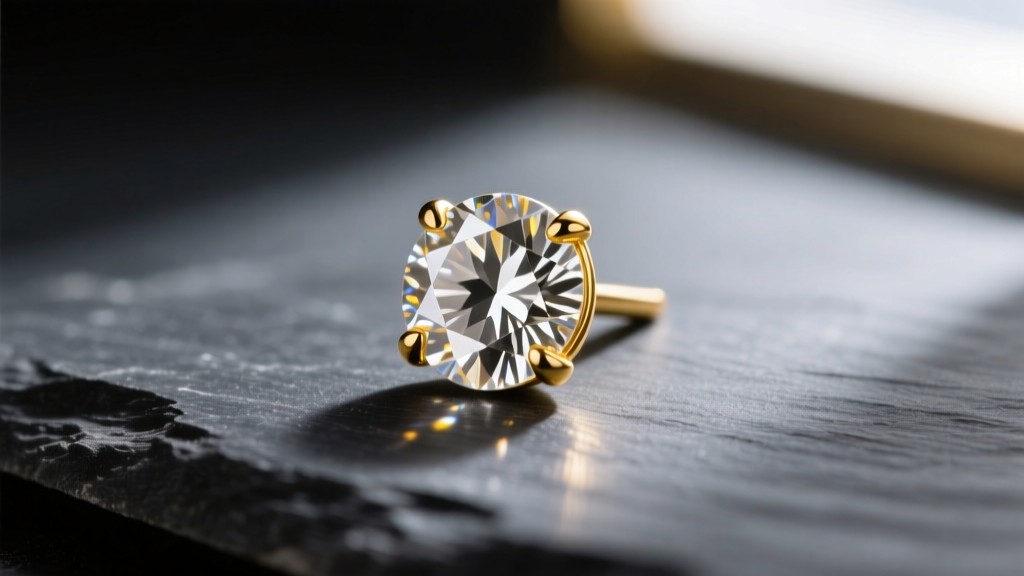
To accurately capture the essence of the Harrison Ford earring style, we need to break down the exact specifications of the jewelry. Ford's signature piece was a round brilliant-cut diamond, likely weighing between 0.25 and 0.50 carats. In millimeter terms, this translates to a diameter of roughly 4.0mm to 5.0mm. This specific size is the "sweet spot" for men's studs; it catches the light beautifully in photographs and on camera, but remains discreet enough for everyday wear, boardroom meetings, and casual weekend errands.
The setting was almost certainly a low-profile basket or a classic three-prong martini setting in yellow gold. Yellow gold was the predominant metal for men's jewelry in that era, offering a warm contrast against the skin. The low profile is crucial for men, as high-set stones can easily catch on shirt collars, headphones, or towels, leading to discomfort or even tearing of the earlobe.
Diamond Quality: Where to Save and Where to Spend
Beginners often make the mistake of overpaying for diamond grades that are imperceptible in a 4mm men's stud. According to the Gemological Institute of America (GIA), the visual impact of a diamond relies heavily on its cut. For a men's stud, prioritize an "Excellent" or "Very Good" cut grade to maximize sparkle.
- Clarity: Skip the flawless (FL) or internally flawless (IF) grades. A VS1 or VS2 clarity is entirely "eye-clean," meaning inclusions are invisible without 10x magnification. This alone can save you 30% to 40% on the stone.
- Color: A near-colorless grade of G or H is perfect. Once set in yellow gold, the faint warmth of the metal masks any slight yellow tint in the diamond, making D-F color grades an unnecessary expense.
Beginner's Buying Guide: Size and Pricing Breakdown
Understanding the relationship between carat weight, millimeter size, and pricing is essential before you make a purchase. Below is a structured comparison to help you choose the right stone for your budget and style preferences. Note that lab-grown diamonds offer identical physical and optical properties to mined diamonds but at a fraction of the cost, making them highly recommended for men entering the jewelry space.
| Carat Weight | Diameter (mm) | Visual Impact | Est. Natural Price | Est. Lab-Grown Price |
|---|---|---|---|---|
| 0.25 ct | 4.0 mm | Subtle, minimalist | $600 - $900 | $150 - $250 |
| 0.33 ct | 4.4 mm | Classic Ford sweet-spot | $800 - $1,200 | $200 - $350 |
| 0.50 ct | 5.0 mm | Noticeable, confident | $1,500 - $2,500 | $400 - $600 |
| 1.00 ct | 6.5 mm | Flashy, red-carpet | $4,000+ | $800 - $1,200 |
For the authentic Harrison Ford earring vibe, target the 0.33 ct to 0.50 ct range. Anything approaching 1.00 ct crosses the line from ruggedly sophisticated into overtly flashy territory.
Placement and Piercing Essentials for Men
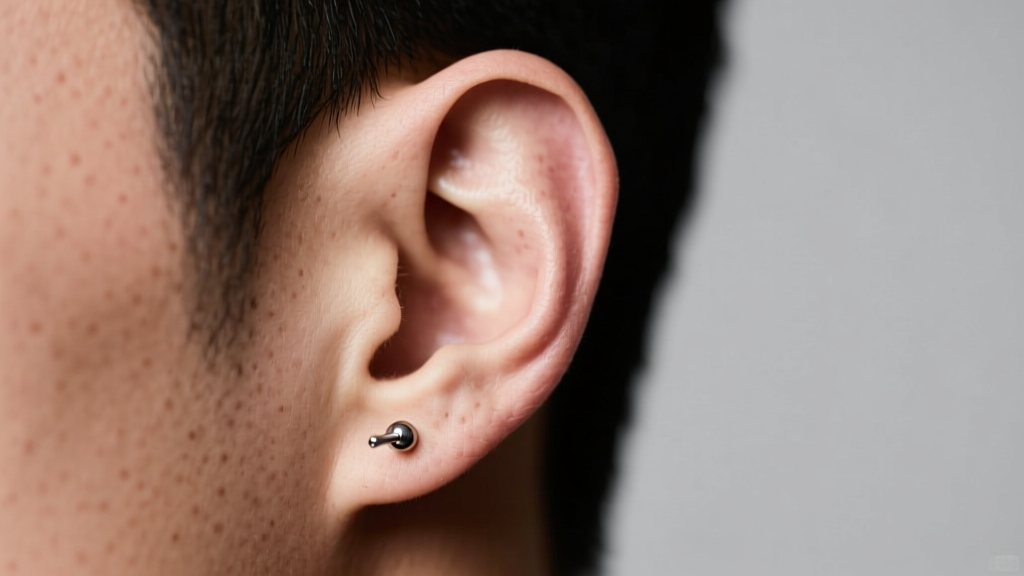
The placement of the piercing dictates how the earring sits and moves. The classic Ford placement is dead-center on the lower earlobe. If you are getting pierced specifically for this look, do not use a mall kiosk or a piercing gun. Piercing guns cause blunt-force trauma to the tissue and cannot be properly sterilized.
Instead, visit a professional piercer who uses a single-use, hollow bevel needle. The Association of Professional Piercers (APP) strongly advocates for needle piercing, which creates a clean incision that heals faster and with less scar tissue. For men's lobe piercings, the standard gauge is usually 18G (1.0mm) or 16G (1.2mm). An 18G needle is perfectly suited for standard diamond stud posts, providing enough structural integrity for the metal post without stretching the lobe unnecessarily.
Metal Grades and Hypoallergenic Choices
If you are getting a fresh piercing to achieve this look, the metal you choose is a matter of medical necessity, not just aesthetics. Fresh piercings are open wounds and will react poorly to alloys containing nickel or copper.
For Healing Piercings (Months 1-4)
Your only options should be Implant-Grade Titanium (ASTM F136) or Niobium. Titanium is highly biocompatible, lightweight, and completely nickel-free. Many high-end jewelers now offer diamond studs set directly into titanium posts, allowing you to wear your desired stone from day one of the healing process.
For Fully Healed Piercings (Month 4+)
Once the fistula (the piercing channel) is fully mature, you can transition to precious metals. 14k or 18k solid gold (yellow, white, or rose) is the traditional choice. Avoid gold-plated or gold-vermeil earrings for everyday wear; the friction of putting on shirts and washing your face will eventually wear away the thin gold layer, exposing the base metal underneath and causing contact dermatitis. Platinum is another exceptional, albeit more expensive, option that offers a naturally white, hypoallergenic, and incredibly durable setting.
Maintenance and Cleaning Routines
Men's earrings often endure more environmental stress than other jewelry due to shorter haircuts, frequent hat-wearing, and active lifestyles. To keep a diamond stud looking brilliant, it requires a simple but consistent maintenance routine.
- Daily Rinsing: Shower water and shampoo residue create a cloudy film on the back of the diamond (the pavilion). Rinse the earlobe with warm water daily.
- Weekly Deep Clean: Use a few drops of mild, unscented dish soap and a soft-bristled baby toothbrush to gently scrub the prongs and the underside of the stone. This removes sebum and dead skin cells that trap light.
- Prong Checks: Every six months, take the earring to a local jeweler to have the prongs checked under a loupe. Men are more likely to snag their studs on hoodies or towel-dry their hair vigorously, which can slowly bend a prong and lead to a lost diamond.
Final Thoughts on Men's Ear Styling
The enduring appeal of the Harrison Ford earring lies in its restraint. It is a testament to the idea that men's jewelry does not need to be loud to be impactful. By focusing on precise sizing (4mm to 5mm), prioritizing cut over clarity, and ensuring professional needle piercing, any beginner can successfully pull off this timeless, ruggedly sophisticated look. Whether you opt for a lab-grown diamond in yellow gold or a natural stone in platinum, the key is to let the subtle flash of the gem complement your personal style, rather than dominate it.


