What Are Post Earrings? The Ultimate Budget & Value Guide
Discover what post earrings are, compare material costs, and learn how to assess true value versus budget pricing for safe, lasting everyday wear.

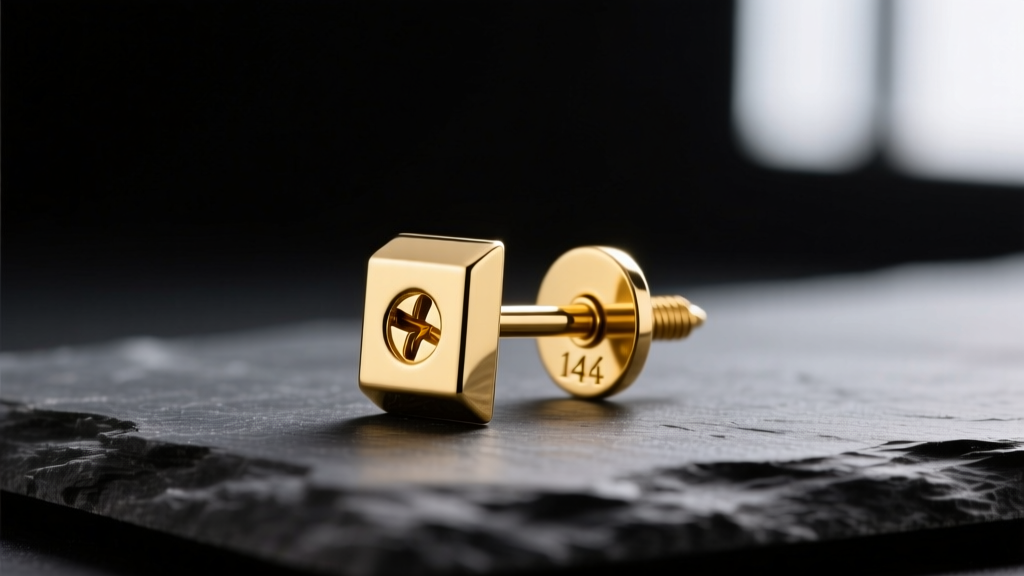
When building a versatile, everyday jewelry collection, understanding the foundational building blocks of ear styling is essential. For beginners and seasoned collectors alike, a common question arises: what are post earrings? At their core, post earrings consist of a straight metal wire (the post) that passes through the ear piercing, secured at the back by a clutch, screw, or locking mechanism. While they seem simple, the market is flooded with options ranging from $5 fast-fashion pairs to $5,000 diamond solitaires. Assessing the true value of a post earring requires looking past the initial price tag and evaluating metallurgical integrity, backing security, and long-term wearability.
In this budget and value assessment, we will dissect the anatomy of post earrings, compare material costs, and provide a practical framework to help you determine where to save and where to invest your hard-earned money.
Defining the Basics: What Are Post Earrings Exactly?
To assess value, you must first understand the anatomy of the earring. A standard post earring comprises three distinct components:
- The Head: The decorative front (e.g., a gemstone, pearl, or metal shape).
- The Post: The straight wire that traverses the fistula (the piercing hole). Its thickness is measured in gauges, and its length must accommodate the thickness of the earlobe or cartilage.
- The Backing (Clutch): The mechanism that secures the post behind the ear, preventing loss and providing structural support.
When evaluating what are post earrings from a financial perspective, you are essentially paying for the metallurgical purity of the post, the precision machining of the backing, and the quality of the head. Budget manufacturers often cut costs on the post and backing, using cheap alloys while focusing the visual appeal entirely on the head. This creates a 'value trap'—an earring that looks expensive but causes skin irritation or breaks within months.
The Material Matrix: Budget vs. True Value
The most critical factor in post earring valuation is the metal. Your skin's bio-compatibility with the post dictates whether an earring is a worthwhile investment or a medical liability. According to the American Academy of Dermatology, nickel allergy is the most common cause of allergic contact dermatitis, affecting millions and making cheap alloy posts a poor long-term value.
| Material Grade | Avg. Price Range | Nickel Risk | Value Verdict |
|---|---|---|---|
| 316L Surgical Steel | $5 - $25 | Moderate/High | Poor for sensitive skin; acceptable for healed, non-reactive lobes. |
| 925 Sterling Silver | $15 - $40 | Low (if pure) | Prone to bending and tarnishing; often plated with rhodium to mask oxidation. |
| Implant-Grade Titanium (ASTM F136) | $20 - $60 | Zero | Exceptional value; the gold standard for sensitive ears and fresh piercings. |
| 14k Solid Gold | $80 - $250 | Low | High value; durable enough for daily wear while retaining intrinsic metal value. |
| 18k Solid Gold | $150 - $500+ | Very Low | Premium luxury; softer than 14k, making the post more prone to bending. |
As highlighted by the Association of Professional Piercers, implant-grade titanium (specifically ASTM F136) is the benchmark for body-safe jewelry. A $30 pair of titanium post earrings offers vastly superior long-term value compared to a $15 pair of surgical steel, as the titanium pair will never corrode, trigger allergic reactions, or require medical intervention.
Backing Mechanisms and Their Hidden Costs
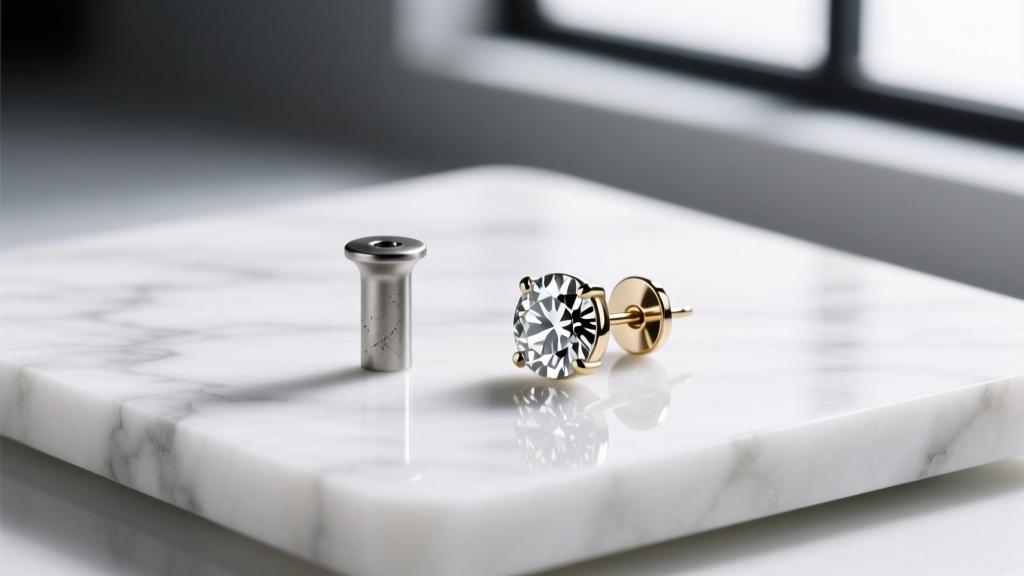
When asking what are post earrings, you must also ask: how do they stay in your ear? The backing mechanism heavily influences the manufacturing cost and the security of your investment. Losing a $500 diamond stud because of a $0.05 faulty backing is the ultimate failure of value assessment.
1. Friction Backs (Butterfly Clutches)
Cost Impact: Lowest.
The Reality: These rely on metal tension and a small notch on the post. They are cheap to mass-produce but collect sebum, dead skin, and hair. Over time, the tension weakens, leading to lost earrings. Value Tip: Only accept friction backs on budget jewelry or secondary, low-value studs.
2. Screw Backs
Cost Impact: Moderate (+$20 to $50 per pair).
The Reality: The post is threaded, and the backing screws onto it. This requires precision CNC machining, which increases the price. However, the security is vastly superior, making it a mandatory feature for fine jewelry and high-value gemstones.
3. La Pousette (Locking Backs)
Cost Impact: High (+$100 to $200 per pair).
The Reality: These feature a spring-loaded internal mechanism that clicks securely into a grooved post. Originally patented in the 1960s, they offer unparalleled security and comfort. If you are investing in heirloom-quality post earrings, the premium for La Pousette backs is a non-negotiable insurance policy.
Gauge Sizes: Why Thickness Matters for Your Wallet and Lobes
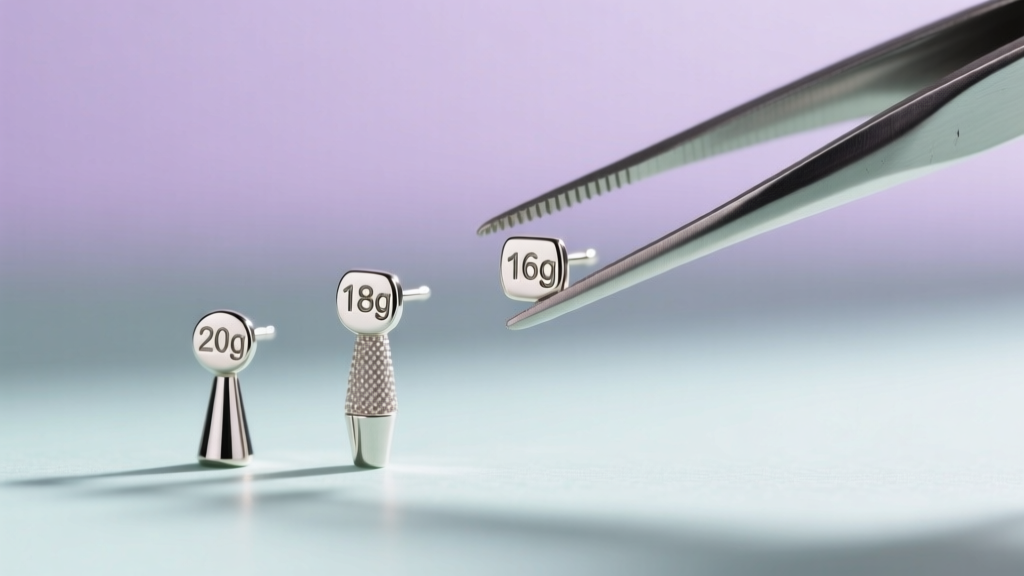
The 'gauge' refers to the thickness of the post. Misunderstanding gauge sizes can lead to discomfort, tearing, or wasted money on ill-fitting jewelry.
- 20 Gauge (0.81mm): The standard for budget and fine jewelry. Thin and lightweight, but highly susceptible to bending if you sleep in them.
- 18 Gauge (1.02mm): The ideal middle ground. Offers structural integrity without feeling heavy. Most high-end jewelers default to 18g for premium post earrings.
- 16 Gauge (1.20mm): Typically reserved for cartilage piercings or heavy-gauge body jewelry. Standard lobe piercings may need to be gently stretched to accommodate 16g posts.
Budget Tiers: Where to Spend and Where to Save
To maximize your jewelry budget, categorize your post earring purchases based on their intended use and material longevity.
Tier 1: The Experimental Budget (Under $30)
Best For: Trendy shapes, colored enamel, or seasonal styles you will only wear for a few months.
Value Strategy: Stick to implant-grade titanium or niobium posts with brass or silver-plated heads. Avoid 'mystery metals' or anything labeled simply as 'hypoallergenic' without a material breakdown. Brands like Studex (for piercing studs) or specialized titanium vendors on Etsy offer excellent entry-level value.
Tier 2: The Everyday Workhorse ($50 - $150)
Best For: Daily wear studs, small pearls, and minimalist geometric shapes.
Value Strategy: This is the sweet spot for 14k solid gold (recycled or fair-mined) and high-quality synthetic gemstones (like lab-grown diamonds or moissanite). At this price point, demand screw-backs or secure silicone clutches. You are paying for permanence; these earrings should last a decade without tarnishing or causing irritation.
Tier 3: The Heirloom Investment ($300 - $1,000+)
Best For: Natural diamonds, rare gemstones (sapphires, emeralds), and luxury designer pieces.
Value Strategy: Here, you are paying for the 4 Cs of gemology and brand prestige. Ensure the post is 18k gold or platinum, and the backing is a proprietary locking mechanism. The value here is tied to asset retention and generational hand-me-down potential. Always request a GIA or AGS certificate for the center stones to verify you are paying fair market value.
The Verdict: Maximizing Your Post Earring Investment
So, what are post earrings in the context of a smart jewelry budget? They are the most frequently worn, highly visible, and biologically interactive pieces in your collection. True value is not found in the lowest price tag, but in the intersection of bio-compatibility, mechanical security, and material permanence.
By prioritizing ASTM F136 titanium or solid 14k gold, insisting on secure backing mechanisms, and understanding the structural implications of gauge sizing, you can build a post earring collection that is safe, secure, and financially sound. Stop paying the 'allergy tax' on cheap surgical steel and invest in metals that respect both your body and your wallet.


