What Are Stud Earrings? A Troubleshooting Guide for Sensitive Lobes
Learn what are stud earrings, why they cause irritation, and how to troubleshoot fit, gauge, and metal allergies for sensitive earlobes.

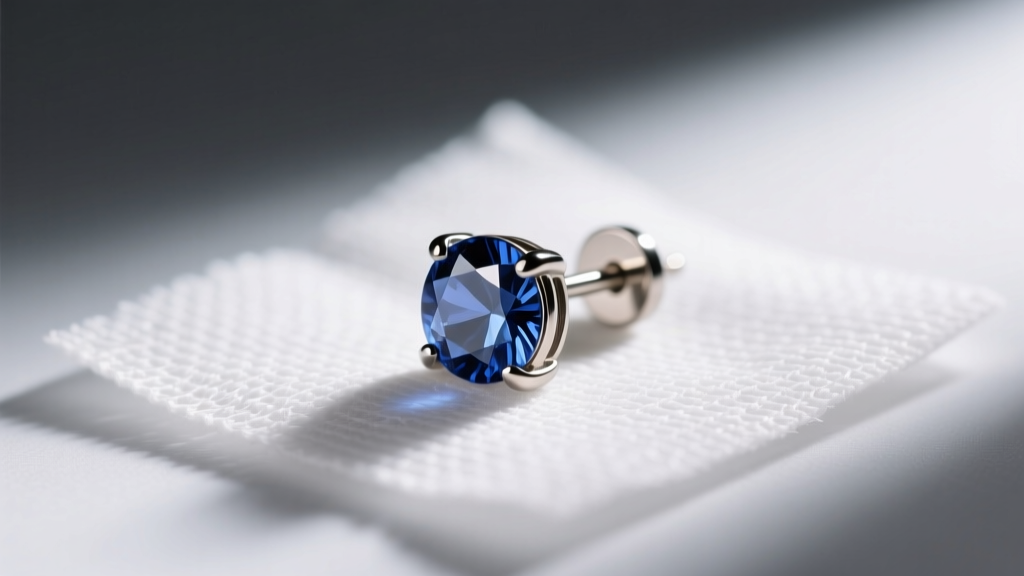
When people type what are stud earrings into a search engine, they are usually looking for a basic definition. But as a jewelry troubleshooting expert, I know that query often masks a deeper, more frustrating issue: your current studs are causing pain, persistent redness, allergic reactions, or mechanical failure. A stud earring is fundamentally a three-part mechanical system designed to secure a decorative element flush against the skin. However, when the anatomy of the jewelry clashes with the biology of your ear, problems arise.
In 2026, the market is flooded with fast-fashion studs that ignore basic anatomical tolerances. This guide bypasses the generic style advice and dives straight into the metallurgy, gauge physics, and structural troubleshooting required to solve your most persistent earring problems.
The Core Anatomy: Deconstructing the Stud
To troubleshoot a stud earring, you must understand its three load-bearing components. Failure in any single part will result in discomfort or loss of the jewelry.
- The Head (Decorative Front): The visible element. In high-quality studs, the gemstone or metal motif is secured via a bezel or prong setting directly soldered to the post. Cheap studs often use glue, which degrades when exposed to sebum and shower steam, leading to lost stones.
- The Post (Wire Shaft): The structural pillar that passes through the fistula (piercing channel). Its thickness (gauge) and length dictate how the earlobe heals and rests.
- The Backing (Clutch): The friction or threaded mechanism that secures the post. The backing must distribute pressure evenly; otherwise, it creates localized necrosis or pressure sores on the back of the earlobe.
Troubleshooting Pain: The Gauge Mismatch Crisis
If your earlobes throb after wearing studs for more than four hours, you are likely experiencing a gauge mismatch combined with the "cheese-cutter effect."
Understanding Wire Thickness
Earring thickness is measured in gauges (G). The higher the number, the thinner the wire. Most commercial mall-kiosk studs use ultra-thin 22-gauge (0.64mm) or 20-gauge (0.81mm) wire to save on precious metal costs. However, standard professional piercings are performed at 18-gauge (1.02mm) or 16-gauge (1.29mm).
When you force a thin 20G post into an 18G fistula, the wire does not fill the channel. This creates a microscopic void where bacteria and dead skin cells accumulate. Furthermore, the thin wire acts like a cheese-cutter, applying disproportionate downward pressure on the bottom of the piercing channel, leading to migration and tissue tearing.
"Jewelry for standard lobe piercings should ideally match the gauge of the initial piercing needle to maintain fistula stability and prevent the cheese-cutter effect." — Association of Professional Piercers (APP)
The Fix: Discard 22G and 20G fashion studs. Upgrade to 18G (1.02mm) or 16G (1.29mm) solid posts. If your piercing has stretched, a 14G (1.63mm) post will provide the necessary surface area to distribute the weight of heavier gemstone heads.
Material Reactions: Solving the Itch and the "Green Ear"
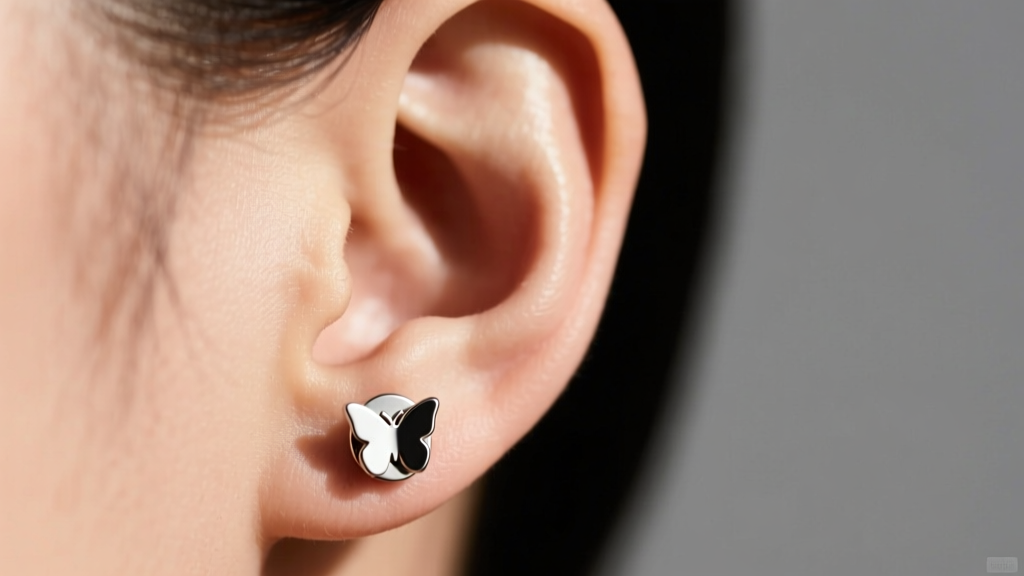
Contact dermatitis from earring posts is one of the most common issues dermatologists treat. If your lobes are itchy, weeping, or turning green, the metallurgy of your stud is failing. According to the American Academy of Dermatology (AAD), nickel allergy is the leading cause of allergic contact dermatitis, and it is rampant in commercial jewelry.
The Metal Grade Troubleshooting Matrix
| Metal Grade | Nickel Content | Best Use Case | Troubleshooting Note |
|---|---|---|---|
| Implant Grade Titanium (ASTM F136) | 0% | Fresh piercings, hyper-sensitive lobes | The gold standard. Will not react with bodily fluids. |
| Niobium | 0% | Color-anodized everyday studs | Highly biocompatible, but softer than titanium; posts can bend if slept on. |
| 14k / 18k Solid Gold | Varies (0-5%) | Healed, mature piercings | Ensure it is alloyed with palladium or silver, NOT nickel. Avoid white gold unless certified nickel-free. |
| Surgical Steel (316L) | 8% - 12% | Display only / Non-pierced clips | Contains bound nickel. The polishing layer wears off, exposing the allergen to the fistula. |
| Sterling Silver (925) | 0% | Occasional wear in fully healed lobes | Contains copper. Tarnishes rapidly in the piercing channel, causing permanent gray skin staining (argyria). |
The Fix: Audit your jewelry box. If a stud is labeled "hypoallergenic" but does not specify ASTM F136 Titanium, Niobium, or 14k+ Palladium-White Gold, it is a biological time bomb. The National Center for Biotechnology Information (NCBI) notes that even "gold-plated" brass or steel will eventually wear through, exposing the base metal to your tissue. Always buy solid, internally threaded, or threadless jewelry.
The Embedding Crisis: Adjusting Post Length
Another frequent complaint is the sensation of the earring back "swallowing" into the earlobe, or the front head pressing painfully into the skin. This is a post-length failure.
Standard commercial studs use a universal 6mm post length. But human anatomy is not universal. Earlobe thickness varies wildly, and cartilage piercings (like the tragus or flat) require entirely different measurements.
- 4mm - 5mm: Required for most cartilage piercings (helix, tragus, conch) once fully healed. Using a 6mm+ post here will cause the jewelry to snag on hair and masks, leading to trauma bumps.
- 6mm - 7mm: The standard for average, healed earlobes. Provides enough clearance for the backing without excessive wiggle.
- 8mm - 10mm: Mandatory for thick earlobes, gauged/stretched lobes, or fresh piercings experiencing acute swelling.
The Fix: If your lobe feels compressed, switch to an 8mm post and use a flat-back labret stud instead of a traditional butterfly clutch. Flat-backs distribute pressure across a wider surface area, eliminating the localized pressure point that causes tissue necrosis.
Mechanical Failure: How to Remove Stuck Butterfly Backs
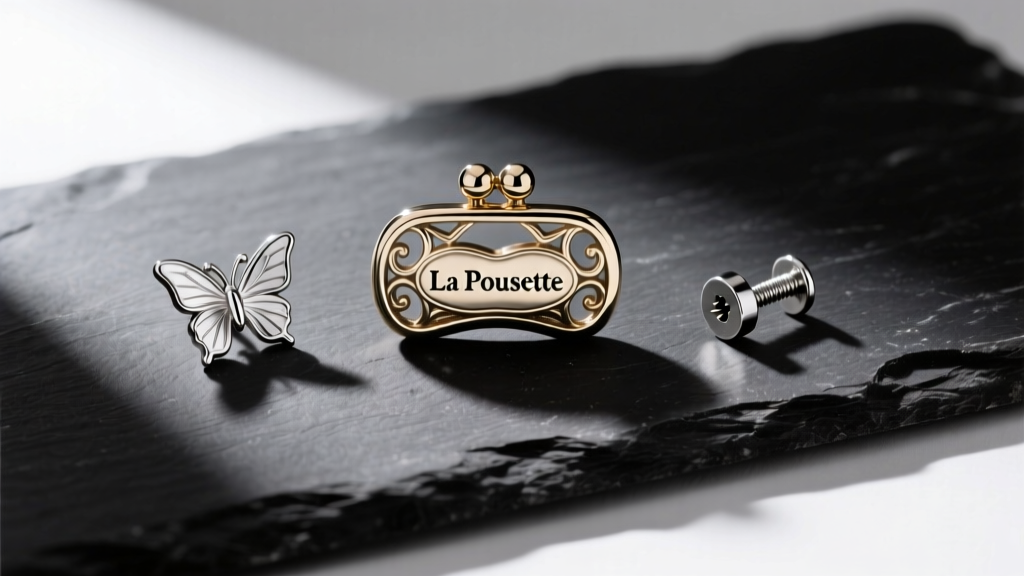
The traditional "butterfly" friction back relies on a small metal tab catching on a carved notch in the earring post. Over time, sebum, dead skin, and soap scum calcify inside this notch. When you try to remove the earring, the clutch seizes, leading to panic and potential tissue tearing.
Step-by-Step Extraction Protocol
- Do Not Pull Blindly: Yanking a seized butterfly back will tear the fistula. Stop immediately if you feel sharp resistance.
- Dissolve the Bond: Soak a cotton swab in warm saline or pure jojoba oil. Hold it against the back of the earring clutch for 3 to 5 minutes to soften the calcified sebum.
- The Floss Trick: Take a piece of unwaxed dental floss and slide it between the earlobe and the butterfly clutch. Gently saw back and forth to break the debris seal inside the notch.
- Apply Leverage: Grip the front head firmly with one hand to stabilize the post. With your other hand, use a clean pair of hemostats or rubber-gripped tweezers to twist and pull the clutch straight back. Never pull at an angle.
Expert Verdict: Upgrading Your Everyday System
Understanding what are stud earrings from a mechanical and biological perspective changes how you shop. The era of accepting itchy, painful, or easily lost jewelry is over. By demanding ASTM F136 titanium, matching your post gauge to your fistula (18G or 16G), and switching from friction butterfly backs to threadless push-pin or screw-back systems, you eliminate 99% of common earring complaints. Treat your piercings as permanent anatomical modifications, and invest in jewelry engineered to respect your biology.


