What Earrings Can You Sleep In? Safety & Care Guide
Discover what earrings are safe to sleep in. Learn expert cleaning tips, material grades, and backing styles to prevent infection and embedding.


The Biomechanics of Overnight Ear Wear
When building a sustainable jewelry routine, one of the most common questions we receive at Jewel Style Radar is: what earrings can you safely leave in overnight? Sleeping in the wrong jewelry is not merely a comfort issue; it is a biomechanical hazard. The earlobe and cartilage contain delicate vascular networks and thin epidermal layers. When you sleep on traditional earring backs, the sustained pressure can cause localized ischemia (restricted blood flow), leading to tissue necrosis, chronic inflammation, or the dreaded 'cheese-cutter' effect where thin wires slowly migrate through the fistula (the piercing channel).
Furthermore, the microclimate of your pillowcase traps heat, sweat, and sebum. If your jewelry has crevices, this environment becomes a breeding ground for Staphylococcus aureus and Pseudomonas, leading to perichondritis in cartilage piercings or contact dermatitis in lobes. Understanding the intersection of material science, mechanical design, and dermatological care is essential for anyone who prefers to keep their jewelry in 24/7.
Material Grades: What Earrings Won't Cause Reactions?
The foundation of safe overnight wear lies in metallurgy. Many commercial brands use ambiguous terms like 'hypoallergenic' or 'surgical steel,' which are largely unregulated marketing terms. According to the Association of Professional Piercers (APP), true biocompatibility requires specific material grades that resist corrosion from the body's slightly acidic pH and overnight sweat.
The Safe List for 24/7 Wear
- ASTM F-136 Implant-Grade Titanium: The gold standard for continuous wear. It contains zero nickel and is highly resistant to corrosion. Its mirror-polished surface prevents bacterial adhesion and sebum buildup.
- Niobium: A highly reactive elemental metal that forms a protective oxide layer. It is completely nickel-free and exceptionally safe for sensitive, healing, or easily irritated fistulas.
- Solid 14k or 18k Gold (Nickel-Free): Gold must be alloyed for hardness, but the alloy mixture matters. Ensure your gold is alloyed with silver, copper, or palladium—never nickel. Avoid anything below 14k, as higher copper/zinc content can oxidize against the skin overnight, causing green discoloration and irritation.
- Borosilicate Glass: Ideal for retainers or sleepers. Glass is entirely non-porous, inert, and can be sterilized easily.
Materials to Remove Before Bed
Sterling silver (925) contains 7.5% copper, which tarnishes rapidly when exposed to the sulfur compounds in your sweat and nighttime skincare products. This tarnish can cause localized argyria (a permanent bluish-gray staining of the skin inside the piercing channel). Additionally, gold-plated or vermeil jewelry will inevitably wear down from the friction of cotton pillowcases, exposing the reactive brass or copper base metals underneath to your skin.
The Mechanics: Threading and Backing Styles
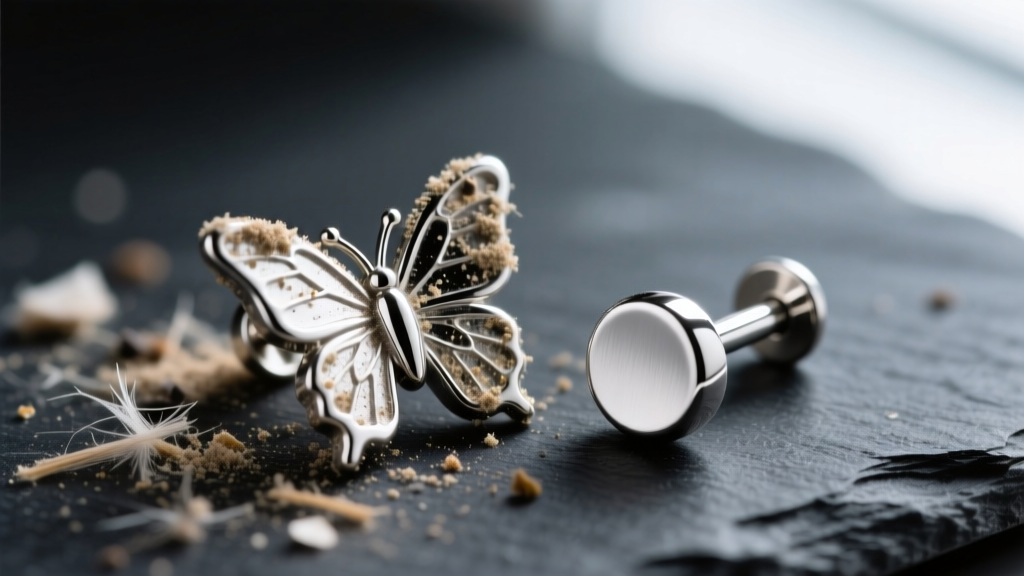
Once you have selected a biocompatible metal, the mechanical structure of the earring dictates its safety profile. The traditional 'butterfly' or 'friction' back is a catastrophic failure point for overnight wear. The tiny scrolls trap dead skin cells, hair products, and sebum (commonly referred to as 'ear cheese'). Worse, the sharp post ends can puncture the skin behind the earlobe when compressed against a pillow.
The Superiority of Flat-Back Labrets
When evaluating what earrings are best for sleeping, the flat-back labret is the undisputed champion. Featuring a flat disc that sits flush against the back of the ear, it distributes pressure evenly across a wider surface area, eliminating pressure points. For optimal safety, choose threadless (press-fit) or internally threaded options. Externally threaded jewelry has microscopic ridges on the post that scrape and harbor bacteria inside the fistula every time they are inserted or shifted during sleep.
Continuous Hoops vs. Huggies
If you prefer hoops, avoid thin, continuous wire hoops. The thin gauge (often 20g or 22g) acts like a blade against the pillow, creating high shear stress on the piercing channel. Instead, opt for 16g or 14g huggies with a secure, recessed clicker hinge that will not snag on bedding or hair.
Overnight Earring Safety & Care Matrix
Use this structured guide to evaluate your current jewelry box and determine what earrings are safe for your nighttime routine.
| Earring Style / Material | Overnight Safety | Cleaning Frequency | Primary Risk Factor |
|---|---|---|---|
| Titanium Flat-Back Labret | Excellent | Weekly deep clean | None (if correctly sized) |
| Solid 14k/18k Gold Huggie | Very Good | Bi-weekly polish | Snagging on heavy bedding |
| Sterling Silver Studs | Poor | Daily (if worn) | Tarnish, copper irritation |
| Friction/Butterfly Backs | Hazardous | Daily required | Sebum trapping, post puncture |
| Acrylic/Resin Tapers | Hazardous | N/A (Do not sleep in) | Micro-cracks, bacterial harboring |
The 2026 Standard for Cleaning Sleeper Earrings
Proper maintenance of sleeper earrings requires a departure from outdated, harsh home remedies. The American Academy of Dermatology (AAD) consistently warns against using rubbing alcohol, hydrogen peroxide, or tea tree oil on piercing sites or the jewelry worn within them. These agents destroy the delicate lipid barrier of the healing or settled fistula and can cause micro-fissures in porous gemstones or degrade acrylic components.
Step-by-Step Nightly and Weekly Protocol
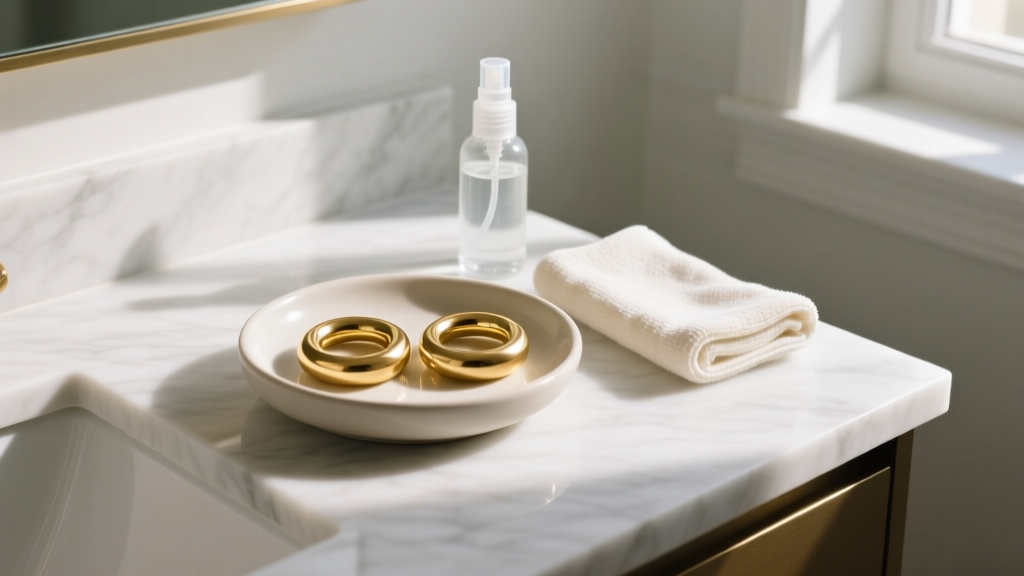
- Daily Rinse: While in the shower, allow warm water and a mild, fragrance-free glycerin soap to gently wash over the earlobes. Do not aggressively twist or rotate the earrings, as this introduces surface bacteria into the channel.
- Saline Application: If you experience minor irritation or swelling from sleeping pressure, spray a sterile 0.9% sodium chloride wound wash (with no additives or preservatives) directly onto the site. Pat dry with a non-woven gauze; avoid cotton balls or swabs, which leave microscopic fibers wrapped around the post.
- Weekly Ultrasonic Bath (Metal Only): For solid gold or titanium sleepers without gemstones, a 3-minute cycle in an ultrasonic jewelry cleaner with a few drops of mild dish detergent will vibrate sebum out of the internal threading or hinge mechanisms. Warning: Never use ultrasonic cleaners on opals, emeralds, or pearls, as the high-frequency vibrations will shatter their crystalline structures.
Troubleshooting Common Sleeper Issues
Even with perfect material choices, mechanical issues can arise. If a flat-back labret becomes embedded due to sudden overnight swelling, do not attempt to dig it out with tweezers, which will only cause further tissue trauma. Apply a sterile, warm saline compress for five minutes to encourage lymphatic drainage, then gently attempt to unscrew or pop the threadless pin. If the tissue has grown over the jewelry, seek immediate assistance from a professional piercer or dermatologist for a safe, sterile removal.
Ultimately, knowing what earrings to trust overnight comes down to prioritizing implant-grade metals, flush-fitting mechanics, and a gentle, consistent cleaning regimen. By upgrading your sleepers to high-quality flat-backs and huggies, you protect your piercings from unnecessary trauma and ensure your jewelry remains pristine for years to come.


