What Does It Mean When Earrings Turn Green, Smell, or Get Stuck?
Discover what it means when earrings turn your skin green, smell bad, or get stuck. Learn the science of ear jewelry materials and expert fixes.

The Beginner’s Guide to Earring Anomalies
If you have ever taken off your favorite studs only to find a crusty green ring around your piercing, caught a whiff of something unpleasant near your earlobes, or panicked because an earring back simply will not budge, you are not alone. For beginners navigating the world of ear jewelry, these three common anomalies—oxidation, odor, and embedding—are frequent sources of frustration and concern. Understanding the underlying biology and metallurgy behind these issues is the first step toward building a healthy, comfortable, and long-lasting jewelry collection.
Rather than guessing or relying on unregulated marketing terms like 'hypoallergenic,' it is crucial to understand how different metals interact with human tissue, sebum, and environmental moisture. In this comprehensive guide, we will break down exactly what these warning signs mean, the specific material grades you should be wearing, and actionable troubleshooting steps to save your piercings.
What Does It Mean When Earrings Turn Your Skin Green?
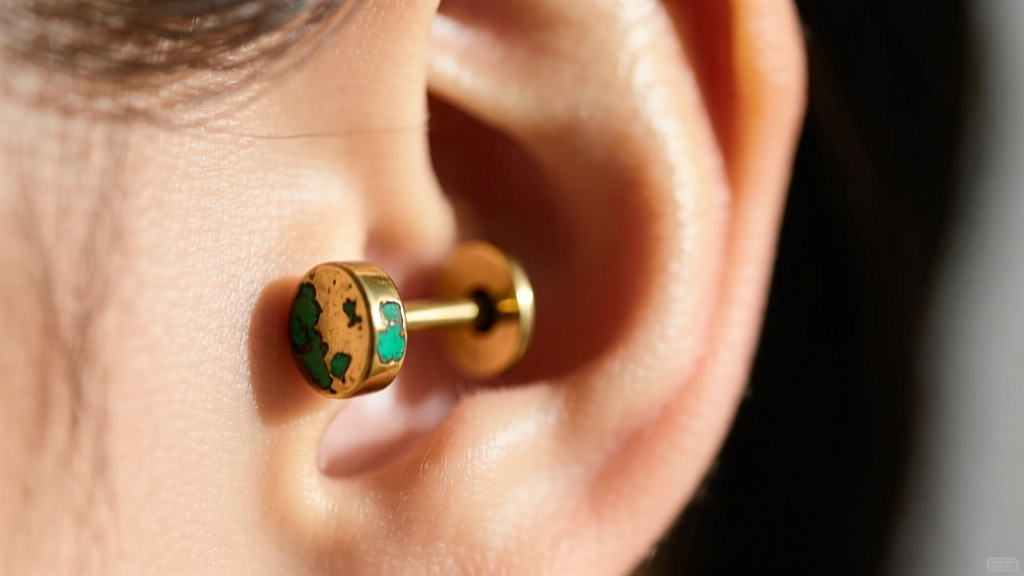
When you remove an earring and discover a bright green or blackish smudge on your earlobe, you are witnessing a basic chemical reaction. This discoloration is not an infection, nor is it a sign that your skin is 'rejecting' the metal. Instead, it is the result of copper oxidation.
Many affordable or fashion earrings are made from brass, nickel-silver, or low-karat gold (such as 10k or 14k gold alloys that contain high percentages of copper). When the copper in these alloys comes into contact with the fatty acids, salts, and natural moisture in your sweat, it undergoes a chemical reaction to form copper chloride or copper chelates. These compounds are naturally green and easily transfer onto the porous surface of your skin.
The Myth of 'Hypoallergenic' Jewelry
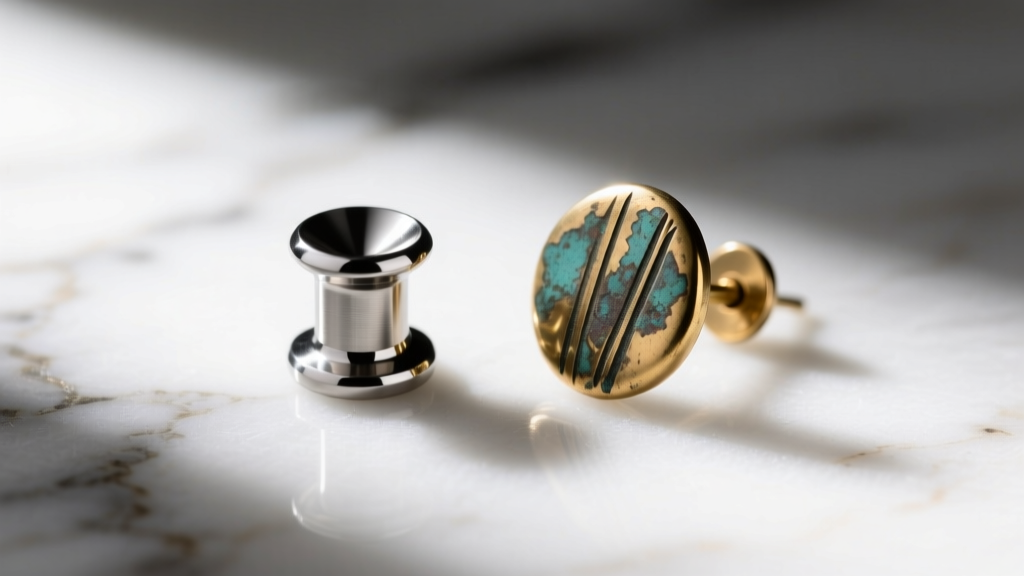
The term 'hypoallergenic' is largely a marketing buzzword with no strict legal or medical definition in the jewelry industry. An earring labeled as hypoallergenic might still contain copper or nickel beneath a thin plating layer. Once that plating wears away from friction, the reactive base metals are exposed to your skin.
To completely eliminate the green smudge, you must upgrade to inert, non-reactive metals. According to the Association of Professional Piercers (APP), the safest materials for long-term wear include:
- Implant-Grade Titanium (ASTM F136): Completely nickel-free, highly biocompatible, and will never turn your skin green.
- Niobium: A highly reactive metal that forms a safe, inert oxide layer, making it an excellent alternative for those with severe metal sensitivities.
- Solid 14k or 18k Gold (Nickel-Free): Ensure the gold is alloyed with silver or palladium rather than nickel or copper to prevent both oxidation and contact dermatitis.
What Does It Mean When Earrings Smell Like Cheese?
The colloquially termed 'ear cheese' is a very real biological phenomenon. If your earrings or the piercing hole itself emits a sour, cheesy odor, it means that dead skin cells, sebum (natural skin oils), soap residue, and bacteria have accumulated inside the piercing fistula (the tube of healed skin) and on the jewelry hardware.
Why Butterfly Backs Are the Primary Culprit
Standard push-back or 'butterfly' earring backs are notorious for trapping moisture and debris. The small metal loops and friction grooves create a dark, damp microenvironment against the back of the earlobe. This environment is ideal for the proliferation of Staphylococcus and Corynebacterium bacteria, which break down sebum and keratin, releasing volatile sulfur compounds that cause the distinct odor.
| Back Type | Odor Risk | Pros & Cons |
|---|---|---|
| Butterfly / Push Back | High | Traps moisture and dead skin; difficult to clean thoroughly. |
| Flat Back (Labret) | Low | Sits flush against the skin; allows the fistula to breathe and drain naturally. |
| Screw Back | Medium | More secure than push backs, but threading can harbor bacteria if not soaked. |
| Hinged Segment Ring | Medium | Great for cartilage, but the hinge mechanism requires regular saline flushing. |
How to Eliminate Piercing Odor
Stop using rubbing alcohol or hydrogen peroxide to clean your earrings. These harsh chemicals strip the skin of its natural moisture barrier, causing the body to overproduce sebum to compensate, which worsens the problem. Instead, remove your jewelry and wash it with mild, fragrance-free liquid soap and warm water. For the piercing itself, spray the front and back with a sterile 0.9% sodium chloride wound wash (saline) twice a day to gently flush out debris without disrupting the skin's microbiome.
What Does It Mean When Earrings Get Stuck or Embedded?
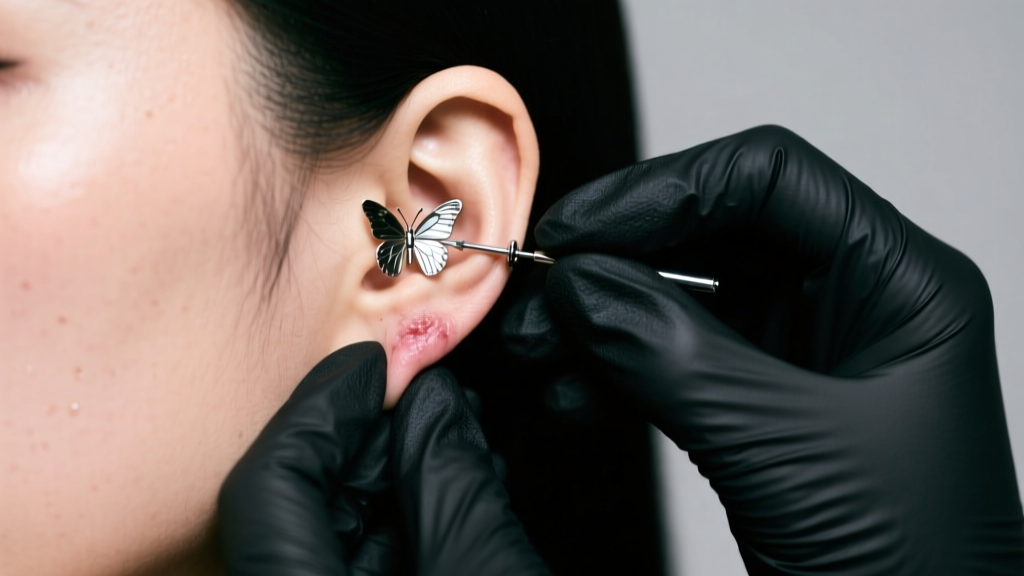
If an earring back will not slide off, or if the decorative front appears to be sinking into your earlobe, you are dealing with tissue swelling and mechanical compression. This is a time-sensitive issue that requires careful handling to avoid tearing the fistula.
The 'Cheese Wire' Effect and Gauge Mismatches
Many commercial fashion earrings are manufactured with extremely thin posts, typically 22-gauge (0.64mm) or even 24-gauge (0.51mm). The standard for a healthy, healed earlobe piercing is 20-gauge (0.81mm) or 18-gauge (1.02mm). When a heavy earring dangles from a 22-gauge post, or when the earlobe swells due to an allergic reaction (such as a nickel allergy), the thin metal acts like a cheese wire, slowly slicing through the tissue. This causes the earring back to become trapped inside the swelling, leading to embedding.
Safe Removal Protocol for Stuck Earrings
Never use brute force, pliers, or sharp tools to remove a stuck earring at home. Follow this professional troubleshooting matrix:
- Apply Cold: Hold a clean ice pack wrapped in a paper towel against the earlobe for 5 minutes to reduce vascular swelling.
- Lubricate: Apply a drop of sterile saline or a water-based lubricant to the post to reduce friction.
- Rotate Gently: While pulling the front and back in opposite directions, gently rotate the post to break up any dried sebum or crust acting as a glue.
- Seek Professional Help: If the metal is completely swallowed by the skin, visit a professional piercer immediately. They possess specialized taper tools and hemostats to remove embedded jewelry safely. If the area is hot to the touch, leaking yellow/green pus, or you have a fever, bypass the piercer and visit an urgent care clinic, as these are signs of a systemic infection.
Building a Beginner-Friendly, Problem-Free Collection
Transitioning away from cheap fashion jewelry is an investment in your anatomical health. When shopping for your next pair of studs, huggies, or dangles, always verify the exact material composition. Look for stamps or certifications indicating 'ASTM F136' for titanium or 'Nickel-Free 14k/18k' for gold. By understanding the chemistry of oxidation, the biology of sebum production, and the physics of jewelry gauges, you can curate an earring collection that remains beautiful, odorless, and comfortable for decades to come.


