Expert Guide: Choosing Gold Dangle Earrings Wedding Styles
Discover the technical details of selecting gold dangle earrings wedding styles. Learn about karat weights, clasp mechanics, and ergonomic comfort.

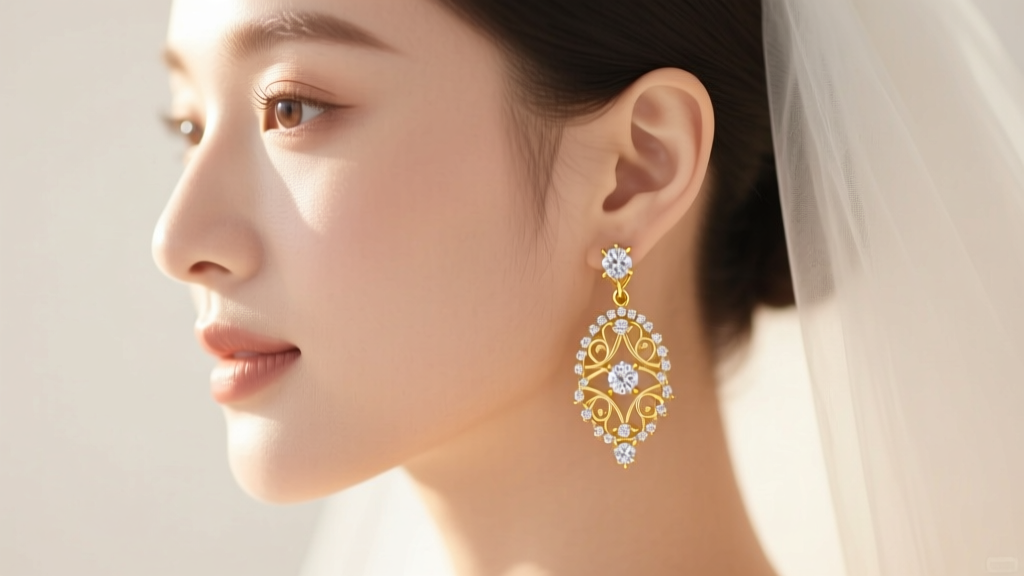
The Engineering of Bridal Elegance
When selecting gold dangle earrings wedding day styles, most buyers focus exclusively on aesthetics—how the metal complements the gown's neckline or how the gemstones catch the flash of a camera. However, from a master jeweler's perspective, a wedding day is a 12-to-16-hour endurance event. Your jewelry must perform under physical stress, temperature fluctuations, and constant movement. The failure to consider the structural engineering, metallurgical composition, and ergonomic weight distribution of dangle earrings frequently results in mid-ceremony discomfort, lost heirlooms, or damaged earlobes. This technical deep dive strips away the marketing fluff to examine the exact specifications required for flawless bridal ear wear.
The Metallurgy of Bridal Gold: 14K vs. 18K vs. 22K
Pure 24-karat gold is entirely unsuitable for dangle earrings. With a Vickers hardness rating of merely 25, it is too malleable and will bend under the kinetic energy of a swinging dangle. Therefore, gold must be alloyed with metals like copper, silver, and zinc to achieve structural integrity. According to the Gemological Institute of America (GIA), the karat weight directly dictates the tensile strength of the earring's wire and jump rings.
| Karat | Gold Purity | Vickers Hardness (Approx) | Structural Best Use |
|---|---|---|---|
| 22K | 91.6% | 60-70 | Heavy, static studs (Avoid for dangles) |
| 18K | 75.0% | 125-140 | Luxury dangles with thick wire gauges (18G+) |
| 14K | 58.3% | 160-180 | Intricate, long dangles requiring high tensile strength |
For intricate gold dangle earrings wedding designs that feature long chains or delicate filigree drops, 14K gold is often the superior technical choice. Its higher alloy content provides the necessary rigidity to prevent the jump rings (the tiny loops connecting the dangle to the clasp) from pulling open when the earring is accidentally tugged by a stray lock of hair or a bridal veil.
Ergonomics and Weight Distribution for All-Day Wear
The human earlobe is composed of fibrofatty tissue with no cartilage support. When a heavy dangle earring is suspended from a standard piercing fistula (the healed tissue tube), gravity exerts continuous downward and forward pressure. The critical metric for bridal comfort is the '7-Gram Threshold.' Earrings exceeding 7 grams per ear will induce lobe fatigue, characterized by a throbbing sensation and visible redness, typically around hour eight of wear—often coinciding with the wedding reception.
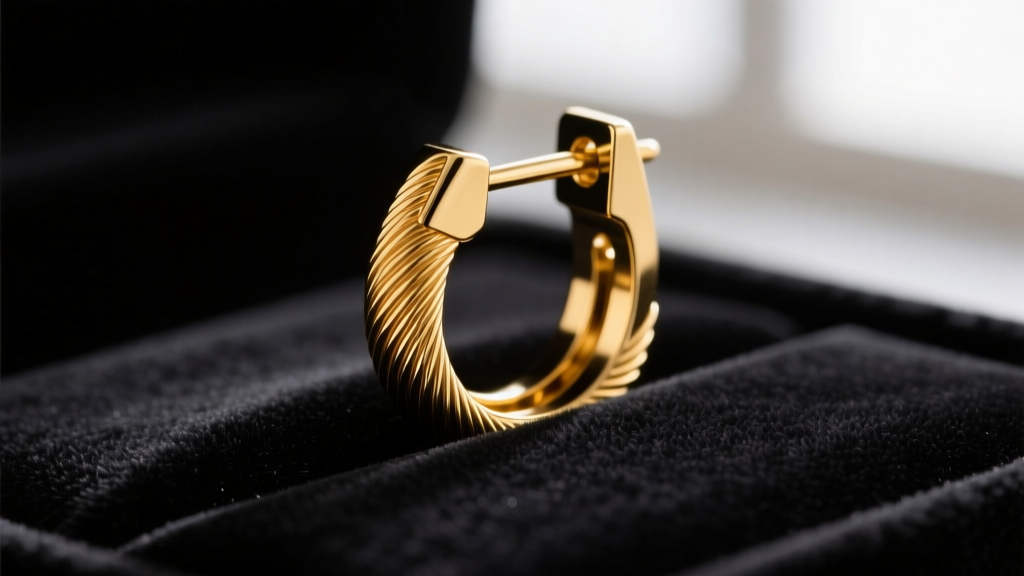
The 'Cheese-Wire' Effect and Gauge Sizing
Weight is only half the equation; the surface area distributing that weight is equally critical. Standard ear wires are typically crafted in 20-gauge wire (0.81mm in diameter). If a 20-gauge wire supports a 6-gram dangle, the narrow wire acts like a cheese cutter against the delicate tissue of the fistula, slowly slicing downward and causing micro-tears. For any gold dangle earrings wedding pieces weighing over 4 grams, you must insist on an 18-gauge (1.02mm) or 16-gauge (1.29mm) ear wire. This 25% to 60% increase in surface area drastically reduces the pounds-per-square-inch (PSI) pressure on the lobe, ensuring the piercing remains comfortable from the first look to the final dance.
Clasp Mechanics: Preventing Mid-Ceremony Loss
Losing an earring during the exchanging of rings or the first kiss is a bride's worst nightmare. The clasp mechanism is the single most critical point of failure. Data from jewelry insurance claims indicates that over 70% of lost dangle earrings are due to inadequate clasp security. Here is the technical breakdown of bridal clasp options:
- French Wire (Fishhook): The most common clasp for dangles, but technically the least secure. It relies entirely on gravity and a tiny silicone or metal friction back. During the hundreds of hugs a bride receives, friction backs are easily dislodged. If you must use French wire, mandate a screw-back silicone stopper.
- Leverback: The gold standard for bridal dangles. A hinged wire snaps securely into a catch at the front of the earring. Ensure the hinge features a 'snap-fit' tension mechanism rather than a simple friction closure. A properly calibrated leverback requires a deliberate fingernail press to open.
- Omega Back: Excellent for heavy, structured dangles. The hinged Omega clip grips the earlobe tightly, while a post provides additional piercing alignment. However, the tension spring inside the Omega hinge can degrade over time, so vintage or heirloom Omega clasps must be serviced by a bench jeweler before the wedding day.
Navigating Veil and Hair Interference
The interaction between your gold dangle earrings wedding accessories and your bridal styling requires careful spatial planning. Tulle, illusion netting, and intricate Chantilly lace are notorious for snagging on jewelry. The culprit is almost always the gemstone setting.

Traditional prong settings feature tiny metal claws that elevate the diamond above the gold bezel. These prongs act like microscopic grappling hooks when they come into contact with the hexagonal weave of a bridal veil. To eliminate this risk, opt for dangle earrings utilizing bezel settings or flush (gypsy) settings. In a bezel setting, a continuous rim of gold completely encircles the gemstone, creating a smooth, snag-proof silhouette. Furthermore, consider the swing radius of the dangle. If you are wearing your hair down, dangles longer than 2.5 inches will inevitably tangle in the hair shafts, especially if the hair has been treated with texturizing sprays that increase surface friction.
Troubleshooting Common Bridal Earring Failures
Even with perfect planning, environmental factors can compromise your jewelry. Understanding these failure modes allows for proactive mitigation.
'Bridal environments are highly corrosive to certain gold alloys. The combination of alkaline hairsprays, acidic perspiration, and the high humidity of a crowded dance floor can trigger rapid oxidation in copper-heavy alloys.' — Master Bench Jeweler Technical Notes, World Gold Council metallurgical guidelines.
The Rose Gold Oxidation Issue
Rose gold achieves its pink hue through a high copper content (often up to 20% in 14K rose gold). When copper reacts with the chlorides and sulfates present in human sweat and certain cosmetic setting sprays, it can leave a harmless but unsightly green or black smudge on the earlobe. To prevent this on your wedding day, apply your hairspray and perfumes at least 45 minutes before putting on your earrings, allowing the volatile organic compounds (VOCs) to fully evaporate. Additionally, wiping the earring posts with a microfiber cloth dampened with a tiny amount of isopropyl alcohol right before insertion removes any residual manufacturing oils that might accelerate a skin reaction.
Asymmetrical Lobe Stretching
If you have a history of wearing heavy statement earrings or have previously stretched your piercings, your fistula may have slight asymmetry. Wearing a heavy, structured gold dangle on a slightly stretched lobe will cause the earring to tilt forward aggressively, ruining the intended profile view of the jewelry. The technical solution is to use an invisible silicone earring support disc (often called a lobe lifter) behind the ear. This 15mm disc distributes the weight across a broader area of the back of the earlobe, forcing the piercing channel to remain perpendicular to the ground and keeping your gold dangles perfectly aligned for every photograph.


