Where Winds Meet Gold Earrings Quest: Real-World Goldsmithing Guide
Explore the real-world Song Dynasty metallurgy behind the Where Winds Meet gold earrings quest, including filigree techniques and replica sourcing.

The Intersection of Wuxia RPGs and Historical Jewelry
When players embark on the highly detailed where winds meet gold earrings quest in the acclaimed open-world Wuxia RPG, they are not merely completing a digital errand; they are interacting with a meticulously researched digital artifact. Set against the backdrop of the Five Dynasties and Ten Kingdoms period transitioning into the early Song Dynasty (907–1279 AD), the game’s item design reflects a pivotal shift in Chinese metallurgical history. Unlike the heavy, bold, and cosmopolitan gold work of the preceding Tang Dynasty, Song Dynasty jewelry favored delicate, nature-inspired motifs, intricate wirework, and a profound emphasis on scholarly elegance.
As jewelry historians and metallurgical experts, we look past the quest’s gameplay mechanics to analyze the physical reality of the item you are crafting or retrieving. How accurate is the in-game rendering? What specific goldsmithing techniques would a master artisan in 10th-century Bianjing (modern-day Kaifeng) have used to create these earrings? More importantly, if you wish to commission a real-world replica of this iconic quest item in 2026, what material grades, gauge sizes, and structural tolerances must you specify to ensure the piece is both historically faithful and ergonomically viable for modern wear?
Deconstructing the In-Game Gold Earring Design
Motif Analysis: The Lotus and Cloud Scroll
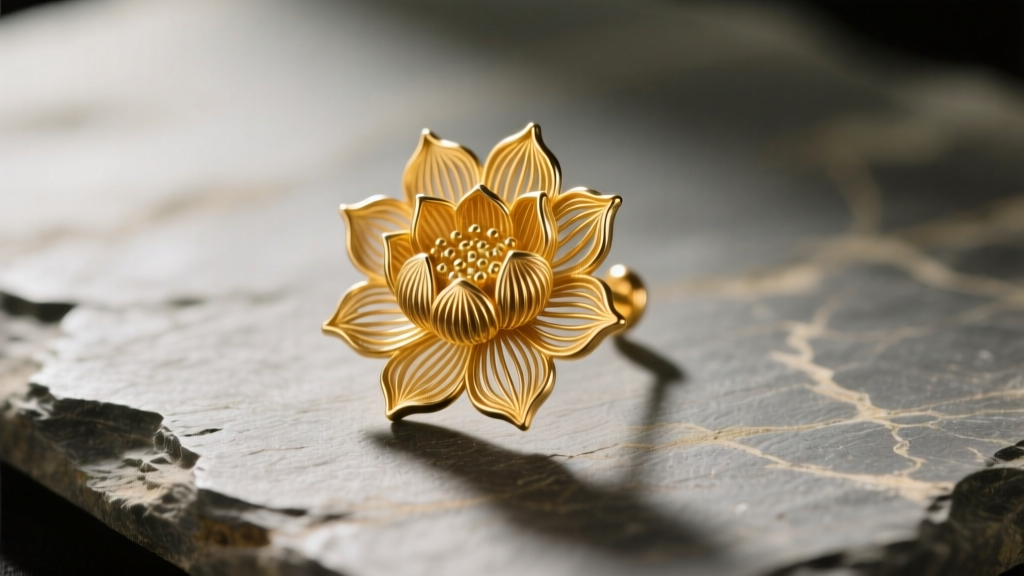
The quest item features a multi-tiered drop design dominated by lotus petals and interlocking cloud scrolls (祥云). According to the Victoria and Albert Museum’s Asian Collections, the lotus motif in Song Dynasty goldwork symbolized purity and spiritual enlightenment, often rendered using ultra-fine gold wires. The in-game model accurately depicts the 'seed pod' of the lotus using granulation—a technique where microscopic spheres of gold are fused to the base metal without the use of solder, relying instead on copper salts and organic adhesives that burn away during the heating process.
Metallurgical Accuracy: 24K vs. 18K Gold Alloys
While the game’s lore may describe the earrings as 'pure gold,' a real-world metallurgist knows that 24-karat (99.9% pure) gold is entirely unsuitable for functional ear wires or structural drop frameworks. Pure gold registers a mere 25 to 30 on the Vickers Hardness (HV) scale, meaning it is softer than a human fingernail and will deform under the weight of jade cabochons.
"To replicate historical Chinese gold jewelry for daily wear, modern jewelers must utilize an 18K (75% gold) or 22K (91.6% gold) alloy. The addition of copper and silver increases the Vickers Hardness to approximately 120-130 HV, providing the necessary tensile strength for ear wires while maintaining the rich, warm yellow hue characteristic of antiquity." — Gemological Institute of America (GIA)
Traditional Chinese Goldsmithing Techniques (Technical Deep Dive)
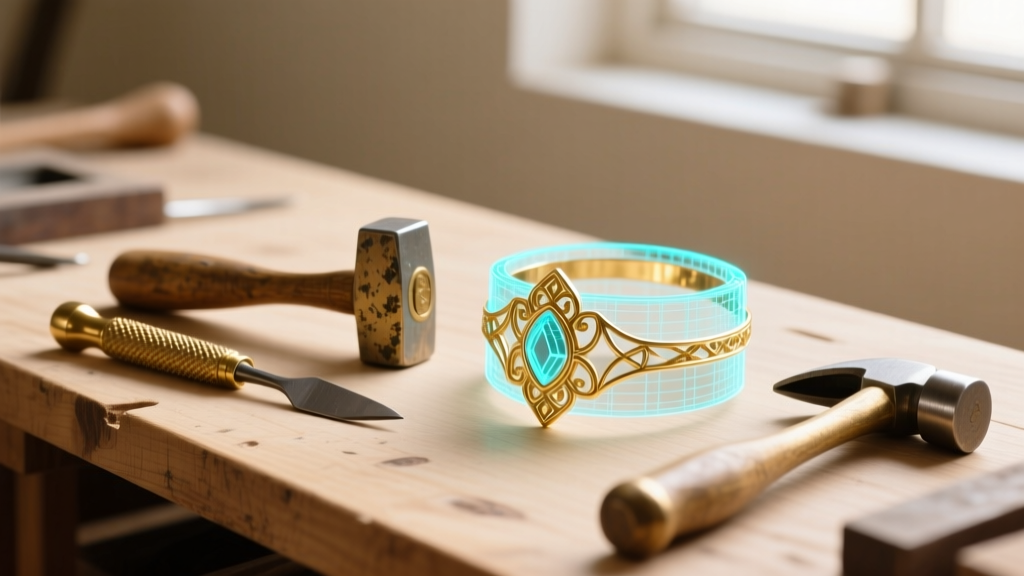
To understand the sheer labor intensity behind the where winds meet gold earrings quest item, we must examine the 'Eight Great Techniques' of traditional Chinese goldsmithing (金银细工). The in-game crafting mini-games abstract these processes, but the real-world execution requires thousands of hours of mastery. Below is a technical comparison of the historical methods depicted in the game versus their modern 2026 equivalents.
| Technique | Historical Execution (Song Dynasty) | Modern Replica Execution (2026) | Structural Application |
|---|---|---|---|
| Filigree (花丝) | Twisting two 0.2mm gold wires into a rope, then flattening and bending into lotus shapes. | Laser-welding 0.15mm 18K gold wire to prevent heat distortion of adjacent joints. | Decorative overlays, cloud scrolls, and lotus petal outlines. |
| Repoussé (錾刻) | Hammering gold sheet from the reverse using pitch bowls and specialized steel chisels. | Hydraulic pressing combined with hand-chasing for high-definition texture refinement. | Base plates, ear cuff shields, and hollow volumetric elements. |
| Granulation (炸珠) | Fusing microscopic gold spheres using copper carbonate flux in a charcoal forge. | Using a hydrogen torch and precise colloidal gold suspensions for microscopic placement. | Lotus seed pods, border accents, and tactile surface detailing. |
| Inlay (镶嵌) | Friction-fitting jade or turquoise using burnished gold bezels without prongs. | CNC-milled micro-bezels with hidden titanium tension springs for stone security. | Securing central jade cabochons and gemstone drops. |
Sourcing and Crafting Authentic Replicas in 2026
For collectors and cosplay enthusiasts looking to manifest the where winds meet gold earrings quest item into reality, commissioning a custom jeweler specializing in heritage Asian metalwork is essential. Off-the-shelf costume jewelry will lack the precise gauge tolerances and metallurgical integrity required. When drafting your commission brief, include the following non-negotiable technical specifications:
- Material Grade: 18K Yellow Gold (75% Au, 12.5% Ag, 12.5% Cu) for the optimal balance of historical color accuracy and structural rigidity.
- Ear Wire Gauge: 18-gauge (1.02mm) for the primary structural wire. Do not accept 20-gauge (0.81mm) or 22-gauge (0.64mm) for heavy historical drops, as they will bend during insertion and cause earlobe migration.
- Weight Distribution: The total weight of the earring should not exceed 14 grams per ear. If the design requires heavier jade elements, the jeweler must incorporate a hollow-box construction (electroforming) for the upper filigree tiers to reduce mass.
- Stone Setting: Specify 'bezel setting with a gallery wire' for the jade inlays to prevent the stones from cracking under lateral pressure, a common failure mode in cheap replicas.
Wearability and Ear Health Considerations
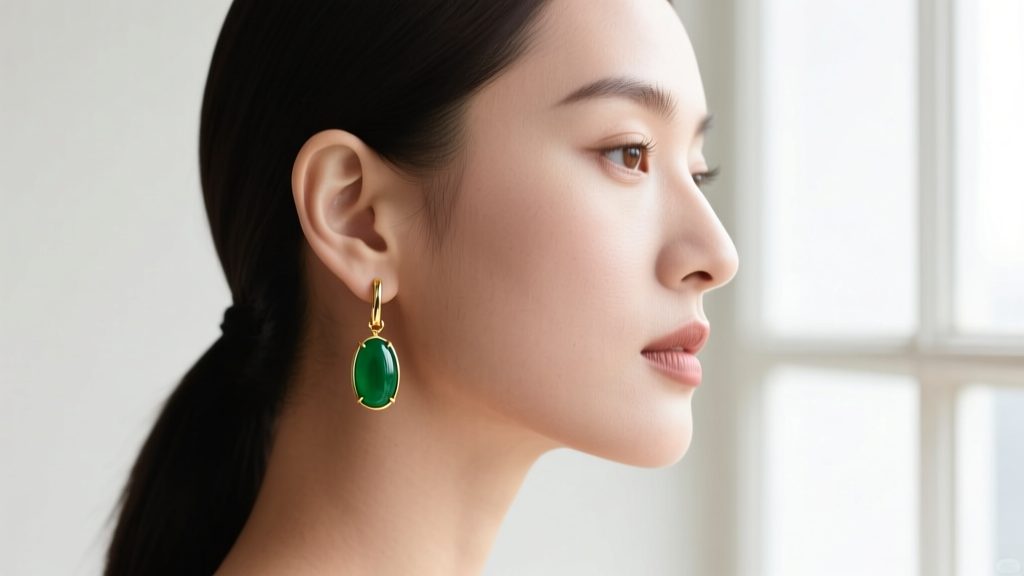
Historical accuracy must never come at the expense of tissue health. The Song Dynasty elite often wore heavy, elaborate earrings that caused significant lobe elongation over time. In modern dermatology and piercing science, we recognize that sustained pressure from heavy gold drops can lead to 'cheese-cutter syndrome,' where the ear wire slowly slices through the earlobe tissue.
To safely wear a replica of this quest item, you must employ modern ergonomic supports. First, ensure your lobe piercing is fully healed and conditioned to an 18-gauge or 16-gauge thickness. Second, utilize silicone earring support patches (such as those from LobeWonder) on the back of the earlobe to distribute the weight of the gold across a wider surface area. Finally, abandon traditional butterfly friction backs; they are entirely insufficient for historical drop earrings. Instead, require your jeweler to fabricate custom Omega-clip backs or La Poussière locking clutches, which grip the ear wire via a spring-loaded internal mechanism, preventing the heavy gold from slipping out and tearing the piercing tract.
Conclusion
The where winds meet gold earrings quest is a brilliant digital homage to the zenith of Chinese goldsmithing. By understanding the profound metallurgical science, the grueling physical techniques of filigree and repoussé, and the strict ergonomic requirements of modern body jewelry, we bridge the gap between virtual Wuxia fantasy and tangible, wearable art. Whether you are analyzing the game's code or commissioning a master goldsmith, the pursuit of historical accuracy remains a deeply rewarding endeavor.


