How to Choose White Dangle Earrings: A Complete Buying Guide
Discover how to choose the perfect white dangle earrings. Explore material grades, ideal lengths, weight limits, and clasp types for everyday comfort.

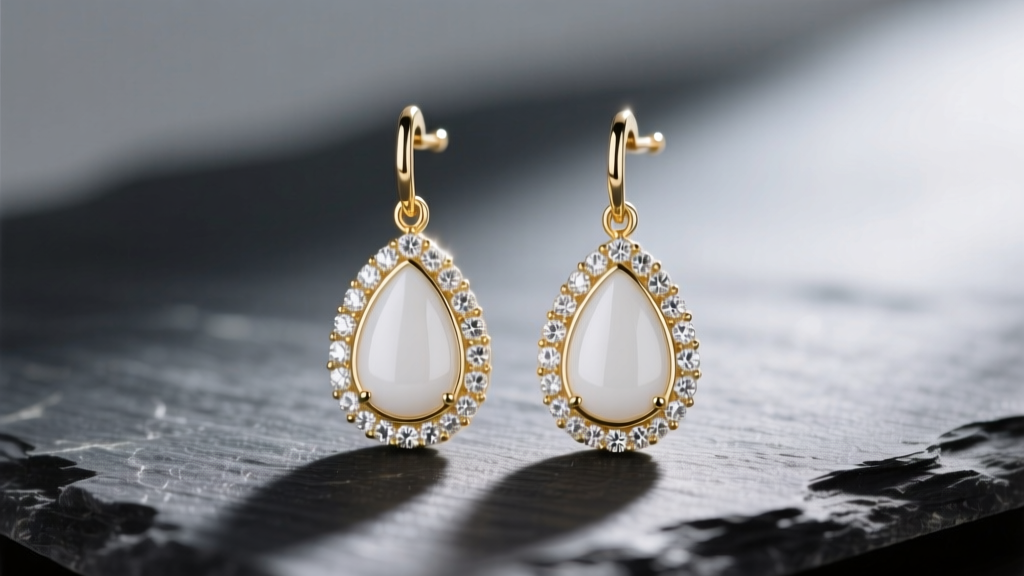
The Anatomy of Articulation: Drops vs. Dangles
When shopping for white dangle earrings, it is crucial to understand the mechanical difference between a 'drop' and a 'dangle.' While the terms are often used interchangeably in retail, a drop earring hangs stationary just below the earlobe. A true dangle earring features kinetic articulation—it moves freely as you walk, talk, and turn your head. This constant motion places unique stress on the jewelry's structural components.
For white dangle earrings, the articulation point (usually a jump ring or a micro-hinge) is the most critical failure point. When inspecting a piece, always look for soldered jump rings rather than open ones. An open jump ring will eventually twist apart under the pendulum effect of a dangle, leading to lost earrings. Furthermore, if the dangle features a white gemstone or ceramic element suspended in a metal frame, ensure the bezel or prongs are reinforced to withstand lateral movement.
Material Matrix: Decoding White Finishes
The term 'white' in jewelry encompasses a vast array of materials, each with distinct durability profiles, weight characteristics, and price points. In 2026, advancements in material science have expanded our options far beyond traditional white gold.
1. White Gold and Rhodium Plating
White gold is an alloy of yellow gold mixed with white metals like palladium, nickel, or silver. To achieve that brilliant, mirror-like white finish, it is plated with rhodium. When buying white gold dangles, opt for 14k over 18k for the moving components; 14k is harder and more resistant to bending. Be aware that rhodium plating wears off over time, especially on high-friction areas like clasp hinges. Budget $35 to $60 for professional re-plating every 12 to 18 months.
2. High-Tech Ceramic
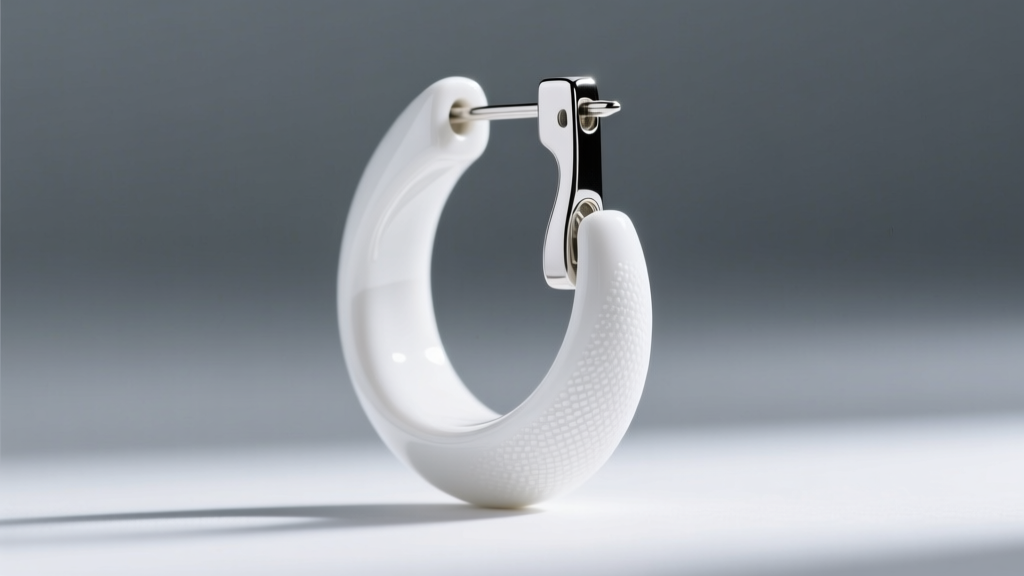
High-tech ceramic (zirconium dioxide) has become a dominant force in luxury white jewelry. It is hypoallergenic, virtually scratch-proof (rating an 8.5 on the Mohs scale), and maintains its pristine white color without the need for plating. It is also significantly lighter than metal, making it an exceptional choice for elongated dangle designs that might otherwise cause lobe fatigue.
3. Enamel: Vitreous vs. Cold
White enamel offers a rich, opaque aesthetic. Vitreous enamel is kiln-fired at over 1400°F, fusing glass powder to metal. It is highly durable and resistant to yellowing. Cold enamel (epoxy resin) is cheaper but prone to scratching, chipping, and UV-induced yellowing over time. Always verify the enameling technique before investing in premium-priced pieces.
4. Pearls and Mother of Pearl
For organic white options, South Sea pearls offer large, satiny white drops, while Akoya pearls provide sharp, mirror-like luster in smaller sizes. According to the Gemological Institute of America (GIA), nacre thickness and luster are the primary determinants of pearl durability and value. For flat inlays, Mother of Pearl provides an iridescent white sheen but requires strict protection from acids and perfumes.
| Material | Weight Profile | Durability (Mohs) | Maintenance Level | Avg. Price Range |
|---|---|---|---|---|
| 14k White Gold | Medium-Heavy | 2.5 - 3.0 | High (Re-plating) | $250 - $1,500+ |
| High-Tech Ceramic | Light-Medium | 8.5 | Low | $300 - $2,000+ |
| Vitreous Enamel | Medium | 5.0 - 6.0 | Medium | $150 - $800 |
| White South Sea Pearl | Light | 2.5 | High (Organic) | $500 - $5,000+ |
Proportion and Face Shape Dynamics
The kinetic nature of dangle earrings means they act as visual pendulums, drawing the eye along their path of movement. Selecting the right silhouette for your face shape is essential for harmonious styling.
- Round Faces: Opt for linear, geometric white dangles (e.g., elongated white gold bars or baguette diamond drops). Aim for lengths between 1.5 and 2.5 inches to create a vertical illusion that slims the jawline.
- Square Faces: Soften strong jawlines with curved, teardrop-shaped white dangles. Oval white ceramics or rounded South Sea pearl drops add necessary fluidity.
- Heart Faces: Balance a narrower chin with chandelier-style dangles or designs that are wider at the bottom than at the top.
- Oval Faces: The universal canvas. You can comfortably wear anything from subtle 1-inch huggie-dangles to dramatic 3-inch statement pieces.
The Biomechanics of Earlobe Fatigue
A frequently overlooked aspect of buying dangle earrings is the biomechanical toll they take on the earlobe. Heavy dangles can lead to earlobe ptosis (sagging) and stretched piercings over time. The general rule of thumb is to keep the weight of your everyday dangles under 7 grams per earring. For special occasion pieces that exceed this limit, limit wear to under four hours.
The 'Cheese-Cutter' Effect and Gauge Sizing
The thickness of the ear wire, measured in gauge, is just as important as the weight of the dangle. Standard fashion earrings use 20-gauge (0.81mm) wire. However, a heavy white ceramic or gemstone dangle on a thin 20G wire creates a 'cheese-cutter' effect, where the thin wire slices downward through the piercing hole under the force of gravity. For any white dangle earring exceeding 5 grams, insist on an 18-gauge (1.02mm) or 16-gauge (1.29mm) ear wire to distribute the weight safely across the lobe tissue.
"The elegance of a dangle earring is entirely negated if the wearer is subconsciously wincing from lobe strain. Proportion must always bow to ergonomics." — Master Jeweler & Ergonomic Design Principle
Hardware and Security Mechanisms
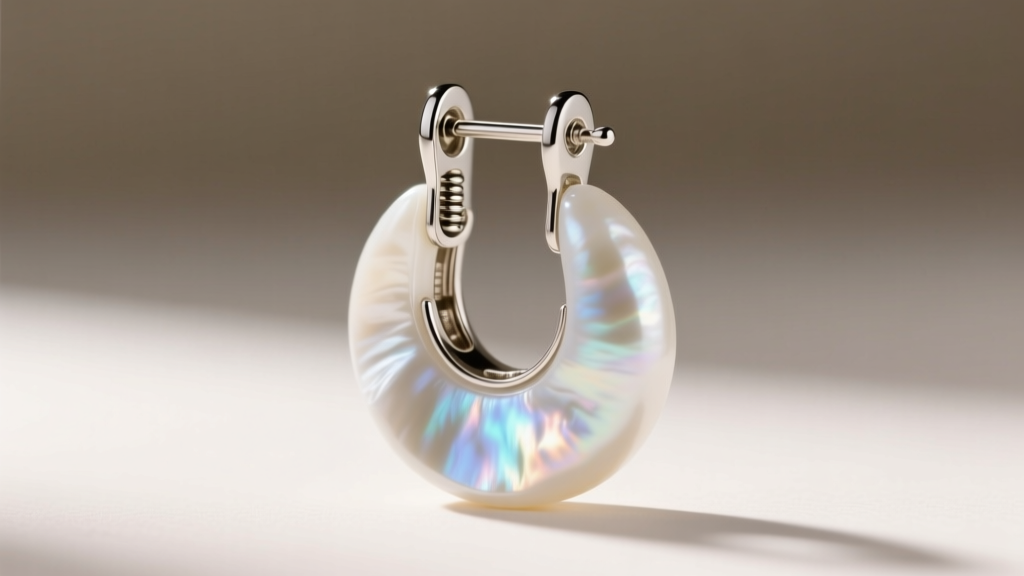
Because dangles catch on hair, scarves, and clothing, their backing mechanisms must be robust. Here is what to look for:
- Leverback: The gold standard for dangles. A hinged wire snaps securely into a catch. It supports heavier weights and prevents loss if the earring is snagged.
- French Wire (Shepherd's Hook): Elegant and classic, but inherently insecure. If you buy French wire white dangles, immediately pair them with high-grip silicone stoppers or O-rings to prevent them from sliding out during movement.
- Omega Back: Features a hinged, solid backing that clamps onto the ear wire. Excellent for supporting heavy, voluminous white enamel or ceramic dangles, though they can pinch thinner earlobes if the tension is too tight.
Allergies and Metal Sensitivities
White gold is often alloyed with nickel to achieve its color before rhodium plating. As the plating wears away, the nickel is exposed to the skin. According to the Mayo Clinic, nickel allergy is one of the most common causes of allergic contact dermatitis. If you have sensitive skin, bypass white gold entirely and opt for platinum, palladium-white gold (nickel-free), or high-tech ceramic, which is 100% hypoallergenic.
Care and Maintenance for Pristine White Finishes
Maintaining the brilliant white finish of your dangles requires specific care protocols. Never use ultrasonic cleaners on white dangles featuring pearls, mother-of-pearl, or cold enamel; the high-frequency vibrations will shatter organic gems and crack resin. Instead, use a soft microfiber cloth and a mild, phosphate-free soap solution. For vitreous enamel and diamonds, ultrasonic cleaning is safe and highly effective at removing trapped skin oils that can dull the white reflection.
Final Verdict: Your Pre-Checkout Checklist
Before finalizing your purchase of white dangle earrings, run through this quick diagnostic checklist:
- Are the jump rings soldered shut to prevent kinetic separation?
- Does the weight fall under the 7-gram threshold for all-day comfort?
- Is the wire gauge thick enough (18G+) to prevent the cheese-cutter effect?
- Is the white material suited to your lifestyle (e.g., ceramic for low maintenance, white gold for traditional luxury)?
By prioritizing structural integrity, ergonomic weight distribution, and material quality, you will secure a pair of white dangle earrings that offer both kinetic beauty and lifelong wearability.


