Who Invented the Earrings? A Historical Guide to Modern Ear Styling
Discover who invented the earrings, tracing origins from ancient Sumerian gold hoops to modern ASTM F136 titanium and 16-gauge cartilage standards.

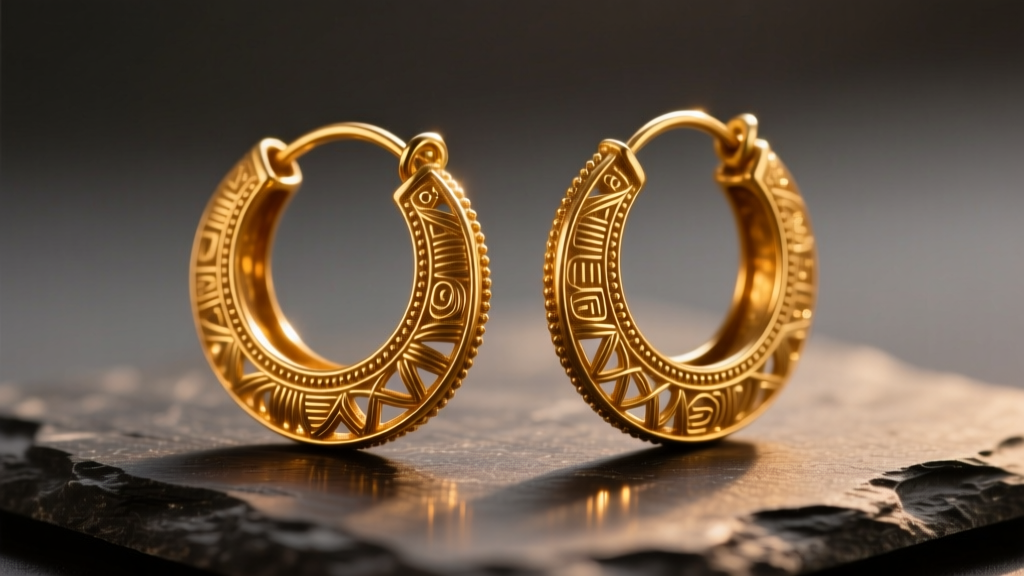
When you adjust your favorite hoops or cartilage studs in the mirror, you are participating in a ritual that spans over 4,500 years of human history. Ear adornment is one of the oldest forms of body modification, predating written language and complex agriculture. Yet, as you navigate the modern jewelry market—sifting through terms like 'implant-grade titanium,' 'threadless ends,' and '16-gauge'—it is easy to feel disconnected from the origins of these accessories. Understanding the deep history of ear piercing not only satisfies historical curiosity but also provides a foundational framework for making safer, smarter, and more stylish jewelry choices today.
The Short Answer: Who Invented the Earrings?
If you are asking who invented the earrings, the historical and archaeological consensus points directly to the ancient Sumerians in Mesopotamia (modern-day Iraq). Around 2500 BCE, Sumerian royalty and elites began wearing elaborate gold hoops and crescent-shaped earrings. The most famous evidence comes from the Royal Cemetery at Ur, where archaeologists discovered the tomb of Queen Puabi. Her burial site contained massive, intricate gold hoop earrings, alongside lapis lazuli beads and carnelian pendants. According to the Metropolitan Museum of Art, these early pieces were not merely decorative; they were profound indicators of divine right, wealth, and social hierarchy.
While the Sumerians popularized the gold hoop, the concept of piercing the earlobe likely originated even earlier as a form of spiritual protection. Many ancient cultures believed that the ear was a gateway for evil spirits, and inserting metal or stone into the lobe acted as a talismanic barrier. Thus, the 'invention' of the earring was as much about spiritual armor as it was about aesthetic beauty.
The Evolution of Ear Adornment: From Gold Hoops to Dangles
Ancient Egypt: The Introduction of the Stud and Plug
Following the Sumerians, the ancient Egyptians revolutionized ear styling by introducing heavier, more complex designs. While hoops remained popular, Egyptian nobility began wearing thick ear plugs and early iterations of the stud earring. King Tutankhamun’s mummy was discovered with pierced ears, and his tomb contained numerous golden ear studs inlaid with glass and semi-precious stones. The Egyptians also pioneered the use of enameling, adding vibrant blues and greens to their ear adornments to mimic the protective colors of the gods.
The Greek and Roman Eras: Dangles and Status Symbols
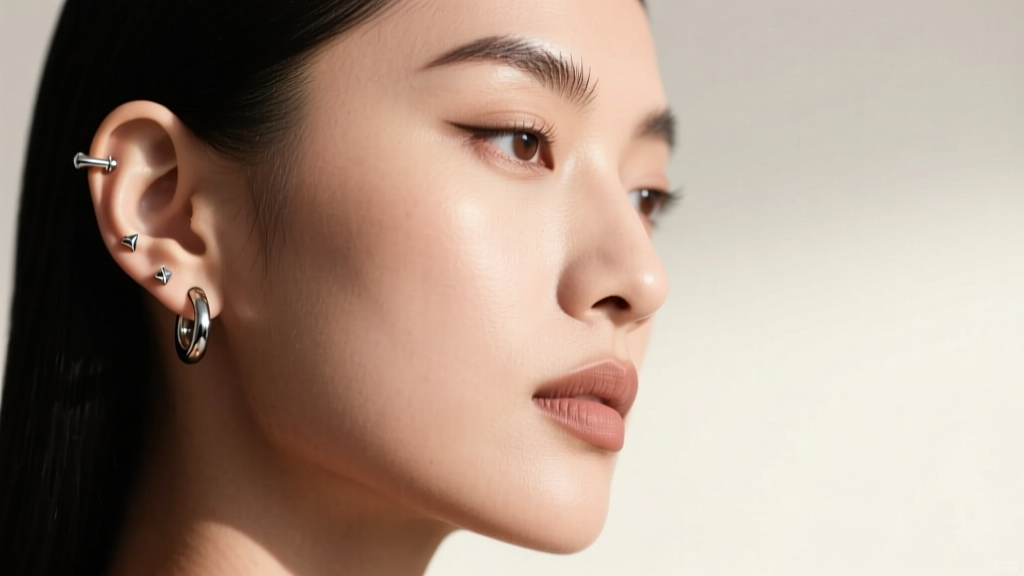 By the time of the classical Greek and Roman empires, earrings had evolved into highly sophisticated dangle and drop styles. The Romans, in particular, used earrings to denote military rank and civic status. According to archives from the British Museum, Roman women of high status wore 'crotalia'—elaborate dangle earrings featuring multiple pearls that clinked together like castanets when the wearer walked. This was an early example of kinetic jewelry, designed to draw attention and announce the wearer's presence through both sight and sound.
How Ancient Inventions Dictate Modern Piercing Standards
The fundamental anatomy of the human ear has not changed since Queen Puabi walked the streets of Ur, but our approach to piercing it has been entirely transformed by modern medicine and metallurgy. The ancient practice of simply forcing a sharp wire through the lobe has been replaced by precise, standardized gauge systems designed to minimize tissue trauma and promote optimal healing.
| Historical Era | Primary Material | Historical Purpose | Modern Equivalent & Gauge Standard |
|---|---|---|---|
| Sumerian (2500 BCE) | Gold, Lapis Lazuli | Wealth, Religious Status | 14k/18k Solid Gold Hoops (16g-18g) |
| Egyptian (1500 BCE) | Gold, Enamel, Glass | Divine Protection, Royalty | Threadless Gold Studs (18g-20g) |
| Roman (100 CE) | Gold, Pearls | Social Hierarchy, Kinetic Display | Pearl Drop Dangles (18g-20g) |
| Modern Era (2026) | ASTM F136 Titanium | Biocompatibility, Cartilage Safety | Flat-Back Labrets (16g / 1.29mm) |
Understanding Modern Gauge Sizes
When shopping for earrings today, you must understand the gauge system, which is inversely proportional to thickness. A standard lobe piercing done with a traditional piercing gun is usually 20-gauge (0.81mm) or 18-gauge (1.02mm). However, professional piercers strongly advocate for 16-gauge (1.29mm) or 14-gauge (1.63mm) for initial piercings. Thicker jewelry reduces the 'cheese-cutter effect,' where a thin wire slowly migrates and slices through the earlobe under the weight of heavy dangles or hoops.
Material Science: What the Ancients Couldn't Access
While ancient jewelers were master craftsmen, they lacked an understanding of cellular biology and metal allergies. Today, the most critical factor in choosing earrings is not just the karat of the gold, but the specific metallurgical grade of the base metal.
Biocompatibility is the cornerstone of modern body jewelry. The human body recognizes certain metal alloys as foreign invaders, triggering an immune response that manifests as contact dermatitis, swelling, or rejection of the piercing fistula.
Implant-Grade Titanium vs. Surgical Steel
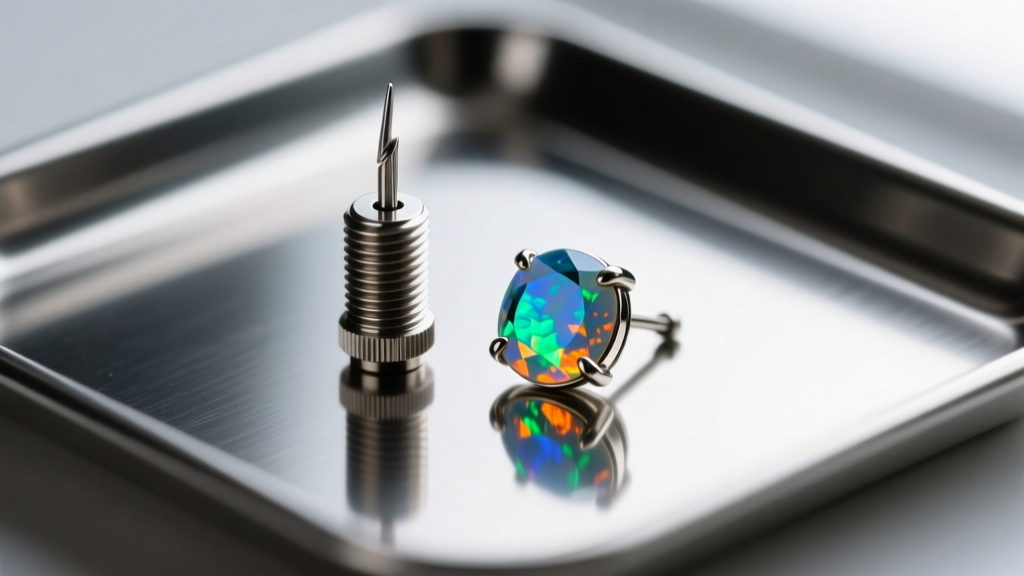 The Association of Professional Piercers (APP) sets the gold standard for modern jewelry materials. The absolute best choice for fresh piercings or sensitive ears is ASTM F136 implant-grade titanium (Ti-6Al-4V-Eli). This is the exact same alloy used in medical joint replacements and pacemakers. It contains zero nickel, making it completely hypoallergenic.
Conversely, 'surgical steel' (often ASTM F138) is a misnomer that trips up many beginners. While safe for healed piercings, surgical steel contains up to 10% nickel. For the 10-15% of the population with nickel sensitivities, wearing surgical steel in a fresh or irritated piercing will result in weeping, crusting, and prolonged healing times. If you are investing in high-quality cartilage or lobe jewelry, always verify that the post is certified ASTM F136 titanium.
Beginner’s Guide to Choosing Your First Quality Earrings
Transitioning from cheap, mass-produced mall kiosk jewelry to professional-grade body jewelry is the best investment you can make for your ear health. Here is a practical framework for buying modern earrings:
- Ditch the Butterfly Back: Traditional friction backs (butterfly backs) trap dead skin cells, sebum, and bacteria against the back of your earlobe. They also apply uneven pressure, which can cause the post to embed in the tissue during sleep. Switch to flat-back labrets that sit flush against the skin.
- Choose Threadless or Internally Threaded Ends: Never buy 'externally threaded' jewelry, where the screw pattern is on the post itself. Pushing a threaded post through a piercing tears the delicate fistula tissue. Instead, opt for internally threaded jewelry (the screw is on the gem) or threadless (push-pin) jewelry, which uses tension to stay securely in place without any sharp edges.
- Look for a Mirror Polish: High-end brands like BVLA, Maria Tash, and Anatometal hand-polish their jewelry to a mirror finish. Microscopic scratches on cheap jewelry harbor bacteria and irritate the healing channel. If the post looks dull or scratched under a macro lens, do not put it in your ear.
- Budgeting for Quality: Expect to pay between $40 and $150 for a single, high-quality titanium post with a genuine gemstone end. While this is a steep departure from $15 multi-packs of fashion jewelry, a single piece of implant-grade jewelry will last a lifetime and prevent costly medical treatments for infected cartilage.
Conclusion: Wearing History in Your Cartilage
So, who invented the earrings? The Sumerians may have hammered the first gold hoops, and the Romans may have popularized the pearl dangle, but today's piercing industry has elevated ear adornment into a precise intersection of art, anatomy, and material science. By respecting the history of this ancient practice and applying modern biocompatible standards to your jewelry choices, you ensure that your ears remain healthy, comfortable, and beautifully styled for decades to come.


