Why Does My Earring Hurt? Metal Allergies, Gauge Friction & Fixes
Discover why your earring hurts with our expert guide on nickel allergies, gauge friction, and post mechanics. Learn biocompatible fixes for ear pain.

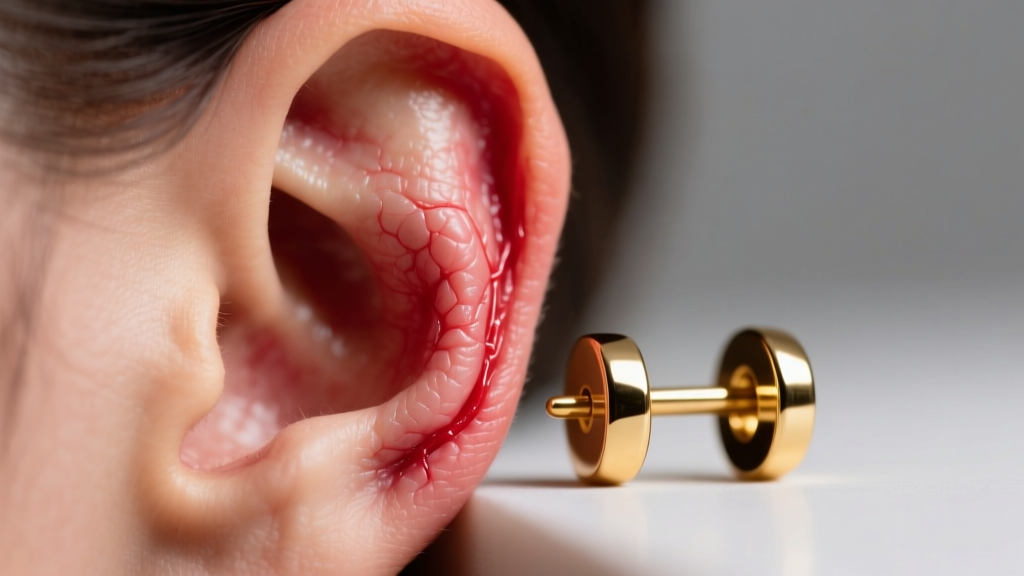
If you have ever found yourself searching why does my earring hurt, you are likely dealing with a complex intersection of metallurgy, biomechanics, and localized tissue trauma. While many consumers blame a generic "infection," the reality is that over 70% of unexplained earring pain stems from substandard metal alloys, gauge mismatches, or improper earring back tension. As we move through 2026, the jewelry industry is finally shifting away from vague "hypoallergenic" marketing claims toward strict, verifiable biocompatibility standards. Understanding the technical reasons behind your ear pain is the first step toward resolving it permanently.
The Metallurgical Culprit: Nickel Sensitization and Contact Dermatitis
The most common reason an earring hurts after a few hours of wear is Allergic Contact Dermatitis (ACD) triggered by nickel exposure. "Surgical steel" is a largely unregulated marketing term. Most commercial stainless steel earrings are crafted from 316L steel, an alloy that contains between 8% and 12% nickel to prevent corrosion and add luster.
When 316L steel comes into contact with the skin, natural sweat—which contains lactic acid and chloride ions—acts as an electrolyte. This causes the metal to leach microscopic nickel ions into the epidermis. The body's immune system identifies these ions as foreign invaders, triggering a localized histamine response. This manifests as a dull, burning ache, intense itching, and eventual flaking of the skin around the piercing channel.
Expert Insight: The European Union's Nickel Directive restricts nickel release to a maximum of 0.5 µg/cm²/week for post-assembly jewelry. However, many fast-fashion brands manufactured outside the EU still exceed this threshold, making them a primary trigger for sudden ear pain in previously non-allergic individuals.
For a deeper clinical understanding of how metal alloys interact with the skin barrier, the American Academy of Dermatology provides extensive documentation on nickel allergy symptom onset and systemic sensitization.
Mechanical Stress: Gauge Mismatches and the Cheese-Cutter Effect
If your pain feels sharp, localized to the bottom of the piercing hole, or worsens when you move your head, you are likely experiencing mechanical tissue stress. This is heavily dictated by the gauge (thickness) of the earring wire.
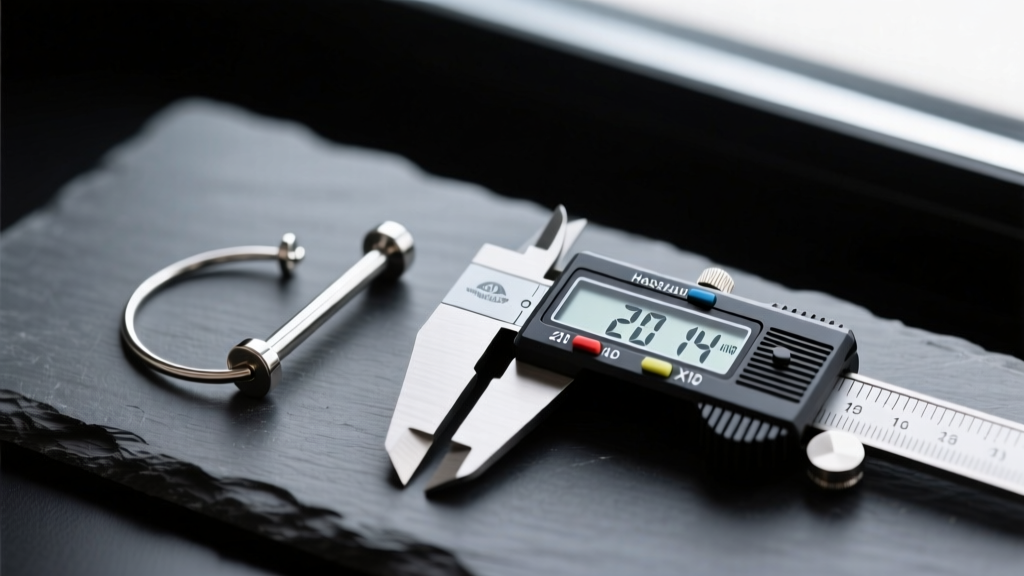
Standard commercial stud earrings and lightweight hoops are typically manufactured at 20-gauge (0.81mm) or 18-gauge (1.02mm). While these thin wires are fine for lightweight studs, suspending heavy dangles, solid brass hoops, or gemstone clusters on a 20-gauge wire creates a severe biomechanical failure known as the cheese-cutter effect.
Understanding Tissue Migration
When excessive downward force is applied to a thin wire, the surface area pressing against the bottom of the fistula (the piercing channel) is incredibly small. This concentrates the kinetic energy, causing the wire to slowly slice through the earlobe tissue. This micro-tearing triggers localized inflammation, sharp nerve pain, and eventual downward migration of the piercing hole. To support heavier jewelry without pain, the mechanical load must be distributed across a thicker post, such as a 16-gauge (1.29mm) or 14-gauge (1.63mm) wire.
The Earring Back Problem: Clutch Tension and Moisture Traps
Often, the earring itself is not the problem; the friction and tension caused by the earring back are to blame. The traditional "butterfly" clutch relies on two small metal loops that grip the post's groove. This design introduces two major clinical issues:
- Pressure Necrosis: Users frequently push the butterfly clutch too tightly against the earlobe to prevent the earring from falling out. This compresses the tissue, restricting localized blood flow and lymphatic drainage. The resulting edema (swelling) causes a persistent, throbbing ache that mimics an infection.
- Anaerobic Moisture Traps: The intricate curves of a butterfly back trap dead skin cells, sebum, and shower moisture against the back of the ear. This creates a warm, anaerobic environment where bacteria thrive, leading to foul odors and tender, inflamed tissue.
The professional standard for mitigating this issue is the flat-back labret. Featuring a smooth, flat disc that rests flush against the back of the ear, labrets distribute pressure evenly across a wide surface area and eliminate the crevices where bacteria and debris accumulate.
Diagnostic Matrix: Identifying Your Specific Ear Pain
Use the following diagnostic table to cross-reference your specific symptoms with their underlying technical causes and immediate solutions.
| Symptom Profile | Sensation | Probable Technical Cause | Primary Trigger | Expert Solution |
|---|---|---|---|---|
| Itchy, flaky, red halo | Burning / Itching | Allergic Contact Dermatitis | 316L Steel / Brass alloys | Switch to ASTM F136 Titanium or Niobium |
| Sharp, tearing pain at base | Stinging / Pulling | Cheese-cutter migration | Heavy dangle on 20g wire | Upsize post to 16g or 14g; reduce weight |
| Dull ache, localized swelling | Throbbing / Tender | Pressure necrosis | Overtightened butterfly clutch | Transition to internally threaded flat-backs |
| Hot, swollen, yellow crust | Sharp / Radiating | Localized bacterial infection | Moisture trap / blunt trauma | Sterile saline irrigation; consult a physician |
| Cartilage bump, piercing angle shifts | Deep ache / Pressure | Hypertrophic scarring / Rejection | Improper piercing angle / rings in fresh cartilage | Downsize post length; avoid sleeping on ear |
Biocompatible Upgrades: What to Buy Instead
If you have determined that metal sensitization is the answer to why your earring hurts, you must upgrade to verifiable, implant-grade materials. The Association of Professional Piercers (APP) strictly recommends the following materials for long-term wear, especially in compromised or sensitive tissue:
1. Implant-Grade Titanium (ASTM F136)
Often branded as Ti6Al4V ELI, this alloy contains absolutely zero nickel. It is the exact same metal used in orthopedic joint replacements and pacemakers. It is lightweight, highly resistant to corrosion, and completely biocompatible, making it the gold standard for sensitive lobes and fresh cartilage piercings.
2. Niobium
Niobium is a highly reactive elemental metal that, when anodized, creates a vibrant oxide layer on its surface without the use of dyes or paints. Because it is an element rather than an alloy, it cannot leach hidden nickel or cobalt, making it an exceptional choice for those with severe, multi-metal allergies.
3. Solid 14k or 18k Gold (Nickel-Free Alloyed)
Gold is biocompatible, but only if it is alloyed correctly. Many commercial jewelers alloy gold with nickel to increase hardness and lower costs. You must seek out reputable jewelers who explicitly state their gold is alloyed with silver, copper, or palladium, and is entirely nickel-free.
Immediate Triage Protocol for Hurting Piercings
If your ear is currently in pain, follow this clinical triage protocol to halt tissue damage and reduce inflammation.
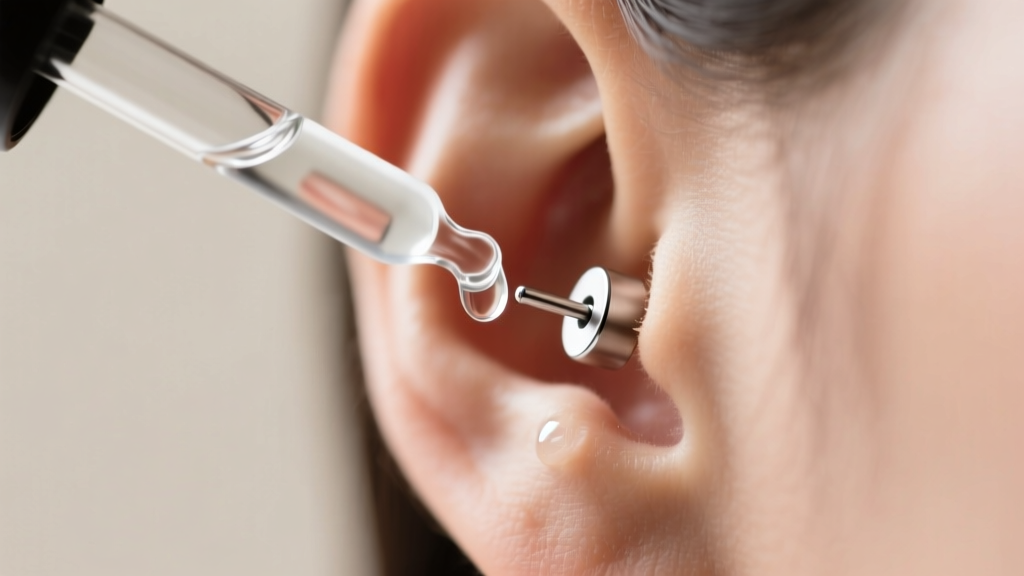
- Remove the Offending Alloy: If you suspect a nickel allergy (characterized by intense itching and redness), remove the earring immediately. Leaving it in will only compound the histamine response. According to the Mayo Clinic, removing the trigger is the most critical step in resolving contact dermatitis.
- Irrigate with Sterile Saline: Do not use rubbing alcohol, hydrogen peroxide, or tea tree oil. These harsh astringents destroy the delicate, newly formed epithelial cells inside the fistula, delaying healing and increasing pain. Use a sterile, wound-wash saline solution (0.9% sodium chloride with no additives) twice daily.
- Assess Post Length: If the ear is swollen, a standard-length earring post may now be too short, embedding the metal into the tissue. Swap to a longer, implant-grade titanium flat-back labret to accommodate the edema until the swelling subsides.
Ultimately, ear pain is your body's check-engine light. By paying close attention to gauge thickness, earring back mechanics, and exact metallurgical compositions, you can curate a jewelry collection that is as comfortable as it is beautiful.


