Wire and Bead Earrings: The Ultimate Beginner Guide
Discover everything about wire and bead earrings. Learn about wire gauges, hypoallergenic metals, bead weights, and styling tips for sensitive ears.

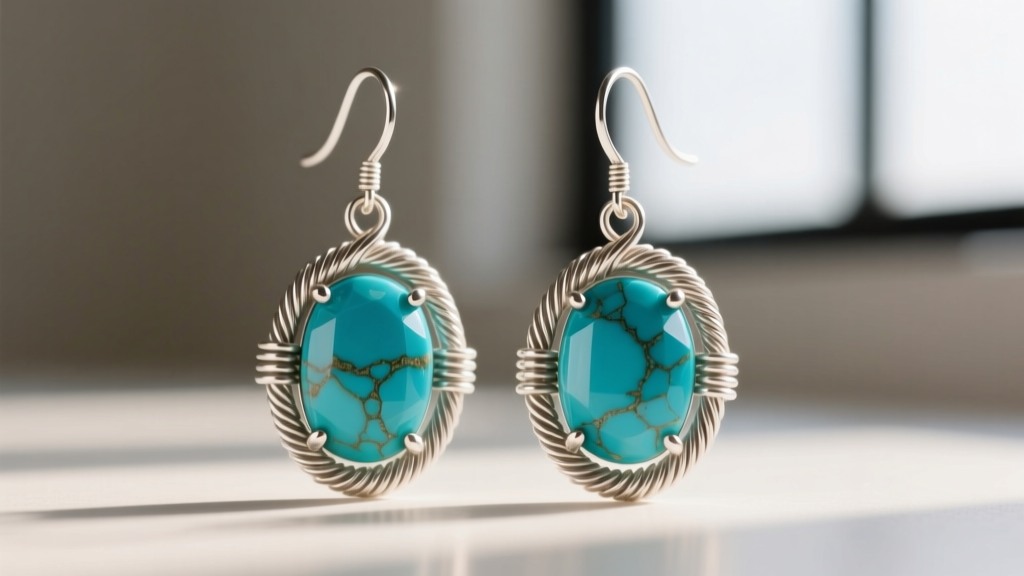
Wire and bead earrings represent one of the most versatile, timeless, and deeply personal categories in jewelry design. Unlike mass-produced cast earrings, pieces crafted from wire and beads offer a unique blend of structural artistry and gemological beauty. Whether you are exploring handmade artisan markets or looking to understand the mechanics of your favorite jewelry box staples, knowing how these earrings are constructed is essential for making informed purchasing decisions. This comprehensive guide breaks down the metallurgy, gemology, and structural engineering behind wire and bead earrings, ensuring you know exactly what to look for regarding comfort, durability, and style.
The Anatomy of Wire and Bead Earrings
At their core, wire and bead earrings rely on the tension, wraps, and loops of metal wire to secure gemstones, glass, or ceramic beads. The most common silhouette is the drop or dangle earring, which typically utilizes a French hook (ear wire) connected to a headpin or eye pin that threads through the bead. The artisan then uses specialized pliers to create a wrapped loop or a simple loop at the top of the bead, securing it in place. The beauty of this construction method lies in its modularity; a single pair of earrings can incorporate multiple beads, wire-wrapped links, and decorative coils, creating a kinetic piece of art that moves fluidly with the wearer.
Decoding Wire Gauges and Hardness
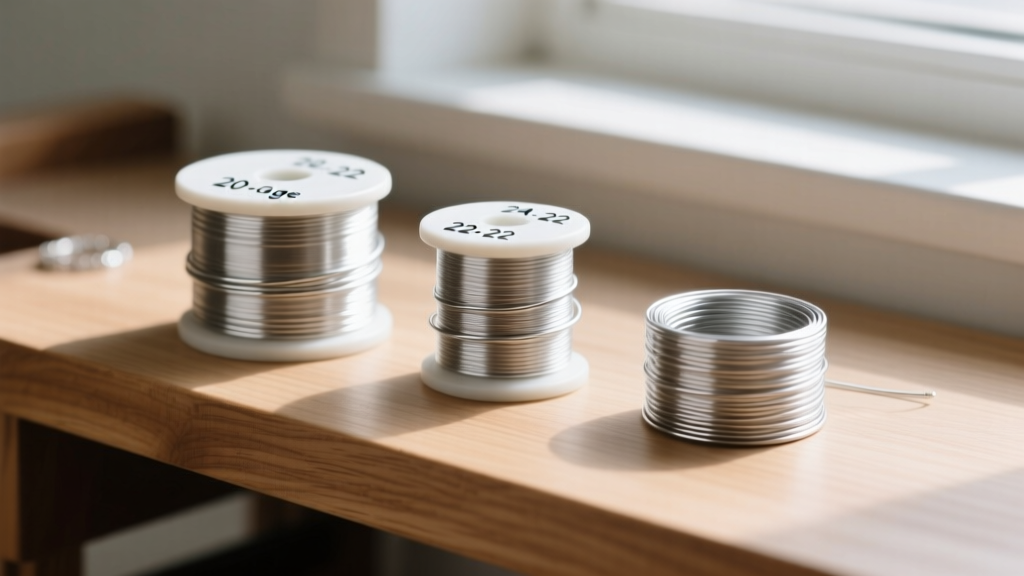
The most critical factor in the longevity and comfort of wire and bead earrings is the metal wire itself. Jewelry wire is measured in gauges (the higher the number, the thinner the wire) and temper (hardness). Understanding these metrics separates cheap, easily broken jewelry from high-quality artisan work.
| Wire Gauge | Diameter (mm) | Best Use in Earrings | Durability Notes |
|---|---|---|---|
| 20-Gauge | 0.81 mm | Ear wires (French hooks), structural links | Sturdy enough to hold shape in the ear lobe; standard for most piercings. |
| 22-Gauge | 0.64 mm | Thicker bead stringing, small wrapped loops | Can bend under heavy bead weight; best for lightweight glass or seed beads. |
| 24-Gauge | 0.51 mm | Intricate wire wrapping, coiling, weaving | Very delicate; strictly for decorative wraps, never for ear wires. |
| 26-Gauge | 0.40 mm | Seed bead stringing, micro-macrame accents | Highly prone to kinking; requires expert handling and tension control. |
Beyond thickness, wire temper dictates how the earring will behave over time. According to jewelry manufacturing standards outlined by Rio Grande, a leading jewelry supply authority, wire comes in three primary tempers: dead soft, half-hard, and full-hard. For the ear wires (the part that actually goes through your piercing), half-hard is the absolute gold standard. Dead soft wire will easily bend out of its hook shape when you take the earrings off, while full-hard wire is too brittle and can snap if adjusted. Half-hard wire offers the perfect balance of malleability for the artisan to shape it, and structural memory to keep it securely in your ear lobe.
Hypoallergenic Metals for Sensitive Piercings
Because the wire passes directly through the ear tissue, metal purity is non-negotiable for those with contact dermatitis or nickel allergies. When shopping for wire and bead earrings, look for these specific metal grades:
- Niobium: An elemental metal that is 100% hypoallergenic and contains no nickel. Artisans love niobium because it can be anodized using electricity to produce vibrant, permanent colors like electric blue, purple, and gold without using dyes or plating that can chip off.
- Implant-Grade Titanium (ASTM F136): The safest metal for fresh piercings or hyper-sensitive ears. It is lightweight, highly resistant to corrosion, and biologically inert.
- Argentium Silver: A modern evolution of sterling silver. By replacing some of the copper with germanium, Argentium silver is highly resistant to tarnish and firescale, making it an excellent, low-maintenance choice for intricate wire wraps.
- 14K Gold-Filled: Not to be confused with gold-plated wire. Gold-filled wire features a thick, mechanically bonded outer layer of 14K gold that makes up at least 5% of the total weight of the wire, ensuring it will not rub off against the ear lobe over years of wear.
Bead Compatibility: Weight, Holes, and Durability
The beads chosen for wire-wrapped earrings must be compatible with the wire gauge and the overall weight distribution of the design. The GIA Gem Encyclopedia notes that different gemstones possess vastly different physical properties, which directly impacts how they should be set in wire.
Standard Bead Hole Sizes and Wire Pairing
Most commercially drilled gemstone and glass beads feature a standard hole size of 0.8mm to 1.0mm. This perfectly accommodates 20-gauge (0.81mm) and 22-gauge (0.64mm) wire. However, pearls and certain delicate organic gems often have much smaller drill holes (0.5mm), requiring the artisan to use 24-gauge wire or to create a custom headpin by hammering the end of a thicker wire to create a 'paddle' stopper.
The Mohs Scale and Wire Protection
When evaluating wire and bead earrings, consider the Mohs hardness scale of the bead material. Soft stones like opal (5.5 - 6.5) or turquoise (5 - 6) can be easily scratched or cracked if the metal wire rubs against them with too much tension. Expert wire wrappers will often use a 'cushion wrap' or incorporate tiny seed beads as bumpers between the metal wire and the soft gemstone to prevent micro-fractures over time. Conversely, hard stones like quartz (7) or beryl (7.5 - 8) can withstand tight, structural wire wrapping without risk of damage.
Styling Wire and Bead Earrings for Your Face Shape
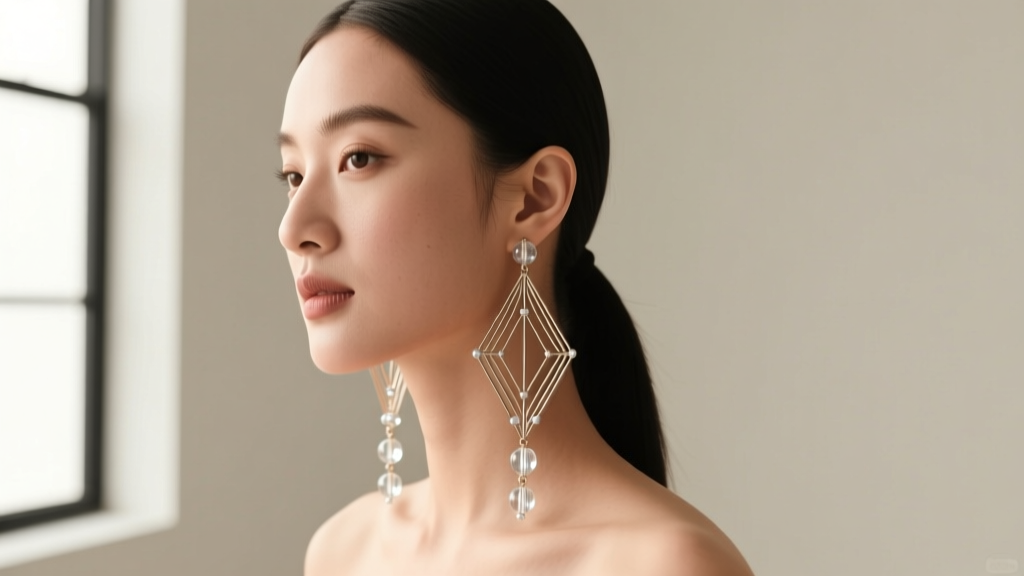
The kinetic nature of wire and bead drop earrings makes them an incredible tool for balancing facial proportions. Because the wire allows the beads to swing and catch the light, they draw the eye vertically or horizontally depending on the design.
- Round Faces: Opt for long, linear wire and bead dangles that feature vertical drops. The elongated silhouette of a 2-inch drop earring helps to visually lengthen the face and draw the eye downward.
- Square Faces: Choose designs that incorporate curved wire elements and round, organic beads like cabochon moonstone or spherical glass beads. The soft curves of the wire wrapping will contrast beautifully with strong jawlines.
- Heart-Shaped Faces: Look for chandelier-style wire earrings that are wider at the bottom than the top. This adds visual weight to the lower half of the face, balancing a narrower chin.
- Oval Faces: You have the versatility to wear almost any style, from tight, bead-heavy cluster drops to minimalist, single-bead wire hooks.
Troubleshooting Common Wearability Issues
Even beautifully crafted wire and bead earrings can present minor wearability challenges. Here is how to troubleshoot the most common issues:
Problem: The ear wire pokes the neck.
Solution: This happens when the loop connecting the ear wire to the bead is too rigid, forcing the hook to angle backward. Gently squeeze the connecting loop with nylon-jaw pliers to allow the bead to hang freely, which will naturally pull the ear wire forward and away from the neck.
Problem: The front-facing bead spins backward.
Solution: If a flat bead (like a coin pearl or a leaf-shaped gemstone) constantly spins to show its edge, the wire loop is too loose. An artisan can fix this by adding a tiny, tight wire wrap directly beneath the bead hole to lock it in a forward-facing position.
Care, Maintenance, and Preventing Wire Fatigue
Wire is subject to 'work hardening'—a metallurgical phenomenon where metal becomes harder and more brittle the more it is bent. To prevent wire fatigue and snapping, never repeatedly bend the ear hook open and closed. Instead, slide the earring through the piercing using the natural curve of the hook. When storing your wire and bead earrings, keep them in individual anti-tarnish ziplock bags to prevent the metal from reacting with sulfur in the air. Avoid spraying perfumes or hairsprays directly onto the piece, as the chemicals can degrade the finish of porous beads like turquoise and accelerate the tarnishing of silver wire.
"The true mark of a master wire artisan is not just in the complexity of the wrap, but in the structural integrity of the ear wire and the protective cushioning provided to the gemstone. A beautiful earring must first be a comfortable, durable earring."
By understanding the interplay between wire gauge, metal temper, and bead geometry, you can confidently select wire and bead earrings that are not only visually stunning but engineered for a lifetime of comfortable wear.


