Pearl Earring Materials: The Woman With Pearl Earring Painting
Explore the material science of pearl earrings, from the iconic woman with pearl earring painting to modern nacre, hardware, and grading.

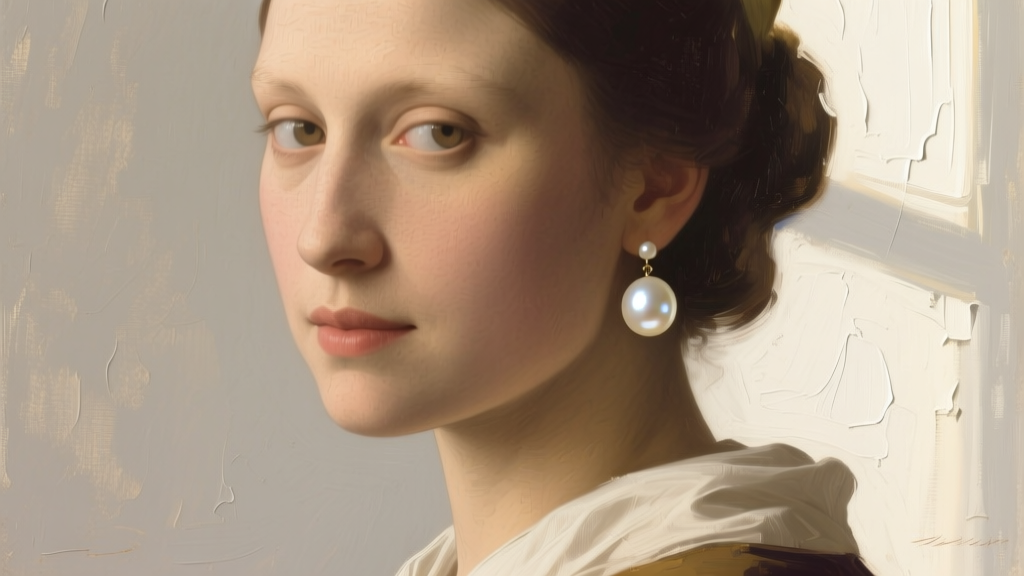
When jewelry historians and art enthusiasts discuss the intersection of fine art and gemology, the conversation inevitably turns to Johannes Vermeer’s 17th-century masterpiece. Often searched by modern audiences as the woman with pearl earring painting (though officially titled Girl with a Pearl Earring), this iconic work captures a massive, light-catching drop earring that seems to defy gravity. But what was the actual material composition of such an earring in the 1650s, and how do the physical properties of pearls dictate the way we design, mount, and wear pearl earrings today?
As we navigate the 2026 jewelry market, understanding the material science of pearls—from their organic aragonite structures to the specific metallurgical requirements of their mounting hardware—is essential for both collectors and everyday wearers. This guide deconstructs the material properties of pearl earrings, comparing natural, cultured, and simulated options through a gemological lens.
The Art History and Material Reality of the Masterpiece
The earring depicted in the famous woman with pearl earring painting is extraordinarily large. Gemologists and art historians have long debated its composition. A natural saltwater pearl of that exact size and perfect spherical shape would have been astronomically rare and heavy, likely causing severe lobe distortion or tearing if worn for long periods. Many material scientists suggest the painting actually depicts a glass or lead-white simulants coated in a reflective lacquer, or perhaps a highly polished drop of tin or silver, designed to mimic the luster of a pearl without the prohibitive weight and cost.
According to research from Essential Vermeer, the artist used lead white and subtle glazes to create the optical illusion of a spherical, reflective surface. Today, modern material science allows us to create lightweight, highly lustrous pearl simulants and cultured alternatives that capture that exact same optical magic without compromising the structural integrity of the earlobe.
Nacre, Aragonite, and Conchiolin: The Science of Pearl Luster
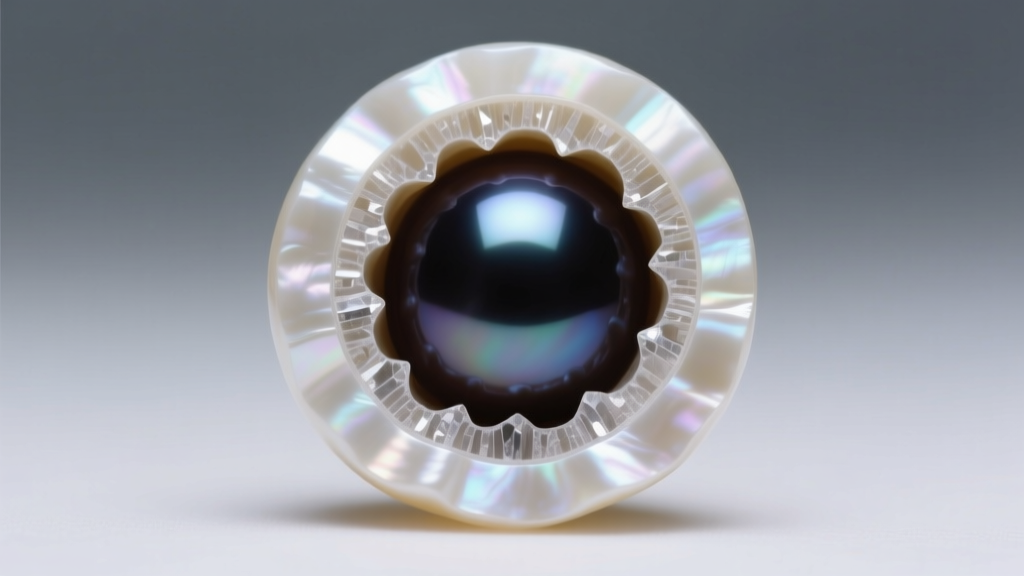
To understand pearl earring materials, we must look at the microscopic level. Unlike faceted gemstones (like diamonds or sapphires) which rely on refractive index and crystal lattice clarity, pearls are organic-inorganic composites.
- Aragonite: A crystalline form of calcium carbonate (CaCO3) that forms microscopic hexagonal platelets.
- Conchiolin: An organic, keratin-like protein that acts as the "glue" binding the aragonite platelets together.
The signature glow of a pearl earring—its luster and orient—is the result of light penetrating these alternating layers of aragonite and conchiolin, refracting and reflecting back to the eye. The Gemological Institute of America (GIA) notes that the thickness and regularity of these nacre layers directly dictate the durability and optical quality of the earring. A pearl with thin nacre will appear chalky and is highly susceptible to peeling, whereas thick nacre provides a deep, mirror-like luster and superior resistance to daily wear.
Comprehensive Pearl Material Comparison Matrix
Not all pearl earrings are created equal. The market is divided into natural, cultured, and simulated materials, each with distinct physical properties, Mohs hardness ratings, and structural vulnerabilities.
| Material Type | Nacre Composition | Mohs Hardness | Typical Earring Weight | Price Range (Studs) |
|---|---|---|---|---|
| Natural Saltwater | 100% solid nacre | 2.5 - 4.5 | 0.5g - 2.0g per pearl | $5,000 - $50,000+ |
| Cultured Akoya | Bead-nucleated (0.1-0.5mm nacre) | 2.5 - 4.5 | 0.8g - 1.5g per pearl | $150 - $1,200 |
| Cultured South Sea | Bead-nucleated (2.0-6.0mm nacre) | 2.5 - 4.5 | 3.0g - 8.0g per pearl | $800 - $10,000+ |
| Cultured Freshwater | Tissue-nucleated (100% solid nacre) | 2.5 - 4.5 | 1.0g - 3.0g per pearl | $50 - $800 |
| Majorica (Simulant) | Glass core, guanine crystal coating | 5.0 - 6.0 (Glass core) | 1.5g - 4.0g per pearl | $100 - $400 |
| Shell/Plastic Simulant | Plastic or ground shell, pearlescent paint | 1.5 - 3.0 | 0.2g - 1.0g per pearl | $10 - $50 |
Note: While pearls rank low on the Mohs scale, making them vulnerable to scratches from metals and other gems, their toughness (resistance to breaking) is surprisingly high due to the interlocking aragonite platelets and flexible conchiolin matrix.
Hardware and Mounting: Securing Soft Organic Gems
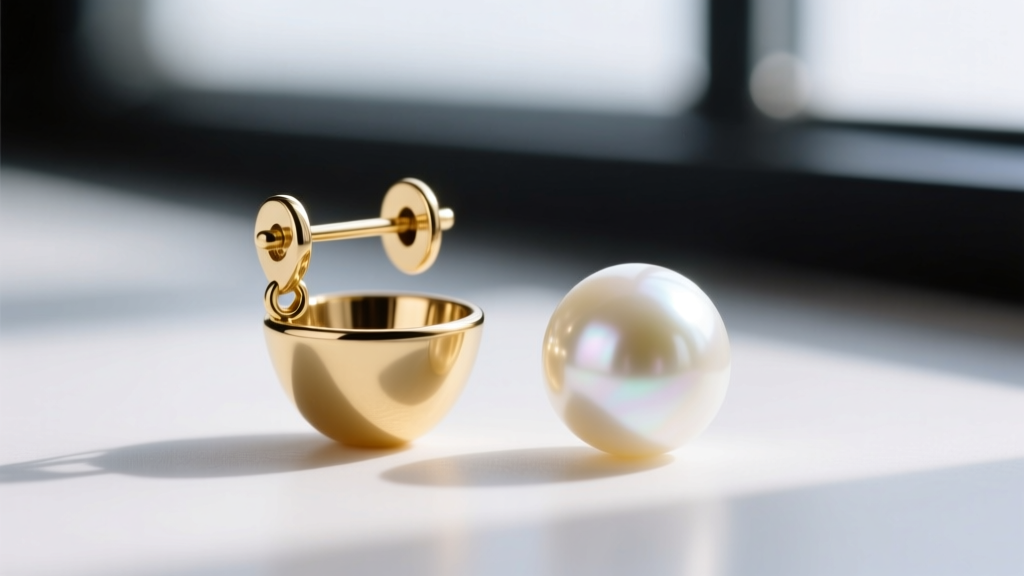
The material properties of pearls require highly specialized jewelry hardware. Because pearls are organic and relatively soft, they cannot be prong-set like diamonds. Instead, they are mounted using a peg and cup system.
Pegging, Cupping, and Adhesives
High-quality pearl earrings utilize a half-drilled hole (typically 0.8mm to 1.0mm in diameter, drilled about halfway through the pearl). The earring post is manufactured with a small metal cup and a protruding peg, usually in 18k gold, 14k gold, or platinum.
The choice of adhesive is a critical material decision that separates fine jewelry from mass-market accessories:
- Two-Part Epoxy Resin: The industry standard for fine pearl earrings. Epoxy remains slightly flexible after curing, accommodating the natural expansion and contraction of the organic pearl in varying temperatures and humidity levels.
- Cyanoacrylate (Super Glue): Often used in cheap, mass-produced earrings. This adhesive cures rigid and brittle. Over time, it will shrink, degrade the organic conchiolin inside the drill hole, and inevitably cause the pearl to pop off the post.
Friction Backs vs. La Pousette Backs
For heavier cultured pearls, such as South Sea or large Tahitian drops (which can exceed 4 grams per ear), standard butterfly friction backs are insufficient. The weight of the pearl will cause the earring to droop, stretching the earlobe piercing. Expert jewelers recommend La Pousette backs (which use a mechanical spring-loaded locking mechanism) or jumbo silicone disc backs to distribute the weight across a wider surface area of the earlobe, preventing material fatigue and tissue tearing.
Longevity and Material Degradation
Unlike the eternal nature of diamonds, pearl earrings are dynamic materials that interact with their environment. The calcium carbonate structure of nacre is highly susceptible to acidic degradation. Human sweat, which has a pH ranging from 4.5 to 7.0, can slowly dissolve the aragonite platelets over years of continuous wear, leading to a loss of luster and a chalky surface texture.
To preserve the material integrity of pearl earrings, adhere to the following protocol:
- Chemical Isolation: Always apply perfumes, hairsprays, and acidic skincare products before putting on pearl earrings. Alcohol and volatile organic compounds (VOCs) can dry out the conchiolin, leading to micro-cracking.
- Hydration: Pearls require ambient moisture. Storing them in airtight plastic bags or bank vaults without a humidifier can cause the organic matrix to dehydrate and crack.
- Mechanical Protection: Never store pearl earrings loose in a jewelry box where they can come into contact with harder materials (like gold chains or diamond rings). The 2.5 Mohs hardness of nacre will be easily scratched by any metal or faceted gemstone.
Conclusion
Whether you are marveling at the optical illusions in the woman with pearl earring painting or selecting a pair of modern Akoya studs, understanding the material science of pearls elevates your appreciation of these organic gems. From the microscopic layers of aragonite to the precise metallurgical engineering of the earring posts, every element is designed to protect and showcase one of nature's most delicate and beautiful creations.


