Dangle Bead Earrings: Material Comparison for Weight and Drape
Compare glass, gemstone, and resin dangle bead earrings. Learn how material density impacts earlobe comfort, swing dynamics, and long-term durability.

The Physics of the Dangle: Static vs. Dynamic Load
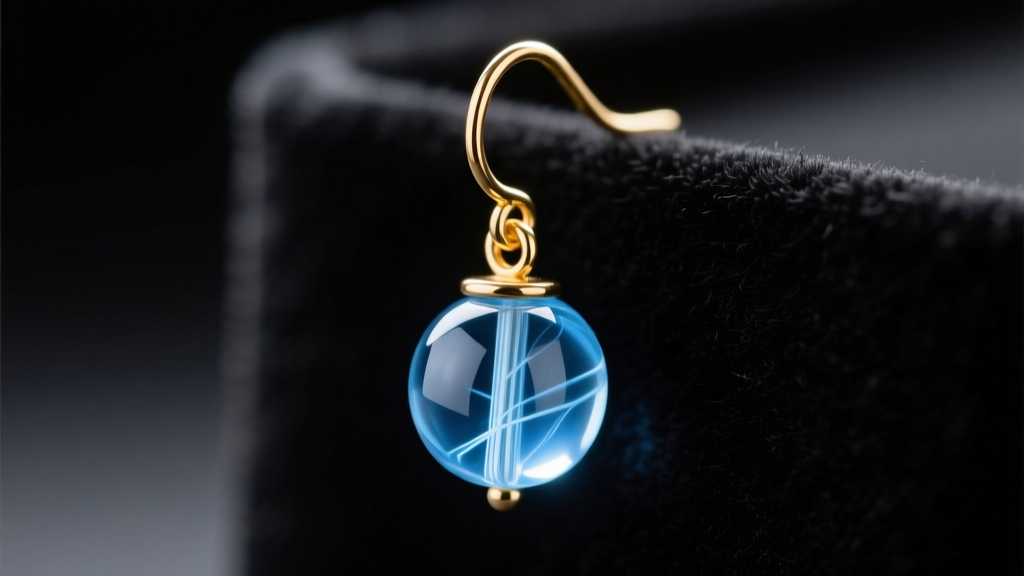
When selecting or designing dangle bead earrings, most consumers focus solely on aesthetics. However, as a kinetic piece of jewelry, a dangle earring is subject to the laws of physics. The primary concern is not just the static weight of the bead, but the dynamic load it exerts on the earlobe during movement. A 12-gram gemstone bead hanging still exerts 12 grams of downward force. But when the wearer walks, turns their head, or dances, the pendulum effect can multiply that force by 1.5x to 2x at the bottom of the swing arc.
This dynamic stress is the leading cause of earlobe stretching, micro-tears, and eventual piercing migration. According to dermatological guidelines on piercing care, sustained tension on the fistula (the piercing hole) causes collagen breakdown over time. Therefore, understanding the density and material properties of your beads is critical for balancing dramatic drape with long-term earlobe health.
Material Density & Properties Comparison
Density dictates how large a bead can be before it becomes unwearable for a standard 20-gauge ear piercing. Below is a comparative breakdown of common bead materials used in dangle earrings, referencing data from the Gemological Institute of America (GIA) and standard metallurgical benchmarks.
| Material | Density (g/cm³) | Mohs Hardness | Max Comfortable Volume | Best Use Case |
|---|---|---|---|---|
| Natural Jadeite | 3.30 - 3.38 | 6.5 - 7.0 | 10mm round | Short, structured drops |
| Lead-Free Crystal | 2.80 - 3.00 | 6.0 - 7.0 | 12mm briolette | Light-catching evening wear |
| Murano / Lampwork Glass | 2.50 - 2.60 | 5.5 - 6.5 | 14mm rondelle | Artisan statement pieces |
| Quartz / Agate | 2.60 - 2.65 | 7.0 | 12mm faceted | Everyday durable dangles |
| Hardwood (e.g., Ebony) | 1.10 - 1.20 | N/A (Janka scale) | 25mm carved | Boho, oversized lightweight |
| Epoxy Resin / Polymer | 1.05 - 1.25 | 2.0 - 3.0 | 40mm+ geometric | Massive architectural dangles |
Deep Dive: Glass, Gemstone, and Synthetic Beads
Glass and Crystal: The Refractive Heavyweights
Glass beads, particularly artisan lampwork or precision-cut crystal, offer unparalleled light refraction. However, their density hovers around 2.5 to 3.0 g/cm³. When designing long, multi-tiered glass dangle bead earrings, the cumulative weight quickly exceeds the 15-gram comfort threshold per ear. To mitigate this, master jewelers often pair a single, high-quality glass focal bead with lighter metal spacers or hollow metal beads to maintain the visual length without adding excessive mass.
Natural Gemstones: The Density Trap
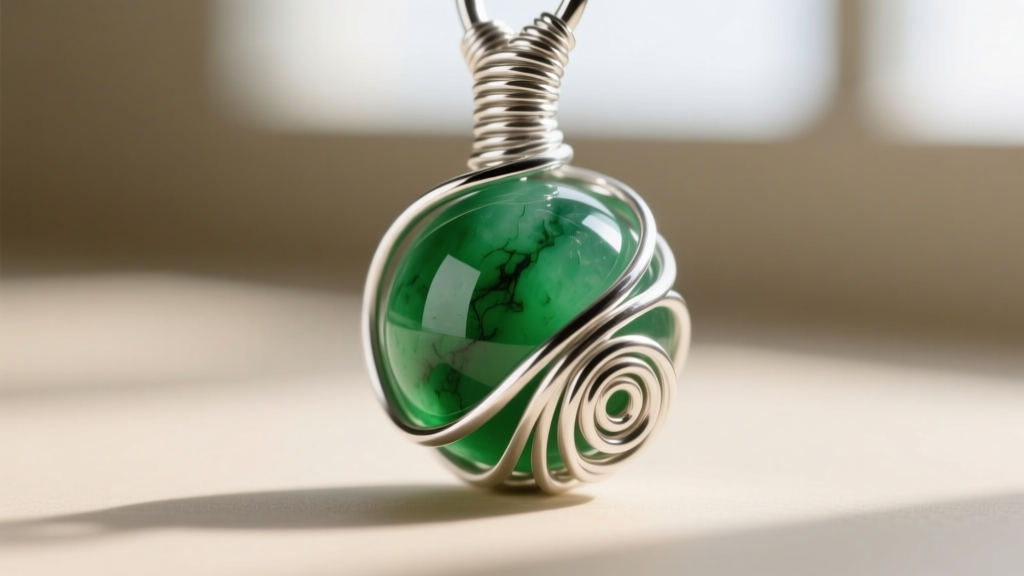
Gemstones are notoriously dense. Jadeite, for instance, is significantly heavier than quartz. A 15mm jadeite briolette can easily weigh 8 grams on its own. When you add the brass or silver wire wrapping, the jump ring, and the ear wire, a seemingly modest gemstone dangle can pull heavily on the lobe. Furthermore, natural gemstones are brittle. If a long gemstone dangle swings and strikes a hard surface (like a smartphone or a desk edge), the kinetic energy transfers directly to the bead's drill hole, which is its structural weak point, leading to catastrophic splitting.
Resin, Polymer, and Wood: The Oversized Solution
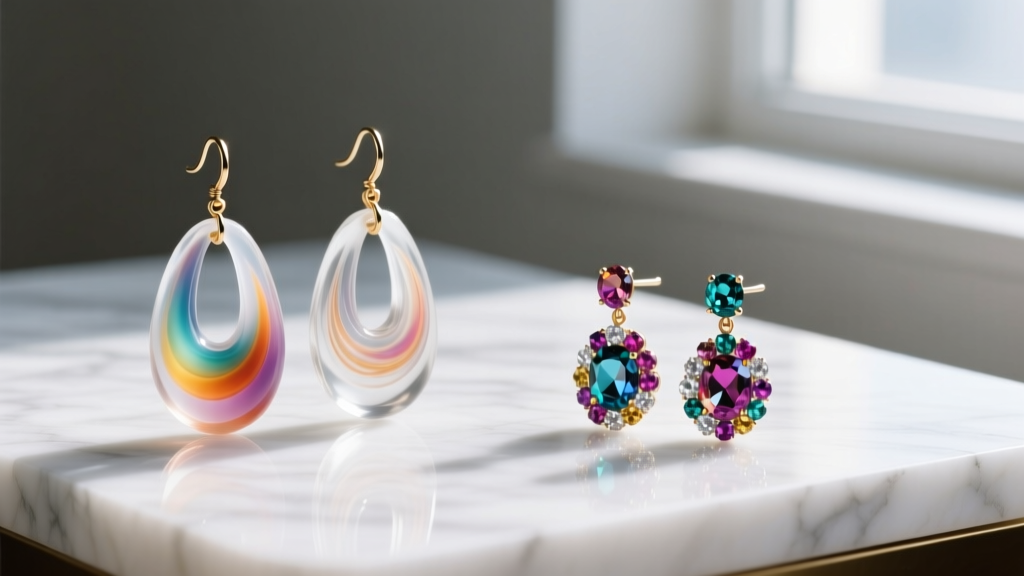
If your design calls for dramatic, shoulder-grazing dangle bead earrings, synthetics and organics are your best allies. Epoxy resin and polymer clays have a density nearly identical to water (approx. 1.1 g/cm³). This allows designers to create massive, 50mm geometric or floral beads that weigh less than 4 grams each. Wood offers a similar advantage, though it requires careful sealing to prevent moisture absorption and warping from the natural oils of the skin and hair products.
Hardware Metallurgy: Wire Temper and Gauge
The most common failure point in dangle bead earrings is not the bead itself, but the wire connecting it to the ear. Understanding wire temper is non-negotiable for jewelry longevity. According to Rio Grande, a premier jewelry supply house, wire is categorized by its hardness or "temper."
- Dead-Soft Wire: Highly malleable. Excellent for intricate weaving, but terrible for dangles. The pendulum motion of a swinging bead will quickly bend dead-soft wire, causing the bead to drop or the wire wrap to unspool.
- Half-Hard Wire: The gold standard for dangle bead earrings. It has been work-hardened enough to resist the dynamic pulling of a swinging bead, maintaining its structural tension and keeping the bead securely suspended.
- Full-Hard Wire: Too stiff for most wire-wrapping applications and prone to snapping if bent repeatedly.
Expert Tip: For any dangle bead exceeding 6 grams, upgrade your ear wire from a standard 20-gauge (0.81mm) to an 18-gauge (1.02mm) half-hard wire. Additionally, switch from a standard French hook to a leverback or kidney wire. The locking mechanism prevents the heavy bead from pulling the earring completely out of the fistula during vigorous movement.
The Hidden Danger: Bead Hole Drilling Quality
A frequently overlooked aspect of material properties is the quality of the bead's drill hole. Gemstones and glass are typically drilled using diamond-tipped core bits. If the artisan drilling the bead does not ease the pressure as the bit exits the stone, it causes a "blowout"—a jagged, microscopic crater at the exit hole.
In a dangle earring, the wire rests directly against this hole. Over months of swinging, a jagged blowout acts like a microscopic saw, slowly fraying and eventually severing sterling silver or gold-filled wire. To prevent this, high-end jewelry makers use a diamond bead reamer to smooth the interior of the hole, or they thread a tiny "wire guardian" (a horseshoe-shaped metal tube) through the bead to protect the structural wire from abrasive friction.
Maintenance and Care by Material
Proper maintenance ensures the kinetic beauty of your dangles lasts for years:
- Porous Materials (Wood, Turquoise, Pearl): Never use ultrasonic cleaners or chemical dips. The vibrations can shatter the bead, and chemicals will strip natural oils. Wipe gently with a damp microfiber cloth.
- Glass and Crystal: Safe for ultrasonic cleaning, but ensure the wire wraps are secure first. Clean with a mild dish soap solution and dry immediately to prevent water spots on the glass.
- Hardware Polish: Because dangles swing against the neck and hair, the ear wires accumulate skin oils and hair product residue rapidly. Wipe the ear wires with an alcohol pad after every 3-4 wears to maintain hygiene and prevent contact dermatitis.
By respecting the density, hardness, and dynamic physics of your chosen materials, you can curate a collection of dangle bead earrings that are not only visually captivating but structurally engineered for lifelong comfort and durability.


