Woman With The Pearl Earring: Technical Guide To Vermeer's Drop
An expert gemological and structural analysis of the iconic woman with the pearl earring, covering pearl grading, weight tolerance, and modern sourcing.

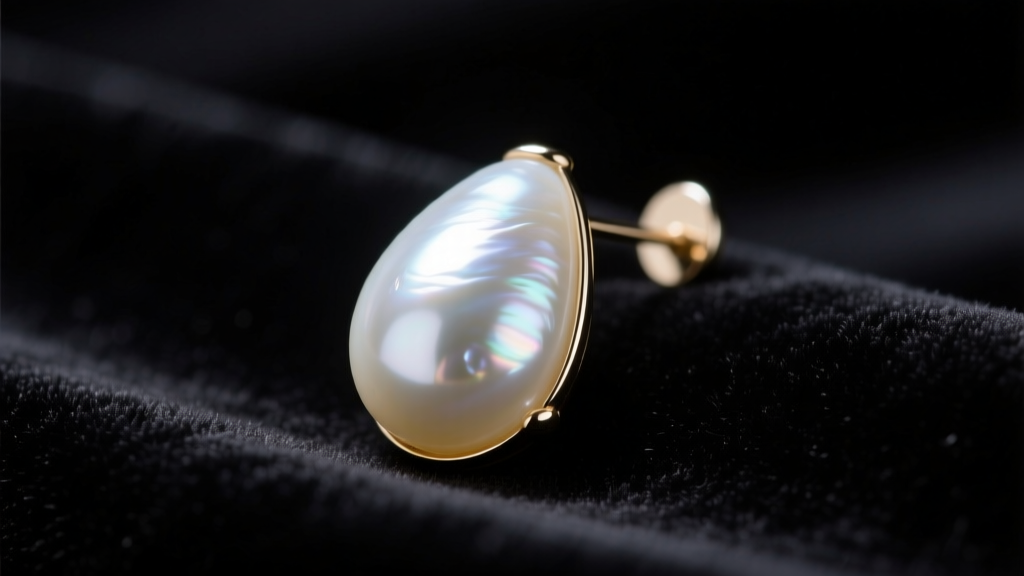
Johannes Vermeer’s 1665 masterpiece is globally recognized, but jewelers, gemologists, and structural designers look past the enigmatic gaze to focus on the massive, light-catching drop resting against the subject's jawline. The search for the real-life inspiration behind the woman with the pearl earring leads us into a fascinating intersection of 17th-century global trade, optical illusion, and modern biomechanical jewelry design. Today, we are stripping away the art history romance to conduct a forensic, technical deep dive into this specific earring style. How heavy would it be? What gauge wire is required to support it without causing tissue damage? And how can you source a gemologically accurate, structurally sound replica today?
The Physics of Vermeer’s Drop: Size, Weight, and Lobe Tolerance
To understand the physical reality of this earring, we must first establish its dimensions through proportional analysis. The pearl in the painting spans roughly the width of the subject's eye and extends down toward the corner of her mouth. Based on average human facial anthropometry, this indicates a pearl diameter between 14mm and 18mm. In the gemological world, a 14mm+ round saltwater pearl is considered exceptionally large, entering the realm of investment-grade collector stones.
Weight Calculations and Biomechanical Stress
A high-quality 16mm round White South Sea pearl weighs approximately 4.5 to 5.5 grams. When you add a solid gold peg-and-cup setting and a heavy-duty earring finding, the total weight reaches 6.5 to 8 grams. This presents a severe biomechanical challenge for the human ear.
- Standard Lobe Tolerance: A standard pierced earlobe comfortably supports 2 to 4 grams for extended periods.
- The Cheese-Cutter Effect: Sustained wear of an 8-gram drop on a thin 22-gauge (0.64mm) wire will concentrate kinetic force on a microscopic surface area. Over months, this slowly migrates the piercing downward, stretching the collagen matrix and eventually tearing the tissue.
- Structural Solution: To wear a 15mm+ drop safely, the earring must be constructed on an 18-gauge (1.0mm) or 16-gauge (1.3mm) French wire or leverback. Furthermore, the piercing itself should ideally be healed at a 16-gauge thickness to properly distribute the kinetic load across the earlobe.
Material Forensics: Was It Even a Real Pearl?
During the Dutch Golden Age, the VOC (Dutch East India Company) imported vast quantities of luxury goods, but a flawless 16mm+ round pearl was a statistical anomaly. Such massive gems were strictly reserved for European royalty. This leads gemologists to two primary theories regarding what the woman with the pearl earring is actually wearing.
Theory 1: The Glass Imitation (Essence d'Orient)
Art historians widely suspect Vermeer painted a glass or tin-foil backed imitation. In the 17th century, "Parisian pearls" were incredibly popular. These were hollow glass beads coated with essence d'orient—a mixture of ground guanine crystals (extracted from herring fish scales) suspended in lacquer. This coating created a mirror-like, highly reflective surface that perfectly matches the stark, specular highlight Vermeer painted on the upper left quadrant of the drop.
Theory 2: The Baroque Freshwater
Alternatively, it could have been a large, irregular baroque freshwater pearl from European rivers. By carefully positioning the earring so the smoothest, most highly polished curve faced the light source, a skilled painter could create the illusion of a perfectly spherical gem.
| Material Type | Typical Size Range | Luster Grade | Weight (16mm) | Price Estimate (USD) |
|---|---|---|---|---|
| White South Sea | 14mm - 18mm | Very High to Excellent | 5.0g - 6.5g | $1,500 - $4,500+ |
| Edison Freshwater | 14mm - 18mm | High to Very High | 4.5g - 5.5g | $300 - $900 |
| Essence d'Orient Glass | 14mm - 20mm | Mirror-like (Artificial) | 8.0g - 12.0g | $20 - $80 |
Sourcing and Setting Mechanics for Heavy Drops
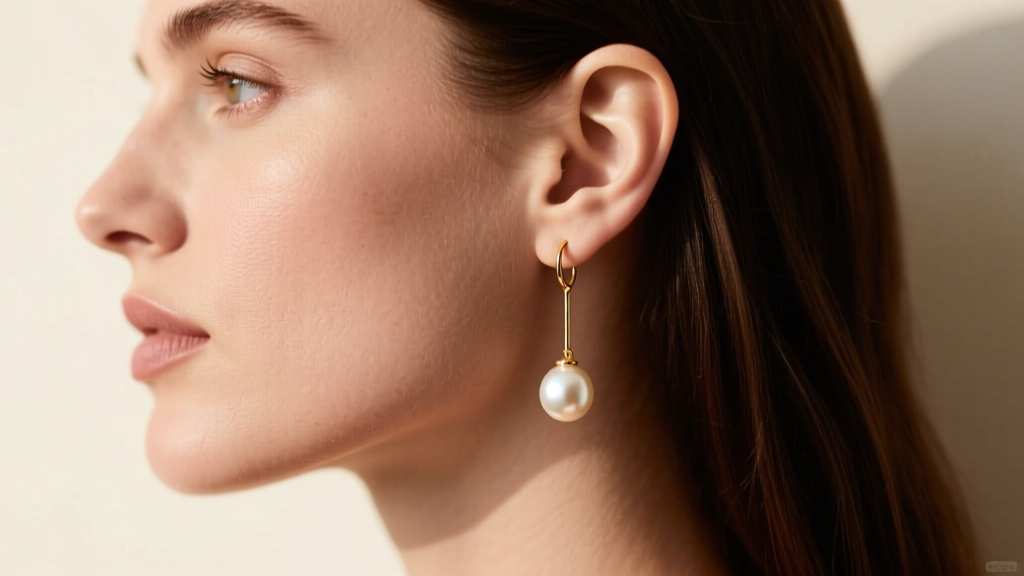
If you are commissioning a modern replica of the earring worn by the woman with the pearl earring, the setting mechanics are just as critical as the gemstone selection. Large pearls of this magnitude require specialized jewelry engineering to prevent catastrophic loss.
The Peg-and-Cup System vs. Full Drilling
Large pearls are rarely drilled all the way through for a simple wire wrap. A full drill hole compromises the structural integrity of the nacre at the exit point, making it highly susceptible to chipping when subjected to the swinging motion of a heavy drop earring. Instead, master jewelers use a peg-and-cup setting.
"For pearls exceeding 12mm, a half-drilled hole paired with a precisely machined 14k or 18k gold peg is the industry standard. This preserves the nacre's outermost layers and provides a secure anchor point that can withstand lateral kinetic forces."
The pearl is cemented to the gold post using a specialized two-part jeweler's epoxy (such as Devcon 5-Minute Epoxy or G-S Hypo Cement for lighter applications). The cup must be contoured to match the exact curvature of the pearl's base to prevent stress fractures.
Nacre Thickness Requirements
According to the Gemological Institute of America (GIA), nacre thickness dictates a pearl's longevity and optical depth. For a heavy drop earring that will experience accidental bumps and kinetic swinging, you must demand a minimum nacre thickness of 2.0mm. Anything thinner risks peeling, flaking, or chipping at the drill hole margin, destroying the gemstone's value and structural soundness.
Optical Illusions: Recreating the "Vermeer Highlight"
The most striking feature of the painting is the stark, white specular highlight on the pearl, accompanied by a secondary, softer reflection near the bottom edge. Recreating this optical phenomenon in real life requires strict adherence to specific gemological grading factors.
- Luster Quality: You need a gem with "Excellent" luster, meaning the light return is sharp, distinct, and mirror-like. Blemishes or chalky nacre scatter light and destroy the sharp highlight Vermeer painted.
- Surface Grading: The surface must be graded "Clean" to "Very Lightly Blemished." Any significant pits or ridges on the upper quadrant will interrupt the specular reflection.
- Orient and Overtone: While the painting depicts a stark white pearl, real White South Sea pearls often exhibit subtle rosé or silver overtones. To strictly mimic the painting, seek a pearl with a neutral to very faint silver overtone, which reads as pure white under natural window light.
Face Shape and Styling Framework
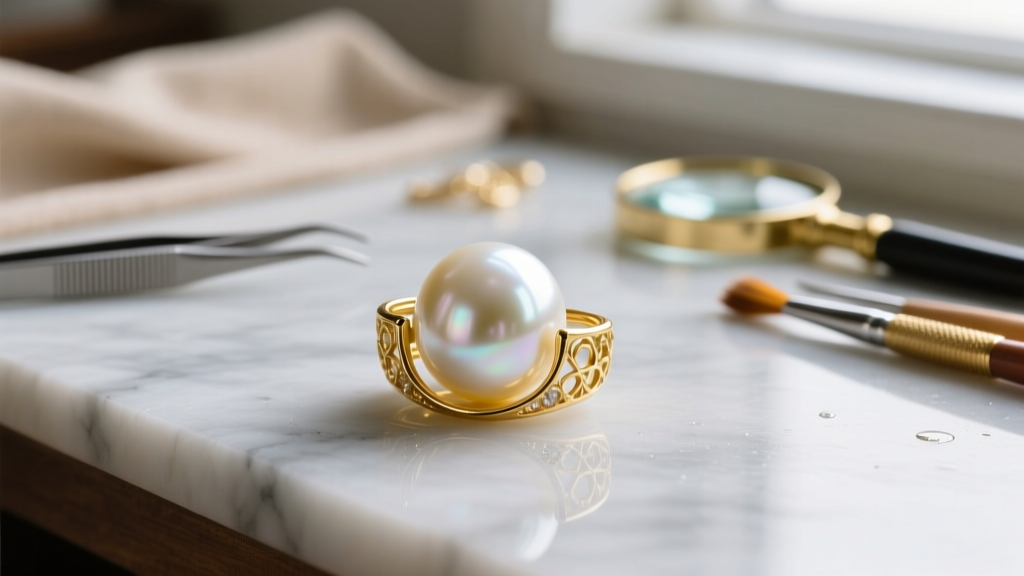
A 16mm drop is a massive statement piece that fundamentally alters the visual geometry of the face and neck. When styling a modern interpretation of this historic piece, consider the following technical framework:
Facial Proportions
Round and Square Faces: The elongated teardrop or large round drop creates a strong vertical line that visually lengthens the face, softening strong jawlines and wide cheekbones. The heavy drop draws the eye downward, creating an illusion of a more oval facial structure.
Oblong Faces: Proceed with caution. A massive 18mm drop can over-elongate the face. If you have a naturally long face, opt for a slightly shorter earring finding or scale the pearl down to 12mm-14mm to maintain harmonious proportions.
Neckline and Textile Pairings
To avoid visual clutter and protect the gemstone, this earring demands an open neckline (scoop, V-neck, or off-the-shoulder). High collars, ruffled blouses, or heavy wool scarves will compete with the pearl's luster and, more importantly, risk scratching the nacre against rough textiles. The pearl should rest against bare skin or delicate silk to maximize the contrast that made Vermeer's original composition so iconic.
Conclusion: The Intersection of Art and Engineering
Visiting the Mauritshuis museum in The Hague to view the original canvas is a profound experience, but viewing it through the lens of a jeweler adds an entirely new dimension of appreciation. Understanding the physical reality—the sheer weight of the gem, the structural necessity of heavy-gauge wire, and the complex optical physics of nacre—deepens our respect for both the artist and the anonymous subject. Whether you are sourcing a museum-grade South Sea replica or a historically accurate glass imitation, the legacy of this iconic drop continues to dictate the highest standards of statement earring design.


