Women's Clip Earrings: A Material & Comfort Guide
Discover the best materials for women's clip earrings. Compare metals, padding types, and mechanisms for all-day comfort and style.

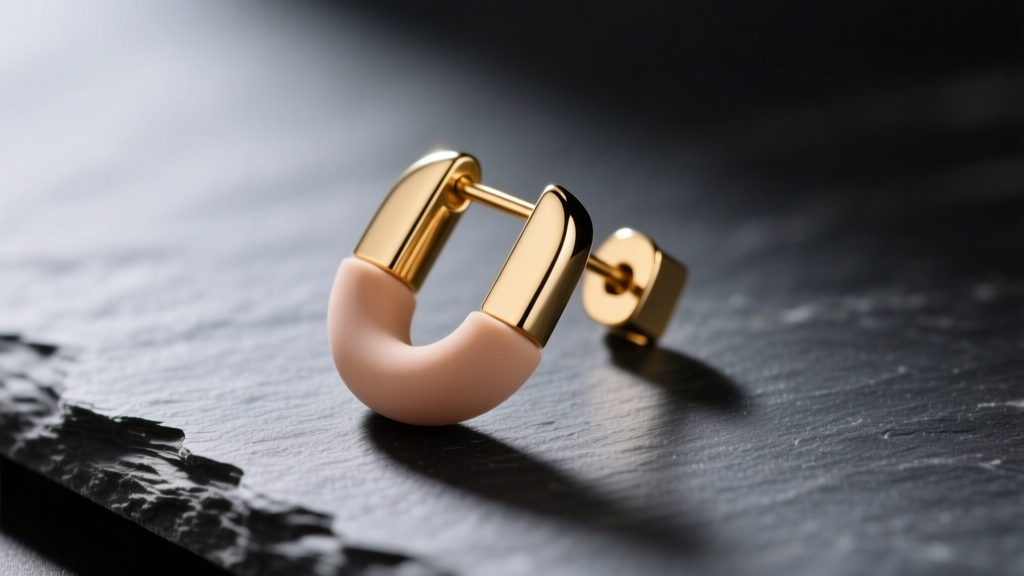
The modern jewelry market has witnessed a massive renaissance in non-pierced options, driven by advanced metallurgy and ergonomic design. Today, women's clip earrings are no longer the painful, heavy relics of the mid-20th century. Instead, they represent a sophisticated intersection of material science, mechanical engineering, and aesthetic design. For collectors and daily wearers alike, understanding the specific materials used in both the clamping mechanism and the decorative elements is crucial for ensuring longevity, hypoallergenic safety, and all-day comfort.
The Metallurgy of Non-Pierced Jewelry: Why Materials Matter
Unlike pierced earrings, where the metal passes through the earlobe, clip-ons rely on surface tension and friction against the skin. The outer layer of the earlobe is highly vascular and sensitive. Prolonged pressure from reactive metals can cause micro-abrasions, leading to localized contact dermatitis. According to the American Academy of Dermatology, nickel is one of the most common culprits for allergic contact dermatitis. Therefore, the base metal of the clip mechanism must be carefully selected and properly sealed or plated to prevent skin reactions, even without a puncture wound.
Base Metals vs. Precious Alloys in Clip Mechanisms
A common misconception among consumers is that a "solid gold" clip mechanism is superior. From a metallurgical standpoint, pure gold (24k) or even high-karat alloys (18k) are entirely unsuitable for the spring hinge of a tension clip. These precious metals are highly malleable and lack the necessary spring temper—the ability of a metal to return to its original shape after being bent or stressed. If a clip hinge were made of solid gold, it would permanently deform after just a few uses, losing its clamping force entirely.
The Role of Spring-Hard Brass and Beryllium Copper
To solve this, expert jewelers utilize base metals with high yield strengths, such as spring-hard brass or beryllium copper. These alloys can be heat-treated to achieve a specific Vickers hardness that allows the hinge to snap back into place thousands of times without material fatigue. Once the structural integrity is established, the metal is plated. The Federal Trade Commission (FTC) Jewelry Guides strictly regulate these platings. For a piece to be labeled "gold vermeil," the base must be sterling silver, and the gold plating must be at least 2.5 microns thick. For standard gold-plated clip-ons, the layer is often thinner (0.5 to 1.0 microns), making it more susceptible to wear from the friction of daily application and removal.
The Comfort Matrix: Padding and Contact Materials
The interface between the metal clip and the earlobe is where comfort is won or lost. Modern manufacturers utilize three primary padding materials, each with distinct physical properties and failure modes.
| Padding Material | Durometer / Hardness | Friction Coefficient | Lifespan & Failure Mode |
|---|---|---|---|
| Medical-Grade Silicone | Shore A 40-50 (Flexible) | High (Grips skin well) | 5+ years; fails via tearing if stretched over sharp metal edges. |
| Cast U-Shape Resin | Shore D 70 (Rigid) | Medium (Smooth glide) | Indefinite; fails if the adhesive bonding it to the metal degrades. |
| Open-Cell Foam | Very Low (Compressible) | Low (Slips on oily skin) | 6-12 months; fails via compression set and absorption of skin oils. |
For heavy dangle styles, U-shaped medical-grade silicone is the gold standard. Its high friction coefficient prevents the earring from sliding down the lobe, while its Shore A 40-50 durometer provides enough cushioning to distribute the clamping force over a wider surface area, reducing localized pressure points.
Mechanical Stress and Material Fatigue
The mechanism type dictates how the materials endure stress over time. The two dominant designs are the tension clip and the screw-back.
Tension Clips vs. Screw-Backs
Tension clips rely entirely on the spring temper of the metal hinge. They are quick to apply but offer a fixed clamping pressure. If the manufacturer uses a low-grade zinc alloy (often found in fast-fashion jewelry) instead of spring-hard brass, the hinge will suffer from "creep"—a slow, permanent deformation under constant stress. This results in a loose clip that falls off unpredictably.
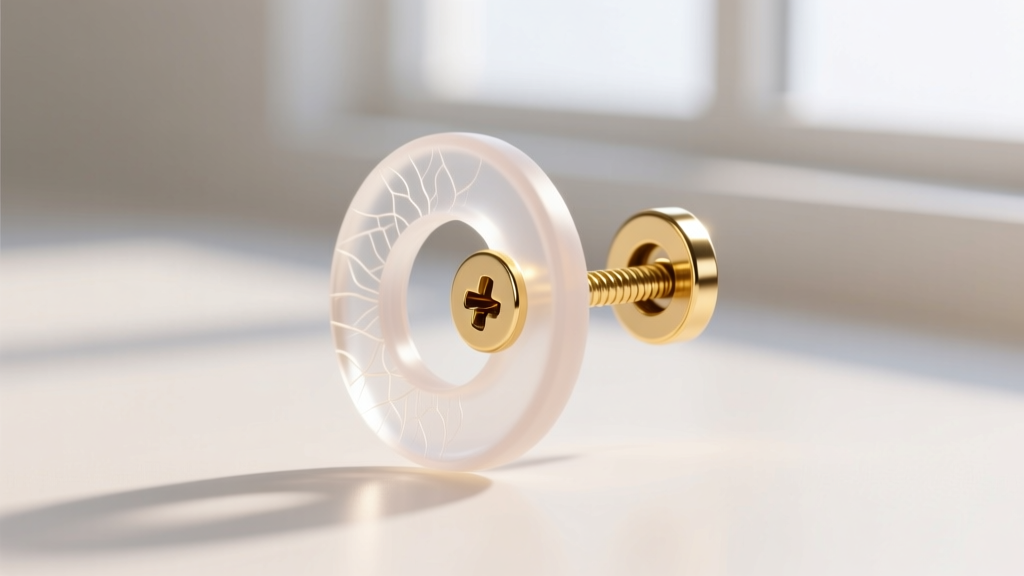
Screw-back mechanisms, conversely, separate the clamping force from the spring tension. A threaded stainless steel or brass shaft allows the wearer to micro-adjust the pressure. This is vastly superior for sensitive ears, as the wearer can dial in the exact millimeter of clearance needed. However, the threaded shaft requires precise machining; cross-threading or stripping the soft brass nut is a common failure point in poorly manufactured screw-backs.
Weight Distribution: Acrylics, Resins, and Hollow-Form Metals
Material density plays a critical role in the wearability of women's clip earrings, particularly in dangle and drop styles. The human earlobe acts as a fulcrum. If the decorative element of the earring is too dense (e.g., solid glass, natural carved stone, or solid bronze), the center of gravity shifts too far below the clip. This creates a lever effect, causing the top of the clip to dig painfully into the upper cartilage of the lobe while the bottom pad loses contact with the skin.
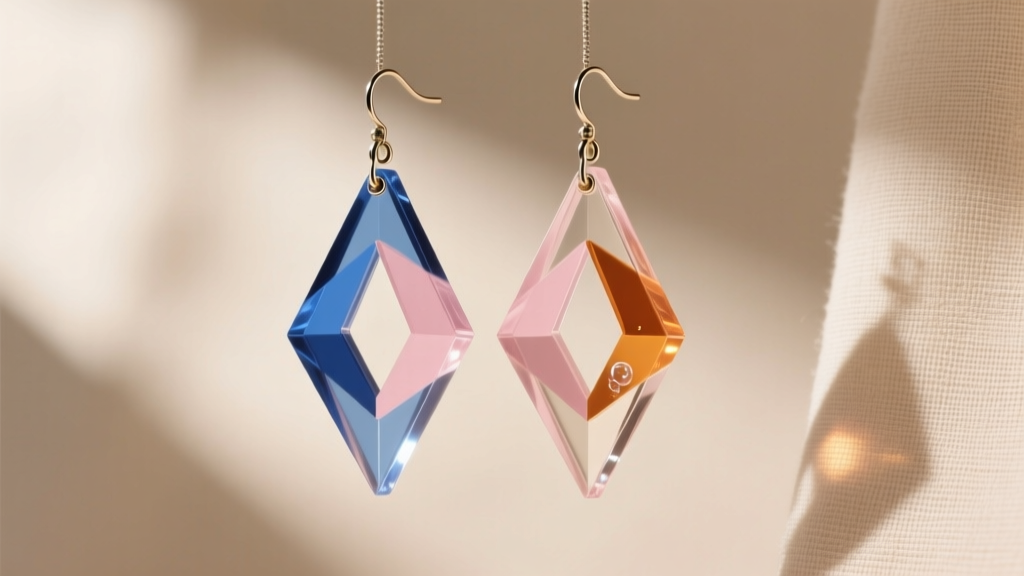
To combat this physics problem, high-end designers turn to advanced lightweight materials:
- Electroformed Metals: A process where copper or silver is deposited over a wax mold, which is later melted out, leaving a hollow, incredibly lightweight metal shell that looks solid but weighs a fraction of the original.
- Cast Acrylics and Lucite: Offering the optical clarity of glass but with roughly half the density, making them ideal for oversized geometric clip-ons.
- Carved Botanical Resins: Modern epoxy resins can be formulated to mimic the appearance of jade, tortoiseshell, or horn, providing high visual impact with minimal structural weight.
Real-World Pricing and Durability Tiers
When shopping for non-pierced earrings, the price is almost always a direct reflection of the material science and mechanical engineering involved. Understanding these tiers helps set accurate expectations for longevity.
- Tier 1: Fast Fashion ($10 - $25): Typically features cast zinc alloy mechanisms with low-friction foam pads. The plating is usually a flash-coat (under 0.2 microns) that will wear through to the reactive base metal within weeks of daily use. Best reserved for occasional, short-term wear.
- Tier 2: Mid-Tier & Vintage Reproduction ($45 - $120): Utilizes spring-hard brass bases with 1.0 to 2.5-micron gold or rhodium plating. Pads are usually silicone or high-density resin. These offer excellent durability and can last for years with proper care and storage.
- Tier 3: Artisan & Luxury ($150 - $400+): Features precision-machined screw-backs in stainless steel or beryllium copper, overlaid with heavy gold vermeil or solid 14k/18k gold decorative elements. The silicone pads are often custom-molded to the specific geometry of the clip, ensuring perfect weight distribution for heavy gemstone drops.
Expert Verdict: Matching Material to Lifestyle
The ideal material composition for women's clip earrings depends entirely on your wearing habits. If you require all-day comfort for a professional environment, prioritize screw-back mechanisms with medical-grade silicone padding and electroformed or acrylic decorative elements to keep the center of gravity high. For evening wear where maximum visual impact is desired, tension clips with cast resin or hollow-form vermeil drops offer the perfect balance of security and striking aesthetics. By looking past the surface finish and evaluating the underlying metallurgy and padding durometer, you can build a non-pierced jewelry collection that is as comfortable as it is beautiful.


