Troubleshooting Silver Flower Earrings Dangle Designs
Fix tarnish, snags, and lobe stretch with our expert guide for silver flower earrings dangle designs. Restore your floral jewelry today.

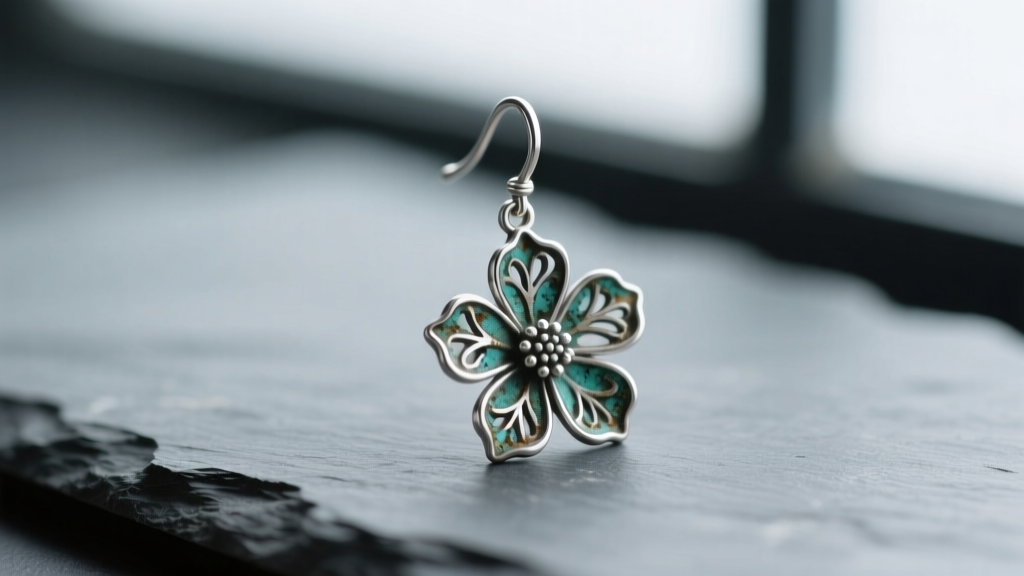
The Hidden Mechanics of Floral Dangle Earrings
Sterling silver botanical jewelry is a perennial favorite, but intricate floral designs introduce unique structural and chemical vulnerabilities. When you invest in high-quality silver flower earrings dangle styles, you are not just buying a piece of metal; you are adopting a complex mechanical system that interacts with your body chemistry, gravity, and environmental sulfur. Unlike simple studs, dangles act as pendulums, subjecting the earlobe fistula to dynamic stress, while their multi-layered petals trap moisture and accelerate oxidation.
As a senior jewelry analyst, I frequently see expensive 925 sterling silver floral pieces ruined by improper cleaning methods, or worse, causing irreversible lobe stretching. This comprehensive troubleshooting guide addresses the four most common failure modes of botanical dangle earrings and provides metallurgically sound, actionable solutions to restore and protect your investment.
Problem 1: Accelerated Tarnishing in Petal Crevices
Sterling silver is an alloy composed of 92.5% pure silver and 7.5% copper. According to the Gemological Institute of America (GIA), it is the copper content that reacts with atmospheric sulfur and moisture to form silver sulfide (Ag2S), the black compound we recognize as tarnish. Floral dangle designs, with their overlapping petals, cast stamens, and deep undercuts, act as micro-traps for humidity, skin oils, and sulfur-rich cosmetics.
The Flawed Toothpaste Method
Many consumers attempt to scrub tarnish out of floral crevices using toothpaste and a toothbrush. This is a catastrophic error. Modern toothpastes contain hydrated silica with an RDA (Relative Dentin Abrasivity) value often exceeding 100. Because 925 sterling silver has a relatively low Vickers Hardness (HV) of roughly 65-75 when annealed, abrasive toothpaste will leave thousands of micro-scratches across the high-polish petals, permanently dulling the light reflection and creating even more microscopic grooves for future tarnish to anchor.
The Chemical Restoration Protocol
To safely remove deep-seated tarnish without mechanical abrasion, use a thiourea-based liquid silver dip. Thiourea chemically reverses the silver sulfide bond.
- Submerge the earring in the dip for exactly 10 to 15 seconds.
- Immediately transfer the piece to a neutralizing bath of warm water and baking soda (1 tablespoon per cup of water) to halt the chemical reaction.
- Rinse with distilled water and dry with a microfiber cloth.
- Apply a microscopic layer of Renaissance Wax to the petals to seal the pores against atmospheric sulfur.
Problem 2: Pendulum Physics and Lobe Stretching
The most insidious issue with heavy silver flower earrings dangle mechanics is fistula stretching. A standard lobe piercing heals around a 20-gauge (0.81mm) or 18-gauge (1.02mm) wire. Solid cast silver is dense; a moderately sized floral dangle can easily weigh between 8 and 14 grams per earring.
Dynamic Load vs. Static Weight
When you walk, turn your head, or catch a breeze, the dangle swings. This pendulum effect multiplies the static weight of the earring. A 10-gram earring swinging at a moderate pace can exert up to 30 grams of dynamic downward force on the inferior aspect of the piercing hole. Over time, this causes the fistula to migrate downward, resulting in the dreaded 'slit' lobe. Healthline's dermatological piercing guidelines emphasize that chronic mechanical stress is the primary cause of acquired earlobe ptosis and splitting.
Weight Distribution Framework
| Earring Static Weight | Dynamic Force (Approx.) | Lobe Tolerance & Action Required |
|---|---|---|
| 1g - 4g | Up to 8g | Safe for all-day, daily wear. No support needed. |
| 5g - 9g | Up to 20g | Limit to 8-hour wear. Use silicone O-ring backs for friction. |
| 10g - 15g | Up to 35g | High risk of stretch. Mandatory use of lobe support patches (e.g., BlingWraps). |
| 16g+ | 40g+ | Severe stretch risk. Wear only for stationary events under 3 hours. |
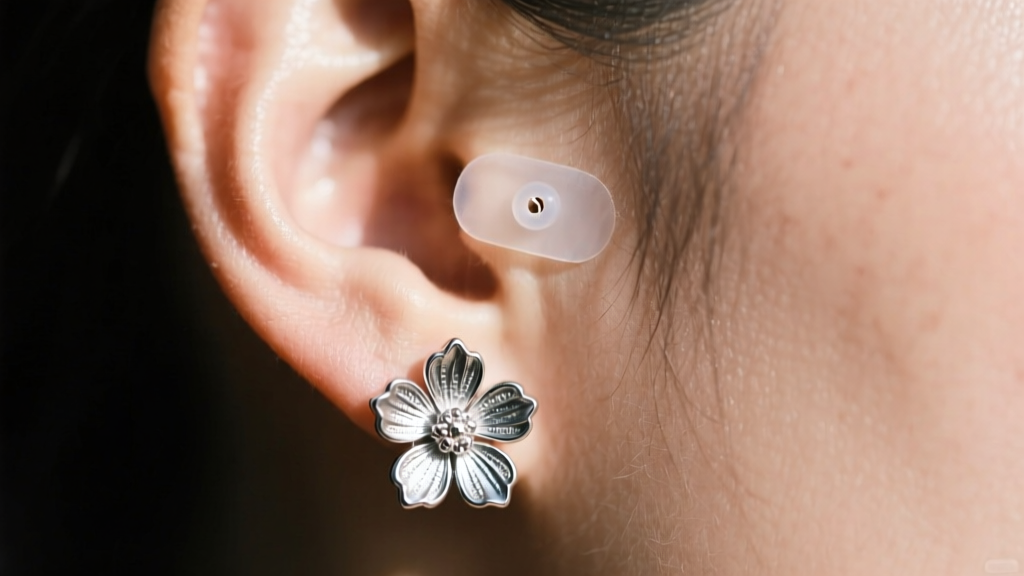
The Fix: If your floral dangles exceed 8 grams, you must use an invisible silicone earlobe support patch. These adhesives distribute the dynamic load across a 15mm surface area of the earlobe rather than concentrating it on the 1mm fistula tunnel.
Problem 3: Snagging Hazards from Casting Porosity
Most silver flower earrings are produced via lost-wax casting. During this process, molten silver is poured into a plaster mold. Where the two halves of the mold meet, a 'parting line' is often left behind. Additionally, rapid cooling can cause microscopic porosity (tiny air bubbles) along the thin edges of the silver petals. These microscopic burrs act like saw blades, catching on silk blouses, fine knitwear, and hair.
DIY Smoothing and Polishing
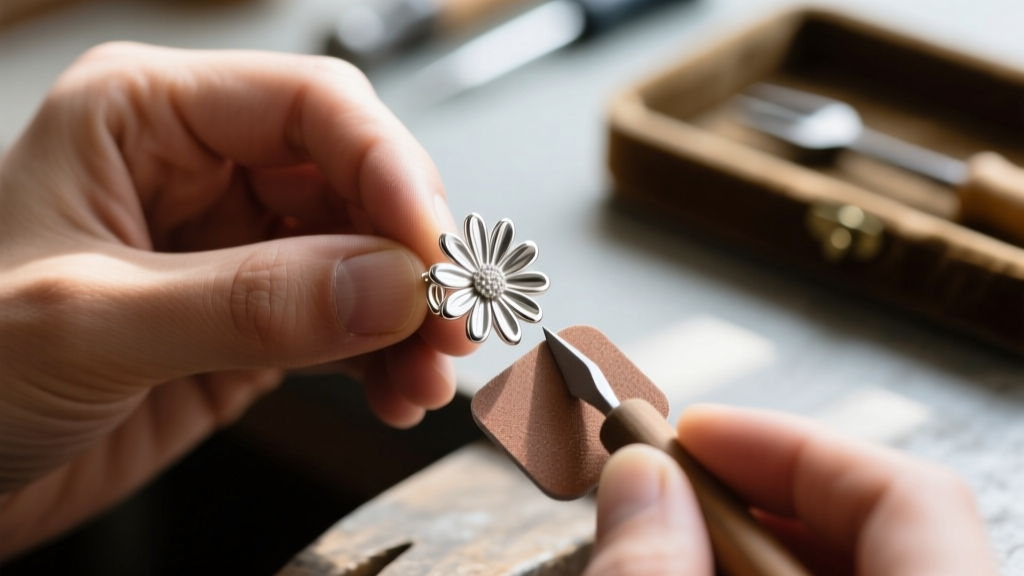
Do not attempt to file silver with standard steel nail files, which are too aggressive and will gouge the soft metal. Instead, utilize a jeweler's approach:
- Step 1: Use a 400-grit flexible sanding pad to gently round the outer edges of the petals where they meet the mold line.
- Step 2: Progress to a 1000-grit micro-mesh stick to eliminate the scratches left by the 400-grit pad.
- Step 3: Apply a small amount of Zam polishing compound (a non-scratching aluminum oxide blend) to a soft denim cloth and vigorously buff the petal edges until they achieve a mirror finish.
Problem 4: Wire Gauge Mismatches and Back Slippage
To maintain the delicate illusion of a real flower stem, jewelers frequently hang dangle floral heads on 22-gauge (0.64mm) or even 24-gauge (0.51mm) ear wires. The standard 'butterfly' or 'friction' earring back relies on metal tension to grip the post. However, on wires thinner than 20-gauge, the metal tension tabs inside standard backs fail to exert enough pressure, leading to the earring sliding out and being lost.
Upgrading Your Earring Backs
If you are losing your silver flower earrings dangle pieces, discard the standard butterfly backs immediately and upgrade to one of the following tension-specific alternatives:
- La Pousette Clutches: These feature a mechanical locking mechanism with dual push-tabs that physically clamp down on the wire, completely eliminating slippage on 22g and 20g wires.
- Silicone Tension Discs: A flat, medical-grade silicone disc that grips via high-friction elastomer properties rather than metal tension. Ideal for heavy floral heads that pull standard metal backs off.
- Screw-Back Conversions: If the ear wire is threaded (rare for dangles but possible), use a threaded barrel back. If unthreaded, you can purchase silicone sleeves that adapt friction posts to screw-back mechanisms.
Preventative Maintenance Checklist
To ensure your botanical silver jewelry remains pristine and structurally sound, implement this bi-weekly maintenance routine:
Expert Tip: Never store silver flower dangles in airtight plastic bags with rubber bands. Rubber contains high levels of sulfur and will cause severe, localized black tarnishing exactly where it touches the silver petals.
- Post-Wear Wipe: Always wipe the ear wire and the back of the floral head with a dry microfiber cloth to remove sebum and acidic sweat before storage.
- Anti-Tarnish Storage: Store the earrings in a flannel-lined box containing activated charcoal or 3M anti-tarnish strips, which absorb atmospheric sulfur.
- Wire Hardening Check: Gently test the ear wire. If it bends too easily, it has lost its work-hardened temper. You can carefully work-harden it by gripping the loop with nylon-jaw pliers and giving it a very slight twist, restoring its structural rigidity.
By understanding the metallurgical and mechanical realities of your jewelry, you can transform problematic silver flower earrings dangle designs into lifelong, trouble-free heirlooms.


