Troubleshooting Wood Earrings: Fixes for Cracking, Allergies & Weight
Solve common wood earrings problems like cracking, green skin, and stretched lobes. Expert fixes for sealing, post swaps, and weight management.

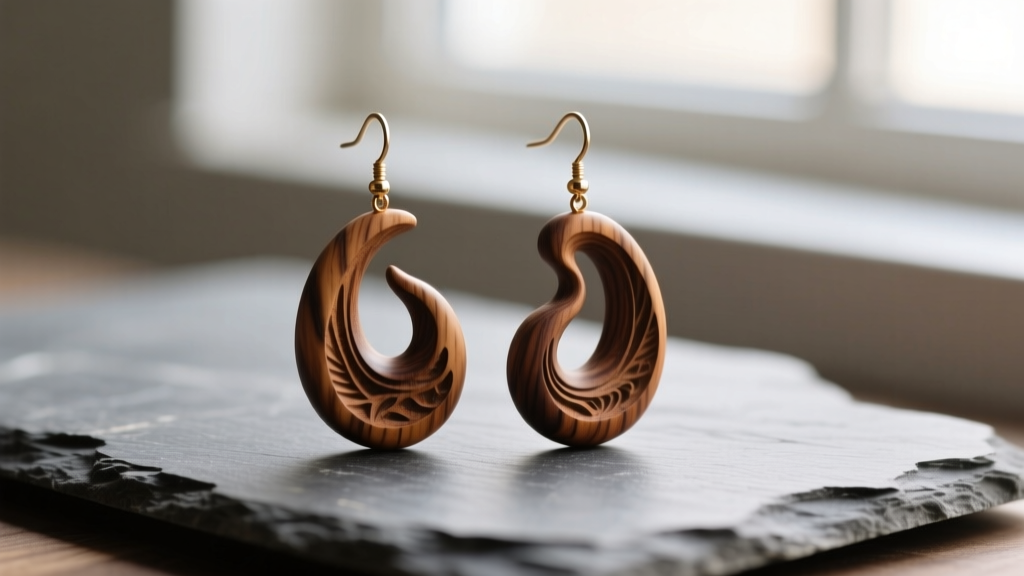
Wood earrings offer an earthy, lightweight aesthetic that synthetic materials simply cannot replicate. However, because wood is an organic, hygroscopic material, it presents a unique set of maintenance challenges. From unexpected allergic reactions to warping in humid climates and stretched earlobes from poorly balanced statement pieces, troubleshooting wood earrings requires a blend of dermatological awareness and woodworking science. This comprehensive guide dives deep into the specific failure modes of wooden ear jewelry and provides actionable, expert-level solutions to restore and protect your favorite pieces.
The Hypoallergenic Myth: Troubleshooting Contact Dermatitis
A frequent complaint among wearers is developing an itchy, red rash after wearing wood earrings. Because wood itself is inherently hypoallergenic, the assumption is often that the wearer has developed a rare sensitivity to the wood's natural oils or sap. In reality, the culprit is almost always the metal hardware or the adhesive used in manufacturing.
Identifying the True Allergen
Most mass-produced wood earrings utilize brass or nickel-silver alloy posts due to their low cost and ease of gluing. According to the American Academy of Dermatology, nickel is the leading cause of allergic contact dermatitis. Furthermore, the adhesive used to bond the metal post to the wood backing often contains acrylates or epoxies that can leach into the skin when exposed to body heat and moisture.
The Post-Swap Protocol
To permanently solve this issue, you must replace the hardware. Follow this troubleshooting framework:
- Remove the existing post: Use a pair of flush-cut wire nippers to snap the metal post as close to the wood base as possible. Sand the remaining metal flush with 220-grit sandpaper.
- Select the right replacement: Source flat-pad earring posts made from ASTM F136 implant-grade titanium or pure niobium. These are the gold standards for biocompatibility.
- Choose a skin-safe adhesive: Avoid standard super glues which can become brittle and irritate the skin. Use a two-part, medical-grade epoxy or a specialized cyanoacrylate (CA) glue designed for jewelry. Apply a microscopic drop to the flat pad, press firmly against the sanded wood backing, and let it cure for 24 hours in a low-humidity environment.
Moisture Damage: Warping, Splitting, and Wood Selection
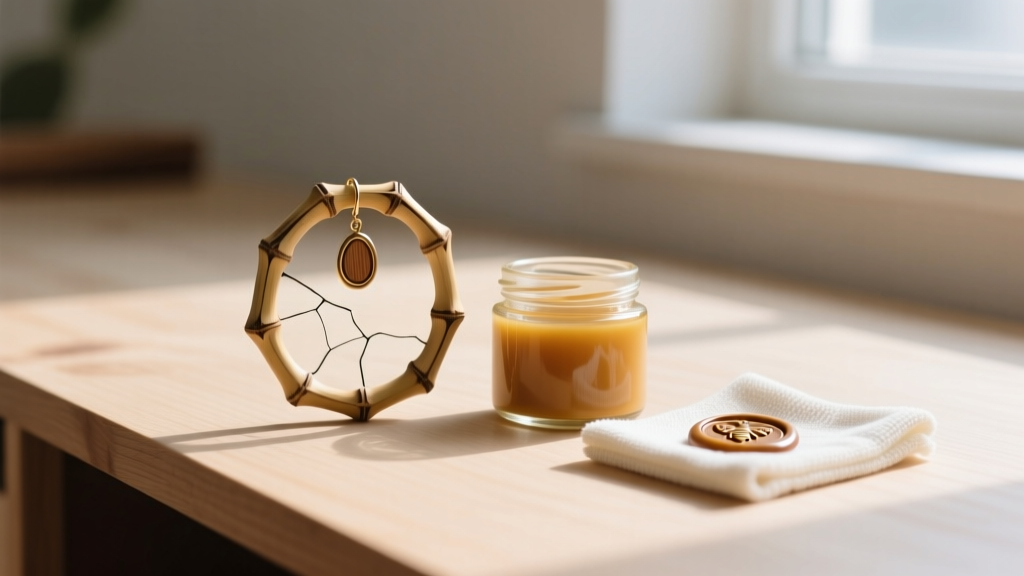
Wood is hygroscopic, meaning it continuously absorbs and releases moisture from the surrounding air. When a wood earring absorbs moisture, it expands; when it dries, it shrinks. This dimensional movement is the primary cause of cracking, warping, and delamination in wooden jewelry.
Understanding Dimensional Stability
Not all woods react to moisture equally. The stability of a wood species is measured by its tangential and radial shrinkage percentages. Woods with high shrinkage rates are poor candidates for intricate, thin earring designs unless they are heavily sealed. According to data from The Wood Database, selecting the correct species is the first step in preventing structural failure.
| Wood Species | Janka Hardness (lbf) | Tangential Shrinkage | Best Use Case in Earrings |
|---|---|---|---|
| Teak | 1,000 | 5.8% (Excellent) | Humid climates, unsealed rustic finishes |
| Black Walnut | 1,010 | 7.8% (Good) | Intricate laser-cut dangles, geometric studs |
| Hard Maple | 1,450 | 9.9% (Moderate) | Painted earrings, thick hoops requiring sealing |
| Bamboo (Grass) | 1,380 | Variable (High Split Risk) | Thick bangles only; avoid thin, flat slices |
| Balsa | 100 | 12.5% (Poor) | Avoid entirely; too soft, dents and warps easily |
Troubleshooting a Cracked Earring
If your wood earring has developed a hairline crack, do not attempt to fill it with standard wood putty, which will not flex with the wood and will eventually pop out. Instead, use a thin-viscosity CA glue. Apply a single drop directly into the crack, allowing capillary action to draw the glue deep into the fissure. Once cured, lightly sand the area with 400-grit paper and reapply your finish.
The 'Cheese Wire' Effect: Managing Weight and Gauge Sizes
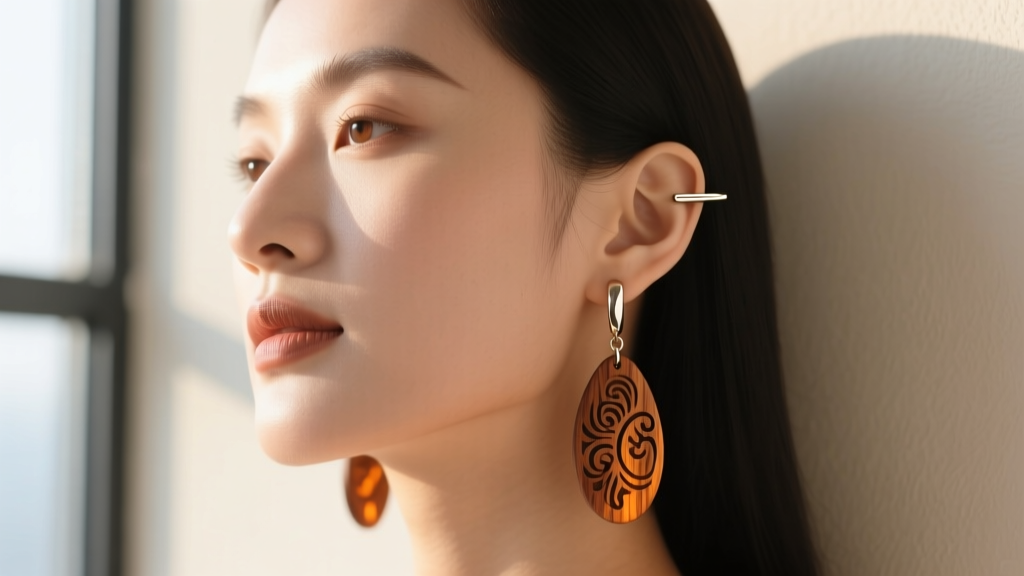
While wood is lighter than metal or stone, large statement wood earrings can still weigh between 10 and 18 grams. When suspended from a standard, thin metal wire, this weight creates a 'cheese wire' effect, slowly migrating the piercing downward and permanently stretching the earlobe tissue.
Upgrading the Wire Gauge
Standard earring posts and French hooks are typically 20-gauge (0.81mm thick). For any wood earring exceeding 8 grams, a 20-gauge wire is structurally insufficient for long-term lobe health.
The Fix: Upgrade the ear wire to an 18-gauge (1.02mm) or 16-gauge (1.29mm) wire. Thicker wire distributes the gravitational load across a wider surface area of the piercing fistula, drastically reducing the cutting effect on the tissue.
Balancing the Drop
Another common issue is the 'forward droop,' where the top-heavy design of a wood earring causes it to point outward rather than hanging flush against the neck. To troubleshoot this:
1. Add Silicone O-Rings: Place a small, clear silicone earring back or O-ring on the wire behind the earlobe. This creates a gentle counter-tension that forces the earring to hang vertically.
2. Counterweighting: For extreme statement pieces, jewelers sometimes embed a tiny, dense tungsten bead into the top-rear of the wood backing during the carving process to shift the center of gravity closer to the piercing hole.
Restoring the Finish: A Step-by-Step Resealing Protocol
Over time, the natural oils from your skin, combined with friction and environmental exposure, will strip the protective finish from wood earrings, leaving them looking dull, gray, and vulnerable to moisture.
Expert Warning: Never clean dull wood earrings with rubbing alcohol, hand sanitizer, or ultrasonic jewelry cleaners. Alcohol strips natural wood oils and accelerates micro-cracking, while ultrasonic vibrations can shatter delicate, thin-cut wood veneers.
The Renaissance Wax Method
For a skin-safe, durable, and easily renewable finish, micro-crystalline wax (such as Renaissance Wax) is the preferred choice among high-end wooden jewelry artisans. Unlike boiled linseed oil, which contains metallic drying agents that can irritate sensitive skin, or polyurethane, which can chip and peel into the piercing hole, micro-crystalline wax remains stable and inert.
Step-by-Step Restoration:
- Clean: Wipe the earring with a dry, lint-free microfiber cloth to remove surface sebum and dust. Do not use water.
- Scuff: If the wood feels rough or raised, gently scuff the surface with 600-grit sandpaper, moving strictly in the direction of the wood grain.
- Apply Wax: Using a soft cotton swab or your fingertip, apply a microscopically thin layer of micro-crystalline wax to the wood. Avoid getting wax on the metal post or ear wire.
- Buff: Let the wax haze for 5 minutes, then buff it vigorously with a clean horsehair shoe polish brush or a soft cotton cloth. This friction melts the wax slightly, driving it into the wood pores and creating a hard, moisture-resistant shell.
By understanding the material science behind your jewelry, you can transform problematic, uncomfortable wood earrings into lifelong, hypoallergenic staples that maintain their structural integrity and visual warmth for years to come.


