Choosing Types of Earrings Closures by Metal Properties
Discover how metal hardness, yield strength, and alloy composition dictate the security and lifespan of various types of earrings closures.

The Hidden Metallurgy of Earring Security
When evaluating fine jewelry, consumers and collectors typically fixate on gemstone clarity, karat weight, or the aesthetic profile of the front-facing design. However, the structural linchpin of any earring is its closure mechanism. When analyzing the different types of earrings closures, material science is just as critical as mechanical design. A poorly alloyed leverback will suffer from premature metal fatigue, while an overly soft 18k gold screw back can strip its threads within months of daily wear.
Understanding the metallurgical properties—such as Vickers hardness, yield strength, and fatigue resistance—allows you to match the right metal to the right closure type. This guide breaks down how specific material properties dictate the longevity, security, and comfort of your earring hardware.
Friction and Push Backs: Tension, Alloys, and Silicone
The traditional butterfly clutch, or friction back, relies entirely on the metal's tension and the friction coefficient between the post and the clutch's internal grooves. The effectiveness of this closure is heavily dependent on the alloy's hardness.
The 14k vs. 18k Gold Tension Debate
Gold purity directly impacts structural integrity. 18k gold (75% pure gold) has a Vickers Hardness (HV) of approximately 130, making it relatively soft. Over time, the internal tension springs of an 18k gold butterfly back will flatten, leading to a loose fit and lost earrings. Conversely, 14k gold (58.3% pure gold) possesses an HV of roughly 150 to 170, depending on the alloying metals (like copper or silver). This increased hardness allows 14k gold friction backs to maintain their spring tension for years longer than their 18k counterparts.
Silicone vs. Metal Friction Coefficients
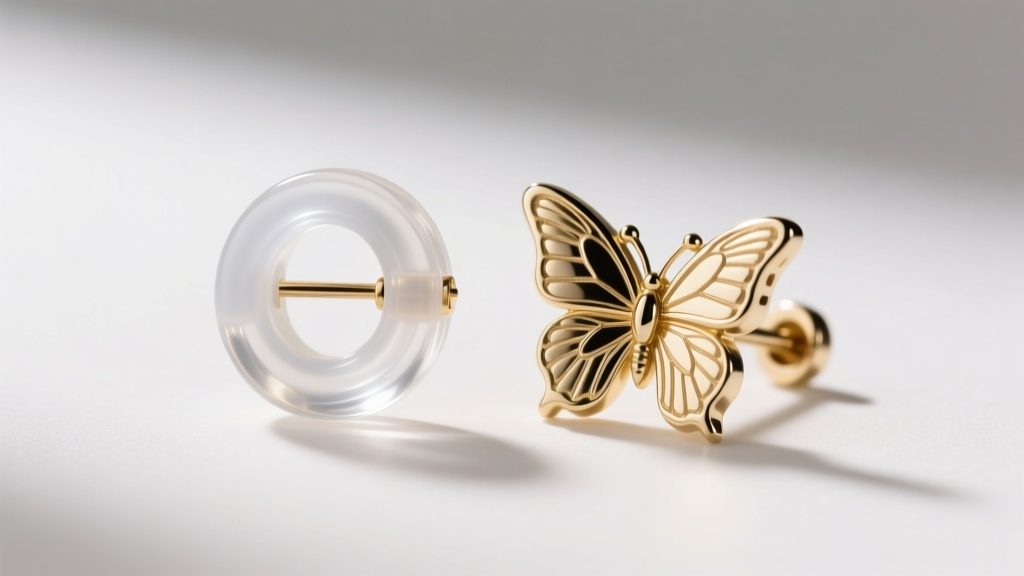
Many wearers swap metal clutches for medical-grade silicone backs to prevent slipping. Silicone offers a vastly superior initial friction coefficient compared to polished metal. However, from a material degradation standpoint, silicone is porous and susceptible to breakdown from sebum, cosmetics, and UV exposure. While metal clutches can be ultrasonically cleaned and sterilized indefinitely, silicone backs should be treated as consumable components, requiring replacement every 3 to 6 months to maintain optimal grip and hygiene.
Screw Backs: Thread Integrity and Metal Hardness
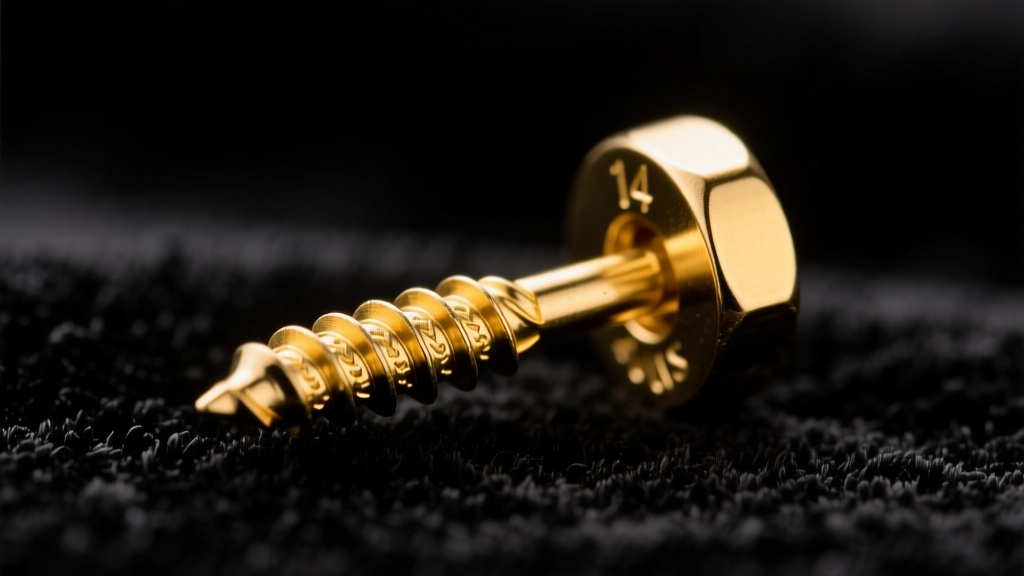
Screw backs are widely considered the most secure option for high-value diamond studs. They utilize a threaded post and a internally tapped cap. The primary failure mode for screw backs is thread stripping, which occurs when the cap is cross-threaded or overtightened, shearing the microscopic metal ridges.
Why Platinum Excels in Threaded Closures
For screw backs, platinum is the undisputed metallurgical champion. Unlike gold alloys, which lose microscopic layers of metal when scratched or subjected to friction, platinum is highly dense and malleable. When platinum threads experience friction, the metal displaces rather than flakes away. This means a platinum screw back will not suffer from thread degradation over decades of use. According to the Gemological Institute of America (GIA), platinum's durability and density make it highly resistant to the wear and tear that compromises intricate metalwork like threading.
| Material | Vickers Hardness (Approx) | Best Closure Match | Primary Failure Mode |
|---|---|---|---|
| 18k Yellow Gold | 130 HV | Leverbacks, French Wires | Tension loss, bending |
| 14k White Gold | 160 HV | Friction Backs, Hinges | Rhodium wear, fatigue |
| Platinum (Pt950) | 110 HV (High Density) | Screw Backs, Snap Clasps | Surface patina (structural integrity remains) |
| Grade 5 Titanium | 350 HV | Clickers, Hinged Segments | N/A (Extremely high fatigue resistance) |
Hinged Snap and Clicker Closures: The Role of Yield Strength
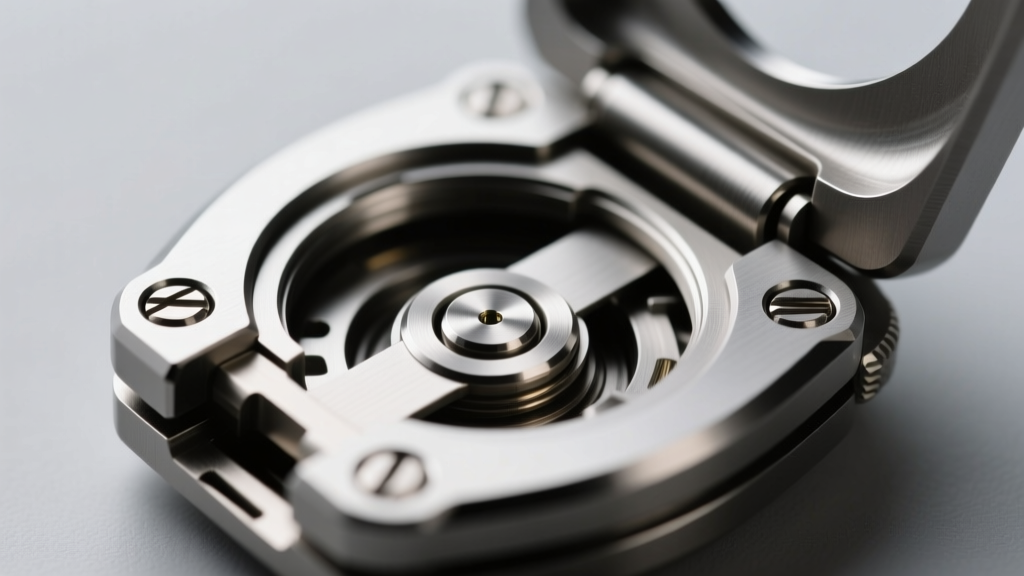
Hinged segment rings and clickers dominate the cartilage and daith piercing market. These closures rely on a tiny internal locking groove and a corresponding pin or ridge that snaps into place. The satisfying "click" and the security of the closure are entirely dependent on the metal's yield strength and elastic memory.
Why Grade 5 Titanium Dominates Clickers
While commercially pure titanium (Grade 2) and Grade 23 (Ti-6Al-4V ELI) are standard for initial piercing posts due to their biocompatibility, they lack the sheer mechanical strength required for the microscopic locking grooves of a clicker. High-end body jewelers utilize Grade 5 Titanium (Ti-6Al-4V) for the closure mechanisms. As outlined by the ASTM F136 standard for titanium alloys, the addition of aluminum and vanadium drastically increases the tensile and yield strength of the metal. This ensures that the tiny locking pin does not shear off or deform after hundreds of open-and-close cycles.
Leverbacks and French Wires: Fatigue Resistance
Leverback earrings feature a hinged wire that passes through the ear and snaps into a catching loop. The hinge area is a high-stress zone subjected to repetitive bending. Metals with poor fatigue resistance will eventually develop micro-fractures at the hinge pin, leading to catastrophic snapping.
Spring gold (a specific work-hardened alloy of 14k gold) is often used by master jewelers for leverback hinges because the work-hardening process aligns the metal's crystalline structure, vastly improving its resistance to cyclic fatigue. Conversely, cast 18k gold hinges are highly prone to snapping because the casting process can introduce microscopic porosity, creating weak points at the hinge joint.
Allergies and Base Metal Corrosion in Closures
The closure is the part of the earring that maintains constant, high-friction contact with the skin and bodily fluids. Base metals or poorly plated closures are prime culprits for contact dermatitis. The American Academy of Dermatology notes that nickel is the most common cause of metal allergies. Many inexpensive friction backs are made from nickel-plated brass. As the friction of daily wear strips the microscopic plating, the underlying nickel is exposed to sweat, causing rapid oxidation and severe allergic reactions. Always verify that closures are crafted from solid 14k/18k gold, platinum, 316L implant-grade stainless steel, or titanium, rather than relying on surface plating.
Quick Reference: Matching Closure Type to Material
- Screw Backs: Demand high-density, thread-resistant metals. Choose: Platinum or 14k White Gold.
- Friction/Butterfly Backs: Require high Vickers hardness to maintain spring tension. Choose: 14k Gold or 316L Stainless Steel.
- Clickers & Hinged Segments: Rely on high yield strength for locking grooves. Choose: Grade 5 Titanium.
- Leverbacks: Need high fatigue resistance at the hinge. Choose: Spring-hardened 14k Gold or Platinum.
- La Pousette (Locking) Backs: Utilize a complex internal spring mechanism. Choose: 18k White Gold or Platinum for precise machining tolerances.
Conclusion: Prioritizing Material Longevity
The security of your jewelry is only as strong as the metallurgical properties of its weakest component. By looking beyond the aesthetic design and evaluating the types of earrings closures through the lens of material science, you can drastically reduce the risk of lost earrings and mechanical failure. Whether you are investing in diamond studs that require platinum screw backs, or cartilage clickers that demand Grade 5 titanium, matching the metal's physical properties to the mechanical demands of the closure is the hallmark of an informed collector.


