Best Metals for Wrapped Wire Earrings: A Material Comparison Guide
Discover the best metals for wrapped wire earrings. Compare sterling silver, gold-filled, copper, and titanium for durability and style.

The Metallurgy of Wire Wrapping: Beyond Aesthetics
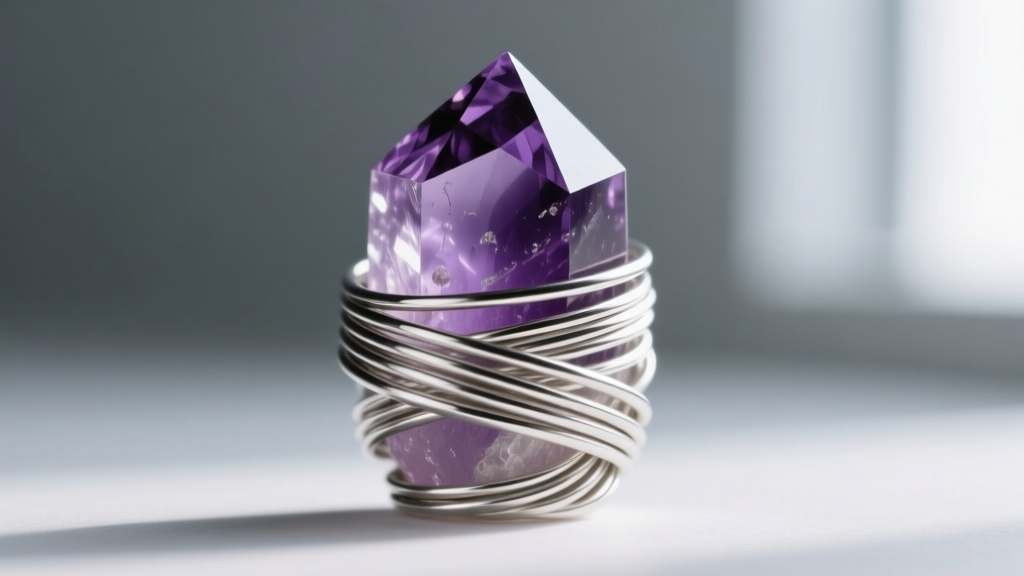
Creating stunning wrapped wire earrings is as much an exercise in metallurgy as it is in artistry. While the visual appeal of a gemstone cage or a woven wire bezel captures the eye, the longevity, wearability, and structural integrity of the piece depend entirely on the material properties of the wire itself. Jewelers and hobbyists alike must navigate a complex landscape of metal alloys, tempers, and gauge sizes to produce earrings that survive daily wear without snapping, tarnishing, or irritating sensitive earlobes.
Unlike cast jewelry, which relies on the uniform density of a mold, wire wrapping manipulates metal at room temperature. This cold-working process fundamentally alters the crystalline structure of the metal, meaning your choice of material dictates not just the final color, but how the wire behaves in your hands. In this comprehensive guide, we break down the exact material properties, failure modes, and best-use scenarios for the most popular metals used in wrapped wire earrings.
Understanding Wire Temper and Gauge
Before comparing specific metals, it is crucial to understand temper—the measure of a metal's hardness and malleability. According to Rio Grande, a leading authority in jewelry supply, wire temper ranges from dead soft to spring hard. For wrapped wire earrings, two tempers dominate the workbench:
- Dead Soft: Highly pliable and easy to bend. It is ideal for weaving, tight coils, and wrapping around complex cabochon shapes. However, it lacks structural memory and will deform if used for ear wires or clasps.
- Half-Hard: Offers a balance of malleability and stiffness. It has been partially work-hardened, making it the mandatory choice for structural frames, ear hooks, and clasp mechanisms that must retain their shape under tension.
Gauge size (the thickness of the wire) works in tandem with temper. Standard wrapped wire earrings typically utilize 18-gauge (1.02mm) for heavy structural frames, 20-gauge (0.81mm) for primary wrapping and ear wires, and 22 to 24-gauge (0.64mm - 0.51mm) for delicate weaving and binding.
Core Material Breakdown
Copper and Brass: The Practice Canvas
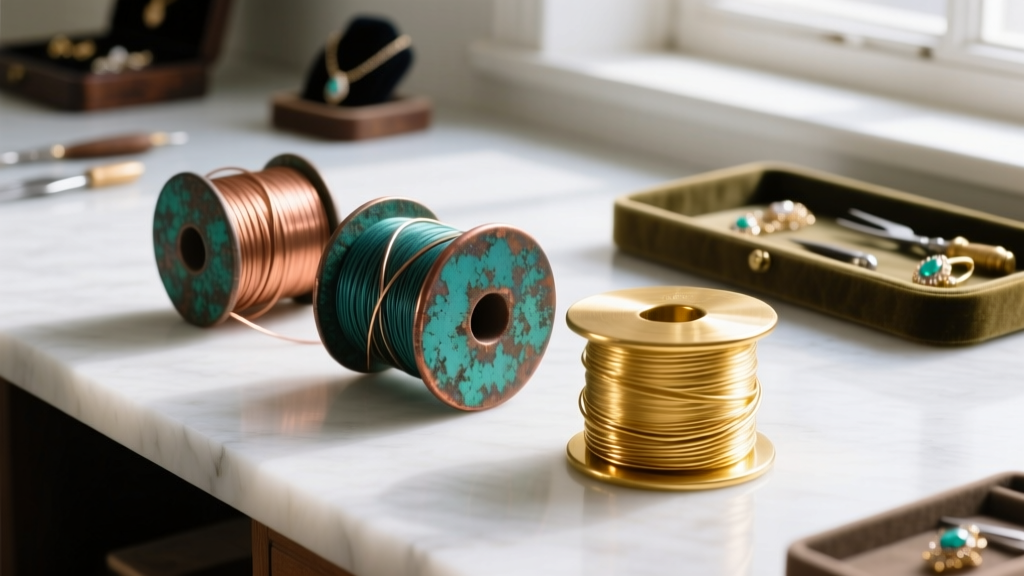
Copper is the undisputed king of practice wire. It is exceptionally malleable, work-hardens slowly, and accepts a beautiful liver of sulfur patina. However, copper has a significant failure mode when used for earrings: galvanic oxidation. When exposed to the natural acidity and salts of human skin, copper oxidizes rapidly, leaving a green residue on the earlobe. While this is harmless, it is highly undesirable for consumers.
Brass (an alloy of copper and zinc) offers a gold-like hue but suffers from dezincification over time and can cause contact dermatitis in wearers with nickel or zinc sensitivities. If you design with copper or brass, the earrings must be sealed with a micro-crystalline wax or a specialized jewelry lacquer to create a barrier between the metal and the skin.
Sterling Silver (.925): The Industry Standard
Sterling silver remains the benchmark for premium wrapped wire earrings. Composed of 92.5% pure silver and 7.5% copper, the copper alloy provides the necessary tensile strength that pure silver lacks. Sterling silver work-hardens at a predictable rate, allowing artisans to weave intricate patterns before the metal becomes too brittle.
The primary drawback of .925 silver is tarnish. The copper content reacts with sulfur compounds in the air to form silver sulfide, creating a black surface layer. While this can be intentionally leveraged for oxidized, antiqued designs, bright silver earrings require regular polishing. Furthermore, repeated bending of sterling silver without annealing (heating to soften) will cause the wire to snap due to work hardening.
Gold-Filled (14k/20): The Premium Alternative
Gold-filled wire is not to be confused with gold-plated wire. As detailed by Halstead Bead, gold-filled wire is created by mechanically bonding a thick layer of karat gold to a brass core using heat and pressure. By law, the gold layer must constitute at least 5% (1/20th) of the total weight of the metal.
For wrapped wire earrings, 14/20 gold-filled wire offers the luxurious appearance of solid 14k gold at a fraction of the cost. It is highly tarnish-resistant and generally hypoallergenic, as the brass core is completely encapsulated. However, gold-filled wire cannot be sanded or aggressively filed, as doing so will expose the brass core and ruin the piece. Artisans must use nylon-jaw pliers to prevent marring the delicate gold surface during the wrapping process.
Hypoallergenic Options: Titanium and Niobium
For clients with severe metal sensitivities, wrapped wire earrings must be crafted from reactive or inert metals. Titanium and Niobium are the premier choices for sensitive ears, but they present unique challenges for the wire wrapper.
Titanium and Niobium are biocompatible metals widely used in medical implants, making them the safest possible choices for fresh piercings and hyper-sensitive earlobes.
Grade 1 Titanium is pure and relatively soft, but it possesses high 'springback'—meaning it resists bending and tries to return to its original shape. This makes tight, flush wire wraps incredibly difficult to execute. Niobium, on the other hand, is softer and easier to wrap, and it possesses the unique property of anodizing: by applying an electrical current, the surface oxide layer thickens, creating vibrant, permanent colors without the use of dyes or plating.
Material Comparison Matrix
| Material | Hardness/Temper | Tarnish Resistance | Price Point | Best Use Case |
|---|---|---|---|---|
| Copper | Dead Soft | Low (Oxidizes green) | $ | Practice, patina designs |
| Sterling .925 | Half-Hard / Soft | Medium (Tarnishes black) | $$$ | High-end weaving, structural frames |
| 14/20 Gold-Filled | Half-Hard | High | $$ | Luxury everyday wear, ear hooks |
| Grade 1 Titanium | Dead Soft | Very High (Inert) | $$ | Hypoallergenic ear wires, simple cages |
| Niobium | Dead Soft | Very High (Inert) | $$ | Anodized colorful wraps, sensitive ears |
Real-World Failure Modes and Troubleshooting
Even with the perfect material, wrapped wire earrings are prone to specific mechanical failures if the artisan ignores the physical limits of the metal.
Work Hardening Snaps
Every time you bend wire, you compress its crystalline lattice, increasing its hardness and brittleness. If you attempt to untangle a mistake or re-bend a 20-gauge sterling silver frame more than two or three times, the wire will snap cleanly. Solution: Plan your wraps meticulously. If using sterling or copper, keep a micro-torch on hand to anneal the wire when it becomes stiff.
Ear Hook Deformation
A common complaint with handmade wrapped wire earrings is the ear hook pulling open when removed from the ear. This occurs when artisans use dead soft wire for the hook. Solution: Always use half-hard wire for ear hooks, and work-harden the loop by striking it gently with a rawhide mallet or tumbling the finished earrings in steel shot for 20 minutes.
Galvanic Corrosion in Mixed Metals
Mixing metals in a single design—such as using a copper core wire wrapped in sterling silver—creates a galvanic cell when exposed to sweat and moisture. The less noble metal (copper) will corrode rapidly from the inside out, eventually turning the silver black and weakening the structure. Solution: Never mix base metals with precious metals in permanent, unsealed wraps.
Final Verdict: Choosing Your Wire
The 'best' material for wrapped wire earrings depends entirely on your target market and design complexity. For intricate, woven bead cages and high-end gemstone settings, Sterling Silver (.925) offers the best balance of workability and prestige. For durable, everyday luxury that resists tarnish, 14/20 Gold-Filled is unmatched, provided you respect its surface boundaries. Finally, for the hyper-sensitive market, mastering the springback of Titanium or the anodizing potential of Niobium will set your jewelry brand apart. According to the Gemological Institute of America (GIA), matching the metal's physical properties to the stone's hardness and the wearer's lifestyle is the hallmark of true jewelry craftsmanship.


