Zebra Earrings: Material Grades, Enamel Techniques & Care Guide
Explore the technical craftsmanship of zebra earrings. We analyze zebrawood stabilization, vitreous enamel striping, and hypoallergenic hardware grades.

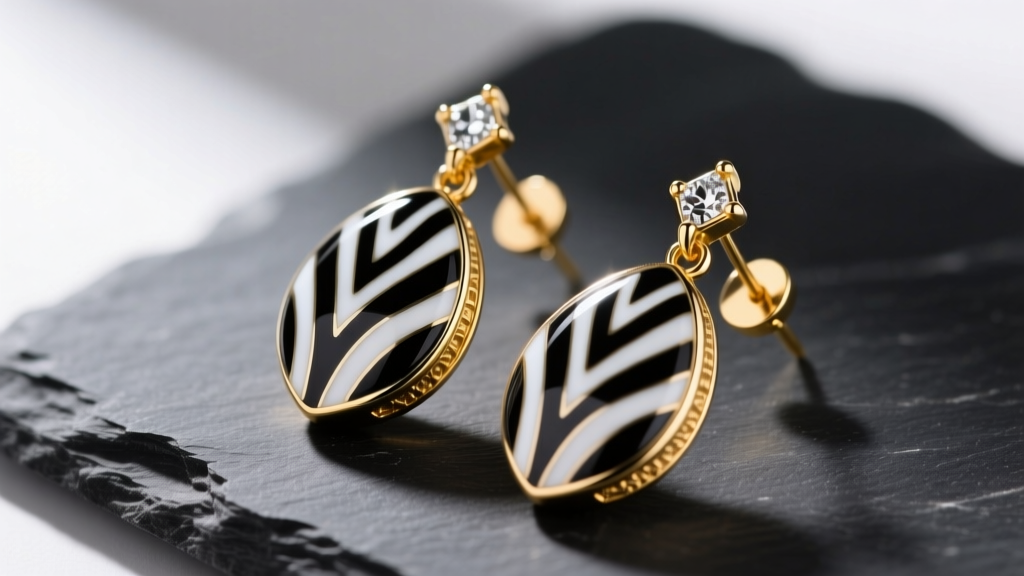
The Anatomy of Premium Zebra Earrings
When most consumers search for zebra earrings, they are met with a sea of mass-produced, stamped alloy jewelry coated in cheap acrylic paint. However, in the realm of fine and artisan jewelry, the striking black-and-white striations of zebra patterns are achieved through advanced metallurgical enameling and the meticulous stabilization of exotic hardwoods. As a jewelry specialist, I frequently see collectors invest in animal print motifs, only to be disappointed by rapid material degradation. This guide bypasses fast-fashion fluff to provide a technical deep dive into the material grades, manufacturing techniques, and hardware specifications that separate heirloom-quality zebra earrings from disposable novelties.
The Material Matrix: Decoding Zebra Aesthetics
The visual appeal of zebra patterns relies on high-contrast striations. In fine jewelry, this is achieved through three primary mediums: vitreous enamel, cold enamel (epoxy), and exotic zebrawood. Understanding the physical properties of each is critical for making an informed purchase.
| Material | Mohs Hardness | UV Resistance | Expected Lifespan | Artisan Price Range |
|---|---|---|---|---|
| Vitreous Enamel (Glass) | 5.0 - 6.0 | Excellent (No yellowing) | Generations | $150 - $600+ |
| Cold Enamel (Epoxy Resin) | 2.0 - 3.0 | Poor (Yellows in 2-5 years) | 5 - 10 Years | $40 - $120 |
| Stabilized Zebrawood | 3.5 (Janka 1830 lbf) | Moderate (Requires UV oil) | Decades (if stabilized) | $80 - $250 |
| Celluloid / Acrylic | 2.0 | Poor (Brittle over time) | 1 - 3 Years | $15 - $45 |
Vitreous vs. Cold Enamel Striping Techniques
The most luxurious zebra print earrings utilize vitreous enamel, a technique that involves fusing powdered glass to a metal substrate (usually copper, silver, or gold) at temperatures exceeding 1,450°F (788°C). To achieve crisp zebra stripes, master jewelers employ the champlevé method. This requires carving microscopic troughs into the metal base, packing them with black and white enamel powders, and firing the piece multiple times. The result is a glass-like finish with a Mohs hardness of up to 6.0, making it highly resistant to scratching. The GIA Gemological Institute notes that properly fired vitreous enamel maintains its color saturation indefinitely, as the pigments are locked within a glass matrix.
Conversely, cold enamel is a two-part epoxy resin poured into metal recesses. While it allows for intricate zebra patterns at a fraction of the cost and firing time, epoxy is fundamentally a plastic. It possesses a low Mohs hardness (2.0-3.0), meaning it will scratch if dropped or stored improperly. More critically, the chemical structure of epoxy is susceptible to UV degradation. White cold enamel strips will inevitably yellow or become cloudy after 3 to 5 years of regular sun exposure.
Zebrawood: Stabilization and Janka Hardness
For those who prefer organic textures, zebrawood (Microberlinia brazzavillensis) offers natural, high-contrast dark brown and pale gold stripes. According to The Wood Database, zebrawood boasts a Janka hardness of 1,830 lbf, making it denser than oak. However, in its raw state, it is highly porous and prone to warping or cracking when exposed to the humidity fluctuations of human skin and weather.
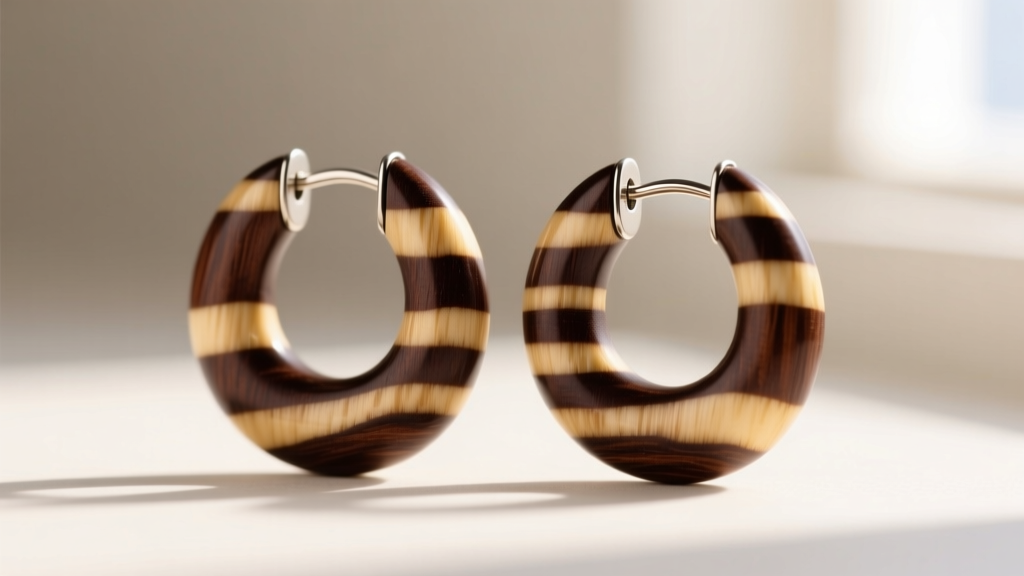
High-end wooden zebra earrings must undergo resin stabilization. Artisans place the raw wood blanks into a vacuum chamber to extract all air and moisture, then submerge them in a methyl methacrylate (MMA) resin, such as Cactus Juice. The resin penetrates the cellular structure of the wood. Once heat-cured, the wood becomes a hybrid material: it retains the visual striations of zebrawood but behaves like a dense acrylic. This process increases the weight of the earrings slightly but renders them completely impervious to sweat, humidity, and cosmetic sprays.
Hardware Integration: Gauge Sizes and Metallurgy
A common failure point in artisan zebra earrings is the hardware. Heavy zebrawood drops or enameled chandelier styles require robust posts and wires. Furthermore, because animal print jewelry is often mass-produced with nickel-heavy brass, buyers with contact dermatitis must scrutinize the metal grade.
- ASTM F136 Titanium: The gold standard for earring posts. This implant-grade titanium alloy (Ti-6Al-4V ELI) is entirely nickel-free and biocompatible. Always look for the ASTM F136 Standard certification on product listings.
- Gauge Sizing: Standard lobe piercings are typically 20G (0.81mm) or 18G (1.02mm). However, if you are purchasing heavy zebrawood huggies or cartilage cuffs, the hardware should be 16G (1.29mm) to prevent the 'cheese-cutter effect,' where a thin wire slowly migrates through the tissue due to the weight of the wood.
- Friction Backs vs. Threaded: For heavy enamel drops, avoid standard butterfly friction backs. Opt for threaded screw-backs or secure silicone o-rings to prevent the loss of expensive vitreous pieces.
Proportions and Face Shape Dynamics
Beyond materials, the geometry of zebra earrings dictates their visual impact. The high-contrast nature of the stripes draws immediate attention to the jawline and neck.
Round and Square Faces
Opt for elongated zebrawood drop earrings or narrow, vertical champlevé enamel dangles. The vertical black-and-white lines create an optical illusion that lengthens the face and softens angular jawlines. Avoid wide, circular zebra hoops, which will exaggerate facial width.
Oval and Heart Faces
These face shapes can carry the visual weight of oversized zebra huggies or wide, geometric enamel studs. A chandelier-style zebra earring with horizontal striping will beautifully balance a narrow chin.
Long-Term Maintenance Protocols
Caring for zebra earrings requires specific protocols based on their material composition. Using the wrong cleaning method can permanently ruin the contrast of the stripes.
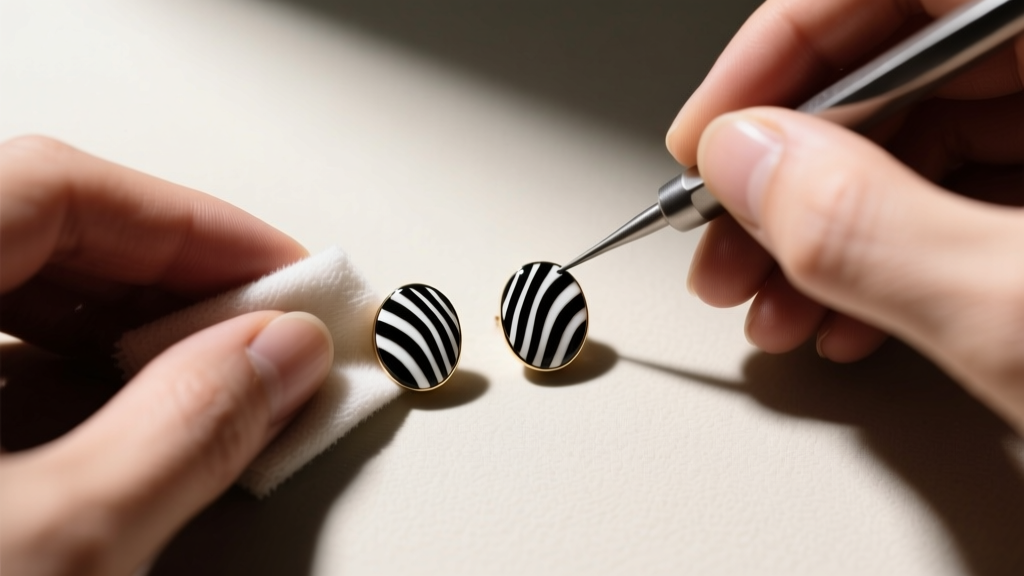
Jeweler's Warning: Never place zebrawood or cold enamel earrings in an ultrasonic cleaner. The high-frequency cavitation will shatter epoxy resins and strip the protective oils from stabilized wood, leaving it dull and brittle.
- Vitreous Enamel: Clean with warm water, a drop of mild dish soap, and a soft-bristled baby toothbrush. Dry immediately with a lint-free cloth to prevent water spots on the metal settings.
- Stabilized Zebrawood: Wipe with a dry microfiber cloth. Once every six months, apply a microscopic drop of mineral oil or specialized wood wax to maintain the depth of the dark striations.
- Storage: Store zebra enamel earrings individually in soft flannel pouches. Because glass enamel has a Mohs hardness of 6.0, it can easily scratch adjacent gold or silver jewelry if tossed loosely into a jewelry box.
Final Verdict on Sourcing
When investing in zebra earrings, demand transparency from the seller. If the listing does not specify whether the enamel is vitreous or cold, assume it is epoxy. If the wood is not explicitly labeled as 'vacuum-stabilized,' it will likely crack within a year. By prioritizing ASTM F136 titanium hardware and traditional champlevé or stabilized woods, you secure a piece of wearable art that defies the disposable nature of trend-driven animal print jewelry.


