Best Jewelry Cleaner for Diamond Rings: 2026 Guide
Discover the best jewelry cleaner for diamond rings in 2026. Compare ultrasonic frequencies, eco-friendly solutions, and expert gemologist maintenance tips.

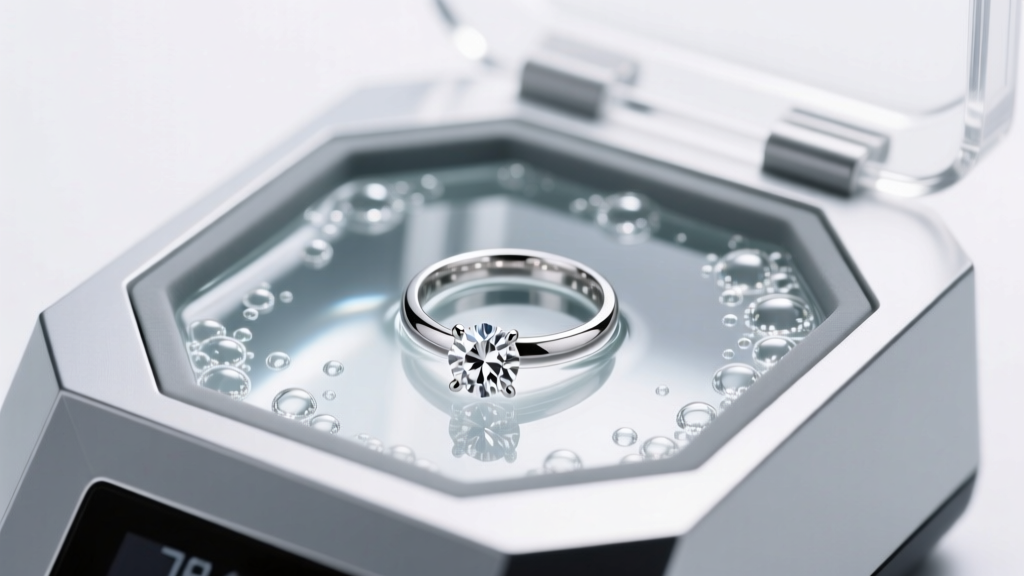
The landscape of fine jewelry maintenance has shifted dramatically. As we navigate 2026, the quest for the perfect jewelry cleaner for diamond rings is no longer just about removing daily lotion buildup; it is about preserving the structural integrity of intricate micro-pavé settings, protecting lab-grown diamond inclusions, and utilizing eco-conscious chemistry. Whether you are caring for a heavy antique European cut solitaire or a delicate stack of crushed-ice eternity bands, understanding the science of diamond cleaning is essential for maintaining maximum brilliance.
The Evolution of Diamond Ring Care in 2026
Historically, jewelers recommended a simple mixture of warm water, mild dish soap, and a soft toothbrush. While this remains a safe baseline, modern ring designs demand more sophisticated approaches. Today's trending styles—such as hidden halos, tension settings, and intricate milgrain banding—create microscopic crevices where sebum, cosmetics, and environmental dust accumulate. Furthermore, the rise of lab-grown diamonds, which often possess different internal strain patterns than mined stones, requires precise thermal and chemical management during the cleaning process.
According to the Gemological Institute of America (GIA), diamonds are inherently lipophilic, meaning they naturally attract and hold onto oils. This makes them particularly susceptible to the dulling effects of hand creams and natural skin oils. Finding a specialized jewelry cleaner for diamond rings that breaks down these lipid bonds without compromising the precious metal alloy of the band is the primary challenge for modern collectors.
Chemical vs. Ultrasonic: What the Gemologists Say
When evaluating cleaning solutions, the market is broadly divided into chemical soaks and ultrasonic machines. Both have distinct advantages, but their efficacy depends entirely on the specific anatomy of your ring.
| Cleaning Method | Best For | Active Mechanism | Risk Level |
|---|---|---|---|
| Ammonia-Based Soaks | Sturdy solitaires, platinum bands | Alkaline lipid breakdown | High (damages porous gems, weakens prongs over time) |
| Non-Ionic Surfactants | All diamond rings, mixed gemstones | Micelle encapsulation of oils | Low (industry standard for safe daily use) |
| Ultrasonic (42kHz) | Heavy grime, durable settings | Acoustic cavitation implosion | Medium (can shake loose stones in worn prongs) |
| Ultrasonic (45kHz+) | Micro-pavé, antique cuts, tension | Gentle high-frequency cavitation | Low (safest mechanical cleaning available) |
Trend Alert: Portable Sonic Cleaners for the Modern Collector
The most significant trend in 2026 is the miniaturization of ultrasonic technology. Portable, USB-C rechargeable sonic cleaners have replaced bulky countertop units for many jewelry enthusiasts. However, not all frequencies are created equal. Understanding the physics of acoustic cavitation is critical when selecting a machine.
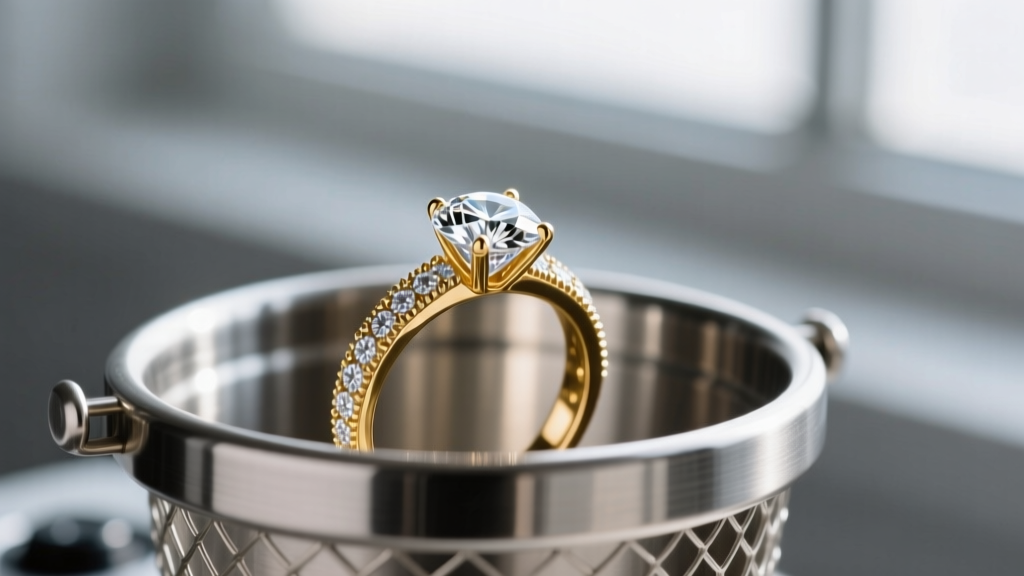
Frequency Matters: 42kHz vs. 45kHz
Ultrasonic cleaners work by emitting high-frequency sound waves into a liquid, creating millions of microscopic vacuum bubbles that implode against the jewelry, blasting away dirt.
- 42kHz (Standard): Creates larger bubbles that implode with greater physical force. This is excellent for a solid platinum solitaire ring with heavy buildup, but the shockwaves can rattle stones loose in older settings or damage the delicate culets of antique mine cuts.
- 45kHz to 50kHz (Gentle/Precision): Produces smaller, more densely packed bubbles. The implosion force is distributed more evenly and gently, making it the absolute best mechanical jewelry cleaner for diamond rings featuring micro-pavé, invisible settings, or fragile vintage prongs.
Brands like Magnasonic and Blitz have dominated the 2026 market by offering dual-frequency portable models, allowing users to toggle between a deep 42kHz clean and a gentle 45kHz polish.
Eco-Friendly and Enzymatic Cleaners: The New Standard
As sustainability becomes a core pillar of the fine jewelry industry, the chemical composition of liquid cleaners has evolved. Harsh ammonia-based soaks—which emit volatile organic compounds (VOCs) and can cause stress corrosion cracking in 14k and 18k gold alloys—are being phased out by top-tier gemologists.
The 2026 gold standard for liquid solutions relies on plant-derived non-ionic surfactants and enzymatic proteins. These compounds work by encapsulating oil molecules into microscopic structures called micelles, lifting them away from the diamond's pavilion without requiring aggressive scrubbing. Products like the Connoisseurs Diamond Dazzle Stik utilize a gel-based delivery system that clings to the stone, allowing targeted enzymatic action exactly where light return is most critical.
"The shift toward enzymatic and non-ionic cleaners isn't just about environmental safety; it's about preserving the rhodium plating on white gold and preventing the microscopic pitting that ammonia causes on lower-karat gold alloys over prolonged exposure." — American Gem Society (AGS) Care Guidelines.
What to Avoid: The Silent Killers of Diamond Brilliance
Despite the wealth of professional-grade options, dangerous DIY myths persist on social media. To protect your investment, strictly avoid the following when searching for a jewelry cleaner for diamond rings:
- Chlorine Bleach: Never expose gold alloy rings to chlorine. It causes a chemical reaction that dissolves the copper and zinc alloys in 14k and 18k gold, leading to catastrophic prong failure and lost diamonds.
- Abrasive Toothpaste: While toothpaste might make a diamond look temporarily shiny, it contains hydrated silica (Mohs hardness of ~4.5). Over time, this will permanently scratch the polished finish of your platinum or gold band, creating a dull, matte appearance that requires professional re-polishing to fix.
- Hard-Bristled Brushes: Always use a baby-soft brush. Stiff bristles can bend delicate micro-pavé prongs, leading to stone loss.
Expert Maintenance Schedule for Stacking and Solitaire Rings
Maintaining the fire and scintillation of your diamonds requires a structured routine. Here is the optimal 2026 maintenance schedule recommended by master jewelers:
- Daily: Wipe the diamond with a clean, lint-free microfiber cloth to remove surface oils and fingerprints before storing.
- Weekly: Use a non-ionic surfactant liquid cleaner with a soft-bristled brush, focusing on the pavilion (the bottom cone of the diamond) where oil accumulates and blocks light return.
- Monthly: Utilize a 45kHz portable ultrasonic cleaner with a few drops of specialized eco-friendly concentrate to dislodge deep-seated debris from the gallery and setting.
- Bi-Annually: Visit a professional jeweler for a steam clean and, crucially, a microscopic prong inspection to ensure the structural integrity of the setting.
By combining the right chemical agents with precise ultrasonic frequencies, you ensure that your diamond rings remain as structurally sound and optically brilliant as the day they were cut. Investing in the proper jewelry cleaner for diamond rings is ultimately an investment in the longevity of your most cherished adornments.

