Reiner's Fine Jewelry Engagement Rings Houston: Technical Review
An expert technical review of Reiner's Fine Jewelry engagement rings in Houston, analyzing diamond curation, metallurgy, and custom CAD workflows.

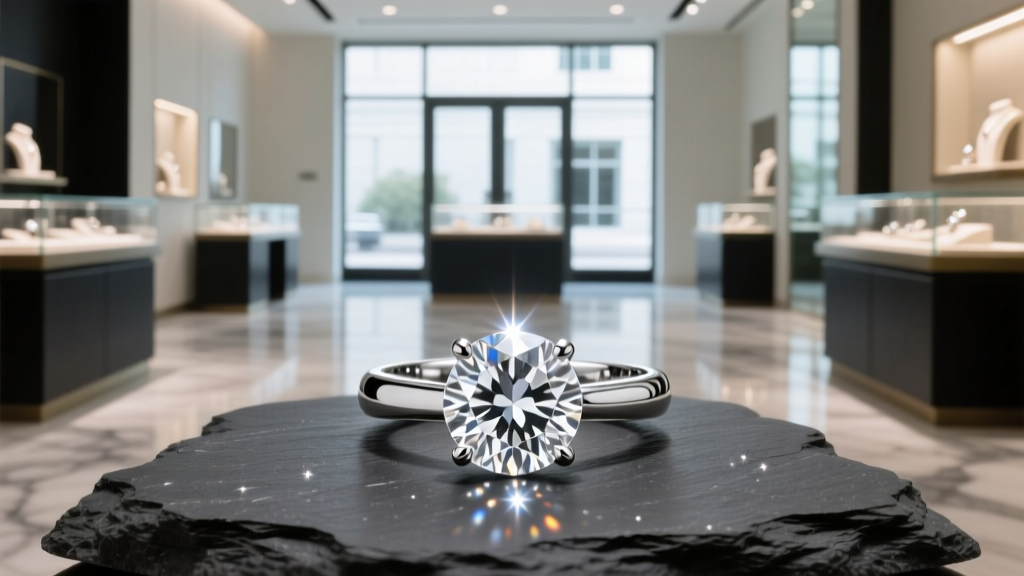
Deconstructing the Inventory: Gemological Standards
When evaluating the highly competitive landscape of Reiner's Fine Jewelry engagement rings Houston buyers have access to, one must look far beyond the showroom lighting and examine the metallurgical and gemological foundations. As an independent jewelry analyst, I approach local jewelers not by their marketing claims, but by their procurement thresholds and technical execution. Reiner's Fine Jewelry has established a reputation in the Greater Houston area for catering to technically minded buyers who demand verifiable data over generic grading reports.
The foundation of any high-end engagement ring is the center stone. Reiner's curates a selection heavily skewed toward GIA (Gemological Institute of America) and AGS (American Gem Society) graded diamonds, actively avoiding the grade inflation often associated with lesser-known international labs. According to the GIA Diamond Grading Standards, consistency in color and clarity grading is paramount, and Reiner's adherence to these strict benchmarks ensures that a G-color stone purchased here faces the same rigorous scrutiny as one bought in Antwerp or New York.
Cut Precision and Light Performance
Where Reiner's truly separates itself from standard retail chains is its uncompromising stance on cut precision. The inventory of round brilliant diamonds is filtered through a strict set of proportion requirements designed to maximize light return and eliminate light leakage. When reviewing their loose diamond vault, I noted the following baseline parameters for their 'Ideal' category:
- Table Percentage: Strictly capped between 54% and 57%.
- Depth Percentage: Maintained between 61.0% and 62.5%.
- Crown Angle: 34.0 to 35.0 degrees for optimal dispersion.
- Pavilion Angle: 40.6 to 41.0 degrees to prevent windowing.
- Fluorescence: Faint to None in D-F color ranges to prevent potential milkiness.
Furthermore, Reiner's provides Idealscope and ASET (Angular Spectrum Evaluation Tool) imagery upon request. This allows buyers to visually verify the optical symmetry and contrast patterning—such as the highly sought-after 'Hearts and Arrows' phenomenon—before committing to a purchase.
Metallurgy and Shank Architecture

A diamond is only as secure as the metal holding it. The structural integrity of an engagement ring is entirely dependent on the alloy's Vickers hardness and the cross-sectional geometry of the shank. Aesthetics mean nothing if the prongs suffer from metal fatigue within three years of daily wear. Reiner's Fine Jewelry approaches metallurgy with a focus on longevity and hypoallergenic properties.
Platinum Alloys: Ruthenium vs. Iridium
For platinum settings, Reiner's predominantly utilizes Pt950/Ru (95% Platinum, 5% Ruthenium) rather than the more common Pt950/Ir (Iridium). While Iridium is easier to cast, Ruthenium significantly increases the Vickers hardness of the platinum from approximately 80 HV to 135 HV. This technical distinction means that Ruthenium-alloyed platinum is vastly more resistant to scratching, holds a polish longer, and provides superior tensile strength for delicate prong work. For clients with active lifestyles in Houston, this alloy choice drastically reduces the frequency of required prong retipping.
The 18k Palladium White Gold Alternative
For buyers who prefer gold, Reiner's offers a premium 18k Palladium White Gold alloy. Unlike standard 14k nickel-alloyed white gold—which requires frequent rhodium plating to mask its underlying yellowish tint and poses a high risk of contact dermatitis—palladium white gold is naturally a cool, steely gray. It is entirely nickel-free and does not require rhodium dipping, offering a low-maintenance, hypoallergenic alternative that aligns with modern dermatological standards outlined by the Jewelers of America.
"A ring's structural integrity is entirely dependent on the alloy's Vickers hardness and the cross-sectional geometry of the shank. Aesthetics mean nothing if the prongs suffer from metal fatigue within three years of daily wear."
Prong Engineering and Stone Security
The intersection of the stone and the metal is the most critical failure point on any ring. Reiner's bench jewelers employ specialized prong engineering based on the specific geometry of the center stone. For round brilliants, they often utilize double-claw prongs, which distribute pressure evenly across the crown facets and reduce the risk of chipping the girdle.
For step-cut stones like emeralds, or stones with sharp points like princess and pear cuts, Reiner's mandates the use of V-prongs. A standard rounded prong on a 90-degree princess corner leaves the tip exposed to impact; a V-prong fully encapsulates the corner, absorbing shock and preventing catastrophic cleavage of the diamond. Minimum prong thickness at the base is maintained at 0.9mm, tapering smoothly to avoid stress concentration points that lead to micro-fractures.
The Custom CAD/CAM Workflow
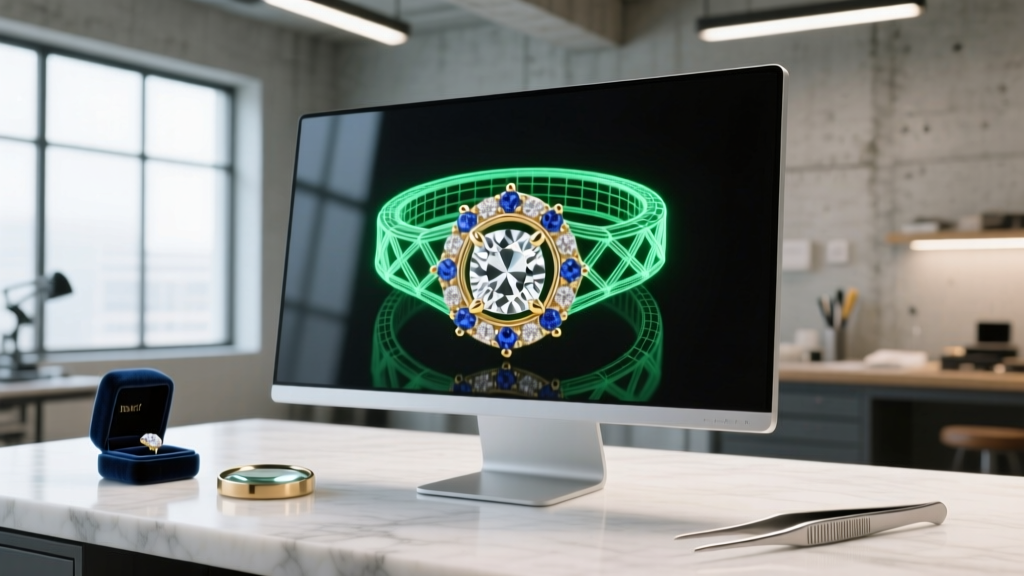
For clients seeking bespoke Reiner's Fine Jewelry engagement rings Houston's design team utilizes advanced MatrixGold and Rhino 3D CAD software. The transition from digital rendering to physical object is where many jewelers lose precision, but Reiner's employs high-resolution 5-axis wax milling machines capable of holding tolerances down to 0.05mm.
The casting process itself is meticulously controlled. They use a phosphate-bonded investment powder with strict water-to-powder ratios to ensure a flawless surface finish on the raw casting, minimizing the need for aggressive post-cast polishing. Aggressive polishing can round off crisp edges and reduce the structural mass of the shank; by achieving a near-perfect cast, Reiner's preserves the exact architectural lines approved in the CAD phase. Burnout cycles are carefully ramped to ensure complete wax elimination, preventing porosity (tiny gas bubbles) within the metal matrix.
Market Positioning and Value Matrix
How does the technical output of Reiner's compare to other purchasing avenues? Below is a structural and service comparison between Reiner's custom bench work, large national online retailers, and standard mall-based chain jewelers.
| Technical Feature | Reiner's Custom Bench | National Online Retailer | Standard Mall Jeweler |
|---|---|---|---|
| Min. Shank Thickness | 1.6mm (Structural) | 1.2mm - 1.4mm (Lightweight) | 1.0mm (Ultra-thin) |
| White Gold Alloy | 18k Palladium (No Rhodium) | 14k Nickel (Requires Dipping) | 10k/14k Nickel |
| CAD Revision Limit | Unlimited until approved | 2-3 Revisions max | N/A (Pre-cast only) |
| Porosity Guarantee | X-ray verified on request | Standard visual inspection | Visual inspection only |
| Prong Retipping Warranty | Lifetime (Local Bench) | 1-5 Years (Mail-in) | 1 Year (Store Credit) |
While the initial capital outlay for a bespoke piece at Reiner's may be 15% to 25% higher than a lightweight, mass-cast equivalent from an online giant, the long-term cost of ownership is significantly lower. The elimination of bi-annual rhodium plating, combined with the superior wear resistance of Ruthenium platinum and 18k palladium gold, results in a ring that requires minimal bench time over a decade of daily wear.
Final Expert Verdict
For the Houston-based buyer who views an engagement ring as an exercise in applied materials science and precision engineering, Reiner's Fine Jewelry delivers exceptional value. Their refusal to compromise on alloy purity, their strict adherence to ideal diamond proportions, and their mastery of modern CAD/CAM milling make them a premier destination for technically sound, heirloom-grade jewelry. They do not just sell rings; they engineer wearable architecture designed to withstand the rigors of daily life while maintaining optical brilliance.


