Swimming Pool Ring Jewelry Guide: Best Metals for Chlorine & Water
Discover the ultimate swimming pool ring jewelry guide. Learn which metals, gemstones, and settings survive chlorine and saltwater exposure.

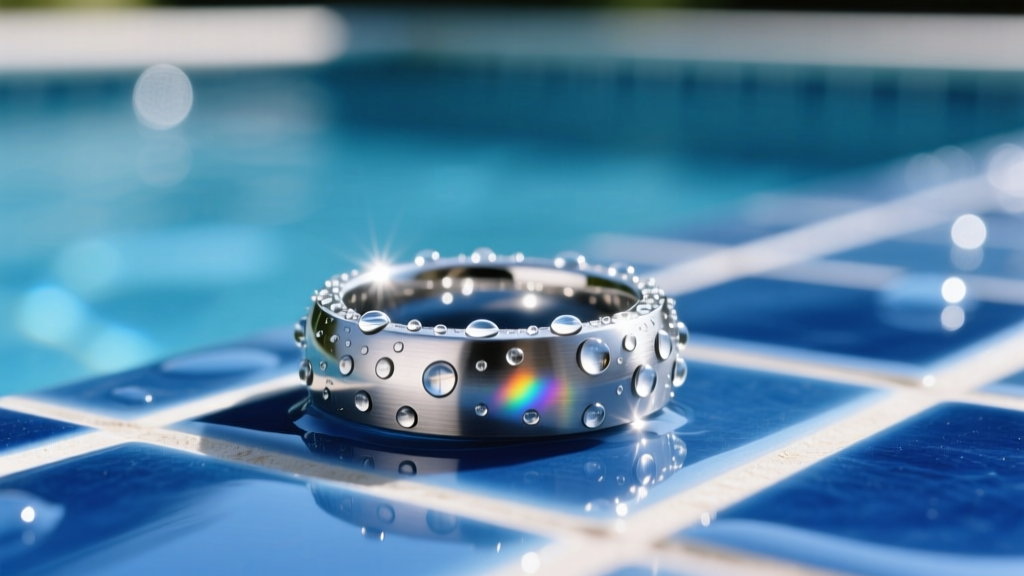
When building a collection of aquatic-safe accessories, selecting the right swimming pool ring jewelry requires looking far beyond surface-level aesthetics. The harsh chemical environment of a chlorinated pool or the corrosive nature of saltwater can permanently destroy precious metals, dissolve gemstone treatments, and compromise structural integrity. As a jewelry metallurgy and style expert, I have evaluated hundreds of rings to determine exactly which materials survive the deep end and which will fail catastrophically. This comprehensive buying guide breaks down the exact metal grades, setting architectures, and gemstone tolerances you need to know before taking your favorite rings into the water.
The Metallurgical Reality of Chlorine Exposure
The primary enemy of fine jewelry in swimming pools is not the water itself, but the hypochlorous acid and sodium hypochlorite used to sanitize it. According to water treatment guidelines outlined by the Centers for Disease Control and Prevention (CDC), pool water is maintained at a pH of 7.2 to 7.8 with free chlorine levels between 1.0 and 3.0 ppm. While safe for human skin, this chemical cocktail is highly aggressive toward the alloy metals used in karat gold.
Pure 24k gold is virtually inert, but it is too soft for daily wear. Therefore, jewelers alloy it with copper, zinc, silver, and nickel to create 14k and 18k gold. When exposed to chlorinated water, the chlorine aggressively attacks the copper and zinc matrix. This triggers a destructive metallurgical failure known as Stress Corrosion Cracking (SCC). The chlorine literally eats away the alloy at a microscopic level, particularly at high-stress points like prong tips, ring shanks, and solder joints. Over time, this causes prongs to snap and stones to fall out without any visible warning. If you are committed to wearing gold swimming pool ring jewelry, you must understand the severe limitations of karat alloys.
Material Grades: What Survives the Deep End?
To avoid SCC and chemical tarnishing, you must select metals that possess high noble properties or stable oxide layers. Below is a definitive comparison of common ring materials and their aquatic viability.
| Material & Grade | Chlorine Resistance | Saltwater Resistance | Expert Verdict for Pool Wear |
|---|---|---|---|
| Platinum (950 Pt) | Excellent | Excellent | The ultimate luxury choice. Highly inert; will not degrade, though it may develop a patina. |
| Titanium (Grade 5) | Excellent | Excellent | Top tier for active swimmers. Lightweight, incredibly strong, and 100% immune to pool chemicals. |
| Tungsten Carbide (Nickel Binder) | Very Good | Very Good | Safe from chlorine, but brittle. Will shatter if struck against a concrete pool edge. |
| Tungsten Carbide (Cobalt Binder) | Poor | Poor | AVOID. Cobalt reacts with chlorine, leaching out and leaving the ring porous, brittle, and staining the skin black. |
| 14k / 18k Yellow Gold | Poor | Fair | High risk of Stress Corrosion Cracking. Prongs will weaken rapidly with frequent pool exposure. |
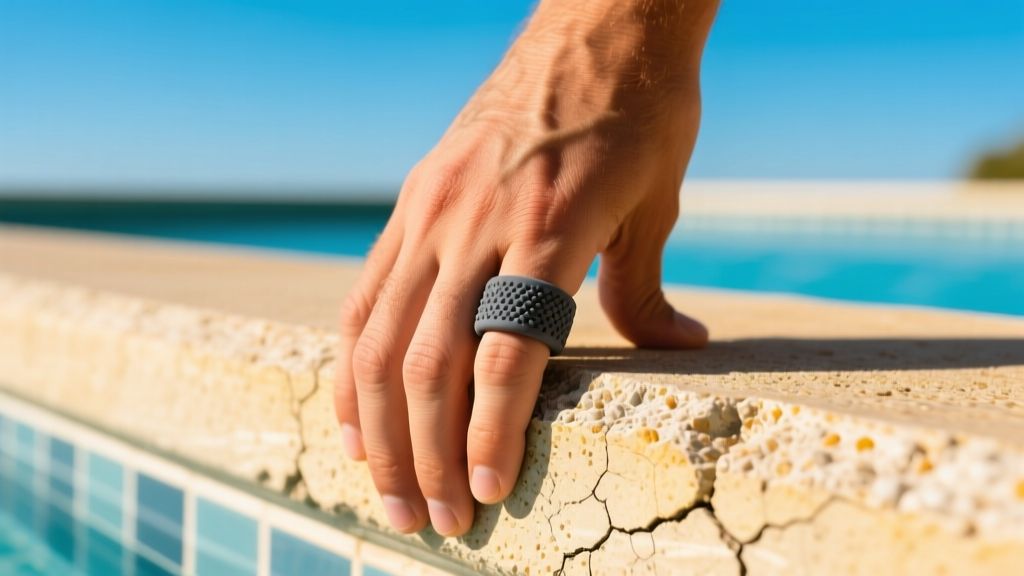
| Medical-Grade Silicone | Good | Good | Best for sports swimming. Will eventually degrade from UV and chlorine after 1-2 years, but is cheap to replace. |
For a deep dive into how different alloys react to chemical stressors, the Rio Grande jewelry metallurgy guides provide extensive data on why nickel-binder tungsten outperforms cobalt-binder tungsten in acidic and chlorinated environments. Always verify the binder metal with the manufacturer before purchasing a tungsten ring for aquatic wear.
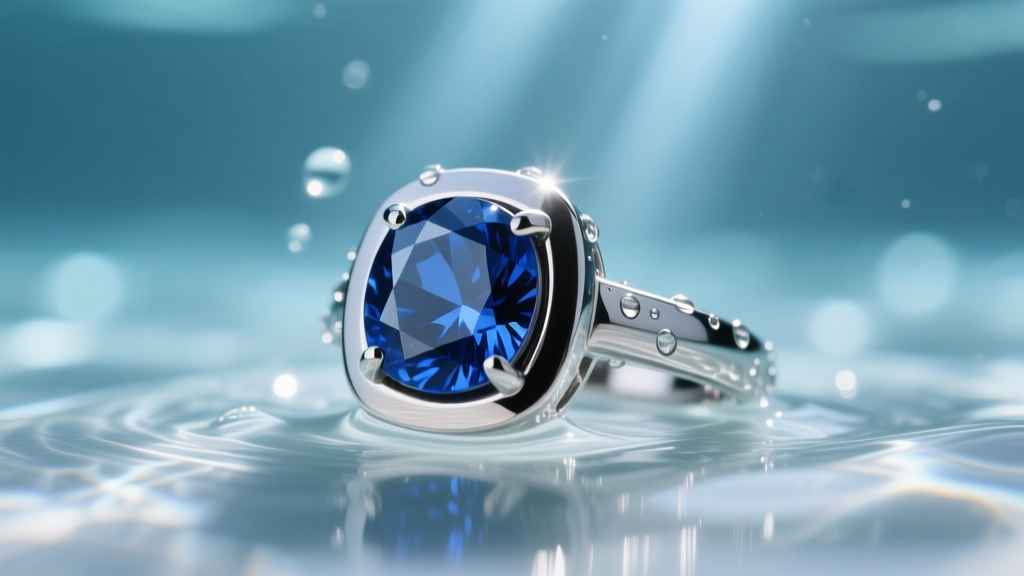
Gemstone Porosity and Chemical Vulnerability
Even if your metal survives the pool, your gemstones might not. The Gemological Institute of America (GIA) categorizes gemstones not just by Mohs hardness, but by chemical stability and porosity. Swimming pool ring jewelry must avoid porous and treated stones entirely.
- Emeralds: Over 90% of commercial emeralds are fracture-filled with cedar oil or synthetic resins (like Opticon) to hide natural inclusions. Hot pool water and harsh chlorine will dissolve these fillers, leaving the stone looking cloudy, heavily fractured, and significantly devalued.
- Opals: Opals contain between 3% and 21% water within their silica structure. Exposure to chlorinated water, followed by rapid drying in the sun, can cause "crazing"—a network of permanent micro-cracks that destroys the stone's structural integrity and play-of-color.
- Pearls and Coral: These organic gems are composed of calcium carbonate. They will literally dissolve and lose their luster when exposed to the acidic nature of chlorinated pool water.
- Safe Alternatives: Stick to chemically inert, non-porous stones like sapphires, rubies, and high-quality cubic zirconia or moissanite. These stones will not absorb pool chemicals or react to temperature fluctuations.
The Physics of Aquatic Sizing and Setting Security
One of the most overlooked aspects of buying swimming pool ring jewelry is the physiological reaction of the human body to water temperature. When you enter a cold swimming pool, your body undergoes peripheral vasoconstriction to preserve core heat. This causes the blood vessels in your fingers to shrink, reducing your finger volume by up to half a ring size.
If your ring features a traditional prong setting, this sudden reduction in finger size means the ring will spin freely. As you swim, the hydrodynamic drag and accidental bumps against pool walls can easily catch a loose prong, ripping it back and losing your gemstone into the pool drain.
The Solution: For any ring intended for aquatic environments, demand a bezel setting or a flush/gypsy setting. A bezel setting completely encircles the gemstone's girdle with a custom-fitted metal rim, eliminating exposed prongs entirely. This not only protects the stone from chemical exposure but ensures that even if the ring spins on a shrunken finger, the gemstone cannot be knocked loose by physical impact.
Post-Swim Care and Maintenance Protocols
If you choose to wear platinum, titanium, or nickel-binder tungsten swimming pool ring jewelry, you still need to implement a strict post-swim care routine to maintain the finish and hygiene of the piece.
- The Immediate Rinse: Within 10 minutes of exiting the pool, rinse the ring thoroughly under warm, fresh tap water. This halts the chemical reaction of any residual chlorine trapped beneath the setting or inside the ring's inner band.
- Mild Surfactant Cleaning: Once a week, soak the ring in a bowl of warm water mixed with a few drops of ammonia-free dish soap. Use a soft-bristled baby toothbrush to gently agitate the area behind the gemstone, where dead skin cells and pool chemicals accumulate to form a cloudy film.
- Avoid Ultrasonic Cleaners for Pool Rings: If your ring has been exposed to pool water and features microscopic stress fractures from accidental impacts against pool tiles, an ultrasonic cleaner's high-frequency vibrations can cause the stone to shatter or the metal to finally snap.
Expert Takeaway: True luxury is knowing when to take your jewelry off. While Grade 5 titanium and 950 Platinum are engineered to survive the chemical assault of a swimming pool, the physical risk of dropping a $10,000 ring into a deep-end drain is never zero. For daily lap swimming, a high-quality silicone band remains the most pragmatic, stress-free choice, reserving your fine bezel-set platinum pieces for poolside lounging rather than active swimming.

