How to Get Permanent Jewelry Rings: The Complete Guide
Learn how to get permanent jewelry rings safely. Our step-by-step guide covers custom sizing, laser welding, 14k gold grades, and swelling risks.

The Rise of the Seamless Band: Understanding Permanent Rings
The permanent jewelry trend has evolved far beyond the simple welded bracelets that dominated social media a few years ago. As of 2026, discerning collectors and minimalists are turning to permanent jewelry rings—continuous, clasp-less bands that are custom-fitted and micro-welded into a seamless loop. But unlike a wrist, which offers a relatively flat surface for a copper shielding plate during the welding process, the human finger presents unique anatomical and safety challenges. Getting a permanent ring requires a meticulous approach to metallurgy, sizing mathematics, and thermal safety. This step-by-step guide will walk you through exactly how to commission, size, and wear a welded ring without compromising your finger's health or your investment.
Step 1: Selecting the Right Metal Alloy for Micro-Welding
Not all metals are suitable for the pulse arc or laser welding techniques used in permanent jewelry. The metal must possess a specific thermal conductivity and alloy composition to fuse cleanly without oxidizing or burning through the delicate band. According to the Gemological Institute of America (GIA), the purity of gold drastically affects its melting point and structural integrity.
| Metal Grade | Weldability | Durability & Wear | Best For |
|---|---|---|---|
| 14k Gold (Yellow/White/Rose) | Excellent. The alloy mix lowers the melting point, allowing for clean pulse arc welds. | High. Resists scratching and deformation during daily wear. | Everyday permanent bands, delicate chains. |
| 18k Gold | Good, but requires precise heat control due to higher pure gold content. | Medium. Softer, more prone to micro-scratches over time. | Thicker signet-style permanent rings. |
| Grade 5 Titanium (Ti-6Al-4V) | Difficult. Requires argon gas shielding and specialized TIG/laser setups. | Extreme. Hypoallergenic, lightweight, and virtually indestructible. | Industrial aesthetics, severe metal allergies. |
| Platinum (950) | Challenging. High melting point requires a high-powered laser welder. | Exceptional. Dense, heavy, and develops a desirable patina. | Luxury heirloom permanent rings. |
Crucial Warning: Never use Tungsten Carbide for permanent jewelry. While incredibly scratch-resistant, tungsten cannot be cut with standard emergency ring cutters and must be shattered with vice grips in a medical emergency, posing a severe degloving risk.
Step 2: The Sizing Protocol (Knuckle vs. Base Differential)
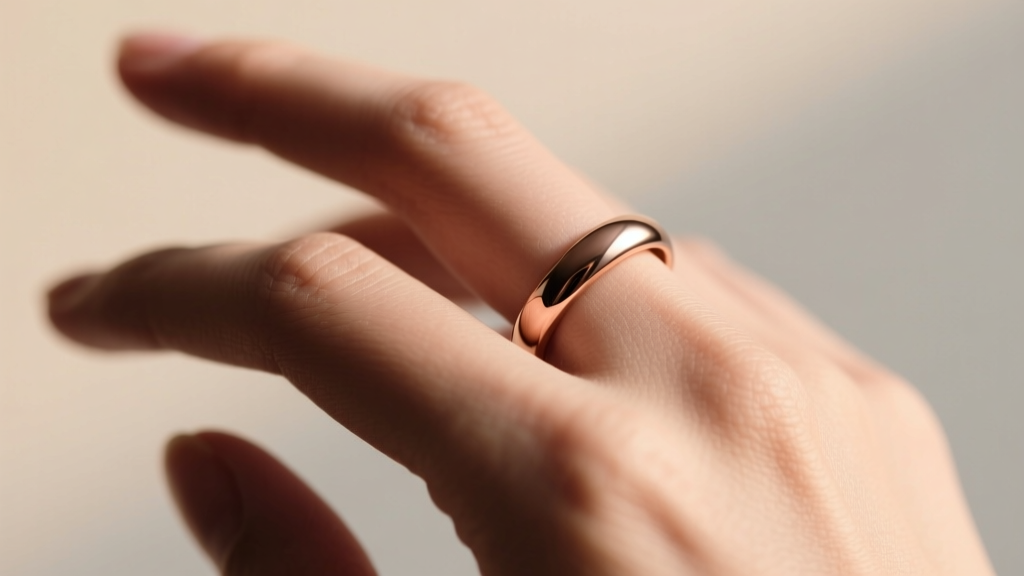
The most common failure point in permanent jewelry rings is improper sizing. Because the ring has no clasp or hinge, it must slide over your knuckle to sit at the base of your finger. This requires calculating the knuckle-to-base differential.
How to Measure for a Permanent Ring
- Measure the Knuckle: Use a non-stretchable measuring tape or a professional finger sizer belt to find the exact millimeter circumference of your widest knuckle joint.
- Measure the Base: Measure the fleshy part of your finger where the ring will rest.
- Calculate the Buffer: If your knuckle is more than 1.5 sizes larger than your finger base, a standard seamless band will either get stuck on the knuckle or spin wildly at the base.
- The Sizing Bead Solution: Master jewelers will often size the ring to comfortably clear the knuckle, then laser-weld two tiny "sizing beads" (or speed bumps) to the inner shank of the band. These beads grip the flesh at the base of the finger, preventing the ring from spinning while allowing it to slide over the knuckle.
"Fingers experience diurnal swelling, fluctuating up to half a ring size between morning and evening due to hydration, temperature, and sodium intake. A permanent ring must be sized during the late afternoon when the finger is at its maximum natural volume to prevent circulatory restriction." — Master Bench Jeweler Guidelines, Rio Grande.
Step 3: The Welding Process (Safety First)
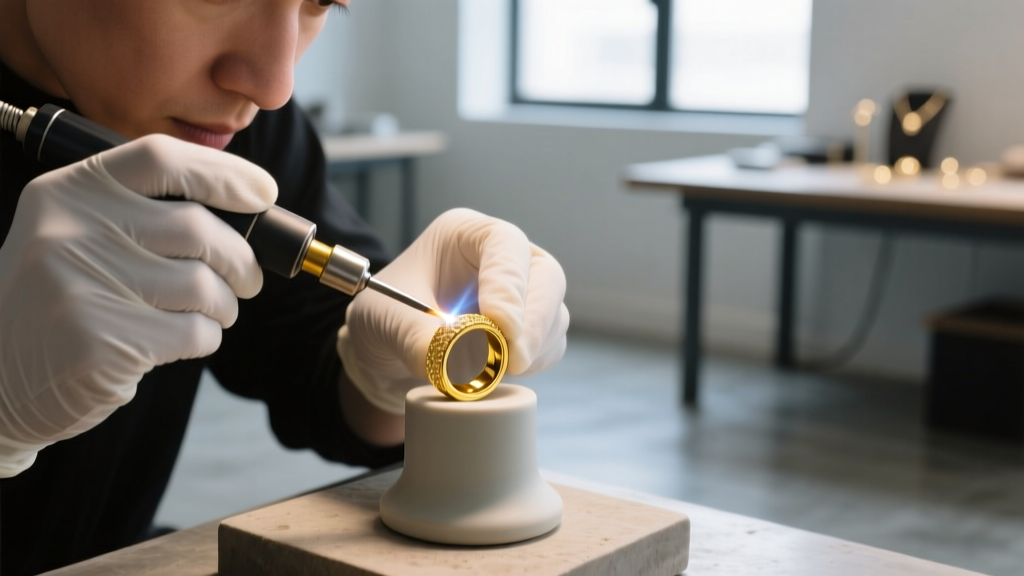
There is a dangerous misconception that permanent jewelry rings are welded directly onto the finger. While welding a bracelet on the wrist is safe when using a copper shielding plate to dissipate heat, the finger's curvature and the proximity of the weld joint to the skin make on-finger welding a severe burn hazard. As of 2026, reputable jewelers strictly adhere to the mandrel-welding method for rings.
The Mandrel-Welding Method
- Sizing on a Mandrel: The jeweler wraps the 14k gold chain or band around a steel or ceramic ring mandrel matched to your exact finger size.
- Argon Gas Purge: An inert argon gas flow is directed at the weld point. This prevents oxygen from reacting with the heated metal, which would otherwise cause a brittle, oxidized, and discolored joint.
- Pulse Arc Fusion: Using an Orion pulse arc welder, a micro-plasma arc melts the two ends of the band together in a fraction of a second. The tungsten electrode never actually touches the gold.
- Polishing: Once cooled, the jeweler uses a micro-motor and polishing compound to smooth the weld seam, rendering it completely invisible to the naked eye and smooth against adjacent fingers.
Step 4: Maintenance, Care, and Emergency Removal
Permanent jewelry rings are designed to be worn 24/7, including in the shower, pool, and ocean. However, specific environmental factors can affect the metal's luster and structural integrity over time.
Daily Wear and Tear
Chlorine in hot tubs and swimming pools can cause microscopic stress corrosion cracking in lower-karat gold alloys over prolonged periods. While 14k gold is highly resilient, it is best practice to rinse your permanent ring with fresh water and mild soap after heavy exposure to chlorinated or salt water. Avoid wearing your ring while lifting heavy weights or gripping metal gym equipment, as the compressive force can warp a delicate continuous band into an oval shape.
Emergency Removal Protocol
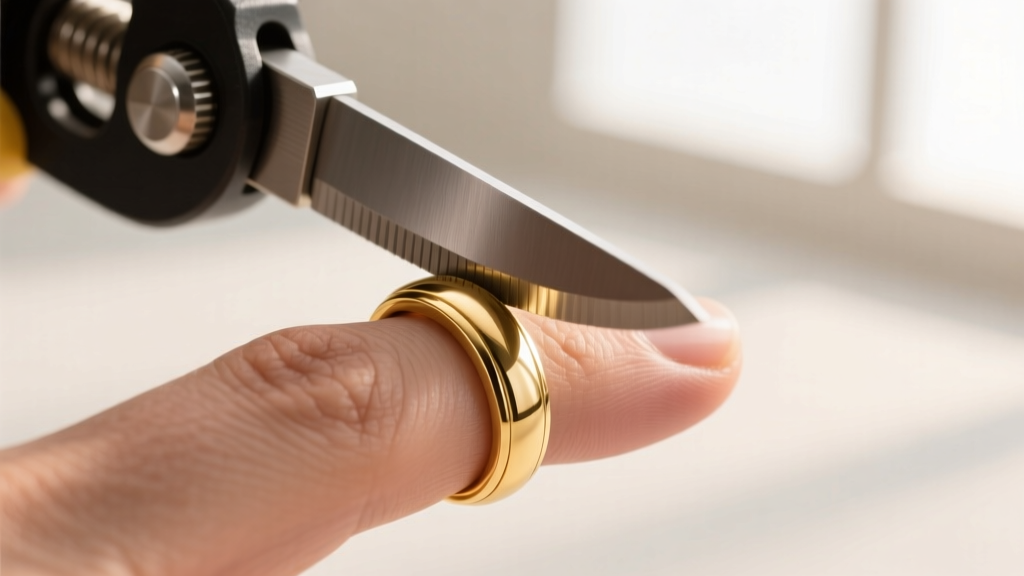
The term "permanent" refers to the lack of a clasp, not an inability to remove the ring. In the event of a medical emergency, severe injury, or required surgery (such as an MRI), permanent jewelry rings can and must be removed.
- For Gold and Silver: Standard manual steel ring cutters or electric hospital ring saws will slice through a 14k gold permanent band in under ten seconds.
- For Titanium: Because Grade 5 titanium is incredibly hard, standard cutters will fail. Emergency responders must use a diamond-coated rotary saw or specialized titanium cutters.
- Re-welding: Once removed, the ring is not destroyed. A jeweler can easily re-size and re-weld the band for a nominal bench fee (typically $25–$50).
Cost Breakdown and Booking Expectations
When budgeting for permanent jewelry rings, expect a two-part pricing structure based on material weight and bench time. Unlike mass-produced cast rings, permanent bands are priced by the inch or gram.
- 14k Gold Chain/Band Material: $35 to $120+ per inch, depending on the chain style (e.g., a delicate cable chain vs. a solid paperclip link).
- Custom Sizing & Mandrel Welding Fee: $30 to $60 flat fee per ring.
- Sizing Bead Add-on: $15 to $25 if inner shank beads are required for knuckle clearance.
To find a qualified professional, search for jewelers who explicitly advertise "pulse arc welding" or "laser welding" capabilities, and always verify that they weld rings off-hand on a mandrel. By prioritizing precise sizing mathematics and safe thermal practices, your permanent jewelry ring will serve as a flawless, enduring symbol of personal style for decades to come.


