How to Inspect and Clean Your Diamond Jewelry Ring Safely
Learn how to safely clean and inspect your diamond jewelry ring at home. Step-by-step prong checks, ultrasonic warnings, and expert maintenance tips.

The Anatomy of Ring Wear: Why Diamonds Get Loose
A diamond is the hardest natural material on earth, scoring a perfect 10 on the Mohs scale of mineral hardness. However, the precious metal securing that diamond is far more vulnerable. Losing a center stone is a devastating, expensive, and entirely preventable event. To properly care for your diamond jewelry ring, you must first understand how different metals degrade over time.
Metals do not wear uniformly. Platinum alloys (typically 95% platinum and 5% ruthenium or iridium) are dense and malleable. When scratched or impacted, platinum displaces rather than flakes away, creating a patina while maintaining structural integrity. Gold alloys, conversely, suffer from abrasive wear. An 18k yellow gold ring (75% pure gold) loses microscopic layers of metal every time it brushes against a surface. Over five to ten years of daily wear, an 18k gold prong can lose up to 20% of its original mass, severely compromising its grip on the diamond's girdle. Meanwhile, 14k gold (58.5% pure gold) is harder and more scratch-resistant due to its higher zinc and copper content, but it is also more brittle and prone to snapping under acute stress rather than bending.
Understanding these metallurgical realities is the first step in transitioning from a passive jewelry owner to an active custodian of your investment. According to the Gemological Institute of America (GIA), regular at-home inspections combined with professional servicing are the most effective ways to prevent catastrophic stone loss.
Step-by-Step Home Inspection Guide
You do not need a gemology degree to spot early warning signs of prong fatigue. By dedicating five minutes a month to a structured inspection, you can catch failures before they result in a lost stone.
1. Secure Your Environment
Never inspect or clean your ring over an open sink drain or a hard tile floor. Always lay down a soft, lint-free microfiber towel or work over a plush carpet. If a stone is already loose, the slightest bump could dislodge it, and a soft surface will prevent the diamond from chipping its culet (the bottom point) upon impact.
2. The 10x Triplet Loupe Check
Invest in a 10x triplet loupe (which corrects for spherical and chromatic distortion). Hold the loupe directly against your eye and bring the ring toward it until it comes into sharp focus. Examine the prong tips. They should be smooth, rounded, and sit flush against the crown of the diamond. If you see a visible gap between the metal and the diamond, or if the prong tip looks flat and paper-thin, the ring requires immediate professional retipping.
3. The Wooden Toothpick Test
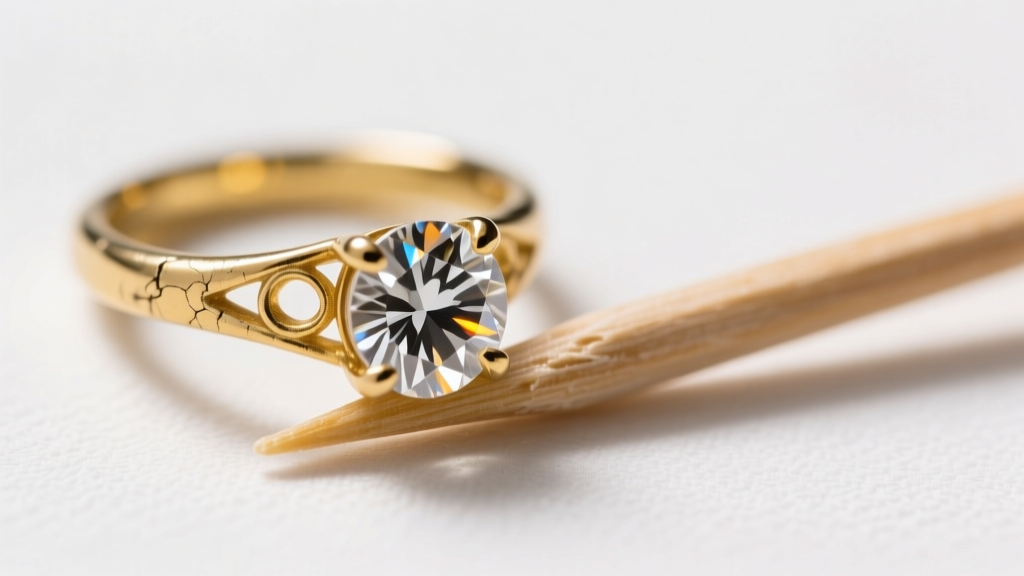
This is an industry-standard trick used by master jewelers. Take a standard wooden toothpick and gently drag it across the top of each prong, applying very light lateral pressure. Never use a metal needle or pin, as hardened steel can scratch gold and platinum. If the prong is secure, the wood will glide smoothly. If the wood catches, snags, or feels spongy, the metal is fatigued, porous, or worn past the 50% safety threshold. Additionally, check the gallery rail—the horizontal wire connecting the prongs beneath the diamond. If the gallery rail is cracked or bent, the entire setting lacks torsional rigidity.
4. The Shake and Tap Test
Hold the ring close to your ear and gently tap the shank (the band) against your knuckle. Listen carefully. A secure diamond will produce a dull, solid thud. If you hear a faint, high-pitched rattling or clicking sound, the stone is moving within the setting. Stop wearing the ring immediately and place it in a soft pouch until a jeweler can tighten the prongs.
The Right Way to Clean a Diamond Jewelry Ring
Diamonds are notoriously lipophilic, meaning they naturally attract and hold onto oils, grease, and sebum. When hand lotions, cooking oils, and dead skin cells accumulate on the pavilion (the bottom cone) of the diamond, they disrupt total internal reflection. This is why a dirty diamond looks like cloudy, lifeless glass. Proper cleaning is not just about aesthetics; it allows light to enter and exit the stone correctly, and it removes corrosive compounds that can degrade certain alloyed metals over time.
The Safe Soak Method
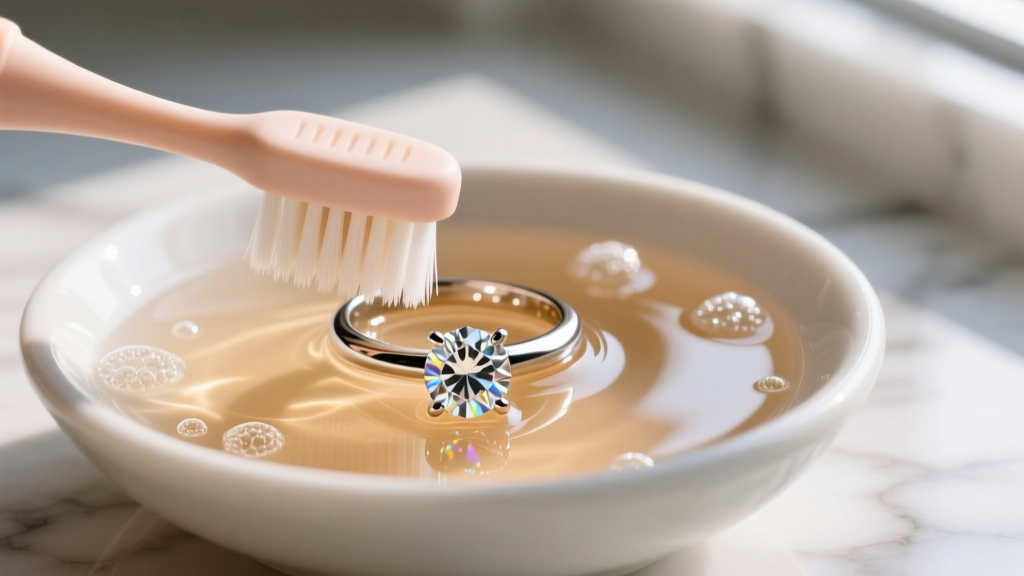
- Mix the Solution: In a small ceramic bowl, mix one part mild, degreasing dish soap (such as original blue Dawn) with six parts warm distilled water. Avoid tap water, as dissolved minerals can leave hard water spots on the metal.
- Soak: Submerge the diamond jewelry ring for 15 to 20 minutes. This softens hardened sebum and cosmetic buildup without the need for aggressive scrubbing.
- Brush the Pavilion: Using an extra-soft baby toothbrush, gently scrub the stone. Pay 90% of your attention to the underside of the diamond (the pavilion and culet), where grime accumulates most heavily. Brush outward from the center to avoid pushing dirt under the prong tips.
- Rinse and Dry: Rinse the ring under a gentle stream of warm distilled water. Pat dry with a clean, lint-free microfiber cloth. Never use paper towels or tissues, as the wood pulp fibers can cause microscopic scratches on polished gold and platinum.
Ultrasonic Cleaners: A Warning
While commercial ultrasonic cleaners use 40,000 Hz sound waves to cavitate dirt away from hard-to-reach crevices, they are not universally safe. Ultrasonic vibrations can easily shake a diamond loose if the prongs are already compromised. Furthermore, if your diamond has been fracture-filled or laser-drilled (common clarity enhancements), the intense vibrations and heat can shatter the stone or melt the glass-like filler. The Jewelers of America strongly recommends avoiding ultrasonic cleaners unless you have explicit confirmation from a gemologist that your specific stone and setting can withstand the process.
Material-Specific Maintenance Matrix
The metal you choose for your diamond jewelry ring dictates its maintenance schedule. Use the matrix below to understand the specific wear characteristics and care requirements of popular jewelry metals.
| Metal Type | Hardness (Vickers) | Wear Mechanism | Prong Retipping Frequency | Specific Care Notes |
|---|---|---|---|---|
| 950 Platinum | 125 HV | Displacement (Patina) | Every 10-15 years | Polishing removes displaced metal; develops a matte patina over time. |
| 18k Yellow Gold | 140 HV | Abrasive Loss | Every 5-7 years | Prongs thin out gradually; requires regular loupe inspections. |
| 14k Yellow Gold | 160 HV | Abrasive Loss / Brittle | Every 7-10 years | More resistant to scratching but prongs can snap if bent repeatedly. |
| 14k/18k White Gold | 130-150 HV | Abrasive Loss | Every 5-8 years | Requires Rhodium plating every 12-18 months to maintain bright white color. |
Expert Insight: If your diamond jewelry ring spins constantly on your finger, you are exposing the top prongs to accelerated, uneven wear against your adjacent fingers. Ask your jeweler to install "sizing beads" (also known as speed bumps) on the inner shank. These two small metal domes grip the finger, keeping the diamond centered and protecting the prongs from lateral friction.
When to See a Professional Jeweler
Home maintenance is vital, but it cannot replace professional bench work. You should schedule an appointment with a certified bench jeweler under the following circumstances:
- Visible Prong Thinning: If the 10x loupe reveals that the prong tip no longer covers at least 15% of the diamond's crown facet, it needs retipping.
- Shank Thinning: If the bottom of the band (the shank) becomes paper-thin or develops a concave dip, it must be cut out and replaced with a new half-shank via laser welding. Laser welding is preferable to traditional torch soldering, as it prevents thermal shock to the diamond and avoids leaving visible solder seams.
- Fading Rhodium: White gold is naturally pale yellow. It is plated with rhodium (a platinum-group metal) to achieve a mirror-white finish. When the yellow undertone begins to show through on the top of the shank, it is time for a professional polish and re-plate.
- Post-Travel or Impact: If you have recently traveled (changes in cabin pressure and temperature can subtly affect metal tension) or if you struck your ring against a hard surface like a gym weight or granite countertop, an immediate professional prong-tightening is mandatory.
By combining the wooden toothpick test, the pavilion-focused cleaning method, and an understanding of your specific metal's wear matrix, you will ensure your diamond jewelry ring remains secure, brilliant, and structurally sound for generations.