Jewelry Box Ring Inserts: The 2026 Storage Buying Guide
Discover how to choose the best jewelry box ring inserts in 2026. Learn slot dimensions, material grades, and storage solutions for every ring style.

The Hidden Costs of Poor Ring Storage
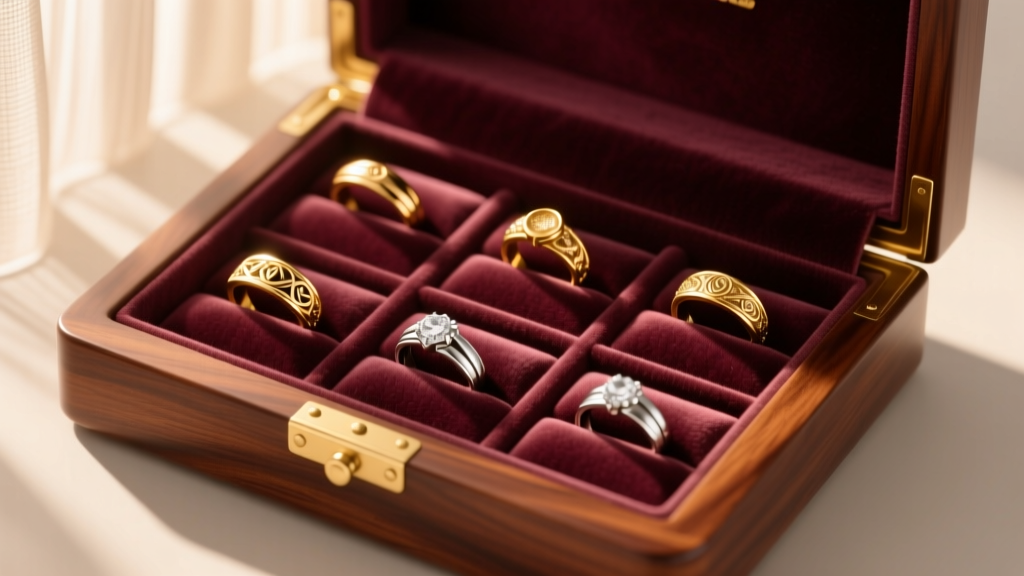
As ring collections evolve from simple bands to complex, multi-finger arrangements, the storage infrastructure often fails to keep pace. In 2026, the market for jewelry box ring inserts has shifted dramatically, moving away from generic, one-size-fits-all rolls toward highly engineered, modular storage systems. Storing a 1mm stacking ring in the same 20mm slot designed for a heavy signet ring is not just an aesthetic compromise; it is a metallurgical hazard. When rings shift during drawer movement, the friction between different metals and gemstones can cause catastrophic micro-scratches. According to the Gemological Institute of America (GIA), diamonds rank at a 10 on the Mohs hardness scale, meaning a loosely stored diamond solitaire can easily gouge the surface of a 14k gold band (Mohs 2.5-3) or permanently dull the polish of a sterling silver signet. Furthermore, improper storage accelerates the wear of rhodium plating on white gold, costing owners hundreds of dollars in annual re-plating fees. This buying guide dissects the exact material grades, dimensional requirements, and structural configurations you need to protect your finger jewelry.
Material Science: What Your Inserts Are Made Of
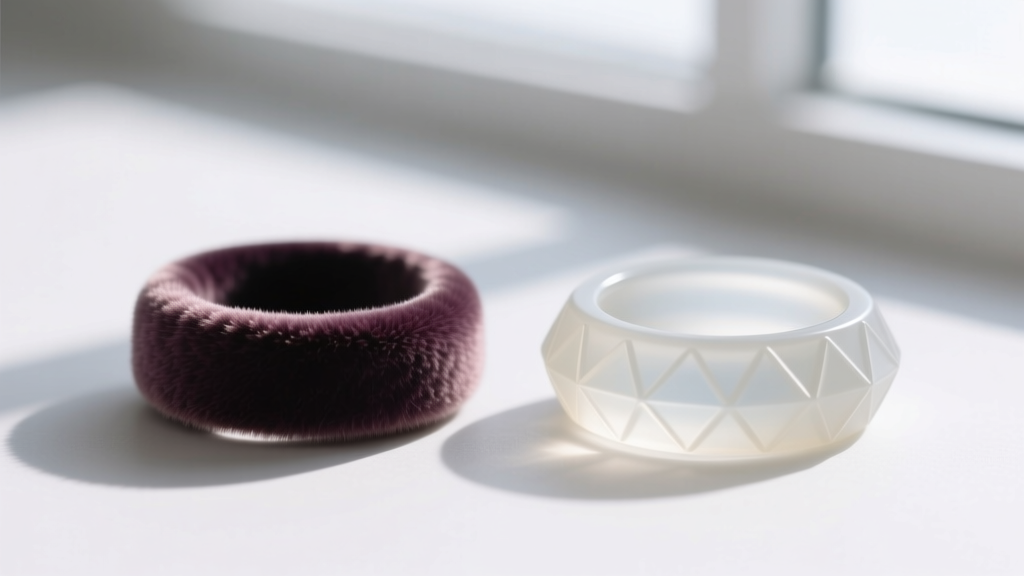
The most critical, yet frequently overlooked, aspect of jewelry box ring inserts is the core foam and the exterior textile. Cheap inserts utilize Polyurethane (PU) foam, which is notorious for degrading over time and releasing Volatile Organic Compounds (VOCs). These VOCs react with ambient sulfur and moisture to rapidly accelerate the formation of silver sulfide—the black tarnish that plagues sterling silver collections. For long-term preservation, you must seek out specific material combinations.
The 2026 Material Comparison Matrix
| Material Combination | Core Stability | Tarnish Risk | Best Use Case |
|---|---|---|---|
| PU Foam + Standard Velvet | Poor (Degrades in 2-3 years) | High (Off-gasses VOCs) | Costume jewelry, temporary display |
| EVA Foam + Rayon Velvet | Excellent (Non-degrading) | Low (Acid-free options) | Everyday gold and platinum bands |
| EVA Foam + Pacific Silvercloth | Excellent | Zero (Absorbs sulfur gases) | Heirloom sterling silver and high-carat gold |
| Platinum-Cured Silicone | Superior (Memory retention) | None (Inert material) | Heavy signet rings, spinner rings, travel |
For collectors with high-value pieces, inserts lined with Pacific Silvercloth are the gold standard. This material embeds microscopic silver particles into the cotton fibers, which act as a sacrificial anode, absorbing tarnish-causing gases before they reach your jewelry. For heavy rings like solid bronze or stainless steel signets, platinum-cured silicone inserts offer the necessary friction to prevent the rings from sliding out of their slots when a drawer is pulled open sharply.
Dimensional Sizing: Matching Slots to Ring Anatomy
The era of the uniform 18mm ring slot is over. Modern collections feature diverse silhouettes that require specific clearances to prevent structural damage. Bent shanks and loosened prongs are frequently the result of forcing a ring into an undersized slot, or allowing a ring to rattle in an oversized one. Below is the definitive sizing framework for matching your jewelry box ring inserts to your specific collection.
- Stacking Rings (1mm - 2.5mm bands): Require narrow slots, ideally 10mm to 12mm wide. If placed in standard 18mm slots, stacking rings tend to overlap, tangle, and scratch one another. Look for high-density inserts with tight tolerances to hold thin bands perfectly upright.
- Standard Wedding Bands (3mm - 6mm): Fit perfectly in the industry-standard 15mm to 18mm slots. Ensure the depth is at least 20mm to accommodate comfort-fit interiors without the ring popping out.
- Signet & Pinky Rings (8mm - 14mm shanks): These require wide, reinforced slots (22mm to 25mm). The heavy face of a signet ring creates a top-heavy center of gravity; if the slot is too shallow, the ring will tip forward, resting its weight directly on the gemstone or engraved face rather than the shank.
- Cocktail Rings (High-Profile Settings): The primary concern here is vertical clearance. Standard inserts are 25mm deep, which will crush the pavilion of a high-dome cocktail ring against the drawer above it. You must source extra-deep inserts (35mm to 40mm depth). The American Gem Society heavily emphasizes avoiding pressure on gemstone culets to prevent internal fracturing.
- Spinner & Anxiety Rings: These feature an outer band that rotates around an inner band. They require slightly wider slots (20mm) to ensure the outer band isn't compressed or jammed against the velvet walls, which can warp the delicate rotational mechanics over time.
Modular vs. Fixed Configurations: A Space Analysis
When integrating new jewelry box ring inserts into an existing vanity or armoire, dimensional compatibility is paramount. In the US, standard jewelry drawer dimensions typically hover around 14.5 inches wide by 8.5 inches deep, though European and bespoke cabinetry can vary wildly. Fixed, single-piece inserts often leave 1 to 2 inches of dead space at the back or sides of the drawer. This dead space is dangerous; it allows the entire insert to slide backward when the drawer is closed, potentially crushing necklaces or watches stored in adjacent compartments.
To solve this, the 2026 market has fully embraced modular interlocking tray systems. These systems utilize 3-inch, 4-inch, and 6-inch wide blocks that can be combined to achieve a perfect friction-fit within your specific drawer width. When buying modular inserts, ensure the base features a micro-suction or high-friction EVA bottom. This prevents the individual blocks from separating when you pull a ring out of a tight velvet slot.
Textile Snagging and Prong Safety
Not all velvets are created equal. Traditional looped velvet, while luxurious to the touch, is a known hazard for jewelry with micro-pave settings or delicate eagle-claw prongs. The microscopic loops can catch on a slightly lifted prong, pulling it further away from the gemstone each time the ring is inserted or removed. For collections featuring pave diamonds, intricate filigree, or tension settings, you must opt for sheared microfiber or sueded rayon inserts. These materials offer a completely flat, non-looped pile that provides a buttery glide, eliminating the risk of textile-induced prong failure.
Troubleshooting Common Storage Failures
Even with premium jewelry box ring inserts, environmental factors can compromise your collection. Here is how to troubleshoot the three most common storage failures encountered by serious collectors.
- Moisture Trapping in Silicone: While platinum-cured silicone is excellent for grip, it is entirely non-breathable. If you store opals, emeralds, or pearls in a sealed silicone insert within a non-climate-controlled room, the trapped ambient moisture can lead to fungal growth or degrade the structural integrity of porous gems. Always include a 3-gram silica gel desiccant packet in the drawer housing silicone inserts.
- Velvet Crushing and Memory Loss: Over time, the weight of heavy gold signet rings will permanently crush the foam and textile of cheaper inserts, creating a 'trough' that causes adjacent lighter rings to roll into them. To prevent this, rotate the position of your heaviest rings every six months, or invest exclusively in high-density EVA foam cores (Shore A hardness of 40-50) which possess superior memory retention.
- Tarnish Creep: If your silver rings are tarnishing despite using anti-tarnish inserts, check the drawer seals. VOCs from nearby freshly painted walls, synthetic leather watch boxes, or even certain wood glues used in the vanity itself can overwhelm the insert's protective capabilities. Integrate 3M Anti-Tarnish Strips directly beneath the insert tray for a secondary line of chemical defense.
Final Verdict: Building Your 2026 Storage System
Upgrading your jewelry box ring inserts is not merely an organizational task; it is a vital preservation strategy. By abandoning generic polyurethane rolls in favor of acid-free EVA foam, matching slot widths to the exact millimeter dimensions of your ring styles, and utilizing modular configurations to eliminate drawer shift, you ensure that every piece remains in pristine, wearable condition. Whether you are safeguarding a delicate stack of 18k gold midi rings or a heavy vintage bronze signet, the right insert is the silent guardian of your collection's longevity and value. Consult with the Jewelers of America guidelines regularly to ensure your storage practices evolve alongside new metallurgical treatments and gemstone settings entering the market.


