Why An Alessia Caro Ring Not in Jewelry Box Storage Risks Damage
Discover the material science behind demi-fine jewelry degradation and what to do when your favorite ring is left outside its protective storage box.

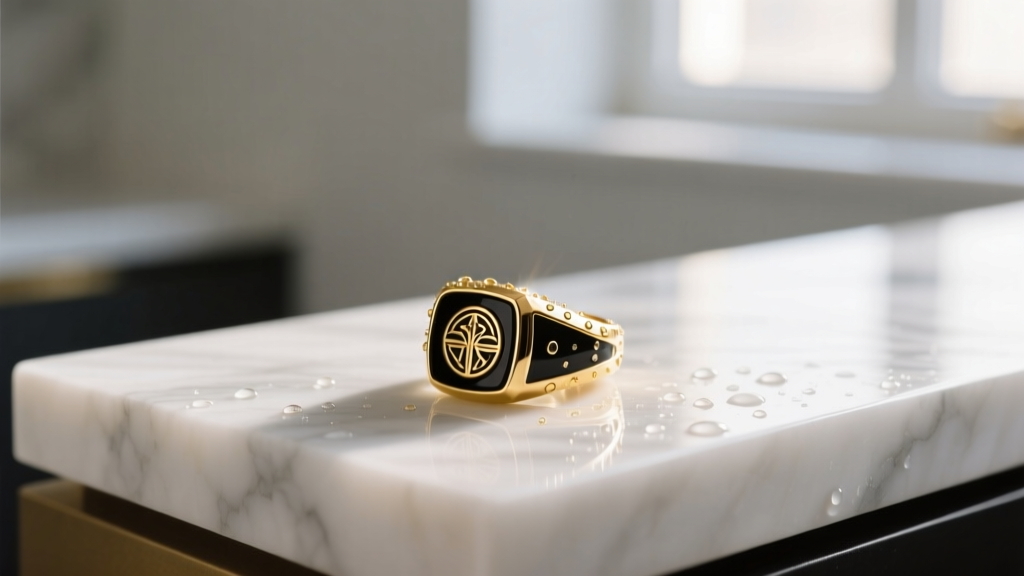
The sinking feeling of misplacing a cherished piece of jewelry is a universal experience, but the material consequences of improper storage are rarely discussed in the world of demi-fine accessories. Realizing your Alessia Caro ring not in jewelry box protection has been sitting on a humid bathroom counter or a sunlit nightstand triggers immediate concern for its material integrity. While solid 14k or 18k gold can withstand months of ambient exposure, the intricate mixed-material constructions favored by contemporary designers require strict micro-climate control to prevent irreversible degradation.
In this deep dive, we examine the metallurgical and chemical vulnerabilities of demi-fine rings when removed from their anti-tarnish environments, and provide a forensic recovery protocol for pieces that have been left exposed to the elements.
The Material Science of Ambient Exposure
To understand why a controlled jewelry box is non-negotiable, we must first deconstruct the anatomy of modern demi-fine rings. Brands operating in the accessible luxury space frequently utilize gold vermeil and cold enamel. According to the Federal Trade Commission (FTC) Jewelry Guides, true vermeil requires a base of 925 sterling silver plated with a minimum of 2.5 microns of 10k, 14k, or 18k gold.
When a vermeil ring is left outside a sealed jewelry box, the primary threat is not the gold itself, but the microscopic porosity of the plating and the environmental assault on the sterling silver core. Airborne hydrogen sulfide (H2S)—emitted by everyday items like aerosol hairsprays, certain paints, and even natural gas—penetrates microscopic fissures in the gold layer. Once H2S contacts the copper and silver alloys in the 925 base, it triggers a rapid chemical reaction, forming silver sulfide (Ag2S). This manifests as a dark, bruised tarnish that can actually cause the gold plating to blister or flake from the inside out.
The Enamel Vulnerability: Cold vs. Vitreous
Many statement rings feature vibrant bands of color. Historically, this was achieved through vitreous enamel (powdered glass fused to metal at 1,400°F). Today, demi-fine jewelry almost exclusively uses cold enamel, which is essentially a pigmented, high-grade epoxy resin. While beautiful, cold epoxy is highly susceptible to two environmental factors when left unboxed:
- UV Degradation: Prolonged exposure to direct sunlight breaks down the polymer chains in the resin, leading to irreversible yellowing, particularly in white, pastel, and neon pigments.
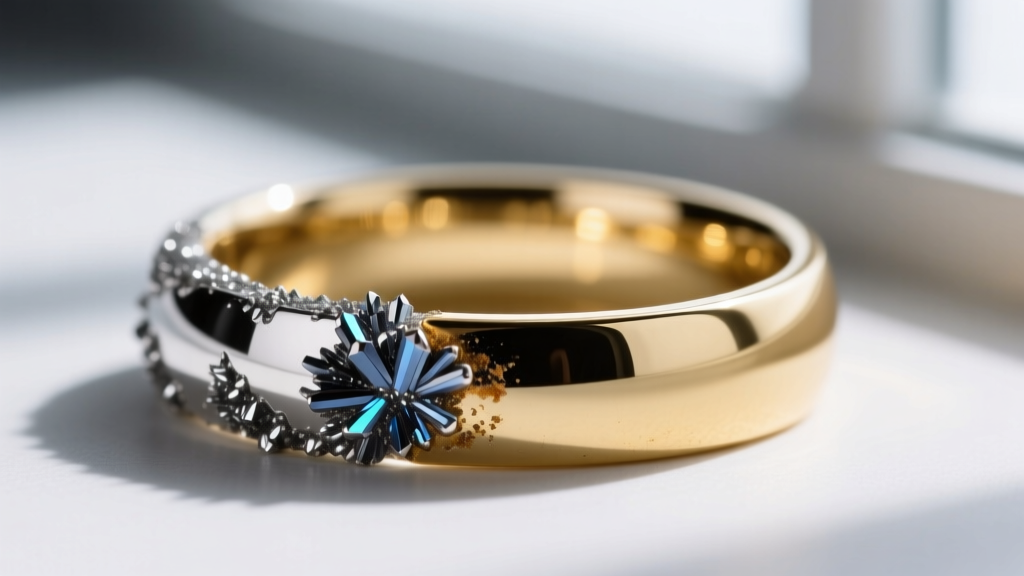
- Thermal Shock: Leaving a ring near a heating vent or in a steamy bathroom causes the metal band to expand and contract at a different rate than the epoxy. This coefficient of thermal expansion mismatch results in microscopic spider-web fractures within the enamel.
Degradation Timelines: What Happens When Left Out
Not all materials fail at the same rate. The timeline for visible degradation depends heavily on the ambient humidity and the specific alloy composition. Below is a comparative breakdown of how different ring materials fare when left unprotected in a standard bedroom or bathroom environment (average 40-60% relative humidity).
| Material Composition | Core Alloy | Plating / Finish | Primary Ambient Threat | Time to Visible Failure |
|---|---|---|---|---|
| Gold Vermeil | 925 Sterling Silver | 2.5μm+ Gold | H2S (Hydrogen Sulfide) | 3 - 6 Months |
| Gold Plated Brass | Copper/Zinc Alloy | 0.5μm - 1.0μm Gold | Moisture & Skin Acids | 1 - 3 Months |
| Cold Enamel Inlay | Epoxy Resin | N/A | UV Light & Heat Cycles | 6 - 12 Months |
| Solid 14k Gold | 58.5% Gold Alloy | N/A | Harsh Chlorides (Bleach) | Years / Decades |
Expert Insight: Brass-core rings are particularly dangerous to leave in humid bathrooms. When the ultra-thin gold plating wears thin, the copper in the brass reacts with moisture and oxygen to form verdigris (copper carbonate), a toxic green crust that can cause severe contact dermatitis and permanently stain the skin and the jewelry.
Forensic Recovery Protocol for Exposed Rings
If you have discovered your demi-fine ring sitting on a vanity for weeks, do not immediately reach for a commercial silver dip or an ultrasonic cleaner. The Gemological Institute of America (GIA) warns that harsh chemical dips strip away the microscopic layer of silver sulfide but also leave the underlying metal highly porous, accelerating future tarnishing and destroying cold enamel finishes.
Follow this three-step recovery protocol to safely restore an exposed piece:
Step 1: The Neutral Surfactant Wash
Mix three drops of pH-neutral dish soap (like original Dawn) into a bowl of distilled water. Tap water contains chlorine and dissolved minerals that can leave hard-water spots on the gold plating. Soak the ring for exactly 90 seconds—no longer, as prolonged water exposure can weaken the epoxy bond of cold enamel settings. Gently agitate with a baby-hair brush to remove surface oils and cosmetic residue.
Step 2: Targeted Tarnish Reversal
For localized silver sulfide tarnish peeking through the vermeil edges, avoid abrasive polishing cloths, which will strip the 2.5-micron gold layer. Instead, use a specialized impregnated jeweler's cloth (such as a Sunshine cloth) and only dab the tarnished crevices. Do not rub the flat, plated surfaces.
Step 3: The Desiccant Rest
Before returning the ring to storage, it must be bone-dry. Use a hair dryer on the "cool" setting to evaporate moisture from under the stone settings, then place the ring in a small container with a fresh silica gel packet for 12 hours to draw out any residual ambient moisture trapped in the metal's pores.
Building a Micro-Climate Jewelry Box
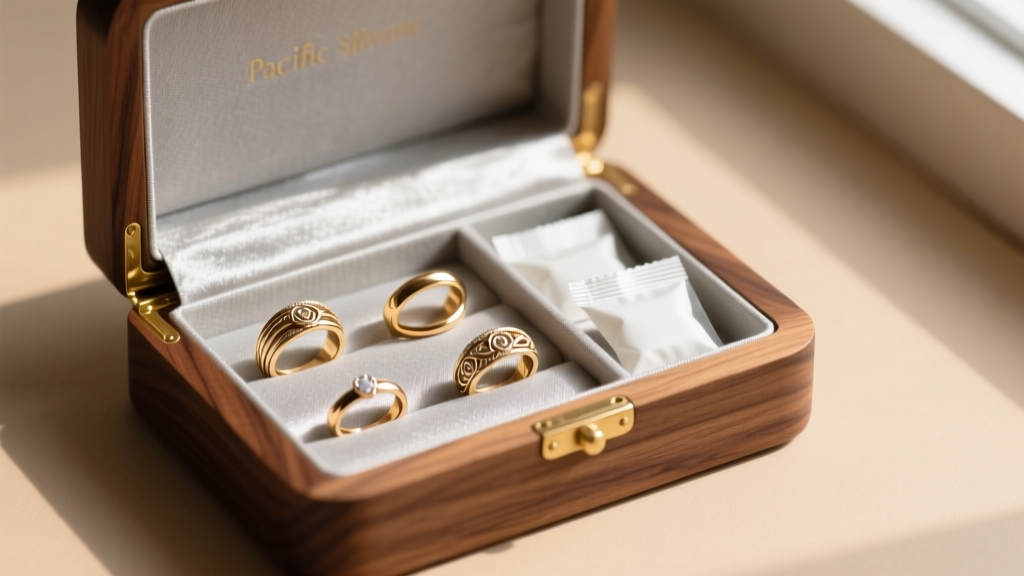
Preventing the panic of a misplaced, degraded ring requires upgrading your storage from a simple velvet pouch to an active micro-climate environment. A proper jewelry box for demi-fine pieces must neutralize both moisture and airborne sulfur.
- Line with Pacific Silvercloth: Unlike standard felt, this specialized fabric is embedded with microscopic silver particles that act as a sacrificial anode. The airborne H2S reacts with the cloth's silver rather than your jewelry's silver.
- Deploy 3M Anti-Tarnish Strips: These strips utilize a copper-based polymer that absorbs sulfur gases. They must be replaced every 6 months, or when the copper indicator turns entirely black.
- Isolate by Hardness: Never store a vermeil ring loose next to diamond or sapphire pieces. Diamonds rank a 10 on the Mohs scale, while gold vermeil and cold enamel rank between 2.5 and 3.5. Ambient friction in a shared compartment will result in severe micro-scratching.
Ultimately, the longevity of designer demi-fine jewelry relies entirely on how it spends its time off your hand. By understanding the chemical sensitivities of vermeil and cold enamel, you can ensure your favorite pieces remain as vibrant as the day they were unboxed.


