How to Style Eye Rings Jewelry: A Step-by-Step Guide
Master the art of wearing eye rings jewelry with our step-by-step styling guide. Learn sizing, enamel types, and stacking formulas.


The Symbolism and Appeal of Eye Motifs
Eye motifs have captivated jewelry designers and wearers for millennia. From the ancient Greek mati and the Turkish Nazar boncuğu to the Renaissance all-seeing eye, these symbols carry profound historical weight. Today, eye rings jewelry transcends mere superstition, functioning as a bold sartorial statement that blends mysticism with high fashion. Whether you are drawn to the protective qualities of the evil eye or the surreal aesthetic of anatomical eye designs, mastering the styling of these pieces requires an understanding of proportion, material science, and finger placement.
In this comprehensive guide, we break down the exact steps to selecting, sizing, and styling eye rings jewelry for maximum impact in 2026 and beyond. We will explore the nuances of vitreous versus cold enamel, provide exact millimeter guidelines for finger placement, and share professional stacking formulas that ensure your statement piece remains the focal point.
Step 1: Selecting the Ideal Finger and Proportion
The most common mistake when wearing statement eye rings is ignoring the anatomical proportions of the hand. An oversized eye ring on a petite pinky finger will look cumbersome and restrict movement, while a tiny eye motif on a large index finger will lose its visual authority. According to the GIA Gem Encyclopedia, the visual weight of a gemstone or enamel face must be balanced against the surface area of the finger.
Use the following framework to determine the correct face diameter for your chosen finger:
| Finger Placement | Ideal Face Diameter | Band Width Recommendation | Styling Vibe |
|---|---|---|---|
| Index Finger | 18mm - 24mm | 3.0mm - 5.0mm | Authoritative, bold, avant-garde |
| Middle Finger | 14mm - 18mm | 2.0mm - 4.0mm | Balanced, classic, statement-making |
| Ring Finger | 10mm - 14mm | 1.5mm - 3.0mm | Romantic, subtle, everyday wear |
| Pinky Finger | 8mm - 12mm | 1.2mm - 2.5mm | Signet-style, edgy, sophisticated |
When shopping for eye rings jewelry, always check the millimeter specifications of the bezel or enamel face. A 20mm face on the index finger allows the eye motif to sit flat across the proximal phalanx without catching on adjacent fingers when you make a fist.
Step 2: Choosing Materials and Enamel Techniques
The allure of eye rings jewelry heavily relies on the contrast between the iris, pupil, and sclera. This is almost always achieved through enamel work or gemstone inlay. Understanding the difference between enamel types is critical for both aesthetics and longevity.
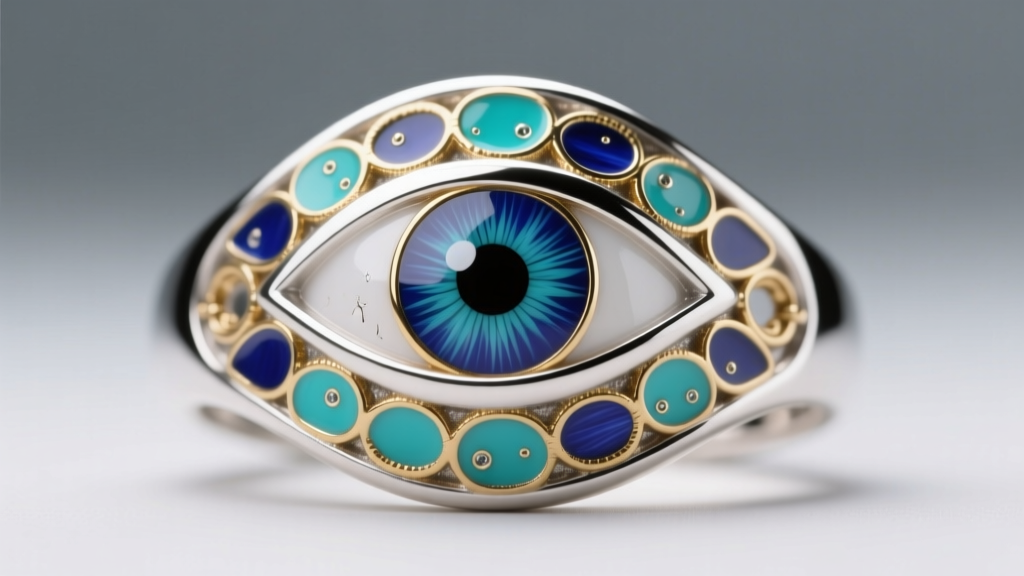
Vitreous (Fired) Enamel vs. Cold Enamel
Vitreous Enamel: This traditional technique involves fusing powdered glass to a metal base (usually 14k or 18k gold, or high-grade sterling silver) at temperatures exceeding 1,400°F. The result is a brilliant, scratch-resistant finish that will not yellow or chip under normal wear conditions. Vitreous enamel eye rings typically range from $350 to $1,200, depending on the complexity of the guilloché (engine-turned) background.
Cold Enamel: Often found in accessible, trend-driven pieces ($40 to $150), cold enamel is essentially a pigmented epoxy resin. While it offers vibrant, opaque colors, it is highly susceptible to micro-chipping, yellowing from UV exposure, and degradation from hand sanitizers. If you purchase cold enamel eye rings jewelry, treat it as fashion jewelry rather than a lifelong heirloom.
Metal Base Considerations
For the metal framework surrounding the eye, 14k or 18k yellow gold provides the highest contrast against traditional deep blue or turquoise enamels. However, if you have a nickel allergy, avoid standard 14k white gold, which often contains nickel alloys. Instead, opt for palladium-white gold or platinum, which are hypoallergenic and provide a striking, icy backdrop for sapphire or diamond-set eye motifs.
Step 3: The Stacking and Pairing Formula
Eye rings are inherently maximalist. The goal of stacking is to frame the eye, not compete with it. When incorporating eye rings jewelry into a multi-ring stack, follow the "Rule of Thirds" for visual harmony.
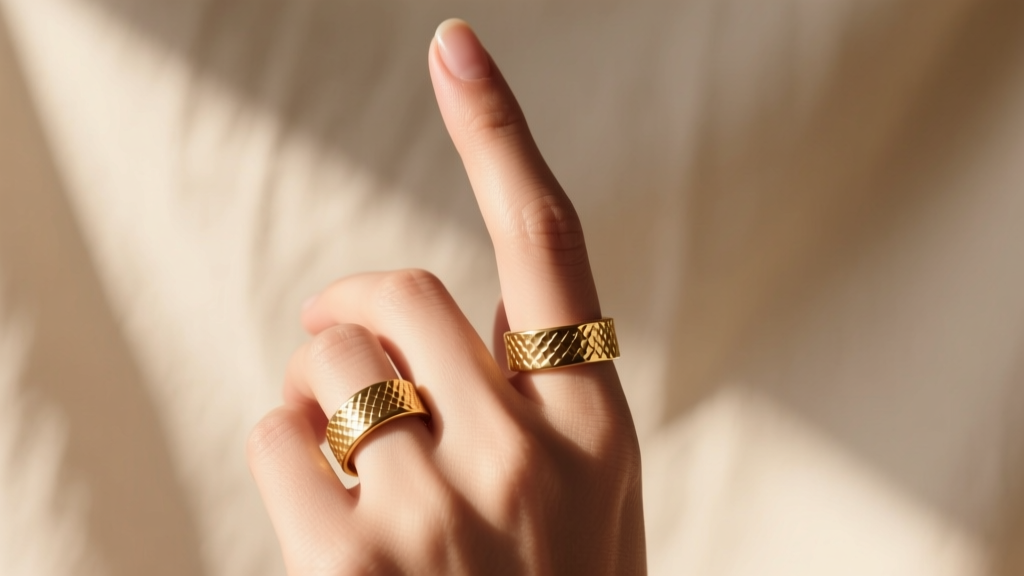
- The Anchor (The Eye Ring): Place the eye ring on the middle or index finger. This is your primary focal point.
- The Spacers: On the adjacent fingers, use ultra-thin bands (1.0mm to 1.5mm). Hammered gold textures or simple micro-pavé diamond bands work best because they catch the light without introducing competing geometric shapes.
- The Balancer: If your eye ring is on the right index finger, place a medium-weight signet or plain dome ring on the left index or middle finger to balance the visual weight across both hands.
Pro Styling Tip: Never stack another gemstone cluster ring on the same finger as an enamel eye ring. The friction between the two pieces will inevitably scratch the enamel or loosen the gemstone prongs over time.
Step 4: Sizing for Knuckle and Joint Variations
Because eye rings often feature wider bands (3mm and above) to support the weight of the enamel face, standard sizing rules do not always apply. A wide band covers more surface area on the finger, creating a tighter fit than a delicate 1mm band of the exact same numerical size.
If your eye ring has a band width exceeding 4mm, you should generally size up by a quarter or half size from your standard measurement. Furthermore, consider your knuckle-to-base ratio. If you have large knuckles but slender finger bases, look for eye rings jewelry that features a slightly tapered shank or an adjustable open-cuff design. Alternatively, stack a thin silicone or gold guard ring at the base of the finger to prevent the heavy eye ring from spinning or sliding off when your hands are cold.
Step 5: Maintenance and Enamel Preservation
Proper care is non-negotiable if you want your eye rings jewelry to retain its vibrant colors and structural integrity. The most common failure mode for these rings is enamel degradation caused by improper cleaning methods.
According to care guidelines from Jewelers of America, ultrasonic cleaners are the enemy of enamel. The high-frequency vibrations can cause micro-fractures in vitreous enamel and will completely shatter cold enamel. Additionally, harsh chemical dips will strip the oxidation from sterling silver settings, ruining the antique contrast that makes the eye motif pop.
Safe Cleaning Protocol
- Preparation: Mix a few drops of mild, phosphate-free dish soap into a bowl of lukewarm (not hot) water.
- Agitation: Submerge the ring for no more than 3-5 minutes. Use a baby-soft toothbrush to gently sweep dirt away from the prongs holding the pupil gemstone.
- Rinsing: Rinse under a gentle stream of tepid water, ensuring the drain is securely plugged.
- Drying: Pat dry with a lint-free microfiber cloth. Avoid paper towels, as the wood fibers can leave microscopic scratches on high-polish gold bezels.
By following these precise steps, you ensure that your eye rings jewelry remains a captivating, protective, and stylish staple in your collection for years to come. Whether you favor a minimalist gold evil eye or a sprawling, gem-encrusted all-seeing eye, the right proportions and care will elevate your styling from ordinary to extraordinary.


