The Jewelry Exchange In Tustin Jewelry Store Engagement Ring Specials: Metal Guide
Evaluate metal quality when shopping local promotions. We analyze the jewelry exchange in Tustin jewelry store engagement ring specials for alloy integrity.

The Allure of Local Promotions: Beyond the Price Tag
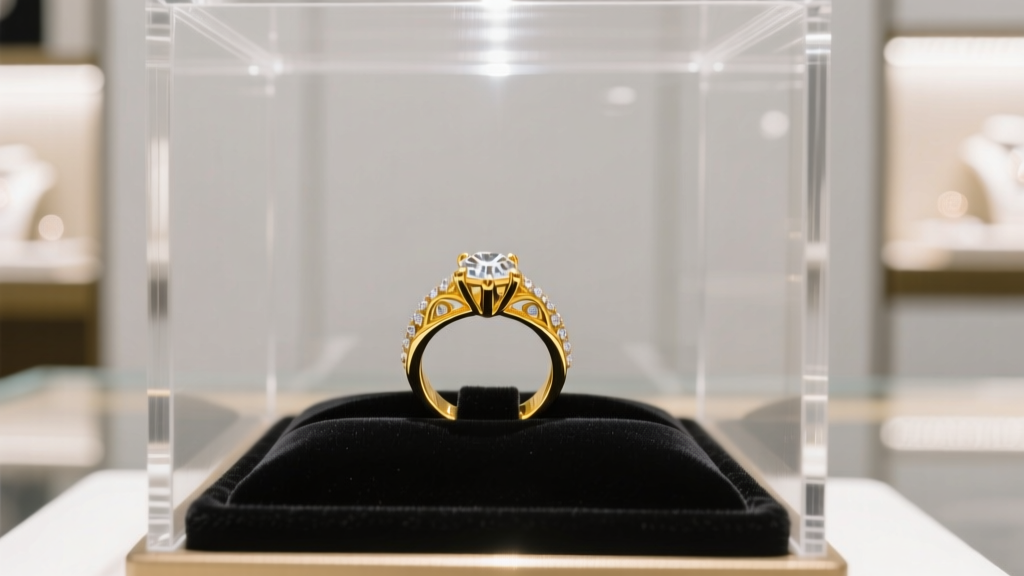
When consumers search for localized deals like the jewelry exchange in tustin jewelry store engagement ring specials, they are often met with aggressive markdowns on diamond center stones. However, the true value of these promotions lies hidden in the metallurgy of the band and setting. In the competitive 2026 bridal market, brick-and-mortar retailers frequently offset discounted diamonds by adjusting metal weights, altering alloy compositions, or utilizing thinner shank profiles. As a savvy buyer, understanding the material properties of precious metals is your best defense against purchasing a ring that will warp, scratch, or wear through prematurely.
Evaluating regional inventory, such as the jewelry exchange in tustin jewelry store engagement ring specials, provides a perfect case study for understanding how physical retailers manage their margins. While the diamond may be heavily discounted, the precious metal framework holding it must meet rigorous structural standards. Below, we break down the exact metallurgical properties, alloy grades, and structural geometries you must verify before finalizing a purchase on a promotional engagement ring.
Decoding Gold Alloys: Purity vs. Structural Integrity
Gold in its pure 24-karat form is far too soft for daily wear, registering a mere 25 on the Vickers Hardness (HV) scale. To create durable engagement rings, gold is alloyed with metals like copper, silver, zinc, and nickel. When shopping promotional specials, you will typically encounter 14K and 18K gold. Understanding the trade-offs between these two grades is critical.
14K vs. 18K Gold: The Hardness Trade-off
18K gold (75% pure gold) offers a rich, saturated color and is highly resistant to tarnish, but it is relatively soft, averaging around 125 HV. 14K gold (58.5% pure gold) is significantly harder, averaging 140 to 150 HV, making it more resistant to scratching and deformation. If the promotional ring features a delicate micro-pavé setting with stones smaller than 1.5mm, 14K gold or platinum is vastly superior, as the harder metal will better secure the tiny prongs against impact.
| Metal / Alloy | Purity | Vickers Hardness (HV) | Best Use Case |
|---|---|---|---|
| 14K Yellow Gold | 58.5% | ~145 | Everyday wear, active lifestyles, micro-pavé settings |
| 18K Yellow Gold | 75.0% | ~125 | High-end solitaire settings, rich color preference |
| Pt950 (Ruthenium) | 95.0% | ~135 | Secure diamond prongs, heirloom pieces, high density |
| Pt950 (Iridium) | 95.0% | ~80 | Intricate castings, comfort-fit bands (prone to scratching) |
Platinum Specials: Is It Really 950 Grade?
Platinum is the undisputed king of engagement ring metals due to its density (21.45 g/cm³) and its unique wear properties. Unlike gold, which loses microscopic layers of metal when scratched, platinum merely displaces, developing a soft patina over time without losing structural mass. However, not all platinum is created equal, and this is where promotional specials can become tricky.
Spotting Platinum-Ruthenium vs. Platinum-Iridium
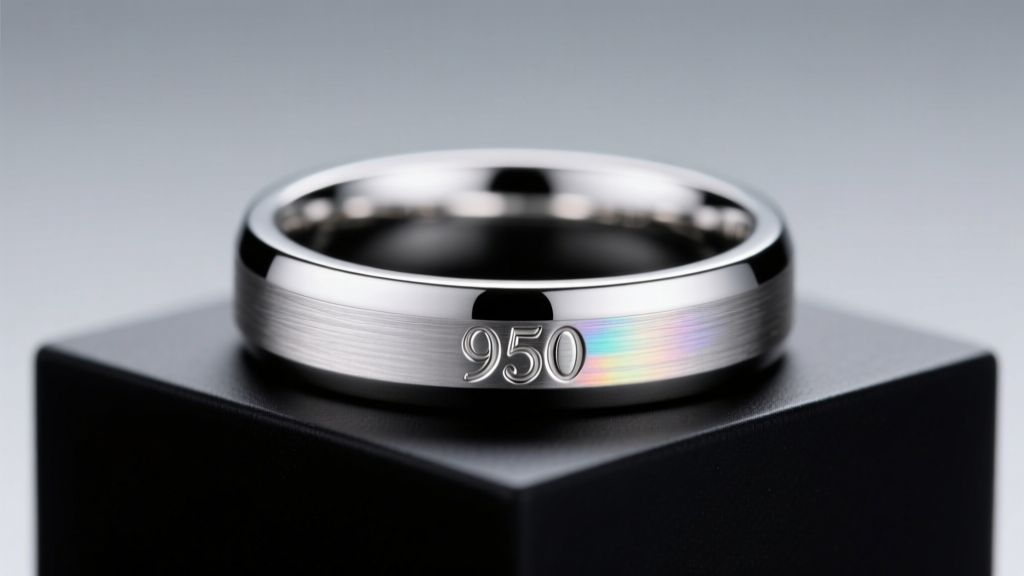
The industry standard for high-quality engagement rings is Pt950 alloyed with Ruthenium (Pt950/Ru). Ruthenium increases the hardness of the platinum to roughly 135 HV, making it exceptionally durable for prongs and thin bands. Conversely, some manufacturers use Pt950 alloyed with Iridium (Pt950/Ir) because it flows more easily during the casting process, reducing manufacturing costs. Iridium-platinum is much softer (around 80 HV) and will scratch and dent significantly faster. When evaluating a platinum ring on sale, always ask the jeweler for the specific alloy mix. According to the Jewelers of America, reputable retailers will have this metallurgical data readily available on the manufacturer's specification sheet.
The White Gold Dilemma: Rhodium Plating Thickness
White gold is naturally a yellowish-gray color. To achieve the bright, mirror-like white finish seen in showroom displays, it must be plated with rhodium, a rare platinum-group metal. When browsing the jewelry exchange in tustin jewelry store engagement ring specials, the quality of this rhodium plating is a major indicator of the ring's overall manufacturing standards.
Flash Plating vs. Standard Plating
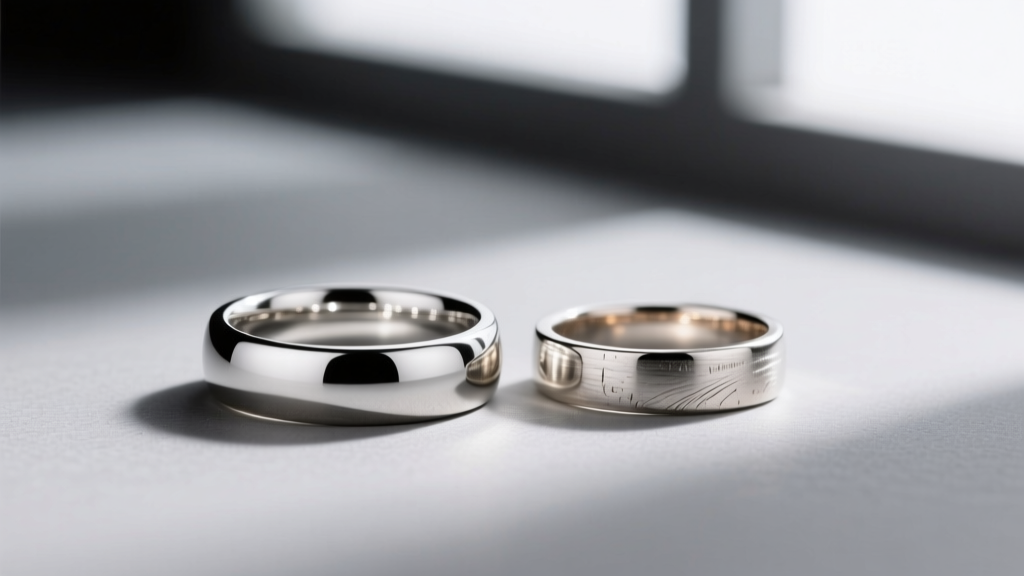
A high-quality rhodium plating should be between 0.75 and 1.0 microns thick. This thickness ensures the bright white finish lasts anywhere from one to three years before requiring a re-plate. Discounted promotional rings, however, often utilize 'flash plating,' depositing a mere 0.1 to 0.25 microns of rhodium. This ultra-thin layer will wear off the high-friction areas of the prongs and shank within three to six months, exposing the brassy undertone of the alloy beneath. If a white gold special seems unusually cheap, factor in the $50 to $100 cost of annual rhodium re-plating into your total budget.
Shank Geometry: The Hidden Cost of Discounted Rings
One of the most common tactics used to lower the price of a precious metal ring without changing the karat stamp is reducing the shank geometry. The shank (the band of the ring) must have sufficient cross-sectional area to resist bending forces.
- Ideal Dimensions: A structurally sound engagement ring should have a minimum shank width of 2.0mm and a depth (thickness) of 1.6mm to 1.8mm.
- The 'Ovaling' Risk: Rings with a depth of 1.2mm or less are highly prone to 'ovaling'—warping from a perfect circle into an oval shape—within the first year of daily wear. This warping can cause extreme stress on the center stone's prongs, leading to stone loss.
- Hollowed Bands: Some promotional rings feature a hollowed-out interior (often called a 'semi-tubular' or 'hollow court' profile) to save on gold weight. These rings are brittle, impossible to resize properly, and will dent easily upon impact.
Always run your fingernail along the inside of the shank. It should feel solid, smooth, and slightly domed (comfort fit). If it feels paper-thin or has a sharp, flat interior edge, walk away from the special, regardless of the diamond discount.
How to Verify Metal Stamps and Hallmarks In-Store
The Federal Trade Commission Jewelry Guides strictly regulate how precious metals are stamped and sold in the United States. When you are in the store examining a promotional ring, you must verify the hallmarks using a 10x jeweler's loupe.
The FTC Rule of Thumb: Any item stamped with a quality mark (like '14K', '18K', or 'PLAT') must also bear the registered trademark of the manufacturer or retailer. If you find a '950' stamp but no accompanying maker's mark, the ring may not meet federal purity guarantees, and you will have no recourse if the metal is later proven to be under-karated.
Furthermore, be wary of stamps like '10K' or '417' in engagement ring specials. While 10K gold is legal and highly durable, it contains more alloy metals than pure gold. It is prone to oxidation, tarnishing, and causing contact dermatitis in individuals with nickel or copper sensitivities. For an engagement ring meant to last a lifetime, 14K should be your absolute baseline for gold alloys.
Final Verdict on Brick-and-Mortar Ring Specials
Promotions like the jewelry exchange in tustin jewelry store engagement ring specials can offer genuine financial value, provided you approach the transaction with a metallurgist's eye. Do not let the sparkle of a discounted diamond blind you to the structural realities of the setting. By demanding 14K or 18K gold, verifying Pt950/Ruthenium alloys, checking for adequate shank depth, and inspecting FTC-compliant hallmarks, you ensure that your investment is built on a foundation of enduring material integrity. Always request a detailed specification sheet before purchasing, and have the ring independently appraised within your return window to confirm both the diamond grading and the precise metal weight.


