Ring Jewelry Display Stand Maintenance & Ring Cleaning Guide
Learn how a ring jewelry display stand impacts ring care. Discover expert cleaning protocols, anti-tarnish materials, and preservation tips for your collection.

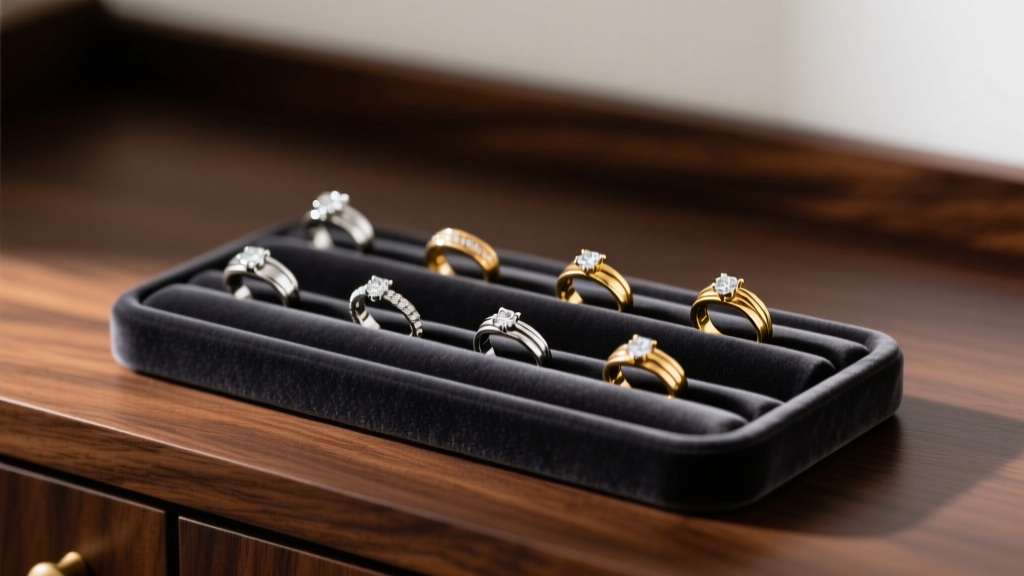
The Hidden Link Between Display and Ring Degradation
Most collectors and enthusiasts view a ring jewelry display stand as a purely aesthetic choice—a way to showcase a prized signet ring or a delicate stacking set. However, from a gemological and metallurgical perspective, your display method is a critical component of your jewelry's long-term care and maintenance. Improper display can lead to micro-scratches, chemical tarnishing, and even structural damage to prongs.
When rings are tossed into a communal jewelry box, the Mohs hardness scale dictates the damage. A diamond (Mohs 10) or moissanite (Mohs 9.25) will easily scratch 18k yellow gold (Mohs 2.5-3) or sterling silver. A high-quality ring jewelry display stand isolates each piece, preventing contact damage. But isolation is only half the battle. The materials of the stand itself, the environment it sits in, and the cleaning protocols you employ before placing a ring on the stand all dictate the lifespan of your collection.
Pre-Display Protocol: Cleaning Rings Before They Hit the Stand
Placing a ring on a display stand without first removing sebum, cosmetic residue, and environmental pollutants is a common maintenance error. Trapped oils can degrade porous gemstones over time, while acidic skin secretions can accelerate the oxidation of copper alloys found in rose gold and sterling silver.
Before placing any piece on your ring jewelry display stand, it must undergo a material-specific cleaning protocol. According to the Gemological Institute of America (GIA), using the wrong cleaning agent can permanently cloud treated gemstones or dissolve the adhesives used in cluster rings.
Material-Specific Cleaning Matrix
| Ring Material / Gemstone | Recommended Cleaning Agent | Tool | Drying Method |
|---|---|---|---|
| Diamond / Moissanite / Platinum | Warm water + mild degreasing dish soap | Soft-bristle baby toothbrush | Lint-free microfiber cloth |
| Opal / Pearl / Coral | Damp cloth only (no chemicals) | Untreated cotton swab | Air dry flat, away from heat |
| Sterling Silver (No Gems) | Specialized silver polishing cream | Polishing cloth (not paper towels) | Buff to a shine immediately |
| 14k/18k Gold with Emeralds | Lukewarm distilled water only | Soft microfiber wipe | Pat dry gently (emeralds are brittle) |
Warning: Never use ultrasonic cleaners on emeralds, opals, pearls, or turquoise. The high-frequency vibrations can shatter these stones or strip their natural oil treatments.
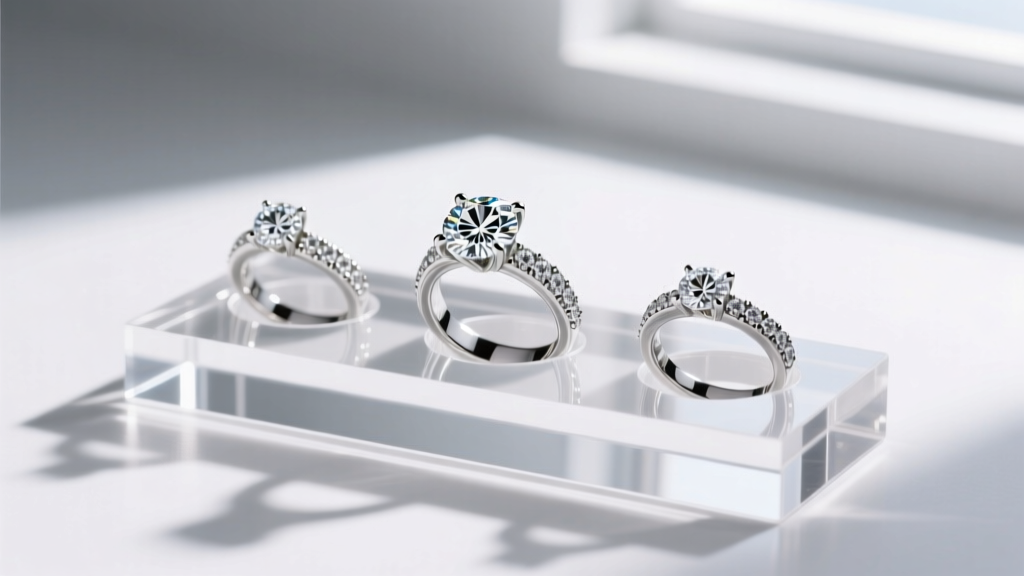
Choosing the Right Ring Jewelry Display Stand for Preservation
Not all display stands are created equal. The material composition of your ring jewelry display stand can actively harm your collection if you are unaware of chemical off-gassing and acidic reactions. As we navigate jewelry preservation standards in 2026, archival-grade materials are more accessible than ever, yet cheap, reactive alternatives still flood the market.
Materials to Avoid
- Unsealed Oak and Walnut: These woods naturally emit tannic acid and acetic acid. When confined in a display case or placed directly against sterling silver, these vapors accelerate the formation of silver sulfide (tarnish).
- PVC and Cheap Plastics: Polyvinyl chloride (PVC) degrades over time, releasing hydrogen chloride gas. This gas is highly corrosive to copper-based alloys like brass, bronze, and rose gold.
- Standard Cardboard/Paper Mache: Wood pulp paper is highly acidic and contains sulfur compounds that will rapidly tarnish silver and react with copper.
Archival-Safe Display Materials
- Cast Acrylic (PMMA): Unlike extruded acrylic or polycarbonate, cast acrylic is chemically stable, does not off-gas, and is the gold standard for museum-grade jewelry display.
- Polyurethane-Sealed Woods: If you prefer the aesthetic of wood, ensure the ring jewelry display stand is coated with a fully cured, water-based polyurethane to seal in natural acids.
- Acid-Free Velvet and Silicone: Look for displays lined with untreated, acid-free cotton velvet or platinum-cured silicone, which will not snag prongs or leave chemical residues.
"The physical support and storage environment must be chemically stable. Off-gassing from poor-quality display materials is a leading cause of preventable metallic corrosion in private collections." — American Institute for Conservation (AIC)
Environmental Controls: Tarnish and Dust Mitigation
Where you place your ring jewelry display stand is just as important as what it is made of. Environmental factors play a massive role in the day-to-day maintenance of your rings.
UV Exposure and Gemstone Fading
If your display stand sits on a vanity near a south-facing window, your rings are being bombarded by ultraviolet (UV) radiation. Prolonged UV exposure will permanently alter the crystal lattice of certain gemstones. Amethyst, kunzite, and smoky quartz will fade and lose their saturation. Always position your ring jewelry display stand in an area that receives indirect, filtered light, or apply a UV-blocking film to nearby windows.
Humidity and the Tarnish Cycle
Sterling silver tarnishes when it reacts with sulfur and moisture in the air. If you live in a high-humidity environment (above 60% relative humidity), your display stand becomes a catalyst for oxidation. To combat this, integrate discreet 3M Anti-Tarnish strips into the base or back of your display stand. These strips absorb airborne sulfides and can protect an open-air display for up to six months before needing replacement.
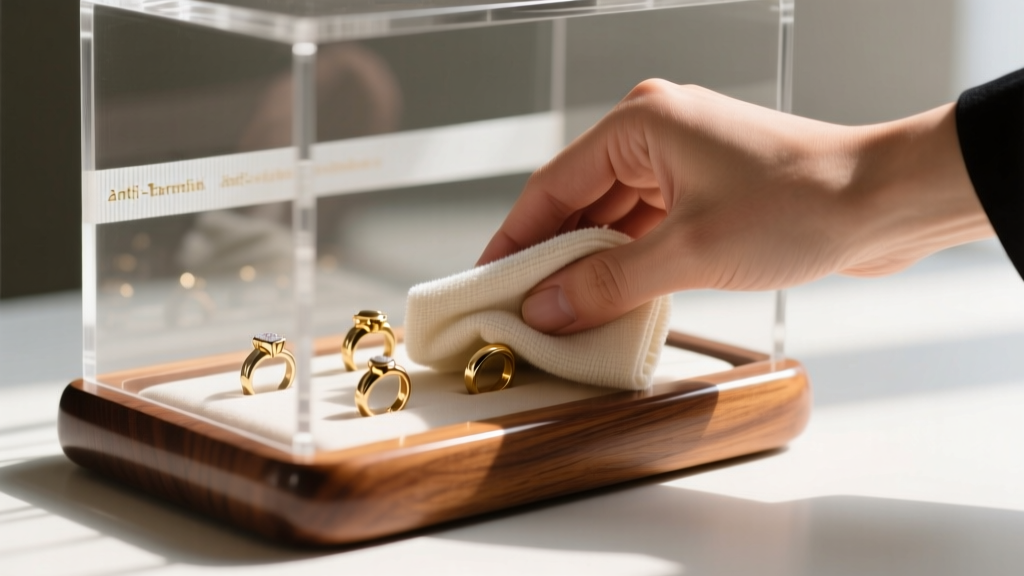
Maintaining Your Display Stand to Protect Your Collection
A ring jewelry display stand requires its own maintenance routine. Dust is not just a nuisance; household dust contains silica particles (Mohs 7). If dust accumulates on the velvet or acrylic slots of your stand, sliding a gold ring (Mohs 2.5) into that slot will result in microscopic, cumulative scratching.
Weekly Stand Cleaning Protocol
- Remove all jewelry and store it temporarily in a soft, lint-free pouch.
- Dust the stand using a clean, dry microfiber cloth or a soft-bristled makeup brush to reach into the crevices of ring slots.
- Wipe down hard surfaces (acrylic or sealed wood) with a slightly damp cloth using distilled water. Avoid glass cleaners like Windex on acrylic, as the ammonia will cause the plastic to cloud and craze over time.
- Allow the stand to dry completely before replacing your rings. Trapped moisture in velvet slots can cause the metal shanks of your rings to oxidize.
Troubleshooting Common Display-Induced Ring Damage
Even with the best ring jewelry display stand, specific design flaws can cause unexpected damage. Here is how to troubleshoot and resolve common issues.
Prong Snagging on Fabric Loops
Many velvet display stands use tight fabric loops to hold rings upright. If the fabric is woven loosely, the sharp tips of your ring's prongs (especially on pavé or claw-set cocktail rings) can catch on the threads. This not only ruins the display stand but can bend the prong, compromising the security of the gemstone. Fix: Use a metal file to gently round off sharp prong tips, or opt for a display stand that uses silicone pegs instead of fabric loops.
The 'Stacking' Slot Squeeze
Some modern display stands feature narrow slots designed to hold multiple stacking rings in a single row. If the slot is too narrow, forcing rings in and out will cause metal-on-metal friction. Fix: Never force a ring into a display slot. If your stacking rings are thick (e.g., heavy signet rings or wide bands), invest in a display stand with adjustable or wide-set pegs to accommodate the varying shank widths.
Final Thoughts on Display as Preservation
Treating your ring jewelry display stand as an active tool in your maintenance arsenal will drastically extend the brilliance and structural integrity of your collection. By pairing rigorous, material-specific cleaning protocols with archival-safe display materials, you ensure that your rings remain as flawless on display as they are on your hand. Remember: proper care doesn't end when you take the ring off; it continues through how you choose to store and showcase it.