Small Nipple Piercing Jewelry: Technical Sizing & Fit Guide
Discover expert technical sizing, material grades, and fit solutions for small nipple piercing jewelry. Avoid rejection with proper gauge and diameter specs.

The Biomechanics of Petite Nipple Tissue
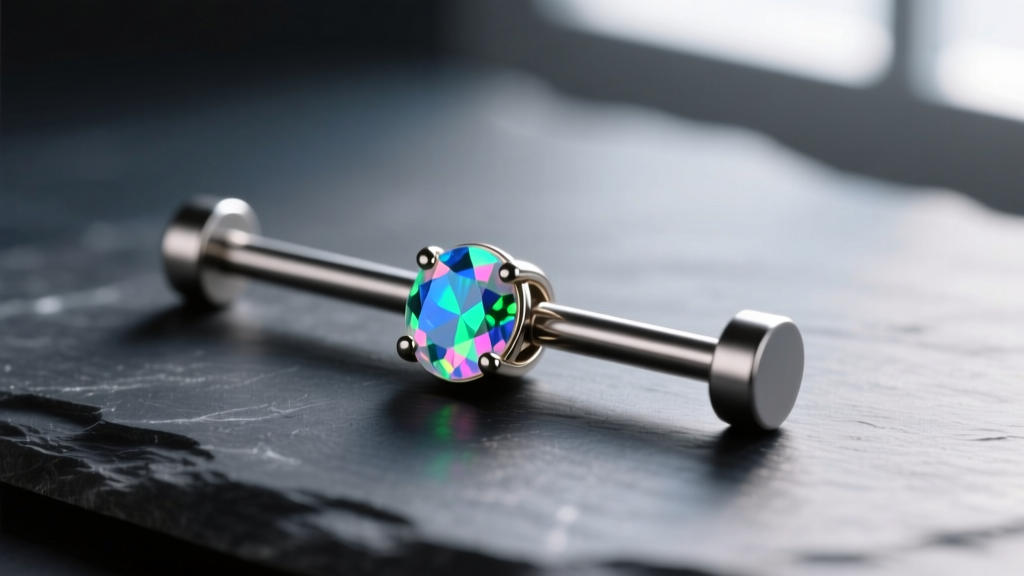
When discussing intimate modifications, the conversation often defaults to standard anatomical assumptions. However, a significant percentage of the population possesses petite, shallow, or inverted nipple tissue that defies standard piercing protocols. Finding the correct small nipple piercing jewelry is not merely an aesthetic preference; it is a critical biomechanical necessity. Standard initial jewelry—typically a 14-gauge, 5/8-inch (16mm) straight barbell—can be disastrous for shallow tissue, leading to excessive tension, migration, and the dreaded 'cheese-cutter' effect.
Petite nipples, generally defined in clinical piercing practice as those with less than a 1/4-inch (6mm) protrusion when stimulated, require a highly specialized approach to jewelry selection. The primary challenge is balancing the need for initial swelling accommodation with the necessity of minimizing leverage and weight. If the jewelry is too long, it catches on clothing, creating torque that the small tissue matrix cannot withstand. If the decorative ends are too heavy or wide, they compress the areola, restrict lymphatic drainage, and cause localized necrosis or embedding. Therefore, sourcing small nipple piercing jewelry demands a rigorous understanding of gauge physics, material density, and precise dimensional tolerances.
The Gauge Paradox: Why Thinner is Not Better
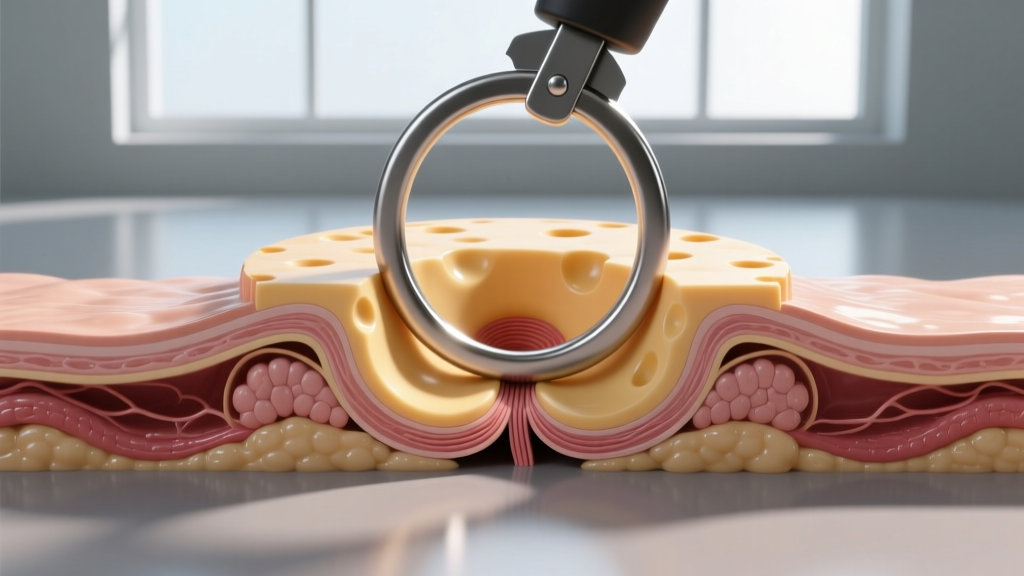
A common misconception among clients with small anatomy is that a thinner gauge will be easier for the body to accept. Logically, one might assume that a 16-gauge (1.2mm) or 18-gauge (1.0mm) wire would cause less trauma to a petite nipple. However, the Association of Professional Piercers (APP) strongly advises against this. The biomechanical reality of the 'cheese-cutter effect' dictates that thinner wire exerts higher pressure per square millimeter on the piercing fistula. When subjected to the inevitable snags from bras, towels, or sleep movements, a thin wire will slice through shallow tissue much faster than a thicker one.
For small nipple piercing jewelry, the gold standard remains 14-gauge (1.6mm). In rare cases where the tissue is exceptionally robust but shallow, a 12-gauge (2.0mm) might be utilized to distribute weight over a wider surface area. The solution to accommodating small anatomy does not lie in reducing the wire thickness, but rather in reducing the overall length, minimizing the ring diameter, and utilizing ultra-low-profile decorative ends.
Technical Sizing Matrix: Standard vs. Petite Anatomy
To properly fit small nipple piercing jewelry, piercers must move beyond off-the-shelf standard sizes and utilize specialized inventory. The following matrix outlines the precise dimensional shifts required for petite tissue modifications.
| Jewelry Metric | Standard Anatomy | Petite / Shallow Anatomy | Technical Rationale |
|---|---|---|---|
| Initial Barbell Length | 5/8' (16mm) | 1/2' (12mm) or 3/8' (10mm) | Prevents excessive leverage and snagging on shallow tissue bases. |
| Downsized Barbell Length | 1/2' (12mm) | 5/16' (8mm) or 1/4' (6mm) | Custom-fit to the healed fistula to eliminate migration-inducing movement. |
| Ring / Clicker Diameter | 5/8' (16mm) | 7/16' (11mm) or 3/8' (10mm) | Ensures the ring clears the areola without resting heavily on surrounding tissue. |
| Decorative End Profile | 5mm - 8mm width | 2mm - 4mm width | Prevents areolar compression and allows for proper lymphatic fluid drainage. |
Material Science and End Weight Optimization
When curating small nipple piercing jewelry, the density of the material plays a massive role in long-term tissue health. Surgical steel (even 316L) is significantly denser than titanium. For a petite nipple, the extra grams of a steel barbell or heavy steel ring can create a constant downward drag, encouraging the piercing channel to elongate and migrate over time.
The only acceptable material for initial and long-term wear in small tissue is ASTM F136 compliant Ti-6Al-4V ELI (Implant-Grade Titanium). Titanium offers a superior strength-to-weight ratio, meaning the jewelry can maintain structural integrity at 14-gauge while remaining exceptionally lightweight. Furthermore, implant-grade titanium can be polished to a mirror finish. According to dermatological studies on body modifications, a mirror polish drastically reduces the microscopic surface area where bacteria and biofilm can adhere, which is crucial for small, tight fistulas that are harder to clean internally.
Niobium as a Secondary Option
Niobium is another highly biocompatible, lightweight option that can be anodized to various colors without the use of toxic plating. While slightly heavier than titanium, it is vastly superior to steel and serves as an excellent alternative for clients seeking colored small nipple piercing jewelry without resorting to unsafe PVD coatings or enamel paints that can chip inside the piercing channel.
Threadless Systems for Low-Profile Ends
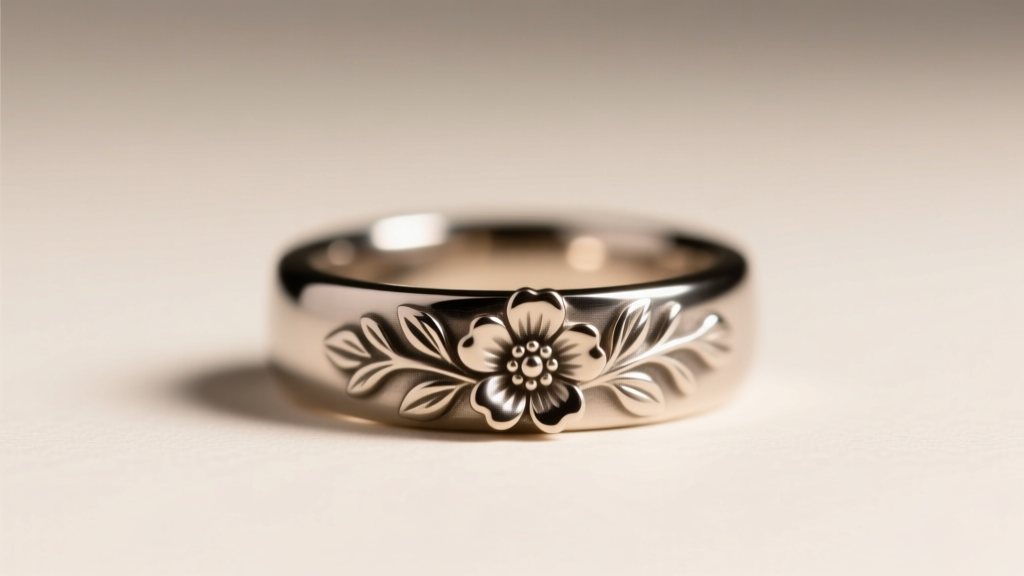
For small nipple piercing jewelry, the connection mechanism of the jewelry is just as important as the bar itself. Traditional externally threaded jewelry is an absolute contraindication, as the threads will tear the delicate fistula upon insertion. While internally threaded jewelry is safe, the threaded ends often require a larger base to house the screw mechanism, resulting in bulky, heavy ends that overwhelm petite nipples.
The optimal solution is the threadless (press-fit) system. Threadless ends utilize a slightly bent pin that creates tension against the inside of the hollow barbell shaft. Because there is no screw mechanism, jewelers can manufacture exceptionally low-profile, lightweight ends—such as tiny 2mm bezel-set gems, micro-prong clusters, or minimalist metallic discs. These ends sit flush against the tissue, minimizing the risk of catching on lace bras or sleepwear, which is the leading cause of trauma in healing nipple piercings.
The Downsizing Timeline: A Critical Protocol
Sourcing the correct small nipple piercing jewelry is only the first step; managing the downsizing timeline is where many modifications fail. Petite nipples typically experience less absolute volumetric swelling than larger tissue, but the tightness of the skin means that any swelling is immediately apparent and can lead to rapid embedding if the initial bar is too short.
A professional piercer will typically schedule a downsizing appointment between 14 and 21 days post-piercing. During this window, the initial acute inflammatory phase has subsided, but the fistula is still highly fragile. Downsizing from a 1/2-inch bar to a custom 5/16-inch or 1/4-inch bar is essential. Leaving an overly long bar in a healed, small nipple creates a 'lever arm' effect; every time the bar is bumped, the mechanical advantage multiplies the force applied to the exit hole, leading to the formation of hypertrophic scarring or 'angry bumps' on the areola.
Expert Troubleshooting: Signs of Jewelry Rejection
Even with perfectly sized small nipple piercing jewelry, clients must remain vigilant for signs of anatomical incompatibility. If the tissue was simply too shallow to support a 14-gauge channel, the body will treat the jewelry as a foreign splinter and initiate a rejection cascade. Warning signs include:
- Translucency: The skin between the piercing hole and the edge of the nipple becomes thin, shiny, and translucent.
- Flaking and Peeling: Persistent dry, flaky skin directly over the fistula track, unrelated to general dry skin.
- Channel Migration: The distance between the entry and exit holes visibly shifts toward the surface of the nipple.
- Slackness: The jewelry hangs lower than it did immediately after healing, indicating tissue elongation.
If these signs occur, the most responsible course of action is immediate removal by a professional to preserve the remaining tissue, allowing for potential re-piercing at a deeper angle after a minimum of 12 to 18 months of cellular regeneration. For further reading on healing protocols and tissue management, the APP Aftercare Guidelines remain the definitive clinical resource for both piercers and clients navigating complex anatomical challenges.


