How to Choose and Size Women's Genital Jewelry for VCH Piercings
Learn how to measure, select materials, and safely size women's genital jewelry for VCH piercings with our expert step-by-step fitting guide.

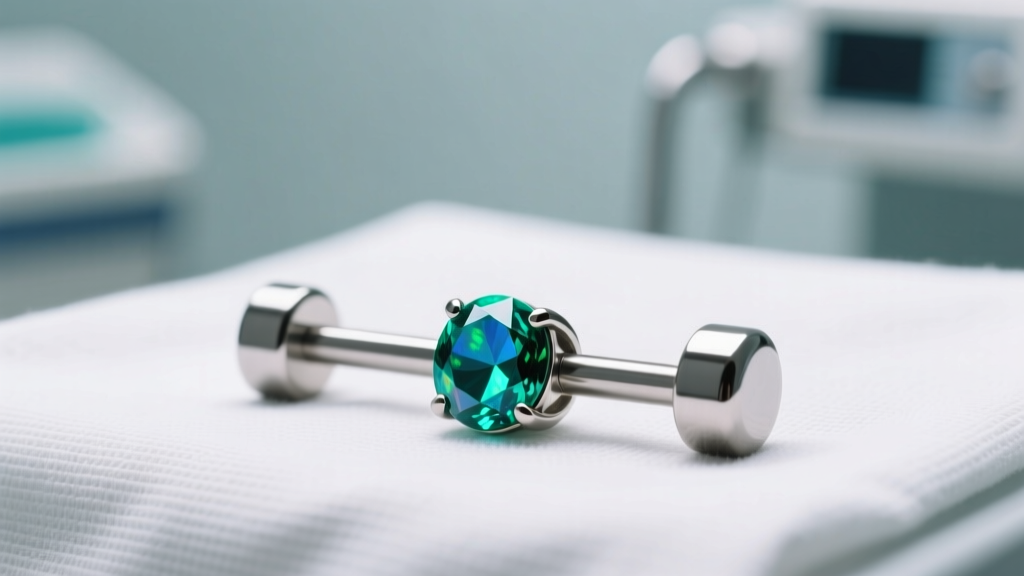
The Biomechanics of Intimate Adornment
When it comes to intimate piercings, precision is not just a matter of aesthetics; it is a strict biological requirement. The Vertical Clitoral Hood (VCH) remains the most popular and anatomically viable starting point for women's genital jewelry. Unlike standard earlobe piercings, genital tissue is highly vascular, densely innervated, and subject to constant friction and moisture. Selecting the wrong gauge, rise, or material can lead to migration, embedding, or severe contact dermatitis. This step-by-step guide will walk you through the exact clinical measurements, metallurgical standards, and fitting protocols required to safely choose and size your first VCH barbell.
Step 1: Verify Your Anatomy with the Cotton Swab Test
Before purchasing any women's genital jewelry, you must confirm that your anatomy can safely accommodate a VCH piercing. The VCH requires a specific depth of tissue extending from the base of the clitoris to the apex of the hood. To test this, professionals use the 'cotton swab test'. Using a standard, sterile cotton swab (approximately 3 inches long), gently retract the clitoral hood and attempt to lay the swab flat against the tissue, pointing toward the base. If the swab rests entirely under the hood without the cotton tip protruding, you have adequate tissue depth for a curved barbell. If the swab bends or sticks out, your hood is too shallow, and a VCH will likely result in rejection or severe migration. In such cases, a Horizontal Clitoral Hood (HCH) or Triangle piercing may be the safer alternative.
Step 2: Selecting the Correct Metallurgical Grade
The mucosal environment of the vulva is highly acidic and sensitive to heavy metals. According to the Association of Professional Piercers (APP), only specific implant-grade materials should be used for initial genital piercings. Avoid 'surgical steel' or 'hypoallergenic' marketing terms, as they are unregulated and often contain high nickel content.
| Material | ASTM Standard | Nickel Content | MRI Safe | Avg. Price Range |
|---|---|---|---|---|
| Implant-Grade Titanium | ASTM F136 | None | Yes | $45 - $85 |
| Implant-Grade Steel | ASTM F138 | Low (Trace) | No | $25 - $50 |
| Niobium | Unalloyed | None | Yes | $40 - $70 |
For 2026, ASTM F136 Titanium remains the undisputed gold standard for women's genital jewelry. Its mirror-polished surface finish minimizes bacterial adhesion, and its complete lack of nickel eliminates the risk of allergic contact dermatitis, which is a leading cause of piercing failure in intimate areas.
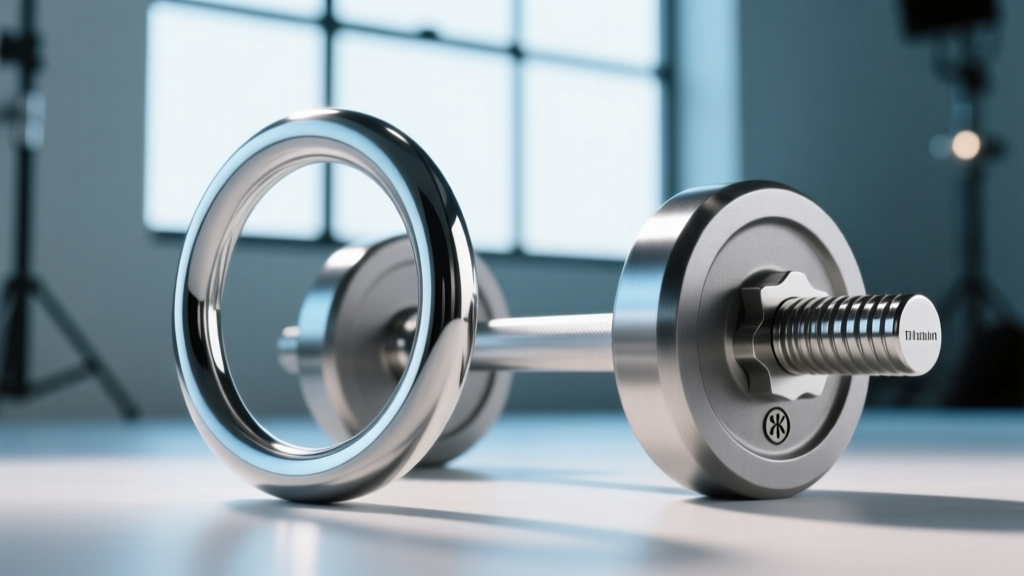
Step 3: Calculating Gauge and Curved Rise
Sizing a curved barbell requires understanding two distinct metrics: gauge (thickness) and rise (the distance between the two beads/ends).
Gauge Selection: The standard gauge for a VCH is 14g (1.6mm). However, if you have particularly thick hood tissue or plan to stretch the piercing later, a 12g (2.0mm) barbell provides a more stable foundation and reduces the 'cheese-cutter effect'—a phenomenon where thin jewelry slowly migrates through the tissue under tension.
Measuring the Rise: The rise is measured along the curve of the barbell, not in a straight line. Standard initial sizes range from 3/8-inch (9mm) to 1/2-inch (12mm). To determine your exact size post-healing, use a digital caliper. Measure the distance from the bottom of the top gem to the top of the bottom bead. If the bottom bead rests more than 2mm away from the underside of the hood, the barbell is too long and will catch on underwear, risking traumatic tearing. If the bead presses tightly into the tissue, causing a visible indentation, the jewelry is too short and risks embedding.
Step 4: Threading Mechanics and End Styles
The way the jewelry components connect is critical for the health of your fistula (the piercing channel). Never use externally threaded jewelry for genital piercings. External threads act like a file, scraping and tearing the delicate mucosal tissue every time the jewelry is inserted or removed. Instead, opt for one of the following:
- Internally Threaded: The threading is on the removable end, and the barbell shaft is smooth. This is the traditional standard for safe insertion.
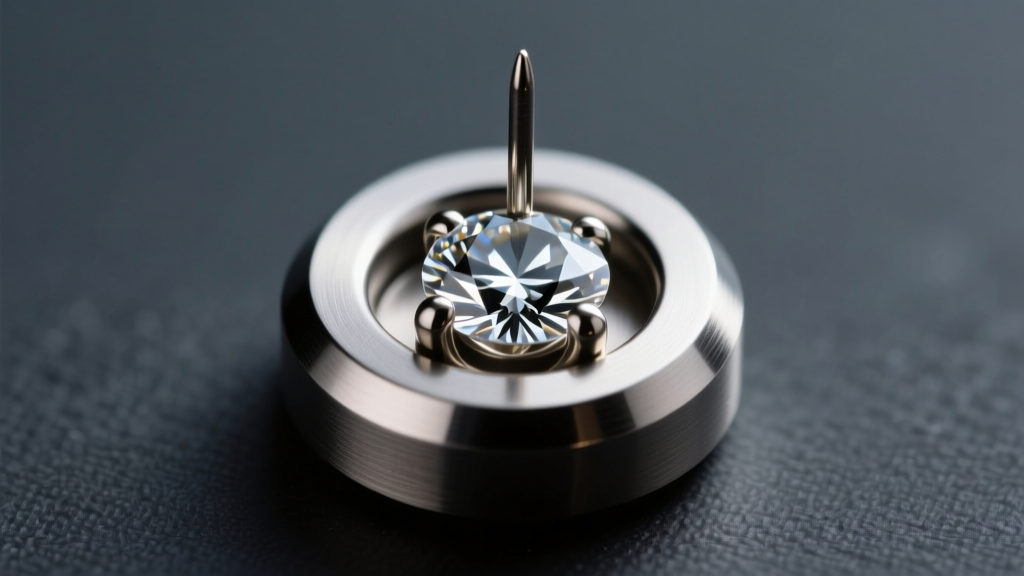
- Threadless (Press-Fit): The modern standard for high-end women's genital jewelry. A slightly bent pin on the decorative end slides into the hollow shaft, creating a secure tension fit. This eliminates micro-tears and allows for seamless swapping of decorative tops without removing the barbell from the body.
When selecting the decorative end, always choose bezel-set gems over prong-set gems. Prongs can snag on lace lingerie or towels, potentially causing severe trauma to the clitoral hood.
Step 5: The Downsizing Protocol
Initial jewelry is intentionally sized longer to accommodate the acute swelling phase, which typically peaks between 48 and 72 hours post-piercing. However, leaving a long barbell in place after the swelling subsides is a primary cause of migration. According to clinical reviews on body modification complications published in the National Center for Biotechnology Information (NCBI), prolonged friction from oversized jewelry triggers chronic inflammation. You must return to your piercer between weeks 3 and 5 for a 'downsize'. The piercer will swap the initial 1/2-inch barbell for a snugger 7/16-inch or 3/8-inch barbell, ensuring the jewelry sits flush against the anatomy.
Troubleshooting Common Fit Failures
Even with perfect initial sizing, anatomical shifts can occur. Monitor your piercing for these specific failure modes:
- Embedding: If the bottom bead disappears into the tissue or the skin folds over the top gem, the barbell is too short or swelling has exceeded the jewelry's capacity. This requires an immediate emergency upsize by a professional to prevent the tissue from healing over the metal.
- Migration: If the piercing hole appears to be moving closer to the edge of the hood, or if the tissue between the entry and exit points becomes thin and translucent, the jewelry is rejecting. Remove the jewelry immediately to preserve the remaining tissue for future attempts.
- Galvanic Reaction: If you experience a sudden metallic taste, localized itching, or darkening of the tissue around the exit hole, you may be reacting to trace alloys in lower-grade steel. Swap immediately to ASTM F136 Titanium.
By adhering to strict material standards, verifying your anatomy, and utilizing precise digital measurements, you can ensure your women's genital jewelry is both a safe and comfortable enhancement.


