Best Vertical Nipple Piercing Jewelry: Budget & Value Guide
Discover how to evaluate vertical nipple piercing jewelry on a budget. We compare titanium vs. steel costs, threading, and long-term value.

The True Cost of Intimate Piercings: Beyond the Price Tag
When it comes to intimate modifications, the initial cost of the piercing is often just the beginning of your financial journey. Vertical nipple piercing jewelry requires a highly specific approach to anatomy, gravity, and tissue stress. Unlike standard horizontal nipple piercings, a vertical orientation means the jewelry must accommodate the natural upward and downward movement of the tissue, making the structural integrity of the barbell paramount. For those navigating the market on a budget, it is crucial to understand the difference between "cheap" and "value." A $12 barbell from an online marketplace might seem like a steal, but when it leads to migration, rejection, or a severe allergic reaction, the hidden costs skyrocket. In this comprehensive budget and value assessment, we break down exactly where you should splurge, where you can safely save, and how to evaluate vertical nipple piercing jewelry like a seasoned professional.
Budget vs. Premium: The Vertical Nipple Jewelry Cost Breakdown
To make informed purchasing decisions, you first need to understand the current market landscape for intimate jewelry. The table below outlines the three primary tiers of vertical nipple piercing jewelry available in 2026, detailing what you actually get for your money at each price point.
| Tier | Price Range (Per Barbell) | Typical Materials | Threading & Finish | Long-Term Value |
|---|---|---|---|---|
| Budget | $8 - $20 | 316L Surgical Steel, Acrylic, Mystery Alloys | External threading, matte or rough polish | Poor. High risk of tissue damage, nickel leaching, and allergic reactions. |
| Mid-Tier | $35 - $65 | ASTM F-136 Titanium, Niobium | Internal threading, mirror polish | Excellent. Safe for long-term wear, highly biocompatible, durable. |
| Premium | $80 - $200+ | Implant-Grade Titanium, 14k/18k Gold | Threadless (press-fit) or precision internal, gem-grade settings | Superior. Lifetime durability, heirloom-quality gems, flawless mechanics. |
As the data illustrates, the jump from the budget tier to the mid-tier is relatively small in absolute dollars (often less than $40), but the leap in safety, comfort, and biocompatibility is monumental. The mid-tier represents the "sweet spot" for value-conscious buyers who refuse to compromise on their health.
Material Science on a Budget: Titanium vs. Surgical Steel
The most critical factor in assessing the value of vertical nipple piercing jewelry is the base metal. The nipple area is highly vascular and sensitive, making it exceptionally prone to contact dermatitis and metal sensitization.
The Problem with "Surgical Steel"
Budget jewelry is almost exclusively crafted from 316L or 304 stainless steel, often marketed deceptively as "surgical steel." While 316L is used in some medical tools, it contains up to 10-14% nickel. Over time, body fluids can cause the nickel to leach into the surrounding tissue. According to the Association of Professional Piercers (APP), stainless steel is not recommended for initial piercings or long-term wear in highly sensitive areas due to the high prevalence of nickel allergies. If you are on a strict budget, buying steel jewelry is a false economy; you are essentially paying for a future allergic reaction.
The Value of ASTM F-136 Implant-Grade Titanium
Mid-tier and premium jewelry utilizes ASTM F-136 implant-grade titanium. This specific alloy is entirely nickel-free and is the exact same material used in orthopedic joint replacements and pacemakers. While a titanium straight barbell might cost $35 to $50 compared to a $10 steel alternative, the value proposition is undeniable. You are paying for absolute biocompatibility, a significantly reduced risk of rejection, and a mirror-polished surface that resists bacterial adhesion. When budgeting for your vertical nipple piercing, titanium is non-negotiable.
Threading and Mechanics: The Hidden Value in Precision
When evaluating the cost of vertical nipple piercing jewelry, buyers often focus solely on the aesthetic ends (the gems or balls) and ignore the mechanics of the post. This is a critical mistake that can severely impact the healing and longevity of your piercing.
External Threading: The Budget Trap
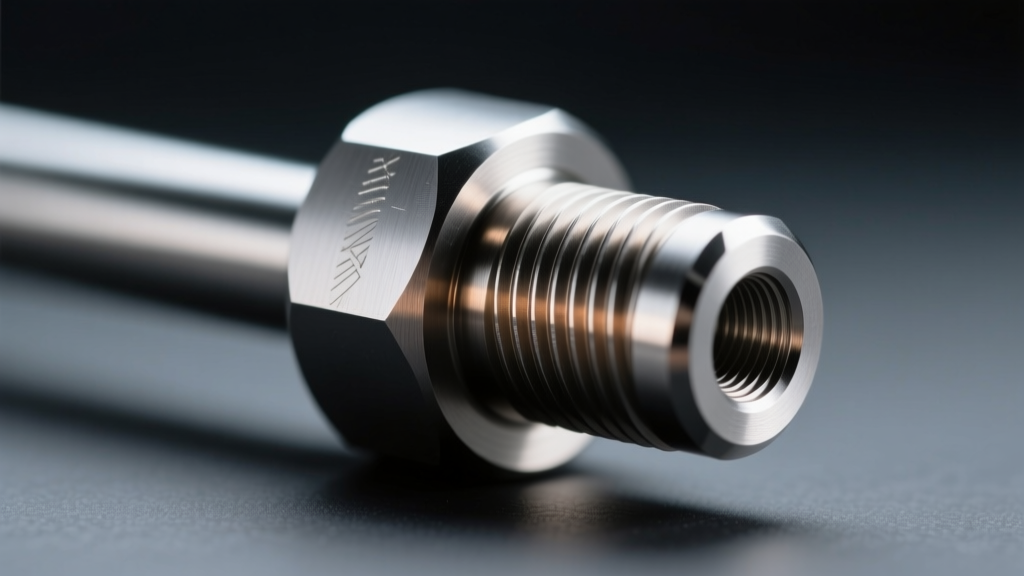
Cheap jewelry relies on external threading, where the screw-like ridges are cut into the post itself. To insert the jewelry, these sharp, jagged threads must pass directly through the delicate fistula (the piercing channel). This acts like a microscopic cheese grater, causing micro-tears in the tissue, introducing bacteria, and creating scar tissue. The money you save on a $12 externally threaded barbell will quickly be spent on aftercare saline and soothing balms to manage the resulting irritation bumps.
Internal Threading and Threadless Systems: The Gold Standard
High-value jewelry features either internal threading or a threadless (press-fit) mechanism. With internal threading, the screw is located on the end piece, while the post remains perfectly smooth. Threadless systems, pioneered by brands like Neometal and widely adopted by premium manufacturers, use a slight bend in the pin to create tension against the inside of the post. Both methods ensure that only a smooth, mirror-polished surface ever passes through your vertical nipple piercing. The APP strongly advises against externally threaded jewelry for this exact reason. Paying an extra $15 for internal threading or threadless ends is an investment in painless insertion and long-term tissue health.
Sizing and Anatomy: Budgeting for the Correct Fit
Vertical nipple piercings have unique anatomical requirements. Because the piercing channels vertically through the peak of the nipple, the tissue column is often thicker and more mobile than a horizontal channel. Wearing the wrong size is not just uncomfortable; it can lead to the "cheese-cutter effect," where a too-thin or too-short barbell slowly migrates through the tissue.
- Gauge (Thickness): 14-gauge (1.6mm) is the absolute standard for vertical nipple piercings. While some budget sites sell 16-gauge (1.2mm) barbells, using a thinner wire in a high-mobility area drastically increases the risk of migration and rejection. Never compromise on gauge to save a few dollars.
- Length (Post Size): For a fully healed vertical piercing, a 5/8-inch (16mm) post is typically ideal. However, if you are sizing up for initial swelling or experiencing hormonal changes that affect tissue density, you may need a 3/4-inch (19mm) or even 7/8-inch (22mm) post. Premium brands sell posts in precise 1/16-inch increments, allowing for a custom fit, whereas budget brands often offer only vague "standard" lengths that fail to accommodate individual anatomy.
Aesthetics on a Dime: Gemstones, Settings, and Finishes
Once you have secured a safe, well-fitted titanium post, you can begin to budget for the aesthetic ends. This is where you can exercise more financial flexibility without compromising your physical health.
Bezel vs. Prong Settings
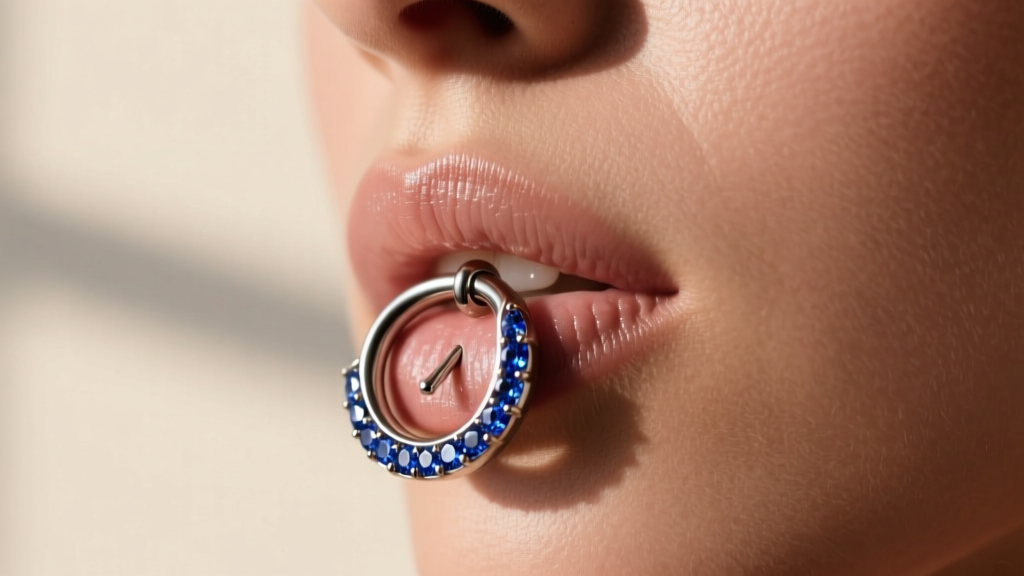
If you are on a budget, bezel-set gemstones (where a smooth rim of metal completely surrounds the stone) offer excellent value. They are generally less expensive to manufacture than prong settings, they catch less on clothing and towels, and they protect the edges of the gemstone from chipping. Prong settings, while beautiful and allowing more light to enter the stone, require precise manufacturing to ensure the prongs don't snag on delicate lace or fabrics. If you opt for budget-friendly prong settings, ensure the prongs are low-profile and smoothly finished.
Cubic Zirconia vs. Genuine Stones
High-quality synthetic Cubic Zirconia (CZ) is a phenomenal budget option. A well-cut CZ set in a titanium bezel will sparkle brilliantly and cost a fraction of a genuine sapphire or diamond. However, avoid cheap, mass-produced jewelry that uses glued-in acrylic or glass stones. These materials scratch easily, harbor bacteria in the glue seams, and degrade quickly when exposed to body oils and shower gels. Always look for stones that are mechanically set (pressed or pronged into the metal) rather than glued.
The "Cheap Jewelry Tax": Calculating the Real Cost of Failure
To truly assess the value of vertical nipple piercing jewelry, we must factor in the potential costs of failure. When budget jewelry fails, the financial and physical toll is significant.
Expert Insight: Treating a localized piercing infection or an allergic contact dermatitis flare-up often requires a visit to a dermatologist or urgent care clinic. Between the consultation fee, prescription topical steroids, or oral antibiotics, you can easily spend $150 to $300. Furthermore, if a cheap barbell causes your vertical piercing to migrate or reject, you will lose the piercing entirely, along with the initial $80-$120 you paid the professional piercer to perform the procedure.
When you view the purchase of a $60 implant-grade titanium barbell through this lens, it transforms from an "expensive luxury" into a highly cost-effective insurance policy for your body modification. The upfront cost is slightly higher, but the total cost of ownership over a five-year period is drastically lower than repeatedly replacing $15 steel barbells and treating the resulting complications.
Final Verdict: How to Allocate Your Intimate Jewelry Budget
Evaluating vertical nipple piercing jewelry on a budget does not mean settling for substandard materials. It means making strategic, informed choices. Always allocate the majority of your budget toward the structural foundation: an ASTM F-136 implant-grade titanium post with internal threading or a threadless mechanism in the correct 14-gauge thickness and precise length. Once that foundation is secured, you can safely explore more budget-friendly aesthetic options, such as bezel-set synthetic CZs or polished titanium balls, to achieve your desired look. By prioritizing metallurgical safety and mechanical precision over flashy but poorly constructed designs, you ensure that your vertical nipple piercing remains a beautiful, comfortable, and cost-effective expression of your personal style for years to come.


