How to Clean All Types of Nipple Piercing Jewelry Safely
Discover expert cleaning routines for all types of nipple piercing jewelry. Learn material-specific care, hinge maintenance, and safe solutions.

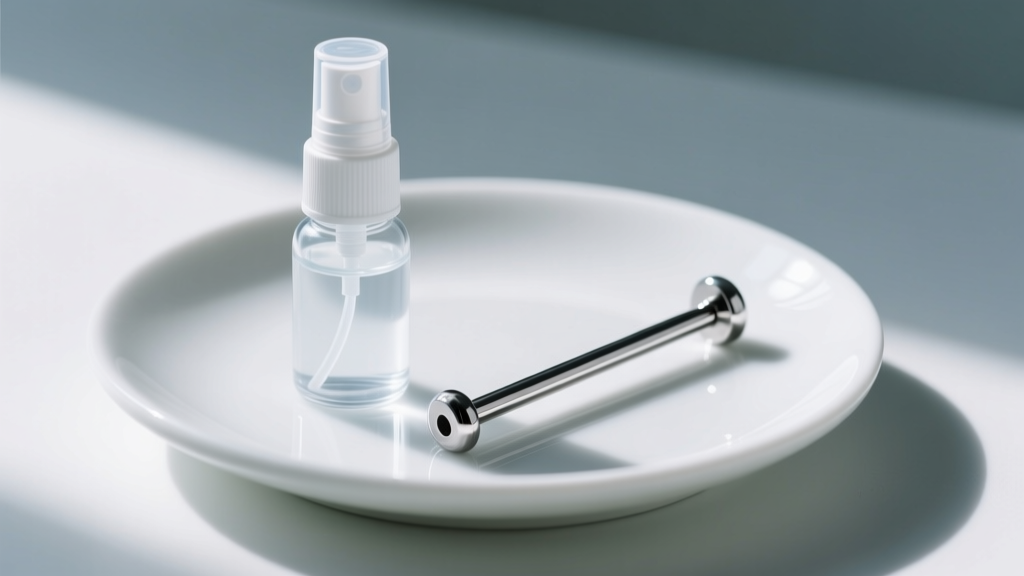
Why Jewelry Architecture Dictates Your Cleaning Routine
When exploring the diverse types of nipple piercing jewelry available on the market, most buyers focus entirely on aesthetics, gauge thickness, and gemstone choices. However, from a professional piercing and dermatological perspective, the physical architecture of your jewelry dictates exactly how it must be cleaned and maintained. A seamless 12-gauge niobium hoop requires a vastly different hygiene protocol than an intricate 14k gold nipple shield with floral filigree.
The nipple area is highly sensitive, subject to friction from clothing, and prone to trapping dead skin cells, sebum, and lint. If you fail to tailor your cleaning routine to your specific jewelry type, you risk sebum buildup, localized contact dermatitis, and the degradation of premium metals. This comprehensive guide breaks down the exact maintenance protocols for every major category of nipple jewelry, ensuring your pieces remain pristine and your tissue stays healthy in 2026 and beyond.
The Baseline: Daily Care for Fresh vs. Healed Piercings
Before diving into specific jewelry shapes, we must establish the biological baseline. The Association of Professional Piercers (APP) strictly advises against using harsh chemicals like rubbing alcohol, hydrogen peroxide, or tea tree oil on any piercing. These agents destroy the delicate acid mantle of the skin and delay cellular regeneration.
- Healing Piercings (0-12 Months): Stick exclusively to sterile 0.9% sodium chloride wound wash. Spray directly onto the entry and exit points twice daily. Do not twist, turn, or remove the jewelry. The LITHA (Leave It The Hell Alone) method is your best defense against irritation bumps.
- Healed Piercings (1 Year+): You can introduce a mild, fragrance-free liquid antibacterial soap during your daily shower. Lather gently around the jewelry, rinse thoroughly with warm water, and pat dry with a disposable paper product. Avoid cloth towels, which harbor bacteria and snag on threading.
Tailoring Care to Specific Types of Nipple Piercing Jewelry
Once your piercing is fully healed, the shape and mechanical components of your jewelry become the primary focus of your cleaning routine. Here is how to handle the most popular styles.
1. Straight Barbells and Threadless Pins
The 14-gauge (1.6mm) straight barbell is the undisputed standard for nipple piercings. The main hygiene challenge here lies in the threading. If you wear externally threaded barbells (where the screw pattern is on the bar), the grooves act as a magnet for dead skin and soap scum.
The Fix: Upgrade to internally threaded or threadless (push-pin) titanium jewelry. Threadless pins have a smooth, continuous surface that wipes clean effortlessly. If you must clean threaded jewelry, use a soft-bristled baby toothbrush dipped in warm saline to gently scrub the grooves every two weeks. Never use metal picks or needles, as scratching the titanium compromises its passive oxide layer, leading to corrosion.
2. Nipple Shields and Dangle Styles
Nipple shields encircle the areola and sit flush against the tissue. While visually striking, the intricate cutouts, hinges, and dangling charms create microscopic crevices where sebum oxidizes and hardens into a dark, crusty buildup.

The Fix: Manual wiping is insufficient for shields. You need a 40kHz ultrasonic jewelry cleaner. Fill the tank with warm water and a drop of mild dish soap (like Dawn). Submerge your removed nipple shield for exactly 3 to 5 minutes. The cavitation bubbles will safely blast oxidized sebum out of the filigree without scratching the metal. Rinse thoroughly with distilled water and dry with a microfiber cloth before reinserting.
3. Clicker Rings and Seamless Hoops
Curved jewelry, particularly 12-gauge (2.0mm) or 10-gauge (2.5mm) clicker rings, introduces a mechanical hinge and a clasp closure. The hinge mechanism is notorious for trapping moisture, leading to a greenish-black sludge (a harmless but unsightly mix of copper oxides, soap, and skin cells).
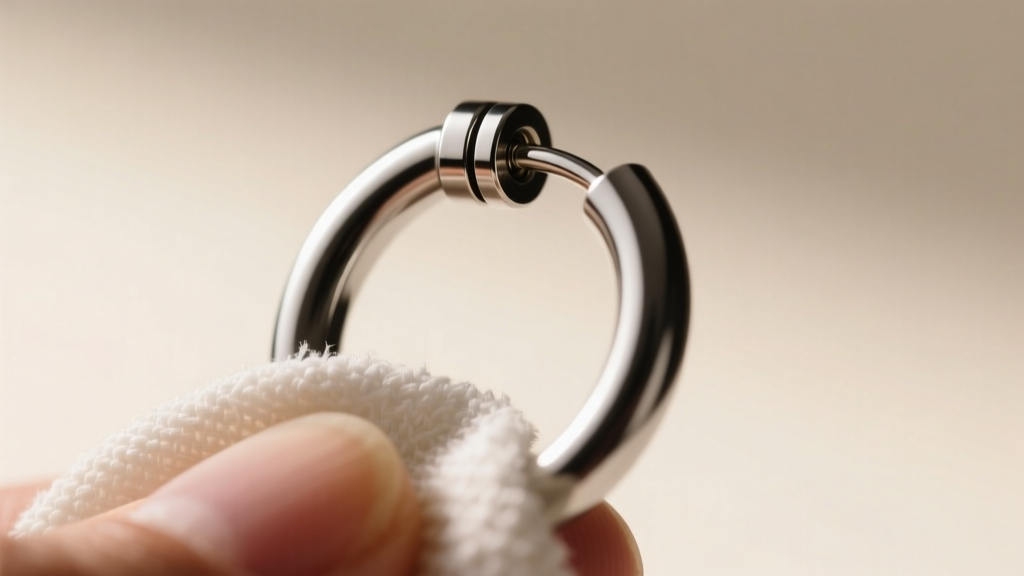
The Fix: Once a week, open the clicker hinge and use a dental water flosser on the lowest pressure setting to flush out the joint. Alternatively, an interdental brush (the tiny brushes used for braces) lightly dampened with saline can sweep the hinge clean. Always ensure the hinge is 100% bone-dry before snapping it shut to prevent trapped moisture.
Material-Specific Maintenance Rules
The metal composition of your jewelry determines which cleaning agents are safe. Using the wrong chemical can permanently ruin expensive body jewelry. Below is a quick-reference matrix for premium body-safe materials.
| Material Grade | Safe Cleaning Agents | Strictly Avoid | Maintenance Notes |
|---|---|---|---|
| Implant-Grade Titanium (ASTM F136) | Saline, mild soap, ultrasonic baths | Chlorine, bleach | Highly corrosion-resistant. Can withstand ultrasonic frequencies safely. |
| Niobium (Anodized) | Saline, warm water, mild soap | Rubbing alcohol, harsh abrasives | Alcohol and harsh chemicals can strip the voltage-created anodized color layer. |
| Solid Gold (14k / 18k) | Mild soap, specialized gold cleaners | Chlorine, iodine, ultrasonic (if gem-set) | Ultrasonic vibrations can loosen micro-prongs holding gemstones in gold settings. |
Troubleshooting Common Cleaning Failures
Even with a diligent routine, you may encounter issues. Here is how to troubleshoot the most common complaints associated with intimate jewelry maintenance.
The 'Green Gunk' Phenomenon
Many wearers panic when they notice a green or dark grey residue on their skin or jewelry, assuming it is an infection or a sign of cheap metal. In 90% of cases involving high-quality metals, this is simply oxidized sebum reacting with the natural pH of your sweat and leftover soap. Cleveland Clinic wound care guidelines emphasize that keeping the area free of trapped moisture prevents this bacterial and fungal overgrowth. Simply remove the jewelry, soak it in a warm saline bath for 10 minutes, and gently brush it away.
Dullness in Gemstones
If the opals or diamonds in your nipple barbells are losing their sparkle, the issue is usually lotion or body oil buildup on the back of the stone. Soap scum creates a film that blocks light refraction. Flip the jewelry over and use a cotton swab dipped in a tiny amount of glass cleaner (ensure it does not touch the skin or the metal setting) to wipe the back of the gemstone.
Cross-Threading and Stripped Balls
Over-cleaning or aggressive scrubbing can lead to worn threads. If your barbell ball feels tight, do not force it. Forcing it will cross-thread the titanium, permanently ruining the bar. Apply a microscopic drop of sterile jojoba oil to the threads, let it sit for five minutes, and gently unscrew. Clean the threads with a soft brush before reattaching.
What to Avoid: The 'Never Do This' List
To protect both your tissue and your investment in high-end body jewelry, memorize these critical prohibitions:
- Never boil your jewelry to sterilize it: While titanium can withstand high heat, boiling water can warp O-rings, shatter synthetic opals (which are highly porous and sensitive to thermal shock), and degrade acrylic components.
- Never use toothpaste as a polish: Toothpaste contains micro-abrasives designed to strip plaque from enamel. On polished gold or titanium, these abrasives create microscopic scratches that dull the mirror finish and create new hiding spots for bacteria.
- Never sleep in damp jewelry: If you shower before bed, ensure your nipple rings are completely dry. Trapped moisture against the areola overnight creates a breeding ground for yeast and contact dermatitis.
Final Thoughts on Intimate Jewelry Hygiene
Maintaining the various types of nipple piercing jewelry requires a shift in mindset: you are not just cleaning a piece of metal; you are maintaining a biomedical implant that interacts directly with your body's largest organ. By matching your cleaning tools—whether that means an ultrasonic bath for intricate shields or a soft interdental brush for clicker hinges—to the specific architecture of your jewelry, you ensure lifelong comfort, brilliant aesthetics, and optimal tissue health.


