The Ultimate Care Guide for Flat Back Labret Earrings
Learn how to properly clean, maintain, and troubleshoot your flat back labret earrings. Expert tips on saline soaks, titanium care, and avoiding irritation.

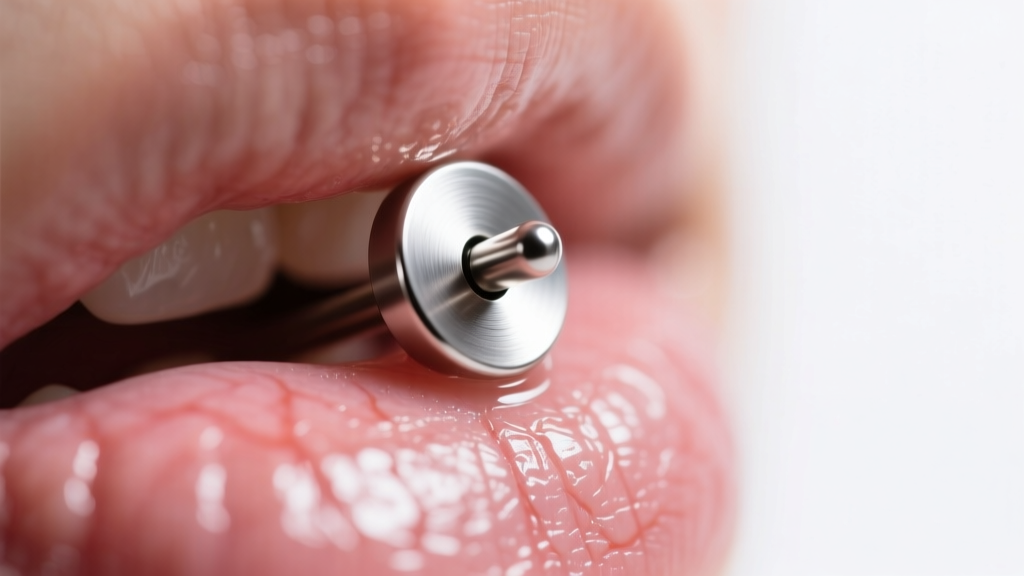
When it comes to oral piercings—including the standard labret, medusa (philtrum), Monroe, and Madonna—flat back labret earrings are the undisputed gold standard. Unlike captive bead rings or horseshoes, the straight post with a flush-fitting disc minimizes movement, protects your gingival tissue, and provides a stable axis for the fistula to heal. However, the unique anatomy of a flat back earring presents specific maintenance challenges. The flat disc rests directly against the highly active, moisture-rich mucosal lining of the inner lip, creating an environment where dead skin cells, sebum, and oral bacteria can easily become trapped.
If you want your piercing to heal flawlessly and remain healthy for years, you must adopt a meticulous, science-backed approach to aftercare. This comprehensive guide breaks down the exact protocols, material requirements, and troubleshooting frameworks necessary to maintain your flat back labret earrings.
The Biomechanics of Flat Backs vs. Oral Tissue
The inner oral mucosa is a marvel of biological engineering, shedding and regenerating cells at a remarkably rapid rate. While this promotes fast healing, it also means that cellular debris accumulates quickly. When you wear flat back labret earrings, the disc acts as a physical barrier. If the post is too long, the jewelry moves back and forth, pumping bacteria into the piercing channel. If the post is perfectly fitted, the disc sits flush, but it can still trap microscopic debris against the tissue.
Understanding this biomechanical relationship is the first step in proper maintenance. You are not just cleaning the surface of the skin; you are managing the micro-environment between the titanium disc and your mucosal wall. Aggressive cleaning methods will disrupt the fragile epithelial cells lining the fistula, while passive neglect will lead to plaque buildup and irritation bumps.
The Daily Cleaning Protocol: Precision Over Aggression
The Association of Professional Piercers (APP) strongly advises against harsh chemicals, rotating the jewelry, or over-cleaning. Your daily regimen should focus on softening debris and gently removing it without causing micro-tears in the healing tissue.
Step 1: The Sterile Saline Soak
Your only liquid cleanser should be sterile 0.9% sodium chloride wound wash. Ensure the ingredient list contains only purified water and 0.9% salt—no preservatives, no aloe, and no added fragrances. Spray the saline generously over both the external gem and the internal flat disc. Allow it to sit for 30 to 60 seconds. This soaking phase is critical; it rehydrates and softens dried lymphatic fluid (crusties) and mucosal plaque, making mechanical removal safe.
Step 2: Mechanical Debridement Without Trauma
Never use cotton swabs (Q-tips) or cotton balls around your flat back labret earrings. Under a microscope, cotton fibers look like jagged ropes. These microscopic fibers easily wrap around the labret post and get dragged into the fistula, triggering foreign body granulomas and severe irritation. Instead, use folded, sterile non-woven gauze. Gently wipe the external gem and the surrounding skin. To clean behind the flat disc, take a piece of gauze, slide it gently behind the disc, and use a flossing motion to wipe the back of the disc and the inner mucosa.
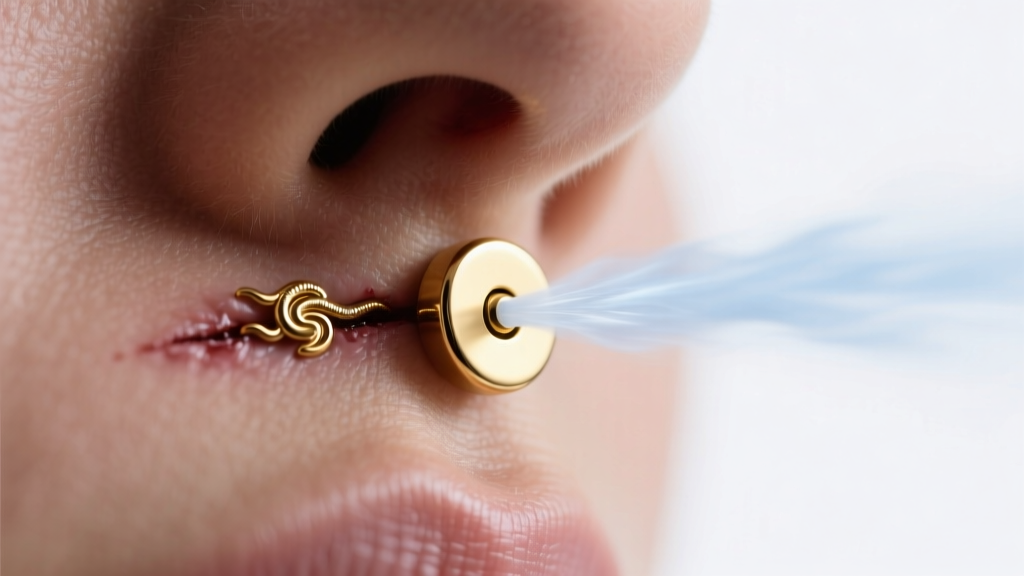
Material Integrity: Why ASTM F-136 Titanium is Non-Negotiable
The environment inside the mouth is highly acidic and corrosive. The material of your flat back labret earrings dictates how your immune system responds to the jewelry. For initial healing and long-term wear, implant-grade titanium is the only logical choice.
- ASTM F-136 Titanium: This is the medical-grade standard for implantable devices. It is entirely nickel-free, highly corrosion-resistant, and biocompatible. Your body will not recognize it as a threat, drastically reducing the risk of contact dermatitis.
- ASTM F-138 Surgical Steel: Often misleadingly marketed as 'hypoallergenic,' surgical steel contains up to 8-12% nickel. In the wet, acidic environment of the mouth, nickel leaching can cause severe allergic reactions, swelling, and rejection.
- Solid Gold (14k or 18k): Safe for healed piercings, provided it is nickel-free and alloyed for biocompatibility. Avoid gold-plated or gold-filled jewelry, as the thin layer will quickly wear away against the teeth and mucosa.
The Importance of Internal Threading
When selecting your flat back labret earrings, always verify that they are internally threaded or threadless (push-pin). Externally threaded jewelry features sharp ridges on the post that must pass through the piercing channel. Every time you insert or remove an externally threaded labret, those ridges act like a cheese grater, tearing the delicate healed fistula and introducing bacteria.
Troubleshooting Common Flat Back Complications
Even with perfect aftercare, oral piercings can encounter hurdles. Below is a diagnostic framework for the most common issues associated with flat back labret earrings.
| Complication | Primary Cause | Actionable Solution |
|---|---|---|
| Hypergranulation | Excess moisture, friction from an overly long post, or pressure. | Downsize the post immediately. Keep the area dry after saline soaks. Apply a brief, cooled chamomile tea compress to reduce inflammation. |
| Embedding | Swelling overtaking the initial post length, causing the disc to sink into the lip. | This is a medical urgency. Visit your piercer immediately to swap to a longer post (e.g., from 8mm to 10mm or 12mm) to accommodate the swelling. |
| Mucosal Plaque | Dead cells and oral bacteria trapping against the flat disc. | Gently lift the disc during your saline soak. Once fully healed, use an extra-soft baby toothbrush to gently brush the back of the disc daily. |
| Gingival Recession | The flat disc resting too close to the gumline, causing chronic friction. | Ensure the jewelry is properly downsized so it sits flush without pressing into the gums. Consider a smaller disc diameter (e.g., 2.5mm instead of 4mm). |
The Critical Downsizing Window
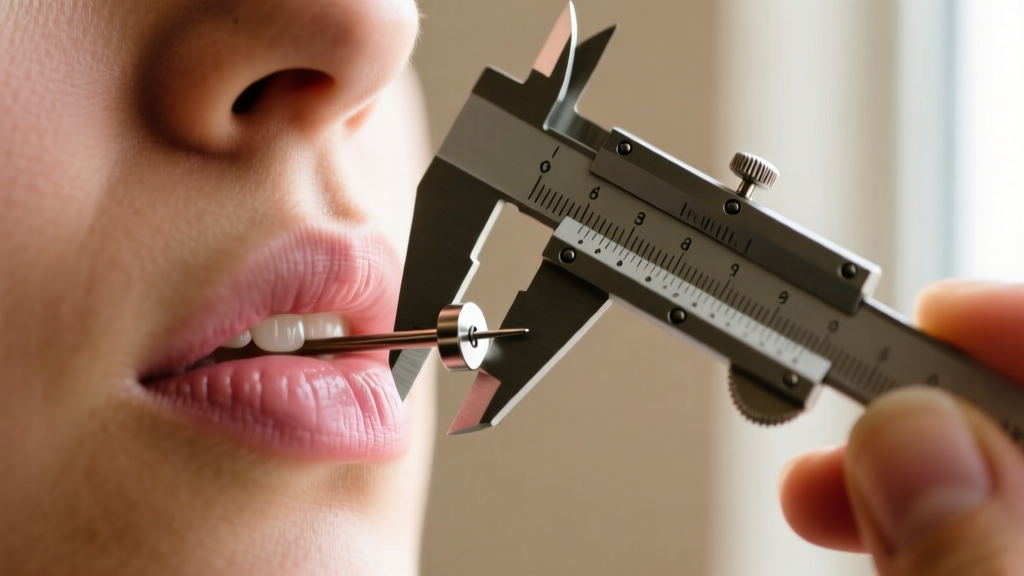
The most vital maintenance step for flat back labret earrings is downsizing. When you are initially pierced, your piercer will insert a longer post—typically 8mm, 9mm, or 10mm—to accommodate the inevitable swelling that occurs in the first 72 hours. However, once that swelling subsides (usually between weeks 3 and 6), that extra length becomes a liability.
A long post allows the jewelry to pivot and click against your teeth. This constant mechanical stress can lead to piercing migration, chipped teeth, and gum erosion. You must return to your piercer for a downsize to a fitted post, usually between 5mm and 7mm, depending on your specific lip anatomy.
According to the Association of Professional Piercers, leaving long initial posts in place after swelling subsides is a leading cause of migration, tissue damage, and dental complications in oral piercings. Proper downsizing is not optional; it is a mandatory phase of the healing process.
Long-Term Maintenance for Healed Piercings
Once your labret, medusa, or monroe piercing is fully healed (which can take anywhere from 3 to 6 months for oral tissue), your maintenance routine shifts from wound care to hygiene and hardware inspection. The fistula is now lined with mature skin, but it still requires attention.
Every time you change your jewelry, inspect the internal threads. Saliva and toothpaste can build up inside the threading of the flat back disc, making it difficult to screw in a new gem. Keep a soft-bristled brush dedicated to cleaning your jewelry components when they are out of your body. Furthermore, regularly check the tightness of your gem. The natural movements of talking, eating, and smiling can slowly unscrew externally threaded gems or loosen threadless pins over time. Give your gem a gentle twist every few weeks to ensure it remains secure.
By respecting the unique anatomy of the oral cavity and adhering to a strict, gentle cleaning protocol, your flat back labret earrings will remain a comfortable, safe, and stunning addition to your facial aesthetic for a lifetime.


