How to Choose the Best Lip Piercing Jewelry Types for Your Placement
Master our step-by-step guide to choosing lip piercing jewelry types. Learn gauge sizes, healing protocols, and downsizing for labrets and hoops.

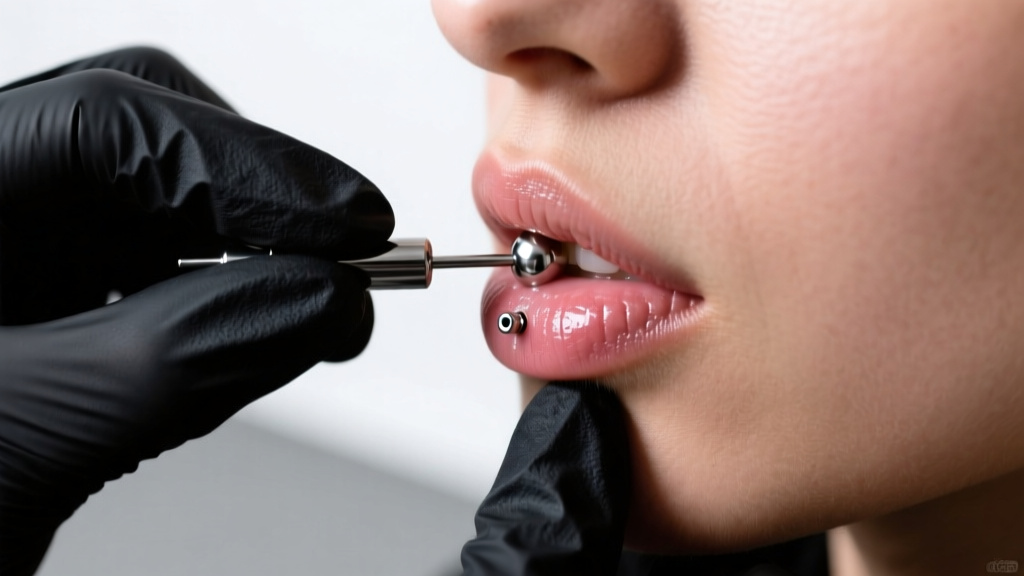
Choosing the correct jewelry for a lip piercing is not just about aesthetics; it is a critical biological decision that dictates how your fistula heals, how your gums are protected, and whether your piercing will thrive or migrate. Whether you are preparing for a standard labret, a Medusa, a Monroe, or a vertical philtrum, understanding the specific lip piercing jewelry types available—and when to use them—is essential. This step-by-step guide will walk you through the exact materials, gauge sizes, and structural transitions required for a flawless healing journey and long-term wear.
Step 1: Identify Your Placement and Initial Gauge Requirements
Before selecting any jewelry, you must establish the baseline gauge and length required for your specific anatomy. The most common mistake beginners make is assuming all lip piercings use the same dimensions. In reality, a professional piercer will select the gauge based on tissue density and placement.
- Standard Labret & Vertical Labret: Typically pierced at 14-gauge (1.6mm) or 16-gauge (1.2mm). A 14G provides greater stability and reduces the 'cheese-cutter effect' (migration caused by thin jewelry cutting through tissue).
- Monroe, Madonna & Medusa (Philtrum): Usually pierced at 16-gauge (1.2mm) to minimize scarring and accommodate the thinner tissue of the upper lip.
- Initial Post Length: To accommodate swelling, initial flat-back labret posts are generally 3/8-inch (10mm) or 5/16-inch (8mm). Using a post that is too short initially will lead to severe embedding, while one that is too long will catch on teeth and cause gum recession.
Step 2: Selecting the Right Lip Piercing Jewelry Types for Healing
During the initial healing phase (which lasts 6 to 12 weeks for most lip piercings), your only acceptable option is a flat-back labret stud. Hoops, rings, and horseshoes introduce rotational movement, which drags bacteria into the fistula and causes hypertrophic scarring (irritation bumps).
When selecting your healing stud, you must prioritize material and threading:
Material Standards
Only accept implant-grade titanium (ASTM F-136) or solid 14k/18k nickel-free gold. Surgical steel is a porous alloy that contains nickel and can cause contact dermatitis, leading to delayed healing and excessive swelling. Titanium is biocompatible, lightweight, and completely hypoallergenic, making it the undisputed gold standard for fresh wounds.
Threading Types
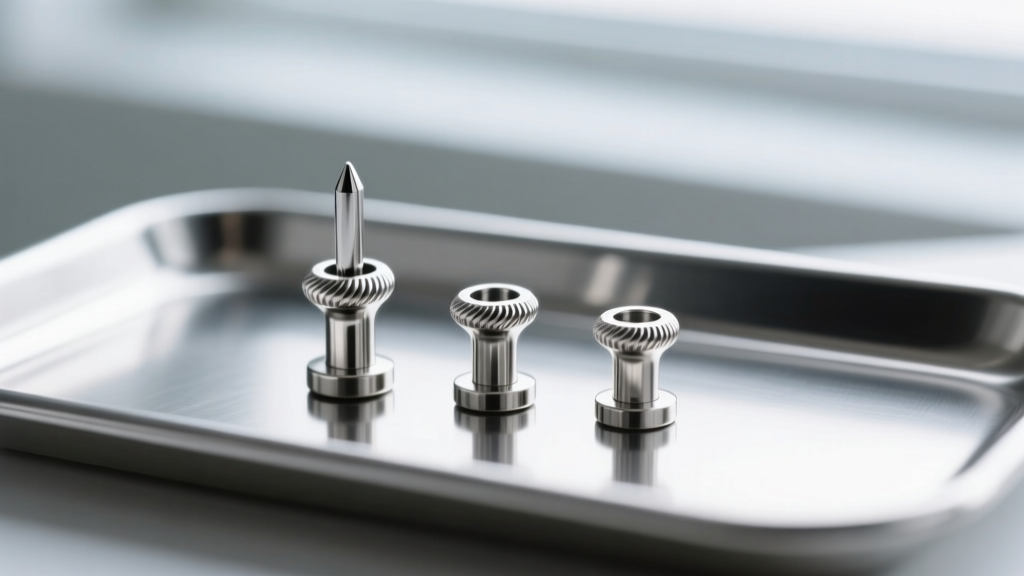
Avoid externally threaded jewelry at all costs. The screw threads on the outside of the post will tear the delicate new cells lining your fistula every time the jewelry is removed. Instead, opt for internally threaded (where the screw is on the decorative end) or threadless (push-pin) jewelry. Threadless jewelry relies on tension to stay together, making it incredibly secure and easy for piercers to swap without unscrewing anything through the piercing channel.
Step 3: Downsizing Your Post (The Crucial 4-8 Week Mark)
The most critical step in the lip piercing healing protocol is downsizing. When you are initially pierced, the 8mm or 10mm post leaves extra room for the inevitable inflammatory swelling. However, once that swelling subsides (usually between weeks 4 and 8), the long post becomes a liability.
'Failure to downsize a lip piercing is the leading cause of gum erosion and enamel chipping. The excess metal acts as a lever, constantly striking the back of the teeth and gums.' — FreshTrends Body Jewelry Guide
How to execute the downsize:
- Wait until the initial swelling has completely flattened out (usually 4-6 weeks).
- Visit your piercer to swap the post to a 1/4-inch (6mm) or 3/16-inch (5mm) length.
- The new post should sit flush against the inside of your lip without pressing deeply into the tissue. If the skin bulges around the back disc, the post is too short and risks embedding.
Step 4: Transitioning to Hoops and Rings (Healed Piercings Only)
Once your piercing is fully healed (minimum 3 to 6 months, confirmed by a professional), you can explore other lip piercing jewelry types, specifically rings. However, sizing a ring for a lip piercing requires precise measurement to avoid migration.
- Captive Bead Rings (CBR): The most secure ring option. The bead is held in place by the tension of the ring. They require special pliers to open and close, meaning you should have a piercer install them to ensure the gap is completely closed.
- Segment Rings: A seamless look where a small curved segment clicks into place. They are easier to open by hand but can pop out if snagged on a towel or clothing.
- Clickers and Hinged Hoops: Convenient for at-home changes, but the hinge mechanism can sometimes harbor bacteria or irritate the fistula if the tolerances are poorly machined.
Diameter Sizing: A standard labret or side lip piercing usually requires a 3/8-inch (10mm) or 7/16-inch (11mm) inner diameter. A ring that is too tight will cause the piercing to migrate outward at an angle, while a ring that is too loose will swing and hit the teeth.
Step 5: Troubleshooting Common Jewelry Failures
Even with perfect aftercare, the wrong jewelry type can cause mechanical failures. Here is how to diagnose and fix the most common issues based on your jewelry choice:
Embedding (The 'Disappearing' Stud)
Cause: The flat-back disc is too small, or the post is too short, causing the jewelry to sink into the swelling tissue.
Fix: See a piercer immediately to upsize the post length or swap to a larger-back disc (e.g., moving from a 3mm disc to a 5mm disc to distribute pressure).
Irritation Bumps (Hypertrophic Scarring)
Cause: Using a hoop before the piercing is fully healed, or an angle mismatch where the jewelry sits crookedly in the fistula.
Fix: Remove the ring immediately. Insert a properly angled, custom-bent titanium flat-back labret. Apply sterile saline compresses twice daily until the bump resolves.
Comparison Chart: Lip Piercing Jewelry Types
| Jewelry Type | Best Phase | Pros | Cons |
|---|---|---|---|
| Flat-Back Labret | Healing & Healed | Maximum stability, protects gums, customizable ends. | Requires professional help to swap initial swelling post. |
| Captive Bead Ring (CBR) | Healed Only | Highly secure, classic aesthetic, continuous circle. | Difficult to change without ring-opening pliers. |
| Horseshoe Barbell | Healed Only | Easy to flip up to hide, simple to thread. | Bulky, balls can irritate gums, catches on masks/hair. |
| Seamless / Segment Ring | Healed Only | Sleek, minimalist look, no bead to lose. | Can warp if forced open, segment may pop out if snagged. |
Final Thoughts on Investment and Quality
When building your collection of lip piercing jewelry, view it as an investment in your oral health. A high-quality, internally threaded titanium labret post from reputable brands like Anatometal or Industrial Strength will cost between $30 and $50, while 14k solid gold decorative ends range from $120 to over $300. While the upfront cost is higher than mall-kiosk alternatives, premium jewelry prevents the costly dental repairs and medical interventions associated with cheap, ill-fitting metals. Always prioritize the structural integrity of the post over the flashiness of the gem, and consult a certified professional piercer for every size transition.


