Labret Stud Earrings: Why Flat-Backs Dominate 2026 Trends
Discover why labret stud earrings are replacing traditional posts in 2026. Explore flat-back trends, gauge sizes, and sleep-friendly styling tips.

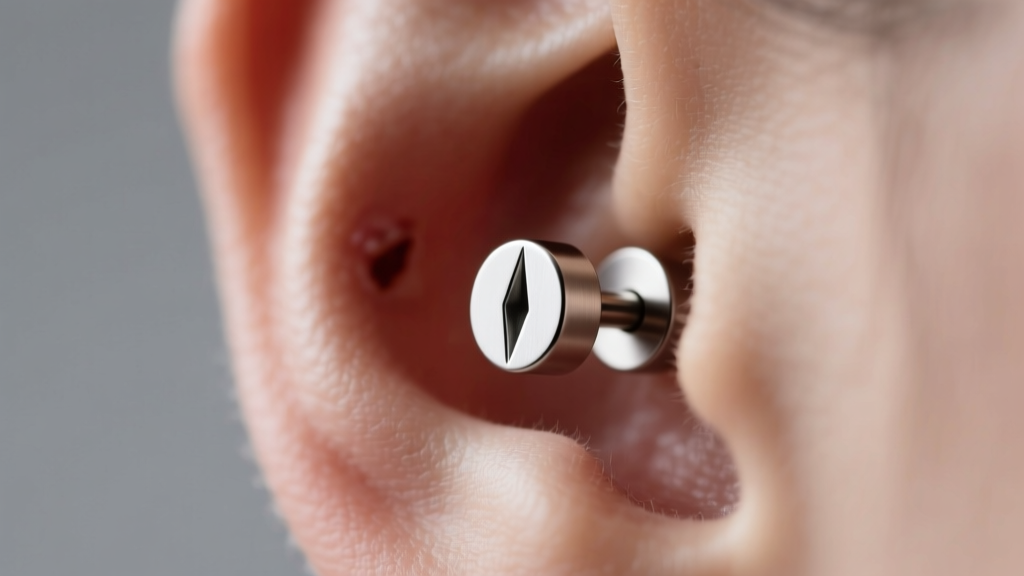
If you have searched for labret stud earrings recently, you are participating in one of the most significant semantic shifts in modern body modification. Historically, labret studs were designed exclusively for lip piercings—featuring a flat back to protect oral mucosa and teeth. However, as we navigate the jewelry trends of 2026, these exact same flat-back posts have completely hijacked the ear piercing market. Today, high-end body jewelers and professional piercers overwhelmingly recommend labret-style flat-back studs for lobes, helixes, and tragus piercings, rendering the traditional butterfly-back earring virtually obsolete.
This crossover from lip jewelry to ear curation is not just an aesthetic preference; it is a functional upgrade rooted in anatomical comfort and metallurgical safety. In this comprehensive style and trend analysis, we will break down why labret stud earrings have become the gold standard for ear styling, how to navigate gauge and length conversions, and the specific material grades you must demand from your jeweler.
The Crossover Phenomenon: Lip Jewelry Meets Ear Styling
The migration of the labret stud from the mouth to the ear began in professional piercing studios but has now fully penetrated the mainstream luxury jewelry market. Traditional earrings rely on a post and a friction clutch (the "butterfly" back). This design inherently features a sharp post end that protrudes past the clutch, which frequently snags on hair and digs into the neck during sleep.
Labret studs solve this by utilizing a smooth, flat disc base that sits flush against the back of the ear. Originally engineered to prevent gum recession in oral piercings, this flush-fit design proved to be the ultimate solution for sleep-friendly ear jewelry. In 2026, luxury brands like Maria Tash and BVLA have fully embraced the labret stud architecture, releasing collections specifically marketed as "flat-back earrings" to cater to consumers who prioritize all-day comfort without sacrificing high-end aesthetics.
Why Traditional Butterfly Backs Are Obsolete
To understand the dominance of labret stud earrings, we must examine the failure modes of traditional friction-back earrings. The butterfly clutch is a notorious trap for dead skin cells, sebum, and shampoo residue. This buildup creates an environment ripe for contact dermatitis and localized infections. Furthermore, the friction mechanism loosens over time, leading to lost earrings and compromised security.
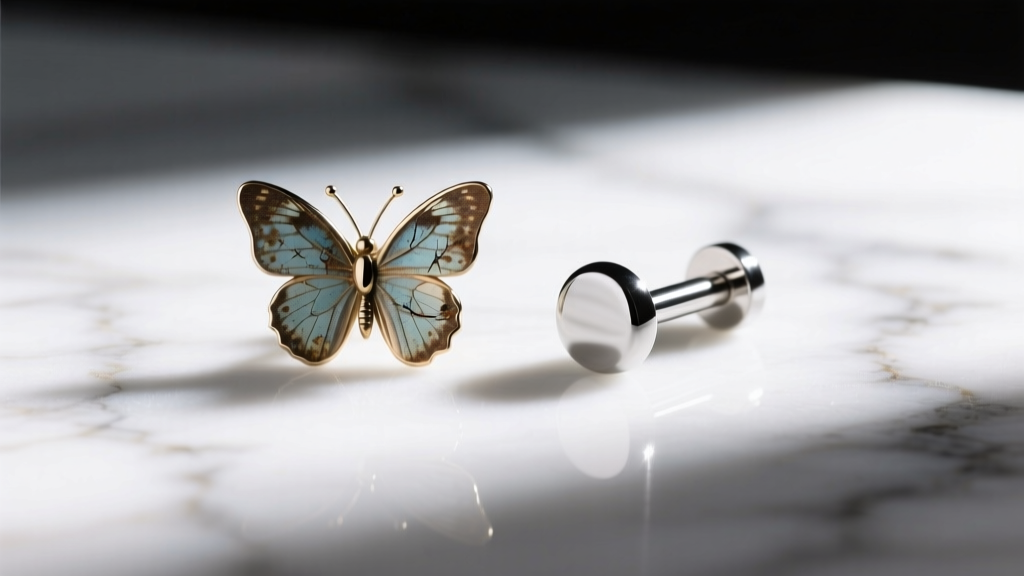
According to the Association of Professional Piercers (APP), jewelry should possess a mirror finish and avoid mechanical traps where bacteria can thrive. Flat-back labret studs, particularly those utilizing threadless or internally threaded mechanisms, completely eliminate the crevices found in butterfly clutches.
| Feature | Traditional Butterfly Back | Labret Stud Earring (Flat-Back) |
|---|---|---|
| Sleep Comfort | Poor (sharp post protrudes) | Excellent (flush flat disc) |
| Hygiene | Low (traps sebum and debris) | High (smooth, crevice-free) |
| Security | Moderate (friction wears out) | Superior (tension-fit or threaded) |
| Snag Risk | High (catches on hair/sweaters) | Low (streamlined profile) |
Gauge and Length Matrix for Ear Applications
The most common mistake consumers make when purchasing labret stud earrings for their ears is buying lip dimensions. Lip tissue is thick, vascular, and prone to significant swelling, requiring longer posts (typically 8mm to 12mm) and thicker gauges (14g or 16g). Ear cartilage and lobes are significantly thinner. Wearing a lip-length labret in a helix piercing will result in a protruding post that snags constantly and disrupts the angle of the piercing channel.
The 2026 Sizing Framework
- Standard Earlobe: 18g or 16g thickness; 4mm to 5mm post length.
- Helix / Flat / Conch: 16g thickness; 5mm to 6mm post length (6.5mm for thicker cartilage ridges).
- Tragus: 16g thickness; 5mm to 6mm post length.
- Snug / Anti-Tragus: 16g thickness; 6mm to 8mm post length (due to the sharp fold of the cartilage).
Pro Tip: Always measure your current jewelry or consult a professional piercer with digital calipers before ordering custom-length labret studs. A post that is even 1.5mm too long will compromise the "flush" aesthetic that makes flat-backs desirable.
Threadless vs. Internally Threaded: The Mechanics of Security
When shopping for labret stud earrings, you will encounter two primary closure systems. Both are vastly superior to the externally threaded or friction-fit options found in mall kiosks, but they operate on entirely different mechanical principles.
Threadless (Push-Pin) Technology
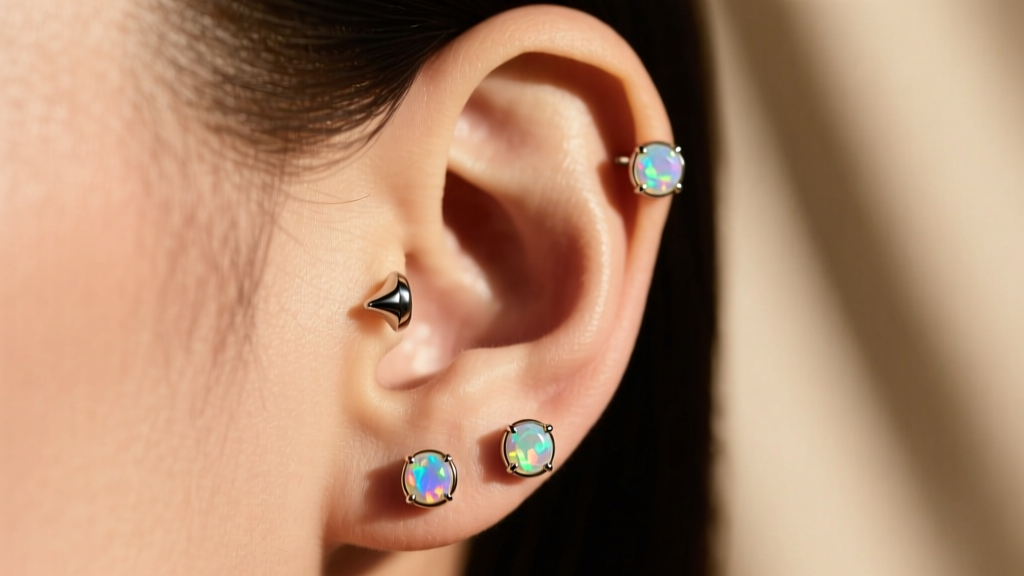
Threadless jewelry, pioneered by brands like Neometal, relies on tension rather than screw threads. The decorative end features a tiny, slightly bent pin that inserts into the hollow post. As detailed in Neometal's Threadless Jewelry Guide, the user bends the pin to a roughly 15-degree angle before insertion. The spring-like tension of the metal pressing against the inner wall of the post creates an incredibly secure lock. This is currently the dominant trend for 2026 ear curations because it allows for endless mixing and matching of ends without the risk of cross-threading.
Internally Threaded Labrets
In this system, the screw threads are located on the decorative end, which screws into a tapped hole inside the flat-back post. This ensures that the part of the jewelry passing through the piercing channel is completely smooth, preventing micro-tears in the fistula. Internally threaded labrets are highly favored for initial piercings and by individuals who find the bending mechanism of threadless pins intimidating.
Material Grades: Avoiding the "Amazon Flat-Back" Trap
The surge in demand for labret stud earrings has flooded the market with cheap, mass-produced alternatives. Many online marketplaces sell "titanium flat backs" for under $10. These are almost universally manufactured from 316L surgical steel (which contains nickel) or low-grade titanium with poor surface polishing.
For permanent wear, you must demand specific metallurgical standards:
- ASTM F136 Implant-Grade Titanium: The absolute baseline for safe, long-term wear. It is entirely nickel-free, highly biocompatible, and lightweight.
- ASTM F138 Implant-Grade Steel: Acceptable for fully healed piercings if you do not have a nickel allergy, but titanium remains superior for polished finish retention.
- 14k or 18k Solid Gold: Ensure it is nickel-free and alloyed for body safety (avoid gold-plated or gold-filled, as the plating will eventually wear off inside the piercing channel).
- Niobium: An excellent, highly reactive-free alternative to titanium, often used in anodized colors.
Styling Framework: Building a Flat-Back Ear Curation
The aesthetic appeal of labret stud earrings lies in their ability to sit perfectly flush, creating a "constellation" effect across the ear. In 2026, the trend has moved away from massive, heavy statement pieces in the upper ear, favoring instead micro-gem clusters, bezel-set opals, and matte-finish titanium balls.
Because threadless labret systems separate the post from the decorative end, you can build a foundational wardrobe of high-quality titanium posts and invest in a few premium 14k gold or gemstone ends. A popular curation strategy involves placing a 3mm bezel-set diamond or moissanite in the upper helix, a 4mm prong-set opal in the mid-helix, and a simple 2.5mm titanium bead in the lobe. The flat-back architecture ensures that every gem sits parallel to the ear's anatomy, catching the light uniformly without drooping or shifting.
Final Sourcing and Price Expectations
Authentic, body-safe labret stud earrings are an investment in your anatomical health and daily comfort. Expect to pay between $25 and $45 for a high-quality threadless titanium post and end combo from reputable brands like Junipurr, Body Gems, or Neometal. Premium ends featuring genuine Swarovski crystals, opals, or solid gold from makers like BVLA or Anatometal will range from $60 to over $150 per piece.
While the initial cost is higher than traditional department store earrings, the modular nature of threadless labret systems means you only ever need to buy the decorative ends to completely change your look. By adopting the labret stud architecture for your ears, you are aligning with the most advanced, comfortable, and hygienic jewelry standards available in modern body modification.


