Monroe Piercing Jewelry Care: Cleaning and Maintenance
Learn how to properly clean and maintain your monroe piercing jewelry. Expert tips on saline soaks, titanium grades, and avoiding irritation bumps.

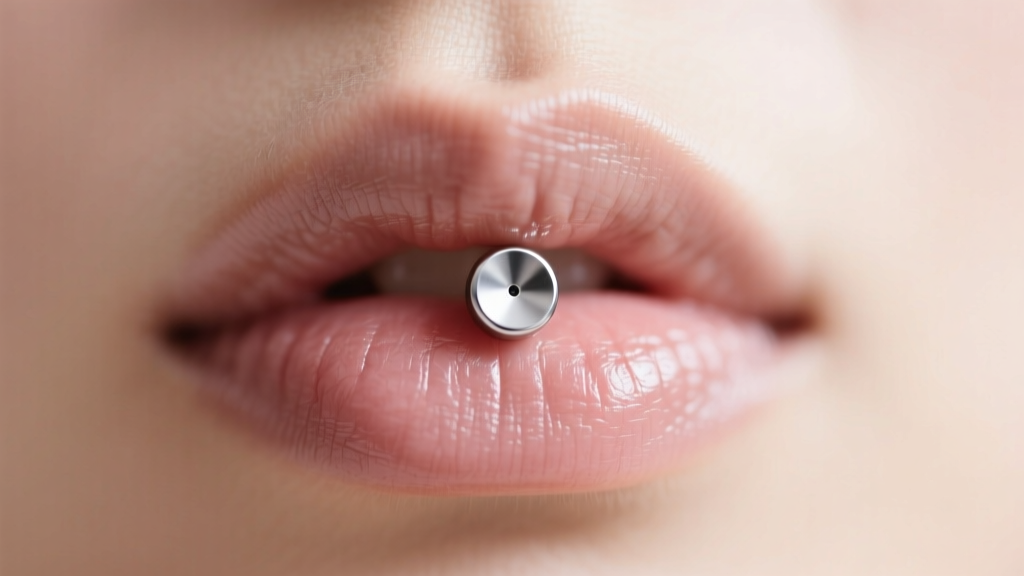
The Anatomy of Monroe Piercing Jewelry and Healing
The Monroe piercing, strategically placed on the upper left lip to mimic Marilyn Monroe's iconic beauty mark, sits in a highly mobile and vascular area of the face. Because the philtrum region is subject to constant movement from talking, eating, and facial expressions, the choice and maintenance of your monroe piercing jewelry are critical for a smooth healing process. As of 2026, professional piercing standards dictate that initial jewelry must accommodate significant swelling while minimizing tissue trauma.
Standard monroe piercings are typically performed at 14-gauge (1.6mm) or 16-gauge (1.2mm). While 16-gauge is common for delicate aesthetics, 14-gauge is heavily favored by professionals because the thicker post reduces the "cheese-cutter effect," where thin metal migrates through the tissue under pressure. Initial labret posts usually range from 3/8-inch (10mm) to 5/16-inch (8mm) in length to account for the first two weeks of swelling. Failing to downsize your post once the swelling subsides is one of the leading causes of gum erosion and enamel damage on the upper incisors.
Daily Cleaning Protocol for Monroe Studs
When it comes to cleaning monroe piercing jewelry, the golden rule endorsed by the Association of Professional Piercers (APP) is LITHA: Leave It The Hell Alone. Over-cleaning is just as detrimental as under-cleaning, as it strips the fistula of beneficial bacteria and dries out the healing tissue.
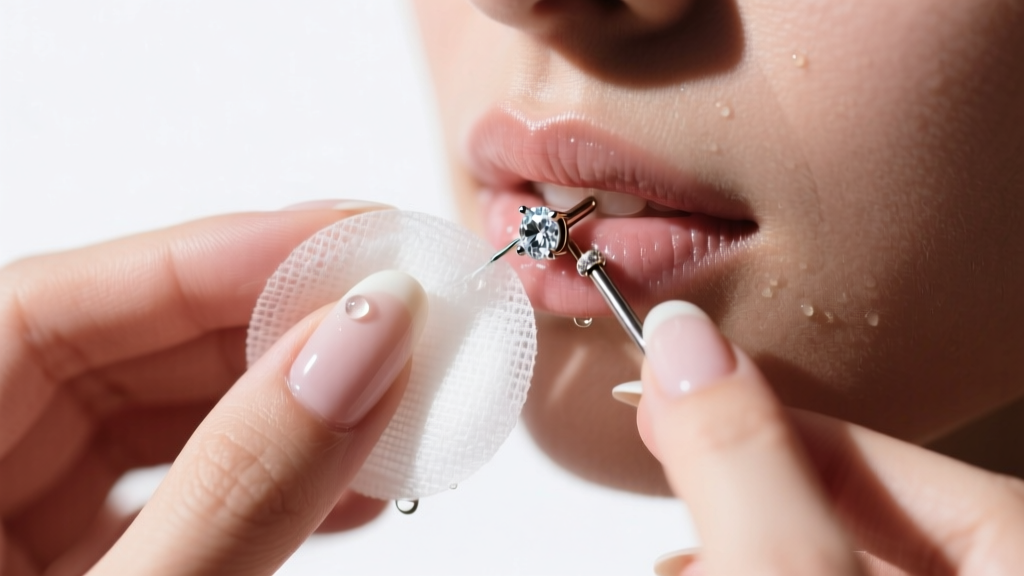
The Sterile Saline Method
Your primary cleaning agent should be a sterile, 0.9% sodium chloride wound wash. Avoid homemade sea salt soaks, as it is nearly impossible to achieve the correct isotonic ratio at home; a solution that is too salty will dehydrate the cells, while one that is too weak will cause osmotic swelling.
- Frequency: Clean the exterior of the piercing 1 to 2 times daily.
- Application: Spray the sterile saline directly onto the jewelry and the surrounding tissue, or apply it using a sterile, non-woven gauze pad.
- Avoid Cotton Swabs: Never use Q-tips or cotton balls. The microscopic fibers easily catch on the gem setting or the threading of the labret post, introducing lint into the wound and causing micro-tears in the forming fistula.
- Drying: Gently pat the area dry with a fresh piece of non-woven gauze or use a hair dryer on the lowest, coolest setting. Leaving the area wet creates a breeding ground for moisture-loving bacteria.
Material Matters: When to Downsize and Upgrade
The metallurgy of your monroe piercing jewelry directly impacts your immune system's response. The oral environment is highly acidic and corrosive, meaning base metals will rapidly degrade, leading to contact dermatitis and severe irritation bumps.
| Material Grade | Safety Profile | Maintenance Needs |
|---|---|---|
| ASTM F-136 Titanium | The gold standard. Hypoallergenic, non-magnetic, and highly biocompatible. Ideal for fresh piercings. | Low. Resists tarnish and corrosion from oral acids and saline. |
| 316L Surgical Steel | Contains trace nickel. High risk of allergic reactions and rejection in fresh Monroe piercings. | High. Prone to pitting and corrosion in the oral cavity over time. |
| Niobium | Highly biocompatible and safe for initial piercings, though softer than titanium. | Low. Can be anodized to different colors without using toxic plating. |
| Solid 14k/18k Gold | Safe only for fully healed piercings (6+ months). Must be alloyed for biocompatibility (no white gold). | Medium. Requires polishing to remove micro-scratches where bacteria hide. |
According to the APP Jewelry Guidelines, internally threaded or threadless (push-pin) titanium labrets are mandatory for initial jewelry. Externally threaded jewelry features sharp threads on the post that tear the delicate fistula tissue every time the jewelry is inserted or removed.
Troubleshooting Common Monroe Jewelry Issues
Even with impeccable hygiene, the upper lip is prone to specific complications. Understanding the mechanical failure modes of your jewelry can help you address issues before they require medical intervention.
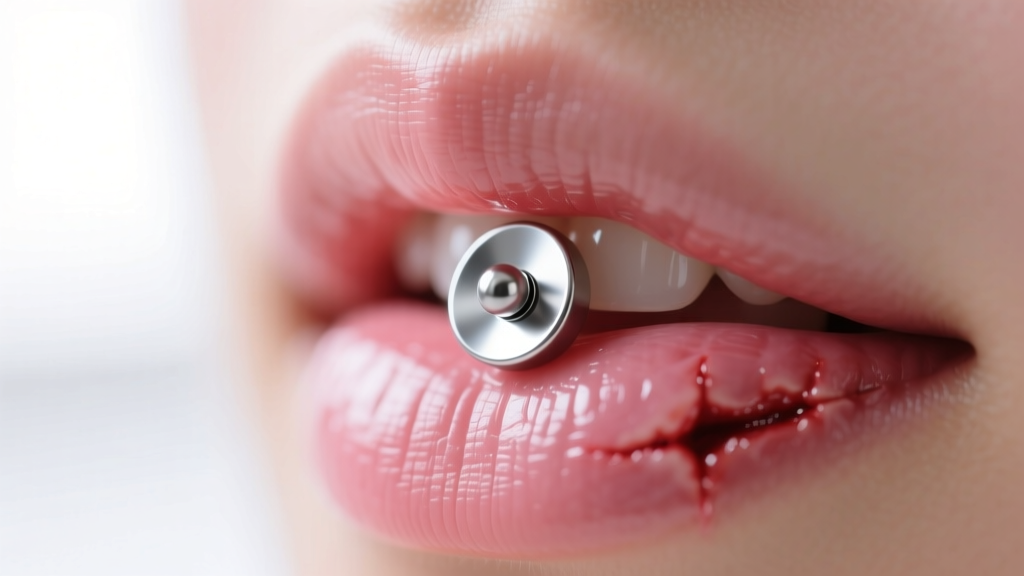
Irritation Bumps (Hypergranulation)
If you notice a red, shiny, or weeping bump forming right next to the gem of your Monroe stud, you are likely dealing with hypergranulation. This is not an infection; it is an overgrowth of healing tissue caused by friction, moisture, or pressure. If your post is too long and the jewelry is moving excessively, or if you are sleeping on your face, the tissue will overproduce cells in an attempt to protect the wound. The solution is to visit your piercer for a downsize to a snugger post and to implement warm, dry compresses using non-woven gauze.
Embedding and the "Cheese-Cutter" Effect
If the flat disc on the inside of your lip begins to sink into the mucosal tissue, you are experiencing embedding. This happens when swelling exceeds the length of the post, or when the jewelry is too thin (e.g., 18-gauge) and the pressure of the lip causes the metal to slice through the tissue. If you cannot see or feel the back of your labret post, you must see a professional piercer immediately to have the jewelry swapped for a longer, thicker post to prevent permanent tissue scarring.
Long-Term Maintenance and Oral Hygiene
Caring for monroe piercing jewelry is a dual-front battle: you must maintain the exterior facial skin and the interior oral mucosa. The inside of the lip requires a completely different chemical approach than the outside.
- Alcohol-Free Mouthwash: After every meal, rinse with an alcohol-free, antimicrobial mouthwash. Alcohol dries out the oral mucosa and delays cellular regeneration. Brands like Biotene or Tech 2000 are highly recommended.
- Brushing the Disc: Once the piercing is past the initial tender phase (usually week 3 or 4), use a brand-new, soft-bristled baby toothbrush to gently brush the flat back of the labret disc. Plaque and tartar love to accumulate on the back of lip jewelry, which can lead to severe gum recession against the upper canine and incisor teeth.
- Flossing: Daily flossing is non-negotiable to prevent plaque buildup from migrating behind the jewelry backing.
What to Avoid: The Biggest Monroe Care Mistakes
The internet is rife with outdated and dangerous piercing aftercare advice. To protect your investment and your facial tissue, strictly avoid the following practices:
- Tea Tree Oil and Essential Oils: Never apply tea tree oil, lavender oil, or aspirin pastes to a Monroe piercing. These are caustic, cause chemical burns on the delicate lip tissue, and will trigger severe contact dermatitis.
- Twisting or Rotating the Jewelry: Turning the labret post breaks the fragile epithelial cells forming the new fistula and introduces exterior bacteria deep into the wound channel.
- Changing Jewelry Too Early: A Monroe piercing takes anywhere from 2 to 3 months to heal on the surface, but the deep tissue can take up to 6 months to fully stabilize. Removing the jewelry before the 3-month mark risks the hole closing within minutes or introducing a secondary infection.
- Using Ointments: Neosporin, Vaseline, and Aquaphor are strictly forbidden. They create an occlusive barrier that traps anaerobic bacteria inside the puncture wound and prevents oxygen from reaching the healing cells.
By adhering to a strict, science-backed cleaning protocol and ensuring your monroe piercing jewelry is crafted from implant-grade titanium with the correct anatomical fit, you can achieve a flawless, long-lasting result that perfectly frames your smile.


