Safe Belly Dancer Jewelry: Budget Guide for Navel Chains
Discover how to budget for safe belly dancer jewelry. Compare prices, material grades, and value for navel chains and body drapes in our expert guide.
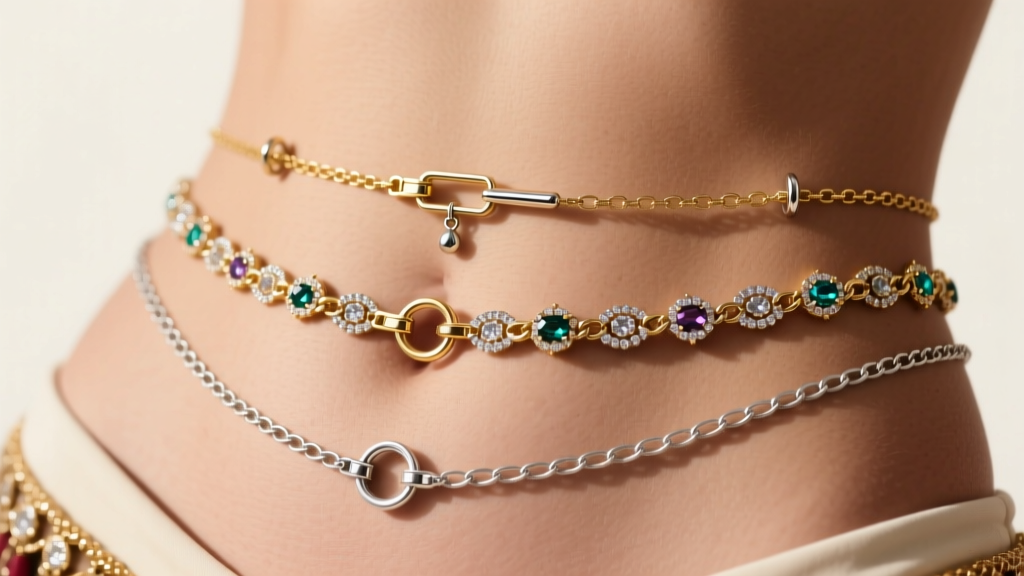

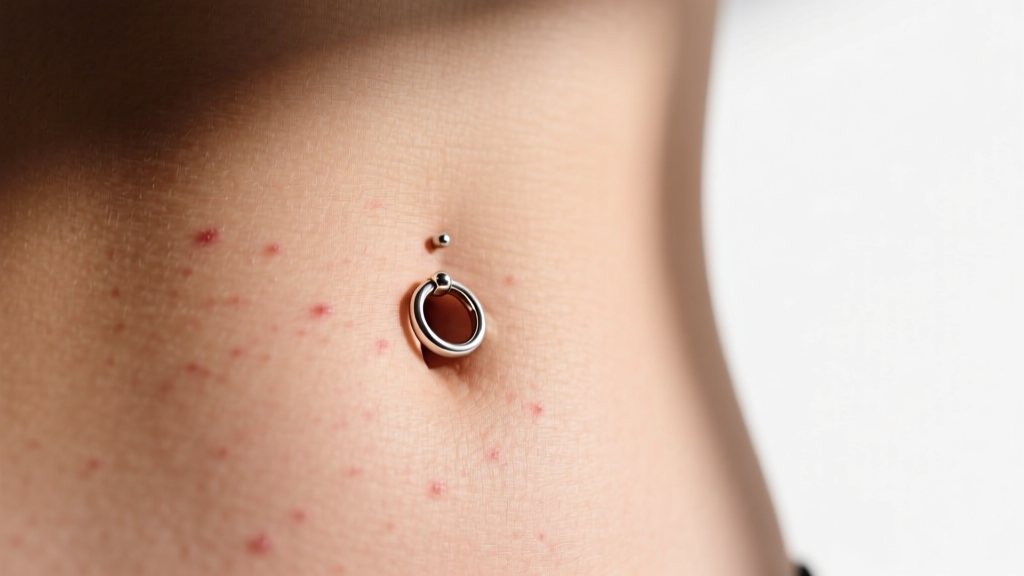
When it comes to performance and festival wear, belly dancer jewelry elevates a routine from standard to spectacular. However, within the body modification community, the term encompasses a highly specific and often misunderstood category: navel-integrated body chains, drapes, and shields. Unlike standalone waist chains that simply rest on the skin, true belly dancer navel jewelry physically anchors to your 14-gauge (1.6mm) or 12-gauge (2.0mm) piercing. This structural integration introduces unique biomechanical stresses and metallurgical challenges that fast-fashion retailers routinely ignore.
As we navigate the 2026 market, the influx of ultra-cheap, mass-produced dance accessories has created a hidden epidemic of piercing rejections, allergic contact dermatitis, and torn fistulas. This comprehensive budget and value assessment will teach you how to curate a stunning, stage-ready belly dancer jewelry setup without compromising your piercing health or draining your wallet. We will break down material science, weight tolerances, and the smartest purchasing strategies for dancers on a budget.
The Biomechanics of Dance and Piercing Stress
To understand the true value of high-quality belly dancer jewelry, we must first analyze the physical demands of belly dancing. Techniques such as shimmies, undulations, and sharp hip isolations generate significant kinetic energy across the midriff. When a chain or coin drape is anchored directly to a curved barbell, every micro-movement transfers sheer force to the piercing fistula.
- Sheer Stress: Lateral hip movements pull the bottom bead of the barbell, twisting the jewelry inside the piercing channel.
- Pendulum Effect: Heavy beaded drapes swing during drops and camel walks, creating a lever effect that can slowly migrate the piercing downward.
- Friction and Snagging: Costumes, finger cymbals (zills), and props easily catch on poorly designed chain links, risking catastrophic tearing.
Budgeting for belly dancer jewelry is not just about aesthetics; it is an investment in structural engineering for your body. A cheap, rigid wire drape will not articulate with your body's movements, leading to excessive pressure on the 14G exit hole. Premium, budget-friendly setups utilize micro-jump rings and fluid ball-chains that move independently of the anchor barbell.
Material Breakdown: The Hidden Cost of Cheap Alloys
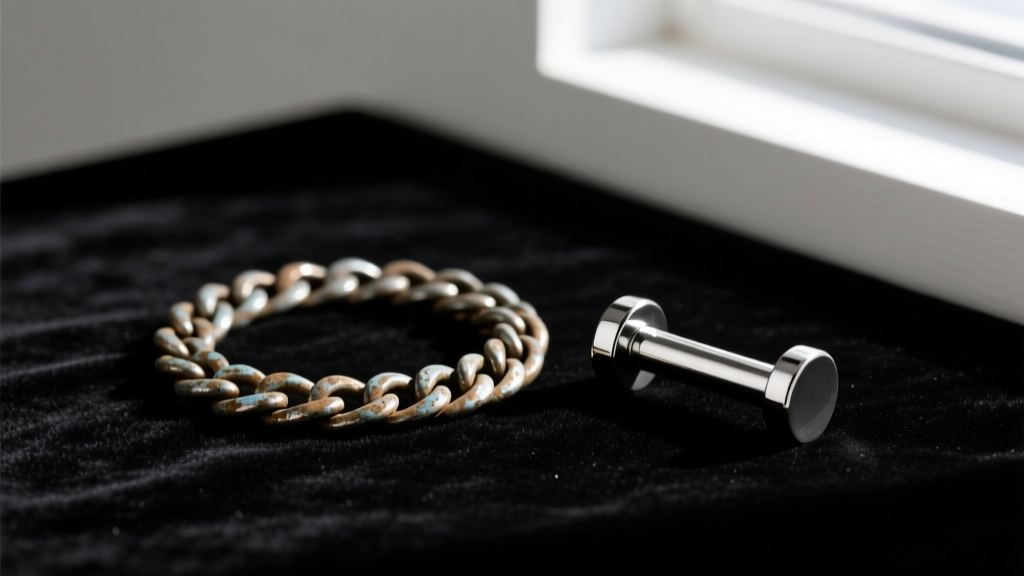
The most common trap for dancers seeking affordable belly dancer jewelry is purchasing "costume grade" integrated sets. These are typically manufactured from zinc alloys, brass, or "Tibetan silver," and finished with a microscopic layer of silver or gold plating. While a $15 integrated navel chain might seem like a bargain, the biological cost is severe.
The Sweat and Nickel Leaching Problem
Human sweat is a highly corrosive electrolyte solution containing urea, lactic acid, and salts, with a pH ranging from 4.5 to 7.0. When cheap base metals are exposed to this environment during a high-intensity dance routine, galvanic corrosion occurs. The plating degrades rapidly, exposing the underlying nickel and copper to your skin and the internal fistula.
According to the American Academy of Dermatology, nickel is the leading cause of allergic contact dermatitis. When a healing or even fully healed navel piercing is exposed to leaching nickel combined with the friction of a belly chain, the result is often severe inflammation, hypergranulation tissue, and eventual piercing rejection. The Association of Professional Piercers (APP) strictly advises against wearing any jewelry that cannot be verified as implant-grade or highly polished 316L steel in a piercing channel.
The Smart Budget Strategy: Modular Assembly
The greatest secret to acquiring safe, beautiful belly dancer jewelry on a budget is to abandon the "all-in-one" retail model. Instead, adopt a modular assembly approach. By separating the anchor (the barbell) from the aesthetic (the drape), you can allocate your budget exactly where it matters most: biocompatibility at the anchor point, and visual impact on the chain.
Step 1: Invest in the Anchor (Budget: $15 - $30)
Your primary navel piercing must be an internally threaded or threadless curved barbell made from ASTM F136 implant-grade titanium. Titanium is completely immune to sweat corrosion and contains zero nickel. Brands like NeoMetal or Industrial Strength offer threadless curved barbells in 14G (1.6mm) that retail between $15 and $30. The bottom end should feature a smooth, rounded bead or a specialized threadless end with a built-in micro-loop for attaching chains.
Step 2: Source the Drape (Budget: $25 - $60)
Once your safe titanium anchor is in place, you can purchase the belly chain or drape separately. Because the chain only rests against the exterior skin (and not inside the fistula), you have more material flexibility. High-quality 925 sterling silver, 14k gold-filled wire, or anodized niobium chains are excellent, budget-friendly choices. You can attach these to your titanium barbell's bottom loop using a seamless 16G stainless steel jump ring.
Cost vs. Value: Purchasing Tiers Compared
To illustrate the long-term value of different purchasing strategies, we have analyzed three common approaches to buying belly dancer jewelry. This table highlights the initial cost, material safety, and expected lifespan of each tier.
| Purchasing Tier | Typical Cost | Materials Used | Safety & Lifespan |
|---|---|---|---|
| Fast-Fashion Integrated | $10 - $25 | Zinc alloy, brass, thin silver plating, external threading. | High Risk. Plating wears off in 2-3 uses. High rejection and allergy risk. Lifespan: < 1 month. |
| Mid-Tier Body Mod Shops | $35 - $55 | 316L Surgical Steel barbell, sterling silver chain. | Moderate Risk. Safe for healed piercings, but steel can still cause irritation in highly acidic sweat. Lifespan: 1-2 years. |
| Modular Pro Setup (Recommended) | $45 - $85 | ASTM F136 Titanium anchor, 14k Gold-Filled or Niobium drape. | Zero Risk. Implant-grade anchor prevents rejection. Gold-fill resists tarnish. Lifespan: 5+ years. |
Weight Limits and Migration Prevention
A critical, often overlooked factor in the value assessment of belly dancer jewelry is physical weight. The navel piercing is notoriously prone to migration due to the natural folds of the abdomen and the pressure from waistbands. Adding a heavy coin belt or thick beaded chain to your barbell accelerates this process.
As a strict rule for 2026 dance choreography, your attached navel drape should never exceed 15 grams (approximately half an ounce) for standard 14G piercings. If your routine requires a heavier, more elaborate belly dancer jewelry setup, you must transition to a 12G (2.0mm) or 10G (2.5mm) gauge piercing, which requires a professional piercer to safely stretch the fistula. For budget-conscious dancers, sticking to lightweight aluminum coins, hollow acrylic beads, or delicate gold-fill cable chains provides the visual volume needed for the stage without the destructive weight.
Maintenance and Longevity of Navel Drapes
Protecting your investment requires a rigorous post-performance cleaning protocol. Sweat, stage makeup, and body oils will quickly degrade even high-quality sterling silver and gold-filled chains if left untreated.
- Immediate Detachment: Always remove the drape from the titanium anchor immediately after your performance. Never sleep with a belly chain attached, as tossing and turning can snag the chain and rip the piercing.
- Ultrasonic Cleaning: For intricate coin drapes or filigree shields, a budget ultrasonic jewelry cleaner ($25-$40) is a high-value investment. Use a mild, ammonia-free jewelry solution for 3 minutes to dislodge sweat salts from micro-crevices.
- Drying: Moisture trapped in chain links leads to oxidation. Use a hair dryer on the "cool" setting to completely dry your belly dancer jewelry before storing it in an anti-tarnish ziplock bag.
Final Verdict on Budgeting for Dance Jewelry
True value in belly dancer jewelry is not found in the cheapest price tag, but in the intersection of biocompatibility, articulation, and visual impact. By avoiding the false economy of integrated costume jewelry and instead building a modular setup anchored by an ASTM F136 titanium barbell, dancers can achieve a stunning, stage-ready aesthetic. This strategic approach not only safeguards your piercing from rejection and allergic reactions but ultimately saves you money by eliminating the need to constantly replace tarnished, broken, or biologically unsafe accessories. Invest in the anchor, curate the drape, and let your midriff shine safely under the stage lights.