Troubleshooting Standard Navel Piercing Jewelry Fit & Irritation
Is your standard navel piercing jewelry causing irritation or migration? Learn how to troubleshoot fit, gauge, and material issues for a healthy belly ring.

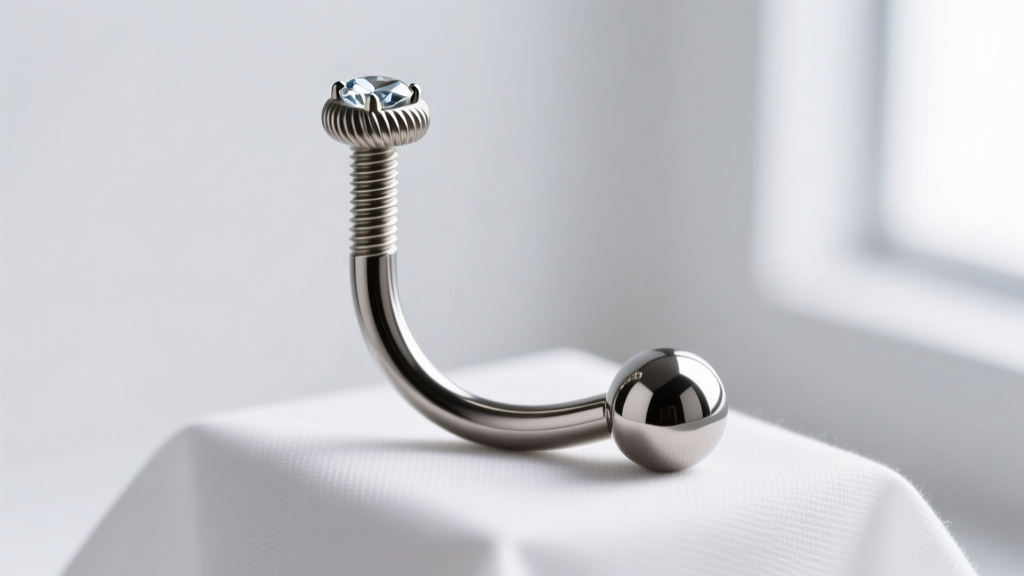
When it comes to belly button piercings, the term "standard navel piercing jewelry" usually refers to a very specific configuration: a 14-gauge (1.6mm) curved barbell, typically 3/8-inch (10mm) or 7/16-inch (11mm) in length, featuring a 5mm top ball and an 8mm bottom ball. While this setup works flawlessly for a large portion of the population, it is not a universal fix. In 2026, professional piercers and dermatologists are seeing a rise in clients attempting to force this standard anatomy profile onto navels that require customized solutions.
If you are experiencing persistent redness, crusting, migration, or the dreaded "cheese-cutter" effect, your standard jewelry might be the culprit. This guide dives deep into the biomechanics of navel piercings, troubleshooting the most common failure modes of standard curved barbells, and providing actionable, expert-level solutions to save your piercing.
The Anatomy Mismatch: Why Standard Sizes Fail
The human navel is essentially a scar left from the umbilical cord, meaning its shape, depth, and tissue density vary wildly from person to person. The standard 7/16-inch curved barbell assumes a moderate upper lip (the fold of skin at the top of the navel) with enough pliability to accommodate the curve of the bar without putting pressure on the fistula (the piercing channel).
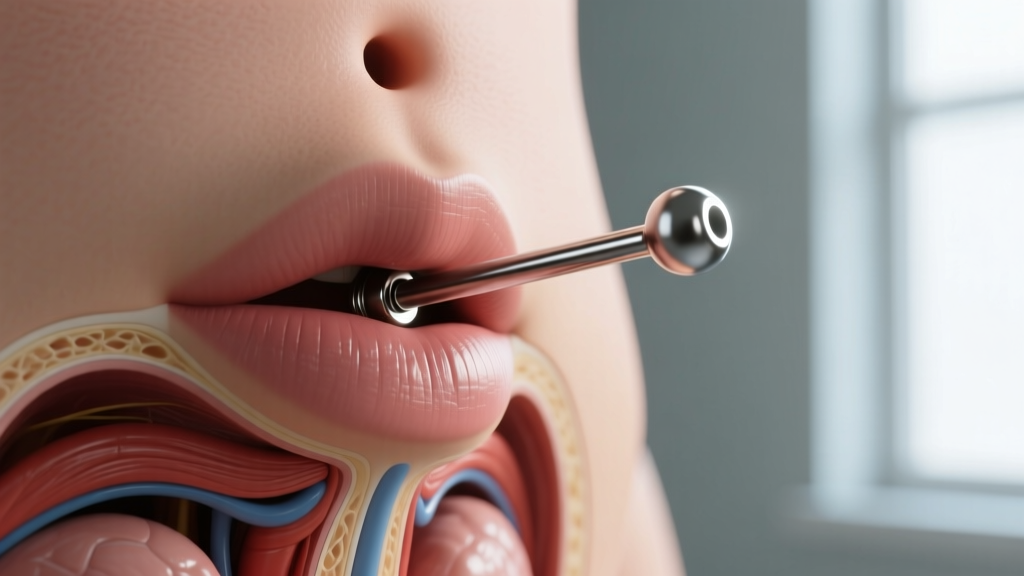
When a client has a deep navel ridge, a shallow upper lip, or a prominent horizontal hood, standard navel piercing jewelry creates immediate mechanical stress. If the bar is too short for a deep ridge, the tissue will swell over the jewelry, leading to embedding. If the bar is too long for a shallow lip, the heavy 8mm bottom ball will swing outward, pulling the top of the bar against the roof of the fistula.
Standard Dimensions vs. Anatomical Needs
| Jewelry Spec | Standard Size | Problematic Anatomy | Troubleshooting Adjustment |
|---|---|---|---|
| Gauge (Thickness) | 14g (1.6mm) | Thin, fragile upper lip tissue | Downsize to 16g (1.2mm) to reduce weight and pressure. |
| Bar Length | 7/16" (11mm) | Deep, prominent navel ridge | Upsize to 1/2" (12mm) or 5/8" (16mm) to prevent embedding. |
| Bar Length | 3/8" (10mm) | Shallow lip, high swelling | Upsize to 7/16" (11mm) during the initial healing phase. |
| Bottom Ball Size | 8mm | Rests against tight clothing | Switch to a 5mm ball or a flat disc (floating navel). |
Troubleshooting Common Standard Jewelry Issues
Before you assume your piercing is rejecting, evaluate the mechanical and chemical environment your jewelry is creating. Here is how to diagnose and fix the three most common issues associated with standard belly rings.
Issue 1: The "Cheese-Cutter" Effect (Migration)
Migration occurs when the body slowly pushes the jewelry outward, thinning the tissue between the piercing holes until it eventually splits. With standard navel piercing jewelry, this is almost always caused by the pendulum effect. The standard 8mm bottom ball is relatively heavy. Every time you bend over, sit down, or wear high-waisted jeans, that bottom ball is pushed upward, leveraging the top of the bar against the delicate roof of your fistula like a cheese-cutter through wax.
The Fix: Remove the heavy bottom ball. Swap the standard 5mm/8mm configuration for a 5mm/5mm setup, or better yet, transition to a "floating navel" setup where the bottom of the bar features a flat, low-profile titanium disc (usually 4mm to 6mm in diameter). This eliminates the downward leverage and allows the tissue to heal and thicken.
Issue 2: Persistent Redness and Crusting (Contact Dermatitis)
If your piercing is constantly weeping clear fluid, forming yellow crusties, and itching intensely, you are likely dealing with allergic contact dermatitis, not an infection. Most cheap or mid-tier "standard" jewelry is made from 316L surgical steel. While 316L is fine for some, it contains 8% to 12% nickel. When exposed to the slightly acidic environment of human sweat and sebum, nickel ions leach into the fistula.
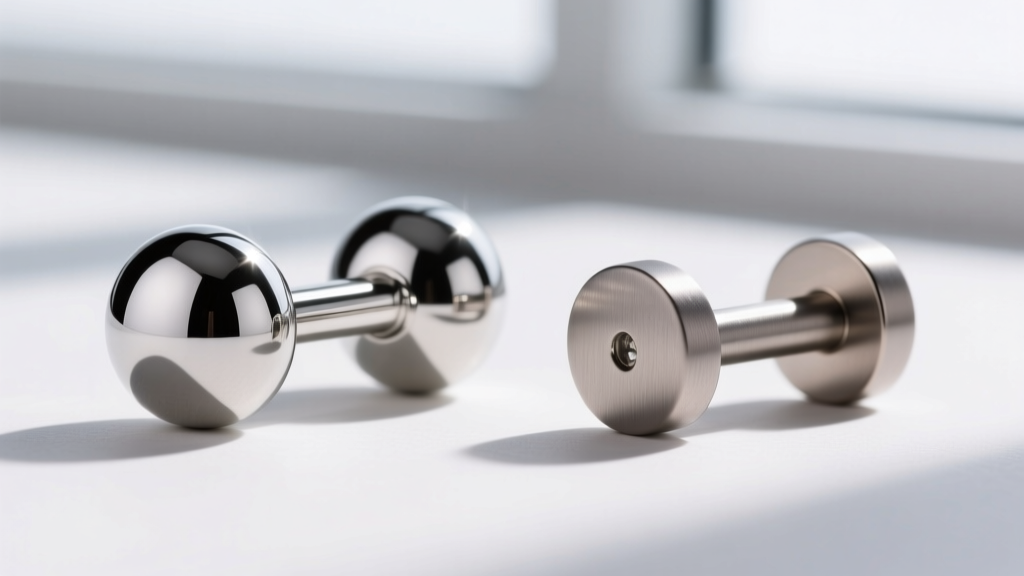
The Fix: You must upgrade your material. According to the Association of Professional Piercers (APP), the gold standard for problematic or healing piercings is implant-grade titanium, specifically ASTM F136 (Ti6Al4V ELI). This alloy contains zero nickel and is highly biocompatible. Expect to pay between $45 and $85 for a high-quality, internally threaded titanium curved barbell from reputable brands like Anatometal, NeoMetal, or Industrial Strength. As noted by the Mayo Clinic, avoiding nickel exposure is the only way to halt allergic contact dermatitis.
Issue 3: Micro-Tears from External Threading
Take a close look at the ends of your standard barbell. If the screw threads are on the outside of the bar (external threading), you are likely causing micro-tears in your fistula every time you change or clean the jewelry. These microscopic scratches harbor bacteria and cause chronic irritation bumps.
The Fix: Discard externally threaded jewelry immediately. Upgrade to internally threaded jewelry (where the screw is on the gem/ball, and the bar is perfectly smooth) or threadless (push-pin) jewelry. Threadless navel barbells, which use tension to hold the ends in place, have become the preferred choice in 2026 for eliminating fistula trauma entirely.
When to Abandon the Standard: Alternative Styles
Sometimes, troubleshooting standard navel piercing jewelry simply isn't enough because the anatomy fundamentally rejects the curved barbell shape. If you have a horizontal navel hood (where the top fold of skin hangs over the navel horizontally rather than vertically), a standard curved bar will sit at an unnatural angle, guaranteeing irritation.
Expert Insight: If your standard barbell sits at an angle greater than 15 degrees off your vertical midline when you are standing straight, you need an anatomical pivot. For horizontal hoods, surface barbells or specialized navel studs designed for hooded anatomy are required to align the jewelry with the natural fold of the tissue.
For "outie" navels (umbilical hernias or protruding scar tissue), standard top-to-bottom piercings are generally contraindicated due to the lack of a stable upper lip. In these cases, professional piercers will often recommend a side-to-side surface bar or a floating navel ring placed on the lower ridge, completely bypassing the standard vertical placement.
Your Troubleshooting Checklist
Before booking an emergency appointment with your piercer, run through this rapid diagnostic checklist to identify exactly what is failing in your current setup:
- Check the Length: Is the tissue swallowing the top or bottom ball? (Needs a longer bar). Is the bar sticking out more than 3mm on either side? (Needs a shorter bar).
- Check the Weight: Does the bottom ball swing and pull the top of the piercing? (Switch to a flat disc or 5mm ball).
- Check the Material: Is the jewelry magnetic or marked only as "surgical steel"? (Upgrade to ASTM F136 Titanium).
- Check the Threading: Are there sharp ridges on the bar itself? (Switch to internal or threadless).
Standard navel piercing jewelry is a great starting point, but it is not a one-size-fits-all mandate. By understanding the exact gauge, length, material, and mechanical forces at play, you can troubleshoot your specific anatomy and transition from a chronically irritated piercing to a comfortable, lifelong accessory.


