Belly Chain Jewelry Trends 2026: Styling With Navel Piercings
Discover 2026 belly chain jewelry trends, material safety guides, and expert styling tips to perfectly pair body chains with your navel piercings.

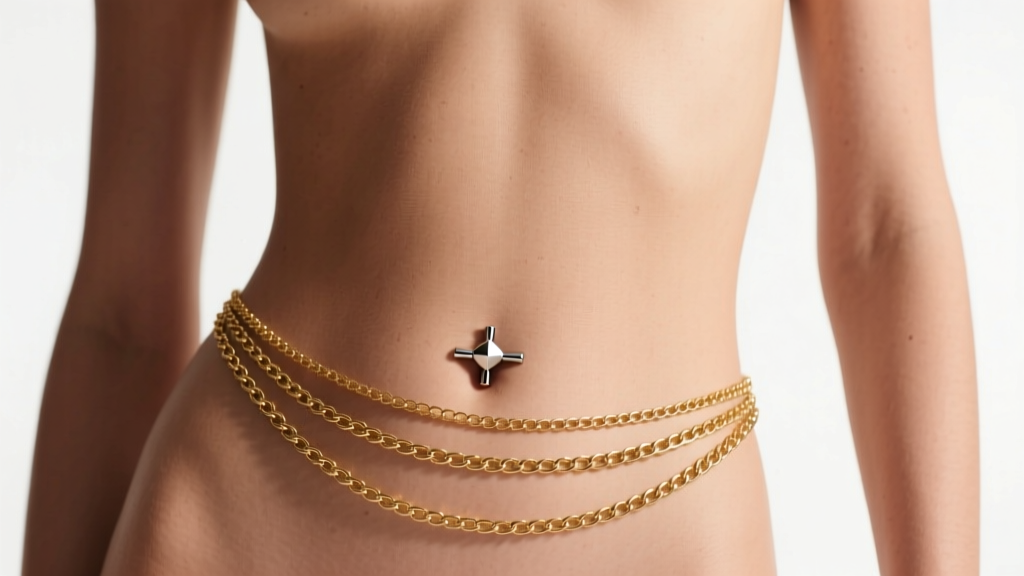
The landscape of midriff styling has undergone a massive transformation. While the early 2000s relied heavily on cheap, mass-produced plastic beads and fragile string, the 2026 approach to belly chain jewelry is rooted in quiet luxury, anatomical precision, and seamless integration with body modifications. Today, body chains are not merely accessories; they are engineered extensions of your navel piercing. Whether you are rocking a classic 14-gauge curved barbell or a modern floating navel setup, understanding how to pair your body jewelry with the correct chain architecture is essential for both aesthetics and tissue health.
The 2026 Renaissance: From Festival Gear to Fine Body Jewelry
The current trend cycle has completely abandoned the tarnish-prone alloy chains of the past decade. In 2026, the market is dominated by solid 14k gold, 18k gold vermeil over sterling silver bases, and, crucially, implant-grade titanium for those with metal sensitivities. The modern aesthetic favors asymmetric drapes, delicate lariat drops that interact directly with the navel ring, and micro-cable chains that mimic the look of liquid metal resting on the skin.
Stylists are now treating belly chain jewelry as a framing device for the navel piercing itself. Instead of competing with a heavy, gemstone-encrusted dangle barbell, the trend is to pair intricate, multi-strand belly chains with minimalist, high-polish navel rings. This creates a visual hierarchy where the chain provides the texture, and the piercing serves as the structural anchor.
Material Safety: What Touches Your Navel Piercing?
When a belly chain drapes across your midriff, it inevitably makes contact with your navel piercing—specifically the fistula (the healed piercing channel) and the jewelry itself. This creates a unique micro-environment where sweat, body oils, and friction can accelerate metal degradation and cause contact dermatitis.
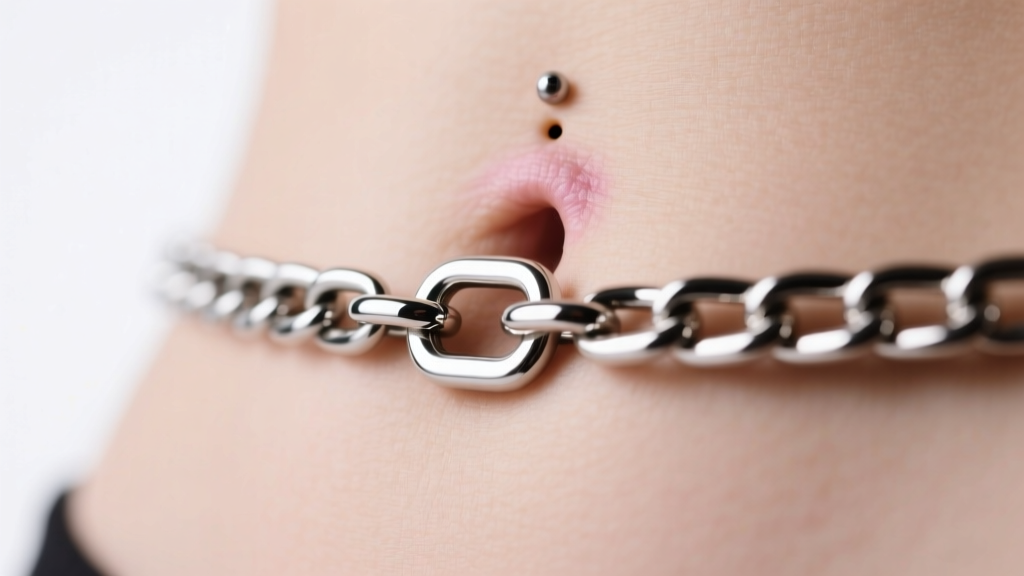
According to the Association of Professional Piercers (APP), only specific materials are safe for prolonged contact with healed and healing piercings. While your belly chain is not technically inserted into the piercing, the constant friction against the external jewelry and surrounding skin demands high biocompatibility.
- ASTM F136 Titanium: The gold standard for sensitive skin. If your navel ring is titanium, ensure your belly chain is either solid titanium or high-karat gold to prevent galvanic corrosion (a reaction that occurs when two dissimilar metals rub together in the presence of moisture).
- Solid 14k or 18k Gold: Excellent for luxury styling, but ensure it is nickel-free. White gold often contains nickel, which can cause severe allergic reactions when trapped against the navel by a tight chain.
- Niobium: A highly reactive metal that is anodized to create vibrant colors without the use of toxic dyes or plating. Anodized niobium chains are a massive trend for 2026, offering safe, colorful alternatives to cheap enamel.
- Materials to Avoid: Brass, copper, and mystery 'surgical steel' (which is unregulated and often contains high nickel). These will oxidize rapidly against the navel and can cause green staining or severe irritation.
Styling Frameworks: Matching Chains to Navel Jewelry Types
Not all belly chain jewelry works with every navel ring. The mechanics of your piercing dictate the architecture of the chain you should wear. Here is a decision matrix for pairing your pieces flawlessly.
| Navel Jewelry Type | Ideal Chain Style | Chain Thickness | Styling Notes |
|---|---|---|---|
| Standard Curved Barbell (14G) | Classic Oval Link / Cable | 1.2mm - 1.5mm | Ensure the center link of the chain is wide enough to slip over the bottom gemstone if you want a connected look. |
| Floating Navel Ring (14G/12G) | Lariat / Y-Chain Drop | 0.8mm - 1.2mm | Floating navels sit deep in the navel cavity. A delicate lariat chain that drops directly into the navel creates a seamless, elongated silhouette. |
| Dangle / Pendant Barbell | Asymmetric Multi-Strand | 1.5mm - 2.5mm | Avoid center-drop chains, which will tangle with the dangle pendant. Opt for chains that sweep to the left or right hip instead. |
| Seamless Clicker Hoop | Layered Micro-Chains | 0.6mm - 1.0mm | Hoops sit flush against the skin. Layering three ultra-fine chains of varying lengths creates a luxurious, bohemian aesthetic without snagging. |
The Mechanics of the 'Skip-Link' Chain
One of the most significant innovations in 2026 belly chain jewelry is the 'skip-link' or 'open-center' chain. Traditional body chains feature a solid clasp or link at the exact center, which can rub aggressively against a standard curved barbell. Skip-link chains feature a 2-inch gap or a series of ultra-wide, smooth links at the navel point. This design intentionally accommodates the 5/16' to 7/16' standard length of a navel barbell, allowing the chain to rest on the skin around the piercing without putting downward pressure on the fistula.
Sizing, Drape, and the 'Belly Button Drop' Metric
Buying a belly chain based solely on total waist circumference is a rookie mistake. The true metric for a flawless fit is the 'Belly Button Drop'—the distance from the natural crease of your navel to the point where you want the chain to rest on your lower abdomen.
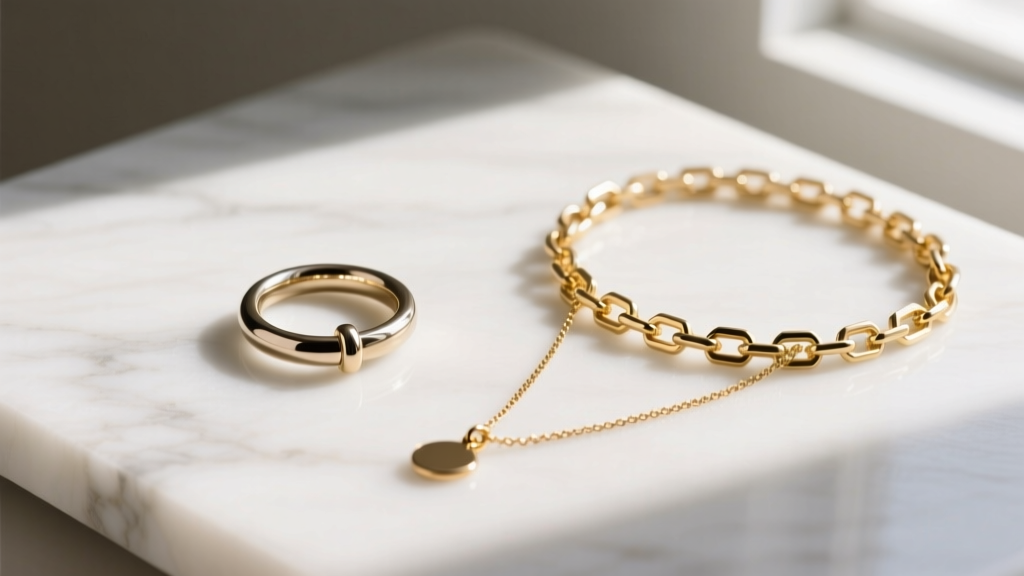
Most off-the-rack belly chains range from 30 to 40 inches in total length. However, torso proportions vary wildly. A 34-inch chain on a short torso will sit high on the waist, while on a long torso, it may droop dangerously close to the hip bones, risking snagging on clothing.
How to Measure for the Perfect Drape
- The Anchor Point: Tie a piece of non-stretch string around your natural waist (the narrowest part of your torso, usually above the navel).
- The Drop Measurement: Measure from the string, down over your navel, to about two inches below your navel. This is your ideal 'drop' length.
- The Hip Circumference: Measure the circumference of your body at that exact drop point, not your natural waist or your widest hip.
- The Clasp Factor: Always opt for chains with a 2-inch to 3-inch extender chain featuring a lobster clasp. Avoid spring-ring clasps, which are notoriously difficult to fasten behind your own back and prone to snapping under the tension of torso movement.
Troubleshooting: Snagging and Friction
The most common complaint among body chain enthusiasts is the chain snagging on the navel jewelry, particularly with prong-set gemstone barbells. If your belly chain repeatedly catches on the bottom gem of your navel ring, you have two actionable solutions:
Solution 1: Upgrade to Bezel-Set Jewelry. Bezel settings encase the gemstone in a smooth metal rim, eliminating the sharp prongs that catch delicate chain links. A 14-gauge titanium bezel-set barbell is the ultimate friction-free anchor for body chains.
Solution 2: The Silicone O-Ring Buffer. If you love your prong-set barbell, slide a tiny, 1mm thick silicone O-ring (available at any reputable piercing studio) onto the barbell just above the bottom gem. This acts as a soft, invisible bumper that prevents metal chain links from sliding down and wedging themselves under the gemstone prongs.
Maintenance: Protecting Your Skin and Your Metals
The midriff is a high-friction, high-moisture zone. Sweat, body lotions, and tanning oils will rapidly degrade lower-quality metals and trap bacteria against your navel piercing. To maintain the integrity of your belly chain jewelry and the health of your piercing, adopt a strict maintenance routine.
Never sleep in your body chain. The tossing and turning of sleep creates immense shear force, which can bend delicate links, break clasps, and worse, cause the chain to pull aggressively on your navel ring, leading to piercing migration or rejection. After wearing, gently wash the chain with a mild, fragrance-free antibacterial soap and warm water. For solid gold and titanium pieces, an occasional three-minute bath in an ultrasonic jewelry cleaner will restore the mirror finish and remove microscopic skin cells trapped in the links. Always ensure the chain is 100% dry before storing it in an anti-tarnish pouch to prevent oxidation.
By treating belly chain jewelry as a specialized, anatomical accessory rather than a disposable fashion trend, you elevate your midriff styling to a level of sophisticated, body-positive luxury that defines the 2026 aesthetic.


