Belly Button Earrings Material Guide: Titanium vs Gold vs Steel
Discover the safest metals for belly button earrings. Compare implant-grade titanium, solid gold, and steel for healing and long-term navel wear.

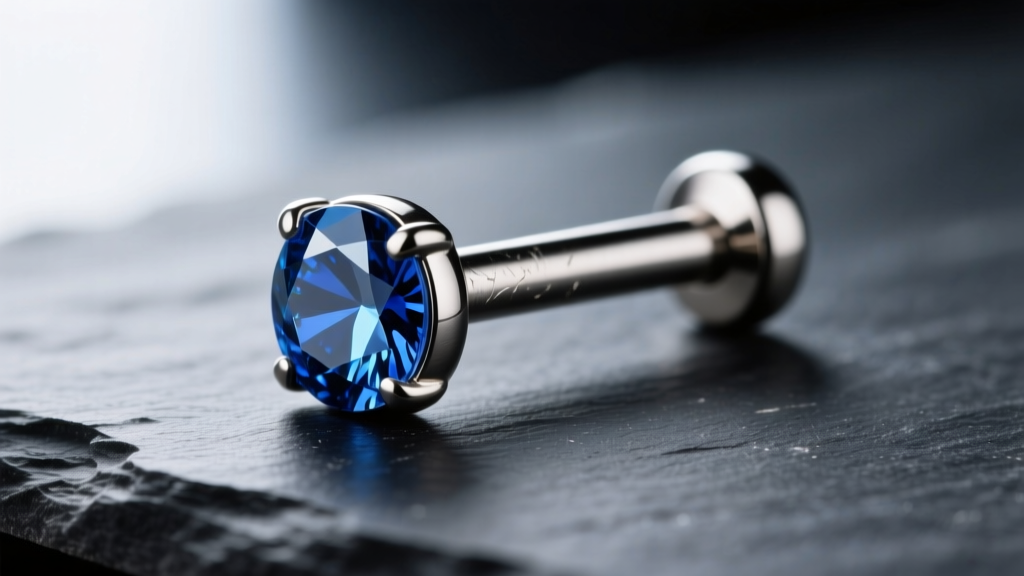
When shoppers search for "belly button earrings," they are typically referring to the wide array of navel barbells, dangles, rings, and floating jewelry designed for the umbilical piercing. While the terminology might borrow from ear piercings, the anatomical reality of the navel demands a much stricter approach to metallurgy. The navel is a high-movement, high-friction area that traps sweat, dead skin cells, and bacteria, making the material of your jewelry the single most critical factor in both healing and long-term comfort.
Not all metals are created equal. A material that performs perfectly in a sterile earlobe can cause severe contact dermatitis, galvanic corrosion, or rejection in the navel. In this comprehensive guide, we break down the exact material grades, alloy compositions, and biocompatibility standards you need to know before purchasing your next piece of navel jewelry.
The Big Three: Implant-Grade Titanium, Solid Gold, and Niobium
For initial piercings, fresh heals, and long-term sensitive wear, the Association of Professional Piercers (APP) recognizes only a select few materials as truly biocompatible. Here is how the top-tier metals compare.
ASTM F-136 Implant-Grade Titanium (The Gold Standard)
If there is one material every navel piercing enthusiast should own, it is implant-grade titanium. Specifically, you want to look for Ti6Al4V ELI (Extra Low Interstitial) that meets the ASTM F-136 or ISO 5832-3 standards. This is the exact same alloy used in medical joint replacements and pacemaker casings.
- Nickel Content: 100% Nickel-free.
- Weight: Roughly 45% lighter than surgical steel, reducing drag and migration risks in the heavy tissue of the navel.
- Surface Finish: High-quality titanium can be polished to a mirror finish (Ra < 0.2 µm), which prevents bacteria from harboring in microscopic scratches.
- Price Range: $35 to $85 for basic barbells; $90 to $150+ for gem-set or threaded ends.
14k vs. 18k Solid Gold (Alloy Breakdown)
Gold is a classic choice for luxury belly button earrings, but pure 24k gold is far too soft for body jewelry. It must be alloyed for durability, which is where the danger lies. For navel wear, you must ensure the gold is alloyed with palladium or silver, never nickel.
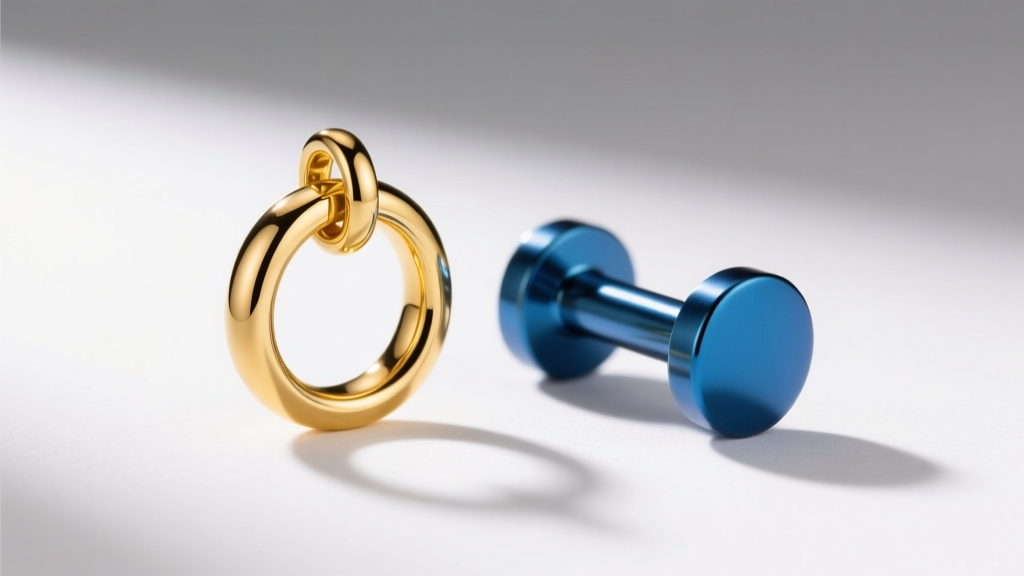
- 14k Gold (58.5% Gold): Harder and more durable, making it excellent for the threaded ends or decorative dangles of a navel barbell. It resists scratching from belt buckles and waistbands.
- 18k Gold (75% Gold): Softer, richer in color, and highly biocompatible, but more prone to surface marring. Best for healed piercings.
- Price Range: $120 to $350+ depending on the brand (e.g., BVLA, Anatometal) and gemstone settings.
Niobium (The Hypoallergenic Alternative)
Niobium is an elemental metal (not an alloy), meaning it contains absolutely no hidden nickel or reactive metals. It is highly malleable, allowing piercers to customize the curve of a navel ring to fit your specific anatomy. While it cannot be mirror-polished to the same extreme as titanium, it can be anodized using electricity to create vibrant, permanent colors without the use of toxic dyes or paints.
Materials to Avoid or Use With Extreme Caution
The mass market is flooded with cheap metals labeled with deceptive marketing terms. Understanding the metallurgy behind these labels will save you from months of irritation bumps and contact dermatitis.
"Surgical" Stainless Steel (The Nickel Trap)
The term "surgical steel" is unregulated and largely a marketing gimmick. Most belly button earrings sold in mall kiosks and fast-fashion retailers are made from 316L stainless steel. While 316L is fine for scalpels that are used once and thrown away, it is terrible for long-term implantation. 316L steel contains between 8% and 10% nickel. When exposed to the saline environment of human sweat, the steel can leach nickel ions directly into the piercing fistula, triggering severe allergic reactions, hypergranulation, and eventual rejection.
Sterling Silver and Plated Metals
Sterling silver (92.5% silver, 7.5% copper) should never be worn in a navel piercing. The copper content reacts with oxygen and bodily fluids to create silver sulfide (tarnish). This tarnish can permanently stain the inside of your piercing channel black—a condition known as localized argyria. Similarly, gold-plated or PVD-coated brass jewelry will eventually wear down due to the friction of clothing, exposing the highly reactive base metals underneath.
Material Comparison Chart
| Material | Standard / Grade | Nickel Content | MRI Safe? | Best Use Case |
|---|---|---|---|---|
| Implant Titanium | ASTM F-136 | None | Yes | Initial piercings, sensitive healed navels |
| Niobium | Elemental (Unalloyed) | None | Yes | Custom curved rings, anodized colors |
| 14k/18k Gold | Palladium Alloyed | None (if verified) | Yes (mostly) | Luxury ends, healed piercing dangles |
| Surgical Steel | 316L / ASTM F-138 | 8% - 10% | No (Magnetic) | Only for fully healed, non-sensitive navels |
| Sterling Silver | 925 | Varies | No | NEVER for body piercing |
Specialized Materials: PTFE and Bioplast for Pregnancy
The navel undergoes drastic changes during pregnancy, stretching and protruding as the abdomen expands. Rigid metals can cause tearing or migration during this period. This is where flexible polymers come into play, but not all plastics are safe.
PTFE (Polytetrafluoroethylene)
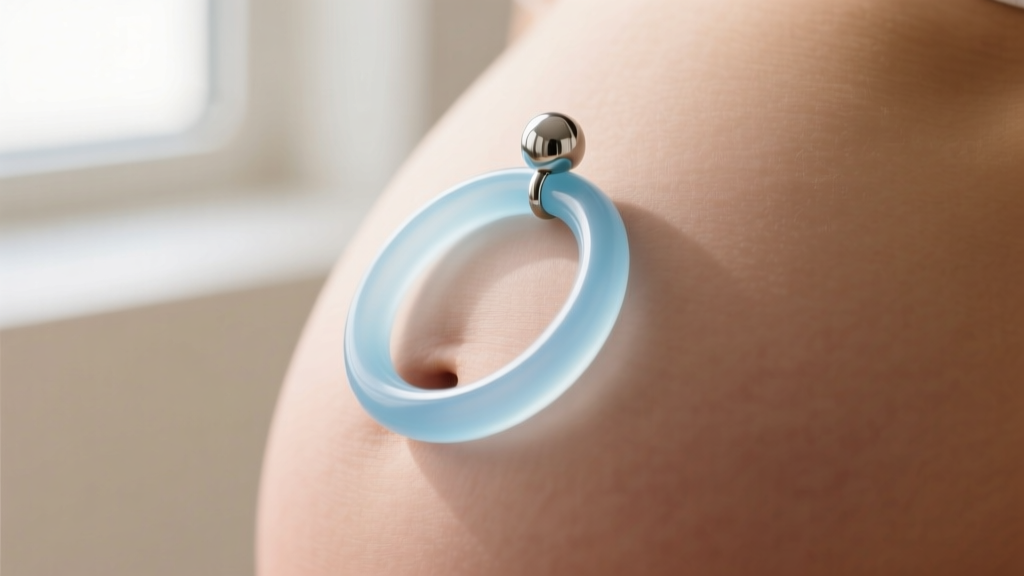
Often known by the brand name Teflon, PTFE is the gold standard for maternity belly button jewelry. It is incredibly flexible, biologically inert, and can withstand extreme temperatures. Crucially, PTFE is autoclavable, meaning it can be sterilized in a clinical setting. A standard 14-gauge (1.6mm) PTFE barbell with implant-grade titanium end balls provides the perfect balance of flexibility and safe threading.
Bioflex / Acrylic
Bioflex is a type of medical-grade plastic that is flexible and hypoallergenic, but it is not autoclavable. It degrades under high heat and harsh chemicals. Furthermore, acrylics are porous on a microscopic level, meaning they can harbor bacteria over time. While acceptable for short-term wear during the third trimester, PTFE remains the superior, safer choice for the duration of a pregnancy.
How to Verify Your Jewelry's Material Claims
Because terms like "hypoallergenic" and "surgical" are not legally protected in the jewelry industry, you must act as your own advocate. When buying high-end belly button earrings or barbells, demand transparency.
Pro-Tip: Reputable manufacturers like Industrial Strength, NeoMetal, and BVLA provide Mill Certificates upon request. These documents trace the exact batch of metal back to the foundry, proving its ASTM compliance and elemental breakdown. If a brand cannot provide proof of their titanium or gold grading, do not put it in your body.
For titanium, you can also look for the anodization signature. While raw titanium is a dull silver, professional piercers use a rectifier to grow a controlled oxide layer on the surface, turning it gold, rose, blue, or purple. If your "titanium" jewelry is painted or plated rather than anodized, it is likely a cheaper base metal masquerading as the real thing.
Sizing Matters Just as Much as Material
Even the purest ASTM F-136 titanium will cause irritation if the sizing is wrong. The standard gauge for navel piercings is 14g (1.6mm), though some anatomies require 12g (2.0mm) to prevent the "cheese-cutter effect" (where thin wire slowly migrates through the tissue). The standard length for a curved barbell is 3/8" (10mm) for healed navels, but initial piercings usually require 7/16" (11mm) to 1/2" (12mm) to accommodate swelling. Always have a professional piercer measure your fistula with digital calipers before ordering custom lengths.
Final Thoughts on Navel Metallurgy
Upgrading your navel jewelry is an investment in your body's health. By moving away from porous, nickel-laden "surgical" steels and embracing verified implant-grade titanium, palladium-alloyed gold, or pure niobium, you eliminate the root causes of chronic irritation. Whether you are searching for your first healing barbell, a luxurious gold dangle, or a flexible PTFE maternity ring, always prioritize verified material grades over flashy designs. Your piercing will reward you with a lifetime of comfortable, complication-free wear.


