Using an Earring in Belly Button Piercings: Material Safety Guide
Discover why using a standard earring in belly button piercings causes rejection, and learn which implant-grade materials ensure safe healing.

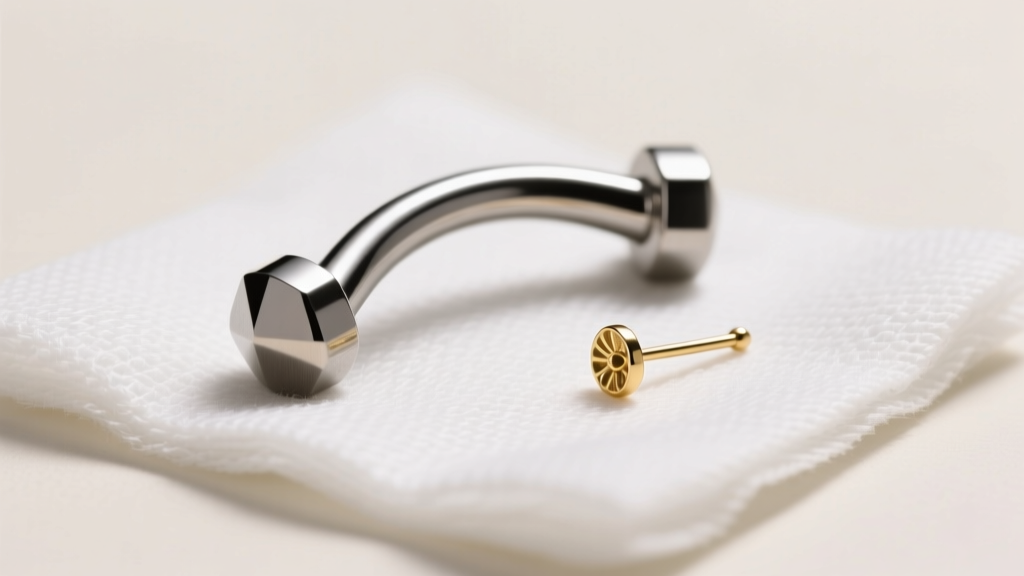
When browsing jewelry stores or looking through your personal collection, you might be tempted to ask: can I put an earring in belly button piercings? It is a common question, especially among those who have just had their navel pierced and want to swap out the initial jewelry for something sparkly, or those looking to save money by repurposing earlobe studs. However, treating a navel piercing like an earlobe piercing is one of the fastest ways to trigger migration, severe allergic reactions, and permanent scarring.
The navel is a highly mobile, dense fold of tissue that undergoes constant friction from clothing, bending, and sitting. Standard earrings are simply not engineered to withstand this environment, nor are their materials always safe for deep-tissue fistulas. In this comprehensive guide, we will break down the exact metallurgical and mechanical reasons why using an earring in belly button piercings fails, and outline the specific material grades you must look for to ensure a healthy, lifelong piercing.
The Mechanical Mismatch: Why Earlobe Jewelry Fails in Navels
Before we even discuss metal composition, we must address the structural incompatibility of standard earrings. Earlobe jewelry and navel jewelry are engineered for entirely different anatomical environments.
The Gauge Discrepancy and the Cheese-Cutter Effect
Standard earlobe earrings are typically crafted in 20-gauge (0.81mm) or 18-gauge (1.02mm) thicknesses. In contrast, a standard navel piercing is performed at 14-gauge (1.6mm), and sometimes 12-gauge (2.0mm) for heavier tissue folds. If you manage to force a thin 20-gauge earring post through a 14-gauge navel fistula, you introduce the dreaded 'cheese-cutter effect.' Because the wire is so thin, the natural weight of the jewelry and the tension of your abdominal skin will cause the wire to slowly slice downward through the tissue. This leads to rapid migration and eventual rejection, where the body simply pushes the jewelry out through the skin.
Post Length and Curvature
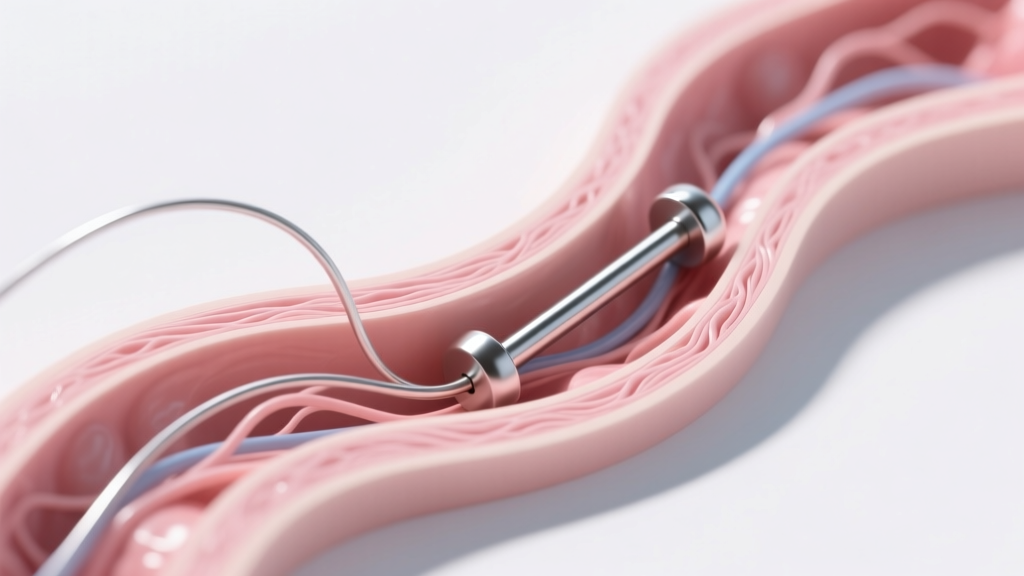
Earlobe studs feature straight posts with flat backs or butterfly clutches. The navel requires a curved barbell to accommodate the natural outward roll of the abdominal tissue. A straight earring post will create severe pressure points at the entry and exit holes, leading to localized necrosis, hypergranulation tissue (those pesky red bumps), and chronic irritation.
Material Breakdown: Standard Earrings vs. Navel-Safe Metals
Even if you find a curved earring, the metal composition of commercial fashion jewelry is rarely suitable for the harsh, high-friction environment of the navel. The Association of Professional Piercers (APP) strictly advises against several common metals found in standard earrings due to their porosity and nickel content.
| Metal Type | Nickel Content | Surface Porosity | Navel Safety Rating |
|---|---|---|---|
| Sterling Silver (925) | Variable (often contains copper/nickel alloys) | High (Oxidizes and tarnishes rapidly) | Unsafe (Causes argyria and irritation) |
| Surgical Steel (316L) | High (8-10% Nickel) | Low (but traps bacteria in scratches) | Poor (High allergy risk for healing navels) |
| Gold-Plated Brass | Extremely High (Base metal is highly reactive) | High (Plating flakes off in the fistula) | Dangerous (Causes severe contact dermatitis) |
| Implant-Grade Titanium | Zero (Nickel-Free) | None (Mirror polish resists bacterial adhesion) | Excellent (The absolute gold standard) |
| Solid 14k/18k Gold | Zero (If specifically alloyed nickel-free) | None (Highly biocompatible) | Excellent (Safe for fully healed navels) |
The Danger of Sterling Silver and Plated Metals
Sterling silver is notoriously bad for navel piercings. Silver reacts with the sulfur in your sweat and the natural moisture of a healing fistula, creating silver sulfide (tarnish). When this tarnish builds up inside the piercing channel, it can permanently stain the surrounding tissue black—a condition known as localized argyria. Similarly, gold-plated earrings will quickly wear off inside the abrasive navel environment, exposing your body to the raw brass or nickel-heavy base metals underneath, triggering aggressive immune responses.
The Only Safe Materials for Navel Piercings
If you want to avoid the pitfalls of using a standard earring in belly button piercings, you must invest in jewelry specifically manufactured for deep-tissue wear. Here are the only materials you should trust.
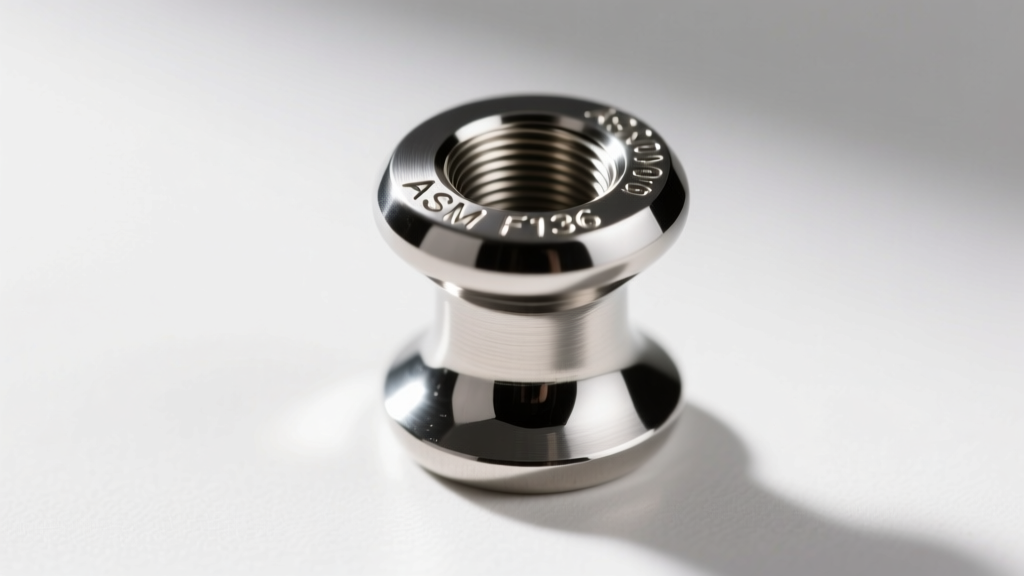
ASTM F136 Implant-Grade Titanium
This is the undisputed champion of navel jewelry. Specifically, you need to look for Ti6Al4V ELI (Extra Low Interstitial) alloy, which complies with ASTM F136 or ISO 5832-3 standards. This is the exact same grade of titanium used in medical joint replacements and bone screws. It is completely nickel-free, non-magnetic, and can be polished to a mirror finish that prevents bacteria from taking hold in microscopic scratches. Brands like Neometal and Industrial Strength manufacture internally threaded titanium barbells that are essential for safe navel wear.
Niobium
Niobium is a highly reactive element that is remarkably biocompatible. Unlike titanium, it cannot be easily welded, so it is usually used for seamless rings or specially machined barbells. It is entirely nickel-free and can be anodized using electricity to create vibrant, permanent colors without the use of toxic dyes or paints. It is slightly heavier than titanium, which some people prefer for the stabilizing weight it provides in a navel piercing.
Solid 14k or 18k Gold (Nickel-Free)
Gold is safe, but only if it is solid and properly alloyed. White gold is frequently alloyed with nickel to achieve its silver color, making it a massive risk for navel piercings. You must seek out yellow or rose gold that is explicitly certified as nickel-free and cadmium-free by the manufacturer. Furthermore, gold should only be worn in fully healed navels; the microscopic pores in gold can harbor bacteria during the initial 6-to-12-month healing phase.
Real-World Troubleshooting: Signs of Material Rejection
If you have previously used a standard earring in your navel, or if you bought cheap 'surgical steel' from a mall kiosk, your body may be silently rejecting the metal. Watch for these specific clinical signs:
- Hypergranulation:Shiny, red, weeping bumps forming around the entry or exit holes. This is often caused by the friction of a poorly fitted earring post combined with metal sensitivity.
- The 'Green Skin' Effect:If the skin around your navel turns green or black, the copper or silver in your jewelry is oxidizing against your sweat. Remove the jewelry immediately.
- Itching and Flaking:A persistent, dry, itchy rash directly surrounding the piercing site is the hallmark of allergic contact dermatitis, almost always triggered by nickel leaching from 316L surgical steel.
- Migration (The Cheese-Cutter):If the distance between your piercing hole and the edge of your skin is visibly shrinking, or if you can see the dark shadow of the barbell just beneath the skin, your body is pushing it out. Downsize to a thicker, properly curved titanium barbell immediately to halt the process.
Expert Sizing Cheat Sheet for Navel Jewelry
To completely eliminate the temptation to use an earring in belly button piercings, keep this sizing cheat sheet handy when shopping for high-quality replacements. Proper fit is just as critical as proper material.
- Standard Gauge:14g (1.6mm). Never go thinner than 12g (2.0mm) or thicker than 16g (1.2mm) unless specifically advised by a professional piercer for anatomical reasons.
- Standard Curve Length:3/8' (10mm) or 7/16' (11mm). This refers to the distance between the two beads on a curved barbell. If the bar is too long, it will snag on high-waisted jeans; if it is too short, it will compress the tissue and cause swelling-induced embedding.
- Threading:Always choose internally threaded (the screw is on the ball, not the bar) or threadless (push-pin) jewelry. External threads act like a cheese grater on the delicate fistula tissue every time you change the jewelry.
Final Verdict
The search for the perfect navel accessory should never lead you back to the earring display case. The mechanical forces of the abdomen, combined with the high risk of nickel exposure and tissue tearing, make standard earrings a liability to your piercing's health. By investing in ASTM F136 implant-grade titanium or properly alloyed solid gold, and ensuring your jewelry features a 14-gauge curved profile, you guarantee that your navel piercing remains a beautiful, permanent fixture rather than a temporary, painful mistake. Always consult with an APP-certified professional piercer to verify your jewelry's material certifications and exact anatomical fit.


