Material Guide to Standard Belly Button Piercing Jewelry
Compare implant-grade titanium, 316L steel, and bioplast for standard belly button piercing jewelry. Find the safest metals for healing.

Defining the Baseline: What Makes Jewelry 'Standard'?
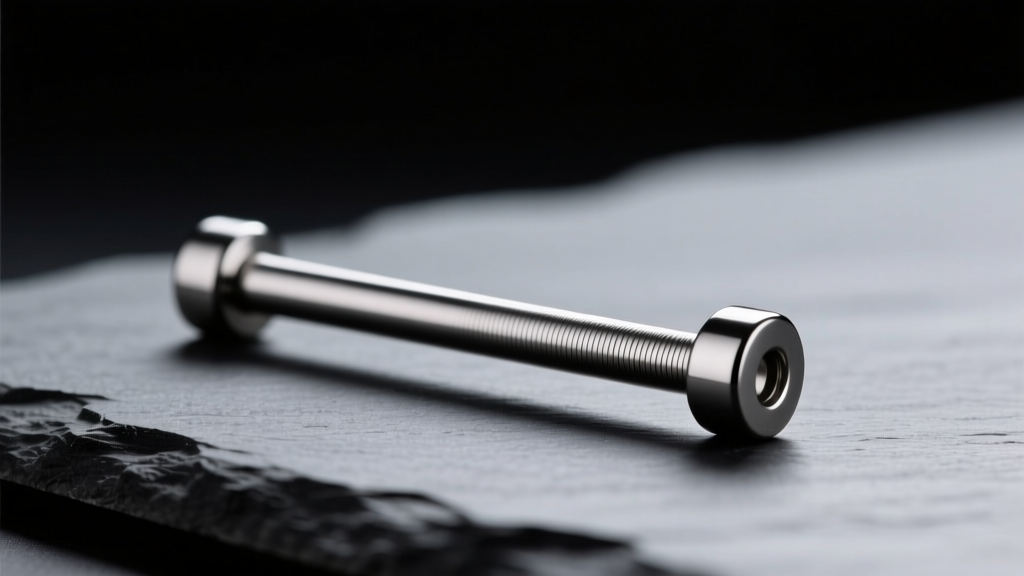
When professional piercers refer to standard belly button piercing jewelry, they are referencing a very specific set of dimensional and structural baselines. The vast majority of navel piercings are performed at 14-gauge (1.6mm). While 16-gauge (1.2mm) and 12-gauge (2.0mm) exist for specialized anatomies or stretching, 14g remains the universal industry standard. The standard length for a healed navel typically ranges from 3/8-inch (10mm) to 7/16-inch (11mm), though initial healing jewelry often requires a 1/2-inch (12mm) or 5/8-inch (16mm) bar to accommodate swelling.
Beyond dimensions, the structural standard is the curved barbell. The curvature is designed to follow the natural contour of the navel tissue, minimizing pressure points and reducing the risk of migration or rejection. However, dimensions are only half the battle. The metallurgical properties of the jewelry dictate how your immune system interacts with the fistula (the piercing channel). Choosing the wrong alloy can lead to chronic inflammation, hypergranulation, and eventual rejection.
Implant-Grade Titanium (ASTM F136): The Undisputed Gold Standard
For fresh piercings and sensitive healed navels, implant-grade titanium is the undisputed champion. Specifically, you must look for ASTM F136 or ASTM F1295 compliant titanium (Ti6Al4V ELI). This specific alloy is entirely nickel-free and is the exact same metal used in orthopedic joint replacements and pacemakers.
Surface Finish and Bacterial Adhesion
One often-overlooked property of high-quality titanium is its ability to achieve a flawless mirror polish. Brands like Anatometal and NeoMetal utilize specialized tumbling and polishing techniques that eliminate microscopic scratches. A mirror finish is critical because microscopic grooves harbor bacteria and dead tissue, which can trigger chronic low-grade infections in the navel. Furthermore, titanium is highly biocompatible and promotes faster cellular adhesion during the initial healing phase.
The Advantage of Anodizing
Titanium can be anodized to create a spectrum of colors without using paints or dyes. Anodizing alters the thickness of the oxide layer on the metal's surface, refracting light to produce colors like gold, rose gold, deep blue, or teal. This process is 100% safe and does not compromise the metal's hypoallergenic properties.
316L Surgical Steel: The Budget-Friendly Alternative
316L VM (Vacuum Melted) stainless steel, governed by ASTM F138, has been the historical workhorse of the body modification industry. It is highly durable, resistant to corrosion, and significantly cheaper than titanium. For individuals with fully healed navels and no metal sensitivities, 316L steel remains a viable and aesthetically pleasing option.
The Nickel Leaching Problem
The primary failure mode of surgical steel is its nickel content. 316L steel contains between 8% and 10.5% nickel. While the 'L' stands for low carbon and the vacuum melting process creates a protective chromium oxide passivation layer, this layer can be compromised. Micro-abrasions from daily friction, exposure to harsh chemicals, or even the natural pH of your sweat can degrade the passivation layer, allowing nickel ions to leach into the tissue. According to the Mayo Clinic, nickel is the leading cause of allergic contact dermatitis. If your navel becomes itchy, red, or develops a rash after wearing steel, you are likely experiencing a nickel allergy, and you must switch to titanium immediately.
Expert Warning: Never use 'surgical steel' for a fresh, unhealed navel piercing. The term 'surgical' is a marketing misnomer; it refers to the steel's use in non-implant surgical tools (like scalpels), not long-term implantable jewelry.
Flexible Polymers: Bioplast and PTFE
Polymers offer a non-metallic alternative, primarily utilized for specific lifestyle or physiological needs. The two most common materials are Bioplast (Bioflex) and PTFE (Teflon).
Maternity and Athletic Applications
Bioplast is a medical-grade thermoplastic that is flexible, autoclavable, and completely metal-free. It is the standard recommendation for pregnant women whose abdomens are expanding, as a standard curved barbell could cause tearing or migration. Similarly, athletes involved in contact sports often use Bioplast to prevent the jewelry from catching and tearing the navel. PTFE is also flexible and chemically inert, but unlike Bioplast, it cannot be autoclaved and degrades faster under UV exposure and body heat, requiring more frequent replacement.

Comprehensive Material Comparison Matrix
To help you make an informed purchasing decision, we have compiled a data-driven comparison of the most common materials used in standard belly button piercing jewelry.
| Material | Industry Standard | Nickel Content | Approx. Price Range (14g) | Best Use Case |
|---|---|---|---|---|
| Implant-Grade Titanium | ASTM F136 / F1295 | 0% (Nickel-Free) | $25 - $80+ | Fresh piercings, sensitive skin, long-term wear |
| 316L Surgical Steel | ASTM F138 | 8% - 10.5% | $10 - $25 | Healed navels, budget-conscious buyers |
| Solid 14k/18k Gold | Nickel-Free Alloy | 0% (If properly alloyed) | $150 - $450+ | Luxury long-term wear, healed piercings |
| Bioplast (Bioflex) | Medical Grade PVC | 0% | $8 - $15 | Pregnancy, sports, MRI scans, metal allergies |
| PTFE (Teflon) | ASTM F754 | 0% | $10 - $20 | Short-term flexibility needs, hidden piercings |
Solid Gold: The Luxury Caveat
Gold is a premium choice for standard belly button piercing jewelry, but it requires strict vetting. Only 14-karat or 18-karat solid gold should be worn. Anything higher (like 24k) is too soft and will easily scratch, warp, and harbor bacteria. Anything lower (like 10k) contains too many base metals. Crucially, you must verify that the gold is alloyed with palladium or silver, not nickel. Many cheap 'white gold' pieces use nickel as a whitening agent, which will cause severe reactions. Never wear gold-plated or gold-filled jewelry; the plating will inevitably wear off inside the warm, moist environment of the navel, exposing the reactive brass or copper core.
Threading and Sourcing: Protecting Your Fistula
The material is only as good as its manufacturing. According to the Association of Professional Piercers (APP), the threading mechanism of your jewelry is vital for tissue health. Externally threaded jewelry (where the screw is on the barbell) acts like a cheese grater when inserted, tearing the delicate fistula and introducing metal shavings into the wound. Always opt for internally threaded (the screw is on the decorative end) or threadless (push-pin) jewelry.
How to Verify Authenticity
When purchasing titanium, reputable vendors should be able to provide a mill certificate proving the metal meets ASTM F136 standards. Avoid unverified marketplaces like Amazon, AliExpress, or fast-fashion retailers, where 'titanium' claims are frequently unsubstantiated and often mask cheap, nickel-heavy alloys. Invest in verified brands such as Industrial Strength, NeoMetal, Anatometal, or BVLA to ensure your navel remains healthy, vibrant, and beautifully adorned for years to come.


