How to Buy the Perfect 1 Carat Diamond Heart Necklace
Discover how to choose a stunning 1 carat diamond heart necklace. Learn about the 4Cs, ideal settings, chain lengths, and pricing in our beginner guide.

The Appeal of the 1 Carat Heart-Cut Diamond
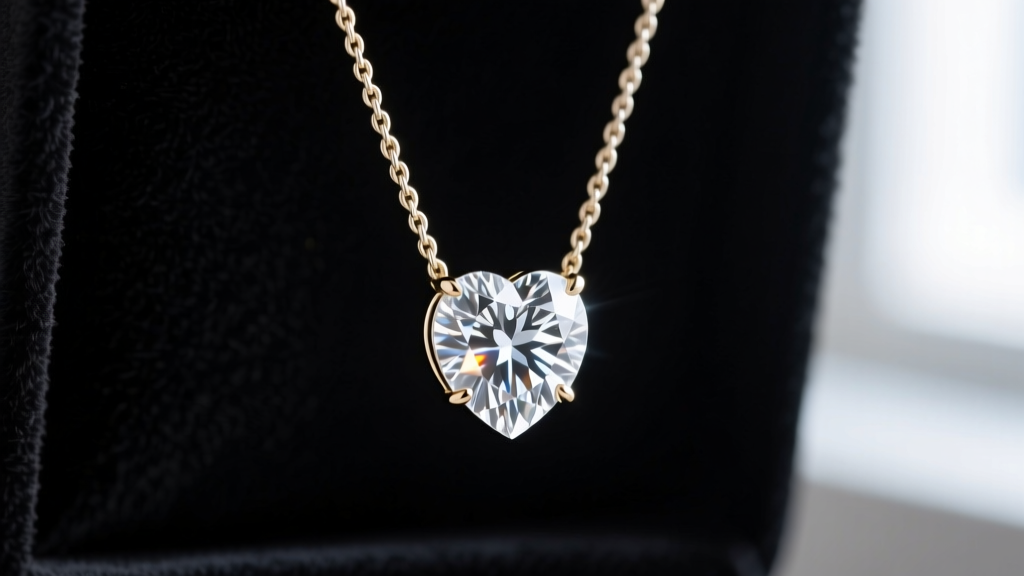
When it comes to romantic and symbolic jewelry, few pieces carry the emotional weight of a heart-shaped pendant. However, selecting the right stone requires more than just picking a pretty shape. A 1 carat diamond heart necklace sits in the ultimate sweet spot for fine jewelry: it is large enough to showcase the intricate cleft and rounded lobes of the heart shape, yet perfectly scaled for everyday wear as a pendant. Unlike round brilliants, which are forgiving in smaller sizes, heart-cut diamonds generally require a minimum weight of 0.50 carats just to maintain their distinct silhouette. At exactly 1.00 carat, the diamond typically measures around 6.5mm by 6.5mm, offering a brilliant canvas that captures light beautifully without overwhelming the neckline.
In this beginner-friendly explainer, we will break down the exact specifications, setting requirements, and chain pairings you need to know to make a confident, informed purchase in today's market.
Mastering the 4Cs for Heart-Shaped Diamonds
The Gemological Institute of America (GIA) established the 4Cs as the universal standard for diamond grading. However, the rules shift slightly when dealing with fancy shapes like the heart cut.
Cut and Symmetry: The Dealbreakers
Cut quality dictates a diamond's brilliance, but for heart shapes, symmetry is the most critical factor. If the two halves of the heart are not perfectly mirrored, the stone will look lopsided when resting on the chest.
- Length-to-Width Ratio: Aim for a ratio between 0.95 and 1.05. A ratio of 1.00 yields a perfectly balanced, classic heart.
- The Cleft: The dip at the top of the heart should be distinct but not so deep that it creates a fragile pinch point.
- The Bow-Tie Effect: Many fancy shapes suffer from a dark 'bow-tie' shadow across the center. Always request high-resolution video of the stone to ensure this shadow is minimal.
Color and Clarity Recommendations
Because of the complex facet pattern at the tip of a heart diamond, color can sometimes concentrate and become more visible.
- Color: Stick to the near-colorless range of G or H. Going lower (like J or K) risks a noticeable yellow tint at the pointed tip, especially when set in white gold or platinum.
- Clarity: A grade of VS2 or SI1 is generally sufficient, provided the diamond is 'eye-clean.' Crucially, ensure there are no dark inclusions located directly at the tip or the cleft, as these areas are already structurally vulnerable.
The Best Settings for Heart Pendants
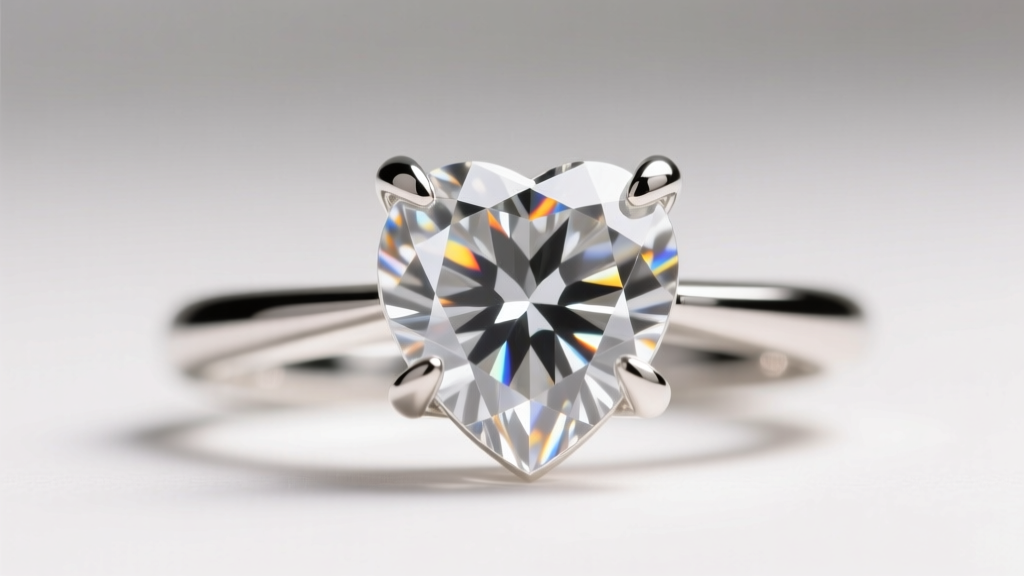
A heart diamond has five distinct stress points: the two rounded lobes, the two side edges, and the sharp bottom tip. Therefore, a standard 4-prong setting used for round diamonds is entirely inadequate and dangerous for this shape.
Expert Rule of Thumb: Never set a 1 carat heart diamond without a V-tip prong. The sharp bottom point is highly susceptible to chipping if struck against a hard surface. A custom V-shaped metal cap protects this vulnerable apex.
For a 1 carat stone, you should look for a 5-prong setting. This configuration places one V-prong at the bottom tip, two prongs securing the top cleft, and two prongs holding the rounded sides. This not only ensures maximum security but also frames the 6.5mm stone beautifully without obscuring its outline. Bezels are another option, but they tend to hide the delicate cleft, making the stone look more like a triangle or pear from a distance.
Chain Selection: Matching the Pendant
The chain you choose must support the weight of a 1 carat diamond (which usually weighs around 0.2 grams) plus the metal setting, without overpowering the delicate silhouette of the heart. According to the GIA Diamond Shapes Guide, the visual proportion of the jewelry piece is just as important as the stone itself.
| Chain Type | Ideal Gauge (Thickness) | Best For | Durability |
|---|---|---|---|
| Cable Chain | 0.9mm - 1.1mm | Classic, minimalist looks | Good (but can kink) |
| Box Chain | 1.0mm - 1.2mm | Modern, geometric pendants | Excellent |
| Rope Chain | 1.2mm - 1.5mm | Vintage or ornate settings | Very High |
| Wheat Chain | 1.0mm - 1.2mm | Intricate, woven aesthetics | Excellent |
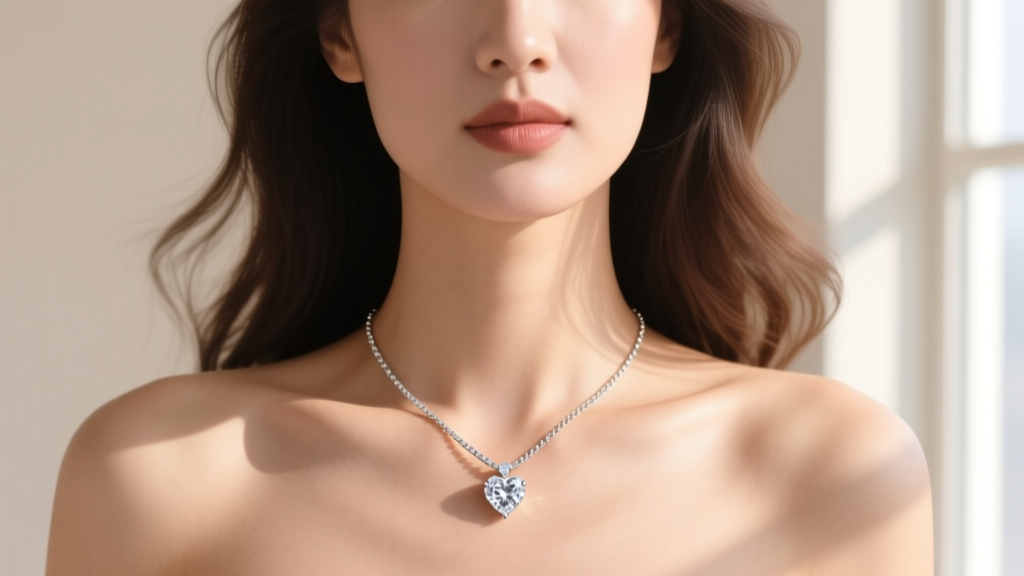
For a 1 carat heart pendant, a 16-inch or 18-inch cable or box chain in 14k or 18k gold is the industry standard. A 16-inch chain sits snugly on the collarbone (choker style), drawing the eye directly to the diamond, while an 18-inch chain rests just below the collarbone, offering a more relaxed, traditional drape.
Pricing: Natural vs. Lab-Grown in 2026
Understanding the current market landscape is vital for budgeting. The pricing for a 1 carat diamond heart necklace varies wildly based on the stone's origin, the 4Cs, and the precious metal used for the setting.
- Natural Earth-Mined Diamonds: Expect to pay between $4,500 and $8,500 for a well-cut, G-H color, VS2 clarity 1 carat heart diamond. Add $400 to $800 for a quality 14k or 18k gold pendant setting and chain.
- Lab-Grown Diamonds: As noted by the Federal Trade Commission (FTC), lab-grown diamonds are chemically and optically identical to mined stones. In the current market, a lab-grown 1 carat heart diamond of the same quality typically ranges from $800 to $1,500. This allows buyers to upgrade to a higher color (D-F) or a platinum chain while staying well under budget.
Beginner Mistakes to Avoid
When shopping for your necklace, avoid these common pitfalls that can lead to buyer's remorse:
- Ignoring the Girdle Thickness: Avoid diamonds with an 'Extremely Thick' girdle. Cutters sometimes leave extra weight at the girdle to push the stone just over the 1.00 carat mark, meaning you pay for weight you cannot see.
- Skipping the V-Tip: As mentioned, skipping the V-prong at the bottom tip to save on metal costs is a recipe for a chipped diamond and a costly repair.
- Buying Blind: Never buy a heart-cut diamond based solely on a PDF grading certificate. The certificate does not grade symmetry or the bow-tie effect. You must see high-res video or view the stone in person to ensure the lobes are perfectly matched.
Final Thoughts
A 1 carat diamond heart necklace is a timeless investment that bridges the gap between everyday elegance and profound sentiment. By prioritizing perfect symmetry, insisting on a protective 5-prong V-tip setting, and carefully matching your chain gauge to the pendant's weight, you will secure a piece that sparkles brilliantly and withstands the test of time. Whether you opt for the geological romance of a natural stone or the modern brilliance of a lab-grown diamond, armed with these specifications, you are ready to make a flawless choice.


