10k Gold Name Plate Necklace: Technical Deep Dive & Guide
Explore the metallurgy, manufacturing, and styling of a 10k gold name plate necklace. Expert tips on alloys, gauge thickness, and chain pairings.

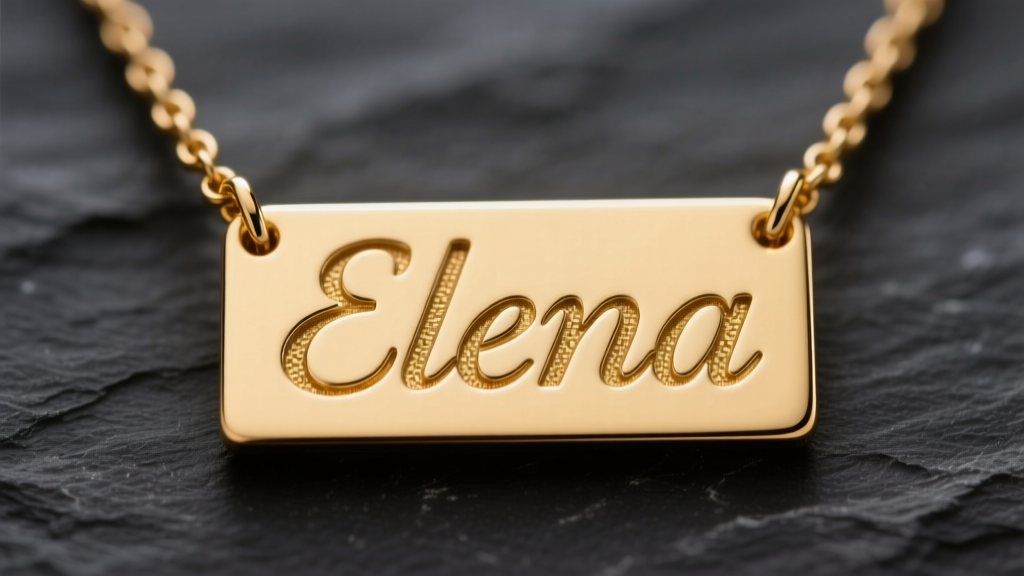
The personalized jewelry market has evolved significantly, moving past simple aesthetic choices into the realm of material science and structural engineering. When selecting a 10k gold name plate necklace, consumers are often overwhelmed by marketing jargon, overlooking the critical technical specifications that dictate the piece's longevity, tensile strength, and wearability. As we navigate the jewelry landscape in 2026, understanding the metallurgical realities of 10-karat gold and the precision required in nameplate fabrication is essential for making an informed investment.
Unlike higher-karat alternatives that prioritize color and prestige over durability, 10k gold offers a unique pragmatic advantage for daily-wear items like nameplates. This guide deconstructs the alloy composition, manufacturing methodologies, gauge tolerances, and chain mechanics that separate a flimsy novelty item from a generational keepsake.
The Metallurgy of 10k Gold: Why It Matters for Nameplates
To understand the performance of a 10k gold name plate necklace, we must first examine its atomic composition. By definition, 10-karat gold consists of 10 parts pure gold to 14 parts alloy metals, equating to exactly 41.7% pure gold content. According to the Gemological Institute of America (GIA), the remaining 58.3% is typically a carefully calibrated blend of copper, silver, zinc, and occasionally nickel or palladium.
Alloy Composition and Tarnish Dynamics
The high alloy content is precisely what makes 10k gold the superior choice for nameplates. Pure gold (24k) is far too malleable; a 24k nameplate would bend, warp, and scratch within days of being worn. The addition of copper and silver creates a crystalline lattice structure that dramatically increases the Vickers hardness of the metal. However, this comes with a trade-off: copper is highly reactive to oxygen and sulfur compounds in the environment.
Because a 10k gold name plate necklace contains a higher copper ratio than 14k or 18k variants, it is more susceptible to surface oxidation (tarnish) if exposed to cosmetics, sweat, or high humidity. Modern refiners mitigate this by introducing trace amounts of zinc and silicon as deoxidizers during the melting process, but buyers must still commit to a rigorous, albeit simple, maintenance routine to preserve the high-polish finish.
Manufacturing Techniques: Laser Cut vs. Stamped vs. Cast
The structural integrity and edge definition of your nameplate are entirely dependent on the fabrication method employed by the jeweler. There are three primary techniques used in the industry today, each yielding vastly different results in terms of durability and aesthetic crispness.
| Method | Process Description | Edge Quality | Durability | Best For |
|---|---|---|---|---|
| Laser Cutting | CNC fiber lasers slice the name from a rolled sheet of 10k gold. | Sharp, precise, requires manual edge-buffing. | High (retains sheet density). | Intricate scripts, custom fonts, fast turnaround. |
| Die Stamping | A hardened steel die strikes the sheet metal with immense pressure. | Slightly rounded, work-hardened edges. | Very High (compresses metal grain). | Standard block letters, high-volume classic styles. |
| Lost-Wax Casting | Molten 10k gold is poured into a plaster mold created from a wax prototype. | Soft, rounded, prone to microscopic porosity. | Moderate (softer crystalline structure). | Chunky 3D letters, heavy statement pieces. |
For traditional, flat nameplates, die stamping is the gold standard. The immense pressure of the stamping press not only cuts the shape but also work-hardens the 10k gold, aligning the metal grains and increasing its resistance to bending. Laser cutting is highly accurate and allows for limitless font variations, but the heat-affected zone near the cut edge must be meticulously polished by hand to prevent micro-fractures. Casting is generally discouraged for flat, thin nameplates due to the risk of porosity, which creates weak points that can snap under tension.
Plate Gauge and Structural Integrity
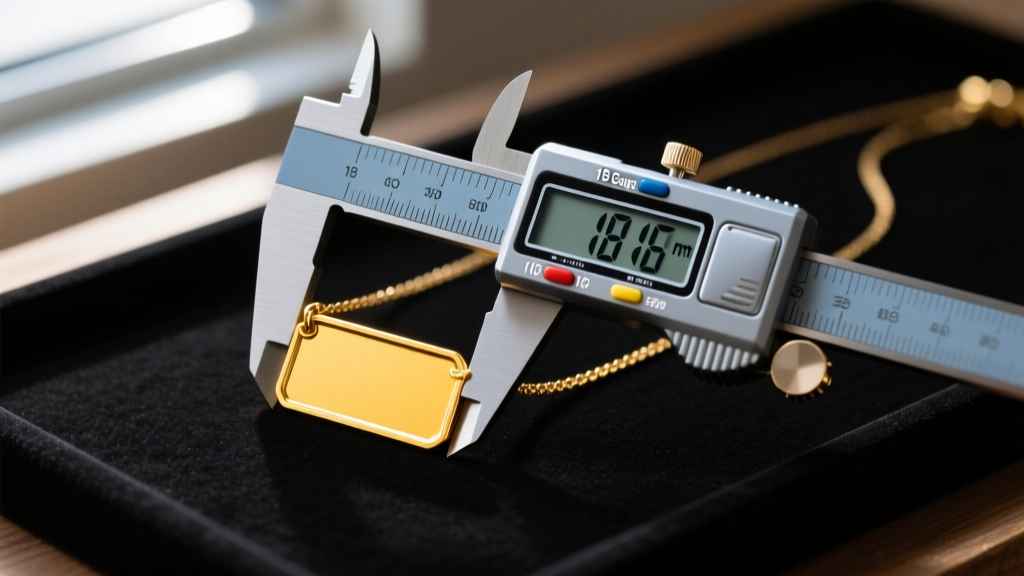
One of the most frequently overlooked specifications when purchasing a 10k gold name plate necklace is the metal gauge. In jewelry manufacturing, sheet metal thickness is measured in gauges, where a lower number indicates a thicker piece of metal. The gauge directly dictates how the piece will drape, how it will resist bending, and how much it will ultimately cost based on gold weight.
Choosing the Right Thickness
- 22-Gauge (0.64mm): Often found in fast-fashion or ultra-budget pieces. It is paper-thin, highly prone to denting, and will warp if the wearer sleeps in it. Avoid for names exceeding five letters.
- 20-Gauge (0.81mm): The industry standard for lightweight, delicate nameplates. It offers a good balance of drape and durability for names up to eight characters, provided the chain is appropriately lightweight.
- 18-Gauge (1.02mm): The premium standard for heirloom-quality nameplates. An 18-gauge 10k gold plate has substantial heft, resists bending, and provides a rigid canvas for diamond or cubic zirconia accents without compromising the structural base.
- 16-Gauge (1.29mm): Reserved for heavy, oversized 'statement' nameplates or urban streetwear styles. It is highly rigid and requires a heavy-duty chain to support its weight.
Chain Pairings and Clasp Mechanics
A nameplate is only as secure as the chain that suspends it. The focal weight of a 10k gold nameplate creates a pendulum effect, placing continuous stress on the chain links and the clasp mechanism. Matching the chain's tensile strength to the plate's weight is a critical engineering decision.
Tensile Strength and Link Styles
The Box Chain is widely considered the optimal pairing for nameplates. Its geometric, interlocking links distribute weight evenly and resist kinking, offering superior tensile strength compared to traditional cable chains. Cable chains, while classic, feature simple oval links with soldered seams that can pull apart if the nameplate is heavy. Figaro chains offer a stylish alternative but can catch on hair or clothing due to their varied link sizes.
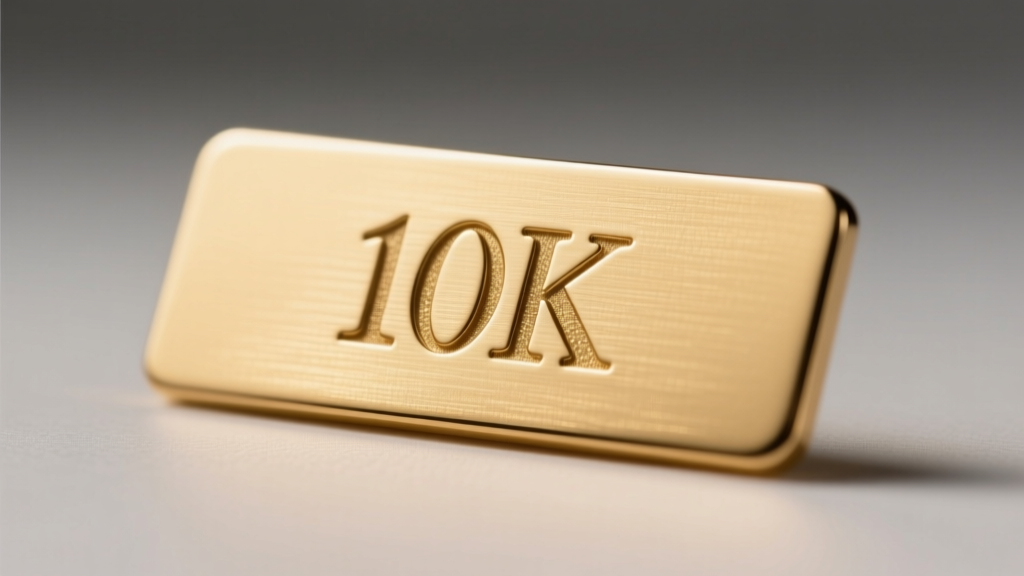
Regarding clasps, always opt for a Lobster Clasp over a Spring Ring. Lobster clasps feature a solid, spring-loaded mechanism that is less likely to fail under the dynamic load of a swinging nameplate. Furthermore, ensure the Federal Trade Commission (FTC) Jewelry Guides compliance by verifying that both the plate and the chain tongue bear the '10K' hallmark and the manufacturer's registered trademark stamp.
Pricing Tiers and Value Assessment
In 2026, the pricing for a 10k gold name plate necklace is heavily dictated by the spot price of gold, the gram weight of the final piece, and the complexity of the labor. Understanding these tiers prevents consumers from overpaying for lightweight items or underestimating the cost of custom fabrication.
- Entry-Level ($120 - $250): Typically 20-gauge, laser-cut from standardized font libraries, paired with a lightweight 1mm box chain. Names are usually limited to 8 characters.
- Mid-Tier ($250 - $450): Features 18-gauge thickness, custom or script fonts, hand-polished edges, and a durable 1.5mm to 2mm chain. May include small bezel-set birthstones or diamond accents.
- Premium/Bespoke ($450 - $800+): 16-gauge or 18-gauge heavy plates, intricate overlapping lettering, mixed-metal inlays (e.g., white gold borders on a yellow gold plate), and heavy-duty Figaro or Cuban link chains.
Expert Care and Oxidation Prevention
Because 10k gold contains a significant percentage of copper and silver, it requires specific care protocols to prevent oxidation. Avoid chemical jewelry dips, which often contain thiourea; these can strip the polished surface and leave a micro-porous finish that accelerates future tarnishing.
Instead, use a mild, phosphate-free dish soap and warm water solution with a soft-bristled baby toothbrush to clean the crevices of the lettering. For polishing, use a treated jeweler's rouge cloth designed specifically for lower-karat alloys. Store the necklace flat in an anti-tarnish flannel pouch to minimize exposure to ambient sulfur compounds. By respecting the metallurgical realities of 10k gold and prioritizing structural gauge and manufacturing quality, your nameplate will remain a pristine, enduring artifact of personal identity for decades to come.


