Finding the Perfect Necklace for V Neck Dress: Material Guide
Discover the ideal necklace for v neck dress styles. Compare metals, gems, and pearls based on drape, weight, and skin tone for a flawless look.

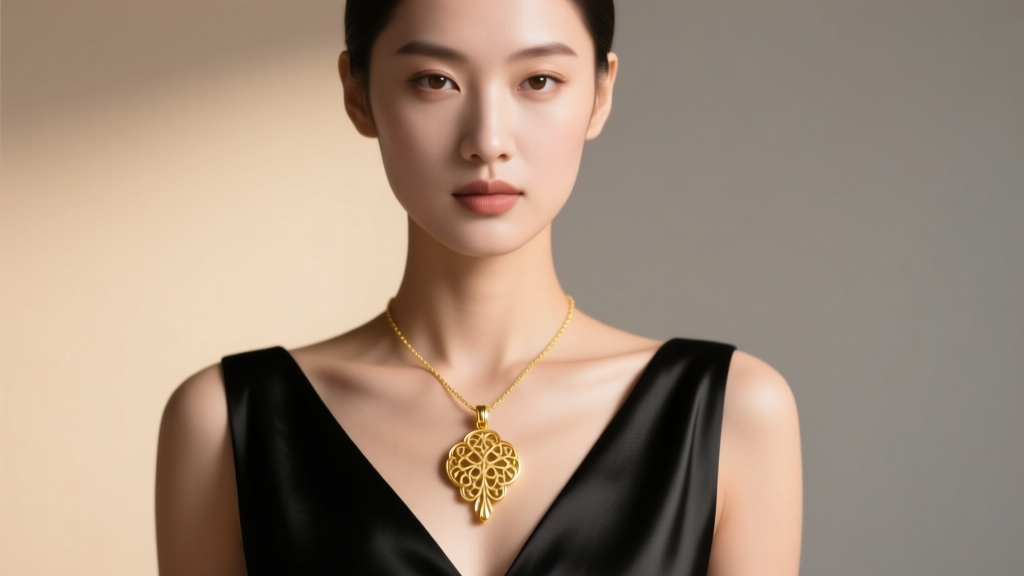
The Physics of the V-Neck: Why Material Weight and Drape Matter
The V-neck silhouette is inherently directional, drawing the eye downward toward the center of the chest. When selecting a necklace for v neck dress ensembles, the physical properties of the jewelry material—specifically its density, tensile strength, and surface friction—dictate how the piece interacts with gravity and the fabric. A heavy, dense pendant on a thin chain will pull the metal taut, creating a harsh, geometric 'V' that competes with the dress's neckline. Conversely, a fluid, low-density chain will follow the natural curve of the collarbone, softening the plunge.
As of 2026, the prevailing styling consensus favors 'architectural draping,' where the jewelry complements rather than mimics the dress's exact lines. To achieve this, you must understand chain gauges. A delicate 0.8mm to 1.2mm chain offers a liquid drape ideal for deep plunges, while a 2.0mm to 3.0mm gauge creates a structured, standalone silhouette that works best with shallow or modest V-necks.
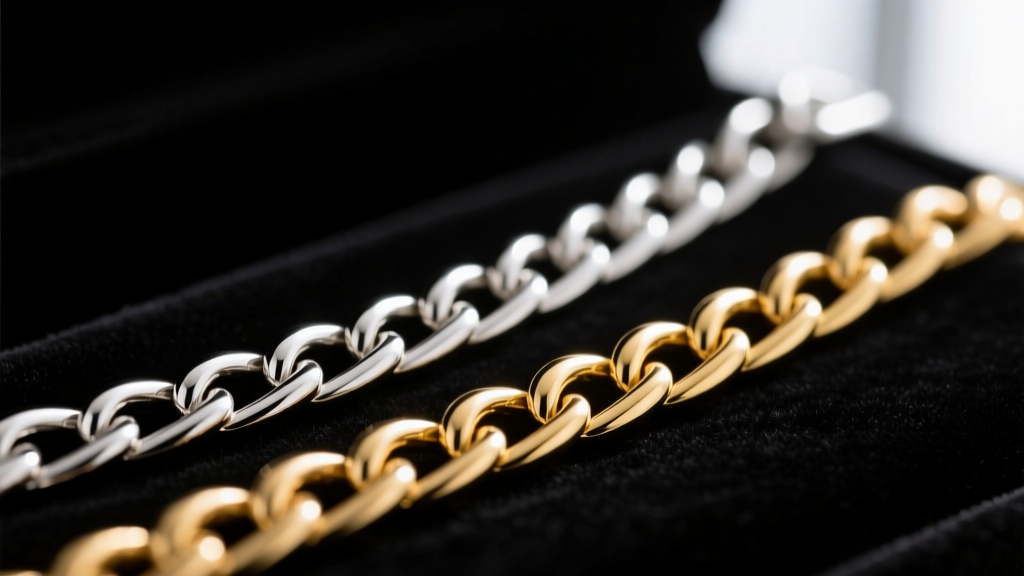
Precious Metals: Comparing Gold, Platinum, and Sterling Silver
The metallurgical composition of your necklace determines its stiffness, color retention, and weight. According to data from the World Gold Council, alloy ratios drastically alter how a metal behaves when worn.
14k vs. 18k Gold
- 14k Gold (58.5% pure gold): Alloyed with higher percentages of copper, silver, and zinc, 14k gold is rigid and highly resistant to deformation. It is the superior choice for structured pendants or geometric shapes that need to maintain their form against the body.
- 18k Gold (75%% pure gold): Softer and denser, 18k gold offers a luxurious, fluid drape. It moves like liquid silk, making it the ultimate pairing for delicate fabrics like charmeuse or crepe de chine.
Platinum and Sterling Silver
Platinum is exceptionally dense (21.45 g/cm³ compared to gold's 19.3 g/cm³) and is typically 95% pure. Because of its density and stiffness, a platinum snake chain will hold an architectural curve, creating a modern, avant-garde look against a deep V. Sterling silver (92.5% silver), while affordable, is prone to tarnishing when exposed to the high-friction, high-moisture environment of the collarbone. If choosing silver for a long event, opt for rhodium-plated pieces to prevent oxidation and maintain a brilliant, high-reflectivity finish.
Organic & Gemstone Materials: Refraction and Friction
When incorporating gemstones or organic materials into your necklace, you must consider both optical properties and surface friction. The Gemological Institute of America (GIA) notes that a gemstone's Refractive Index (RI) determines how it interacts with ambient light.
For evening V-neck dresses worn in dim, warm lighting, high-RI stones like diamonds (RI 2.42) or moissanite (RI 2.65) are essential; they capture and scatter minimal light, creating brilliance against dark fabrics. For daytime or matte-fabric dresses, opaque or translucent stones like turquoise, lapis lazuli, or jade provide necessary color contrast without relying on light refraction.
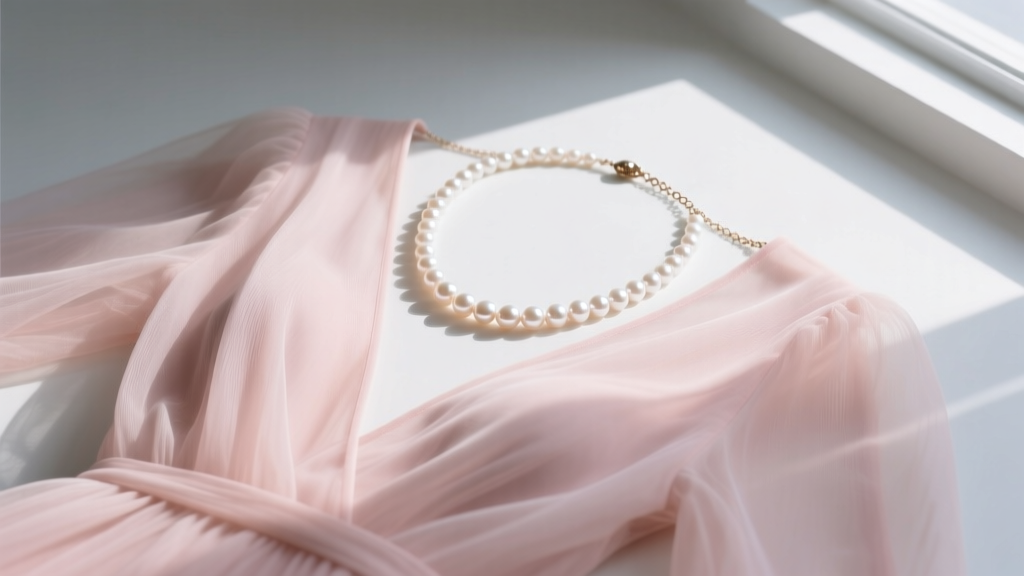
Pearls present a unique challenge. Freshwater and Akoya pearls rank at a mere 2.5 on the Mohs hardness scale and possess a naturally high-friction nacre surface. A heavy pearl pendant can easily snag or pull delicate, loose-weave fabrics like chiffon or raw silk. Always ensure pearl necklaces feature a protective metal bail or a smooth, polished bezel setting where the pearl meets the dress fabric.
Material vs. Fabric Matrix: Pairing Your Necklace with the Dress
The interplay between the necklace material and the dress fabric is where many styling errors occur. Use this matrix to ensure harmony between your jewelry and your garment.
| Dress Fabric | Ideal Necklace Material | Chain Style & Gauge | Why It Works |
|---|---|---|---|
| Silk / Satin | 18k Yellow or Rose Gold | Fluid Rope or Box (0.9mm) | The high polish of 18k gold mirrors the lustrous sheen of silk without snagging the delicate weave. |
| Velvet | Platinum or White Gold with Diamonds | Structured Snake or Wheat (2.0mm) | The matte, light-absorbing texture of velvet requires the sharp, high-contrast brilliance of white metals and high-RI stones. |
| Cotton / Linen | Sterling Silver or Mixed Metals | Textured Curb or Figaro (1.5mm) | Casual, matte fabrics pair best with slightly oxidized or textured metals that offer an organic, relaxed aesthetic. |
| Chiffon / Tulle | Freshwater Pearls or Enamel | Delicate Cable with Pearl Drops | The lightweight, ethereal nature of sheer fabrics demands low-density, organic materials that won't drag the fabric down. |
Skin Tone and Metal Undertones: A Metallurgical Approach
Beyond the basic 'warm vs. cool' skin tone rules, understanding the specific alloy composition of your jewelry can elevate your styling. Rose gold, for instance, derives its pink hue from a high copper content (often up to 20-25% in 14k rose gold). Copper naturally oxidizes and deepens over time, meaning vintage or pre-oxidized rose gold will offer a richer, warmer contrast against olive or deep skin tones than newly polished, bright pink rose gold.
White gold is an alloy of yellow gold mixed with white metals like palladium or nickel, but it inherently retains a faint yellowish-gray tint. To achieve a true white finish, it is plated with rhodium. If you have cool, pink undertones, ensure your white gold necklace has been recently re-rhodium plated; a fading rhodium layer will clash with your skin's natural coolness, whereas fresh plating provides a crisp, icy contrast.
Common Failure Modes: What to Avoid
Even the most beautiful necklace can ruin a look if it fails mechanically or aesthetically. Watch out for these specific failure modes:
- The Pendulum Effect: Pairing a heavy, oversized pendant with a thin, lightweight chain (under 1.0mm) causes the pendant to constantly flip and swing, drawing attention to the mechanics of the jewelry rather than the design. Always match pendant weight to chain tensile strength.
- Prong Snagging: Traditional four-prong or six-prong diamond settings feature sharp metal claws that will inevitably catch on knits, lace, or loosely woven V-neck dresses. Opt for bezel settings or flush mounts for textured fabrics.
- Clasp Tension Failure: Standard spring-ring clasps are rated for lightweight chains. If your V-neck pendant exceeds 15 grams, the tension of the plunge will eventually warp the spring ring, causing it to pop open. Always upgrade to a solid lobster clasp or a magnetic neodymium clasp for heavy pendants.
Final Sizing Rules for the V-Neck Plunge
The ultimate rule for sizing a necklace for a V-neck dress is the 'Rule of Thirds.' The pendant or focal point of the necklace should sit in either the upper third or the middle third of the V-neck plunge. It should never touch or rest directly on the fabric's hemline, as this creates visual clutter and breaks the elongating effect of the neckline. For a shallow V-neck (dropping 2-3 inches), a 16-inch choker or princess-length chain keeps the jewelry in the upper third. For a deep, dramatic plunge (dropping 5+ inches), an 18-inch to 20-inch matinee-length chain ensures the pendant rests perfectly in the negative space, framing the decolletage without intersecting the fabric lines.


