How to Clean a Cool Necklace: Edgy Jewelry Care Guide
Discover how to clean a cool necklace featuring oxidized silver, PVD titanium, or leather. Expert care tips for edgy and alternative jewelry.

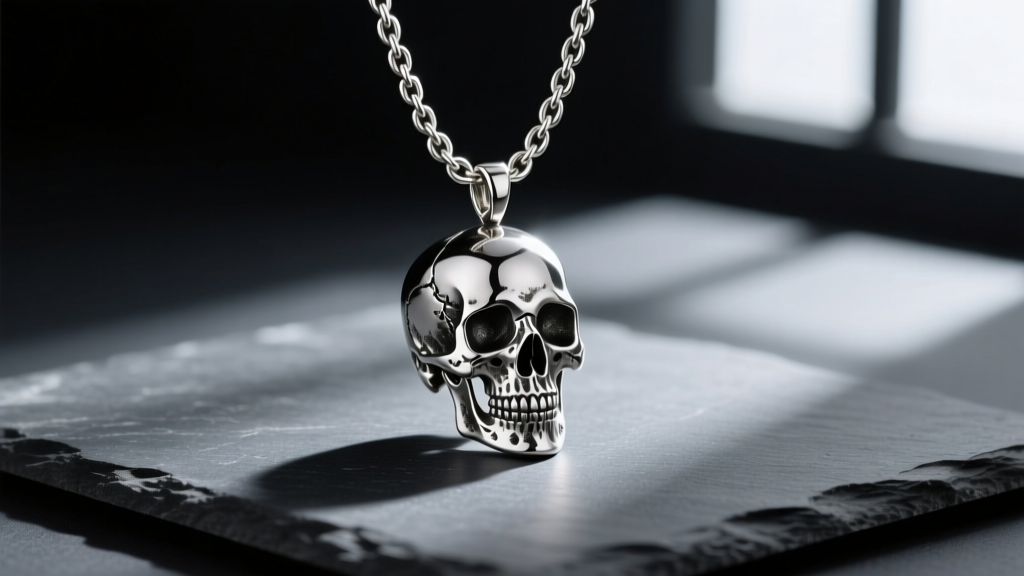
When you invest in a truly cool necklace—whether it is a heavy 14mm oxidized silver Cuban link, a black PVD-coated titanium spike choker, or a mixed-media leather and steel pendant—standard jewelry care advice simply does not apply. Mainstream cleaning methods designed for delicate diamond solitaires or high-polish gold chains can permanently ruin the intentional distressing, dark patinas, and specialized coatings that give alternative and streetwear-inspired jewelry its edge.
In 2026, the landscape of men’s and alternative jewelry has expanded dramatically, utilizing advanced metallurgy and artisanal finishing techniques. Maintaining these pieces requires a deep understanding of material science. This comprehensive guide will walk you through the exact protocols for cleaning, maintaining, and storing your favorite edgy necklaces without stripping their character or compromising their structural integrity.
The Anatomy of an Edgy "Cool" Necklace
Before applying any cleaning agent, you must identify the specific materials and finishes used in your cool necklace. Alternative jewelry typically relies on three primary material categories, each with unique vulnerabilities:
- Oxidized (Antiqued) Sterling Silver: Artisans use liver of sulfur or potassium sulfide to force a controlled tarnish, creating blackened recesses that highlight skull motifs, gothic engravings, or tribal patterns. The high-polish raised areas provide contrast.
- PVD-Coated Titanium and Steel: Physical Vapor Deposition (PVD) is used to create ultra-hard, scratch-resistant black, gunmetal, or rose-gold finishes on heavy chains and spikes. While durable, PVD is a microscopic layer that can be compromised by harsh chemicals.
- Mixed Media (Leather, Paracord, and Hardware):strong> Many statement pieces feature braided leather or waxed cotton cords paired with surgical steel or brass clasps and pendants. The organic cords are highly susceptible to sebum, sweat, and water damage.
Material-Specific Cleaning Protocols
According to the Jewelers of America, the most common mistake consumers make is using a one-size-fits-all liquid dip cleaner. For alternative jewelry, targeted mechanical cleaning is almost always superior to chemical baths.
| Material / Finish | Recommended Cleaning Agent | Application Tool | What to Strictly Avoid |
|---|---|---|---|
| Oxidized 925 Silver | Mild dish soap (e.g., Dawn) & warm water | Soft-bristled baby toothbrush | Tarn-X, silver dips, baking soda paste, ultrasonic cleaners |
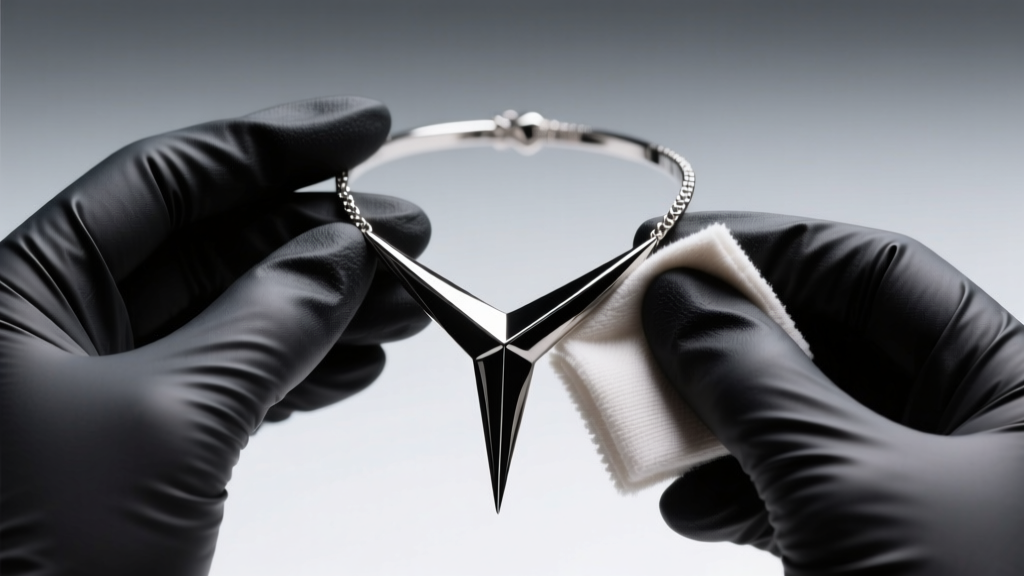
| PVD-Coated Titanium | pH-neutral soap & distilled water | Lint-free microfiber cloth | Ammonia, bleach, abrasive polishing cloths, ultrasonics |
| Braided Leather Cords | Leather conditioner or saddle soap | Damp (not wet) cotton swab | Submersion in water, alcohol-based sanitizers, heat |
| Raw Brass / Bronze | Lemon juice & salt (for intentional brightening) | Soft cloth, rinse immediately | Leaving acidic residue, clear-coat sprays (unless intentional) |
Step-by-Step: Cleaning Oxidized Silver
If your cool necklace features blackened silver details, you must clean around the oxidation, not over it. Mix a few drops of phosphate-free dish soap into lukewarm water. Dip a soft-bristled baby toothbrush into the solution and gently agitate the raised, high-polish areas of the chain links or pendant. Do not scrub the recessed black areas. Rinse briefly under a gentle stream of distilled water (tap water contains chlorine and minerals that can cause unpredictable spotting) and pat dry immediately with a microfiber cloth. If you need to brighten the raised edges, use a dry, untreated silver polishing cloth exclusively on the high spots.
The Dangers of Ultrasonic Cleaners and Chemical Dips
It is incredibly tempting to drop a thick, grimy 12mm steel chain into an ultrasonic cleaner or a jar of chemical silver dip. Doing so will likely destroy the piece's aesthetic value. Here is the metallurgical reality of why these methods fail for edgy jewelry:
Ultrasonic Cavitation and PVD Stripping
Ultrasonic cleaners work via cavitation—creating millions of microscopic vacuum bubbles that implode against the jewelry's surface. While excellent for dislodging dirt from diamond prongs, this violent micro-impact can chip or peel PVD coatings, especially if the underlying steel or titanium had microscopic inclusions or poor surface prep before coating. Furthermore, if your necklace features any epoxy-set stones (common in budget-friendly gothic or biker jewelry), the high-frequency vibrations will shatter the adhesive bond, causing stones to fall out.
Chemical Dips and the "White Silver" Disaster
Chemical dips (like Tarn-X) rely on thiourea and strong acids to instantly strip silver sulfide (tarnish) from the metal. The problem? These chemicals cannot differentiate between unwanted environmental tarnish and the intentional liver-of-sulfur oxidation your artisan applied. A three-second dip will strip your $300 oxidized skull pendant down to bright, blinding white silver, completely erasing the depth, contrast, and edgy aesthetic you paid for. As noted in technical guides by jewelry suppliers like Rio Grande, restoring a stripped oxidized finish requires a professional jeweler to re-apply liver of sulfur and painstakingly re-polish the high spots by hand.
Troubleshooting Clasp and Link Failures
Heavy, cool necklaces place immense kinetic stress on their weakest points: the clasps and the jump rings. A standard 8mm stainless steel curb chain can weigh over 150 grams. The swinging motion of walking generates a pendulum effect that can easily snap thin wire components.
Upgrading the Jump Rings
Inspect the split rings or jump rings connecting your pendant to the chain, and the chain to the clasp. Many mass-produced alternative necklaces use 18-gauge or 20-gauge wire for these rings to save costs. For any chain over 6mm in thickness or 100 grams in weight, you should upgrade to 14-gauge or 12-gauge soldered jump rings. If you notice a gap in an unsoldered jump ring, do not just squeeze it shut with pliers; the metal has been work-hardened and weakened. Take it to a bench jeweler to have a heavy-duty, laser-welded or soldered ring installed.
Clasp Swaps for Heavy Chains
Spring-ring clasps are entirely inadequate for heavy streetwear chains. The internal spring mechanism will inevitably fatigue, leaving the tiny lever stuck open. Upgrade your cool necklace with a stainless steel lobster clasp (minimum 12mm length for thick chains) or a custom-machined T-bar toggle. Toggles are highly secure for heavy chains because the weight of the chain itself pulls the T-bar horizontally against the loop, making accidental unclasping virtually impossible.
Long-Term Storage for Heavy Statement Pieces
How you store your edgy jewelry is just as critical as how you clean it. Tossing heavy steel and leather necklaces into a communal velvet drawer guarantees tangled chains, scratched PVD coatings, and degraded leather.
Anti-Tarnish and Moisture Control
For oxidized silver and raw brass pieces, environmental sulfur and humidity are the enemies of longevity. Store these necklaces in individual, airtight polyethylene ziplock bags (never PVC plastic, which emits gases that accelerate tarnishing and degrade leather). Drop a 3M Anti-Tarnish strip or a small silica gel desiccant packet into each bag to neutralize airborne sulfur compounds and absorb ambient moisture.
Physical Separation and Support
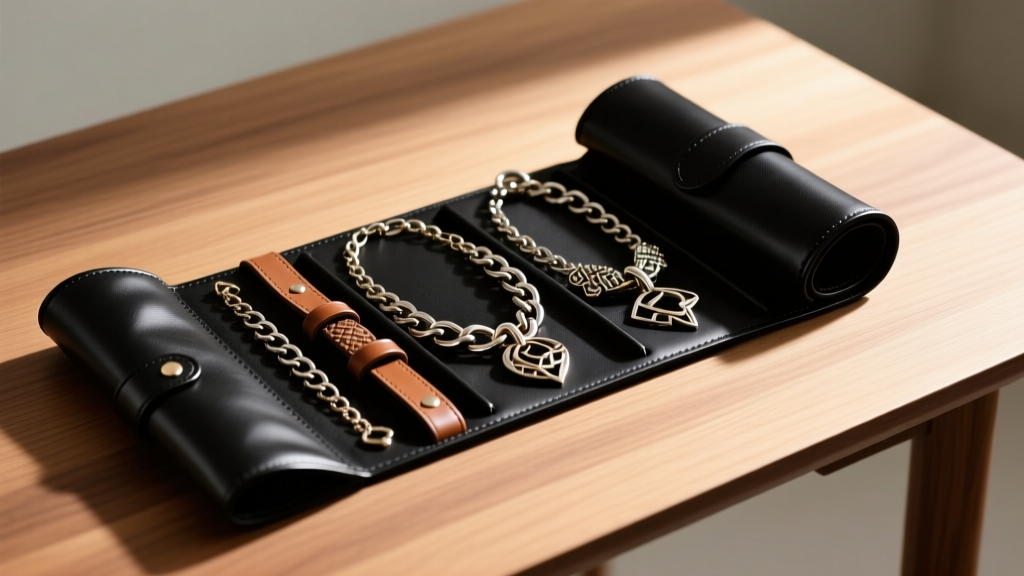
Thick Cuban and Figaro chains act like saws when rubbed against softer metals or coatings. Always store chains individually. For leather cord necklaces, avoid hanging them on standard hooks for long periods, as the gravitational pull will stretch and permanently deform the leather fibers, leading to micro-tears near the metal crimp beads. Instead, lay them flat in a compartmentalized leather jewelry roll or a lined wooden valet tray, ensuring the metal hardware does not press directly into the organic cord.
Final Thoughts on Alternative Jewelry Maintenance
A truly cool necklace is meant to be worn, lived in, and occasionally subjected to the elements. However, understanding the boundary between "worn-in character" and "structural degradation" is the hallmark of a serious collector. By abandoning harsh chemical dips, respecting the fragility of PVD and oxidized finishes, and proactively upgrading your hardware to match the weight of your chains, you ensure your statement pieces remain bold, intact, and undeniably edgy for decades to come. For more technical insights on metal properties, refer to the Gemological Institute of America (GIA) silver care resources.


