How to Style, Layer, and Clean a White Crystal Necklace
Learn how to expertly layer, clean, and maintain your white crystal necklace. Discover material-specific care guides for quartz, selenite, and moonstone.

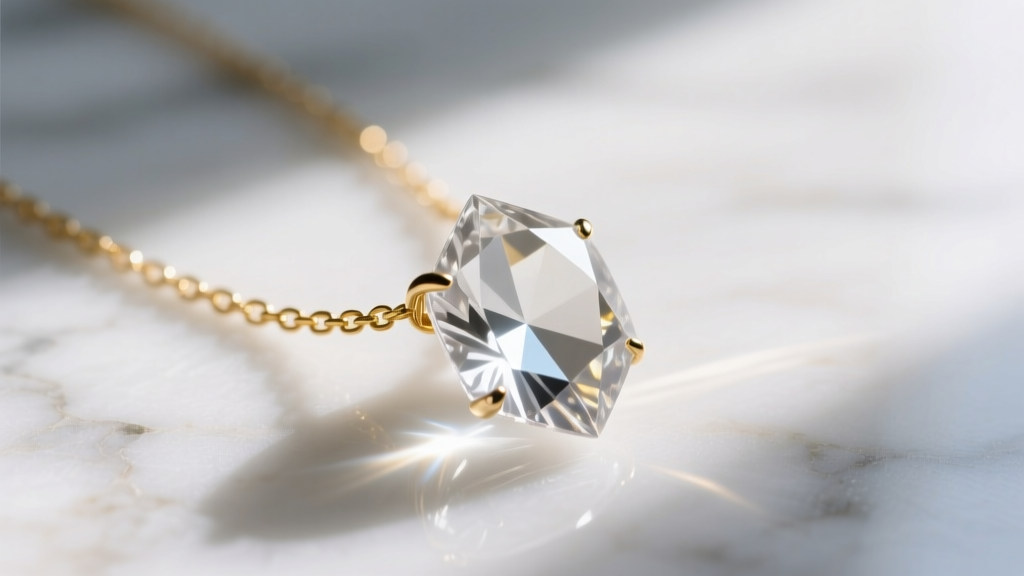
As we navigate the jewelry trends of 2026, the white crystal necklace has cemented its status as a versatile, timeless staple. Whether you are drawn to the brilliant flash of a faceted white sapphire, the ethereal glow of a rainbow moonstone, or the raw, uncut beauty of clear quartz, white crystals offer a neutral yet striking focal point for any outfit. However, the term 'white crystal' encompasses a wide variety of minerals, each with distinct physical properties, Mohs hardness ratings, and care requirements. Treating a delicate selenite pendant the same way you would a durable white sapphire can result in irreversible damage.
This comprehensive, step-by-step guide will teach you how to accurately identify your stone, master the art of layering with precise chain lengths, and execute material-specific cleaning protocols to keep your jewelry looking pristine. According to the Gemological Institute of America (GIA), understanding a gemstone's hardness and toughness is the first step in proper jewelry maintenance.
Identifying Your White Crystal: Hardness and Porosity
Before applying any cleaning solution or layering your necklace, you must identify the specific mineral. The Mohs scale of mineral hardness dictates what your stone can withstand. Data sourced from Mindat.org highlights the vast differences between common white crystals used in jewelry.
| Crystal Type | Mohs Hardness | Water Safe? | Ultrasonic Safe? | Primary Vulnerability |
|---|---|---|---|---|
| White Sapphire | 9.0 | Yes | Yes | Hard impacts on girdle |
| Clear Quartz | 7.0 | Yes | Yes (with caution) | Thermal shock, harsh acids |
| Moonstone | 6.0 - 6.5 | Briefly | No | Scratching, ultrasonic vibrations |
| Selenite | 2.0 | No | No | Dissolves in water, scratches easily |
| White Opal | 5.5 - 6.5 | No | No | Dehydration, chemical exposure |
If you are unsure of your stone's identity, perform a visual inspection. Selenite often has distinct striations and a pearly, fibrous luster. Moonstone exhibits adularescence (a floating light effect). Clear quartz is completely transparent with conchoidal fractures, while white sapphire possesses high refractive brilliance similar to a diamond.
The 2026 Layering Framework: Exact Lengths and Chain Types
Layering a white crystal necklace requires a strategic approach to proportions and chain textures. The current 2026 aesthetic favors mixing delicate, refined metals with organic, slightly asymmetrical crystal pendants. To avoid a tangled, cluttered look, adhere to the 2-to-4 inch spacing rule between each necklace layer.

Step 1: The Base Layer (14 to 16 Inches)
Start with a 14-inch or 16-inch choker or collar. Opt for a 1.5mm 14k gold-filled cable chain or a sterling silver rolo chain. This layer should sit snugly above the collarbone and feature either no pendant or a tiny, 3mm bezel-set white sapphire or diamond accent. This anchors the stack without competing with the main crystal.
Step 2: The Focal Point (18 Inches)
Your primary white crystal necklace should sit at the 18-inch princess length. This places the pendant directly in the center of the chest, drawing the eye. If your crystal is a raw, uncut clear quartz point, pair it with a slightly heavier 2mm box chain to support the weight. For a delicate, bezel-set moonstone, a 1mm snake chain provides a sleek, modern contrast.
Step 3: The Matinee Anchor (22 to 24 Inches)
Finish the stack with a 22-inch or 24-inch matinee chain. This layer should not have a large pendant; instead, use a textured chain (like a paperclip or wheat chain) or a simple lariat drop. This elongates the torso and frames the central white crystal beautifully, especially when worn over V-necklines or unbuttoned linen shirts.
Step-by-Step Physical Cleaning Guide
Physical cleaning removes sebum, lotion buildup, and environmental dust that can dull your crystal's optical properties. The Jewelers of America recommends gentle, non-abrasive methods for most semi-precious stones. Follow these material-specific steps:
For Water-Safe Crystals (Quartz, White Sapphire)
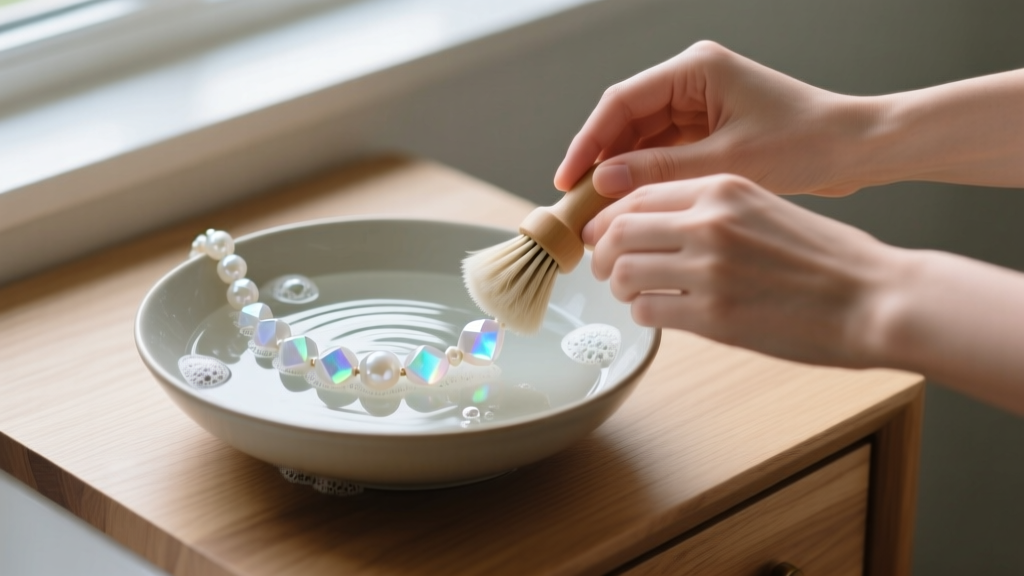
- Prepare the Solution: Mix three drops of phosphate-free, mild dish detergent (like Dawn) into a bowl of lukewarm distilled water. Avoid tap water, as hard water minerals can leave microscopic spots on faceted quartz.
- Soak: Submerge the necklace for 5 to 10 minutes to loosen debris.
- Agitate: Using an extra-soft, baby-sized toothbrush, gently brush the back of the crystal (the pavilion) and the chain links. Do not scrub the metal settings aggressively.
- Rinse and Dry: Rinse under a gentle stream of distilled water. Pat dry with a lint-free microfiber cloth, ensuring no moisture is trapped in the jump rings.
For Water-Sensitive Crystals (Moonstone, Opal)
Never soak moonstone or opal. Instead, dampen a microfiber cloth with a tiny amount of soapy water, wring it out until it is barely moist, and gently wipe the surface of the stone. Immediately follow with a dry cloth. Prolonged water exposure can weaken the adhesive in glued settings or cause opals to craze.
For Selenite (The 'No-Water' Rule)
Selenite is a hydrous calcium sulfate that will literally dissolve and turn into a cloudy mush if exposed to water. To clean a selenite white crystal necklace, use a soft, dry makeup brush or a compressed air duster to dislodge dust from the crevices. If the stone becomes dull, it cannot be polished with liquids; it must be professionally repolished with dry sandpaper by a lapidary.
Energetic Cleansing and Recharging Rituals
Beyond physical dirt, many wearers of white crystals value their metaphysical properties, associating clear quartz with clarity and moonstone with intuition. Energetic cleansing is a personal ritual, but it must be done without compromising the physical integrity of the jewelry.
- Moonlight Bathing: Safe for all white crystals. Place your necklace on a windowsill overnight during a full moon. This is particularly effective for moonstone and selenite, which cannot tolerate sunlight or water.
- Sound Cleansing: Use a Tibetan singing bowl or a tuning fork (432 Hz or 528 Hz) near the necklace. The sound waves clear stagnant energy without any physical contact, making it the safest method for fragile opal or raw selenite pendants.
- Smoke/Smudging: While traditional, passing jewelry through thick smoke can leave a resinous film on porous stones and dull the finish of sterling silver chains. If you choose this method, keep the necklace at the periphery of the smoke and wipe it down with a dry cloth afterward.
Troubleshooting: Cloudiness, Scratches, and Tarnish
Even with meticulous care, issues can arise. Here is how to troubleshoot common problems with your white crystal necklace:
Problem: The clear quartz looks cloudy despite cleaning.
Solution: The cloudiness is likely on the inside of the setting or caused by a buildup of hard water scale. Create a 50/50 mix of white vinegar and distilled water. Dip a cotton swab into the solution and carefully dab only the stone (avoiding the metal setting, especially if it is sterling silver or gold-plated). Rinse immediately with distilled water. Note: Never use vinegar on moonstone, opal, or selenite, as the acid will etch the surface.
Problem: The sterling silver chain is tarnishing rapidly.
Solution: White crystals are often paired with sterling silver, which contains 7.5% copper that oxidizes when exposed to humidity and sulfur in the air. Store your necklace in an airtight anti-tarnish ziplock bag with a silica gel packet and a 3M anti-tarnish strip. To remove existing tarnish, use a dedicated silver polishing cloth (impregnated with jeweler's rouge), but keep the cloth away from the crystal itself, as the abrasives can scratch softer stones like moonstone.
Problem: The stone has surface scratches.
Solution: If your moonstone (Mohs 6) or selenite (Mohs 2) has accumulated micro-scratches from being stored loosely in a jewelry box, home remedies will not fix it. You must take the piece to a professional lapidary who can remove the stone from the setting, re-sand it with progressive diamond grits, and re-polish it to restore its original luster.
By understanding the specific mineral composition of your white crystal necklace and adhering to these precise layering and maintenance protocols, you ensure that your piece remains a brilliant, enduring element of your jewelry collection for years to come.


